Toyota GR Supra A90
Modern turbo coupe; strong tuning; premium interior
Buyer's guide
15 min read
Buyer's guide & specs
Quick answer
The Nissan Fairlady Z spans 1969 to today, with values driven by originality, spec, and era. S30 and Z32 lead collector demand; RZ34 is the modern halo. Buy on rust/records for classics and oiling/cooling/gearbox health for modern cars.
Background
The Nissan Fairlady Z ran from October 1969 to today across seven generations — S30, S130, Z31, Z32, Z33, Z34, and RZ34. Four engine families (L-series I6, VG V6, VQ V6, VR30 twin-turbo V6) and one consistent brief: front-engine, rear-drive, light enough to be fun on a working budget. S30 and Z32 lead collector demand today; the Z33 and Z34 are the driver-grade bargains; and the RZ34 carries the nameplate forward with the VR30DDTT already proven in the Q50 and Q60 since 2016.
The S30 (1969–1978) is the analog purist Z: 2.0L to 2.8L inline-six, twin SU carburetors on early JDM cars, sub-2,500 lb curb weight, no electronic aids. It is the car that established Nissan as a credible sports-car maker in markets that had dismissed Japanese products as economy goods.
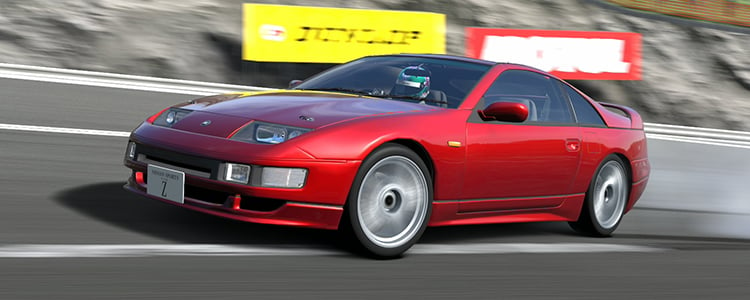
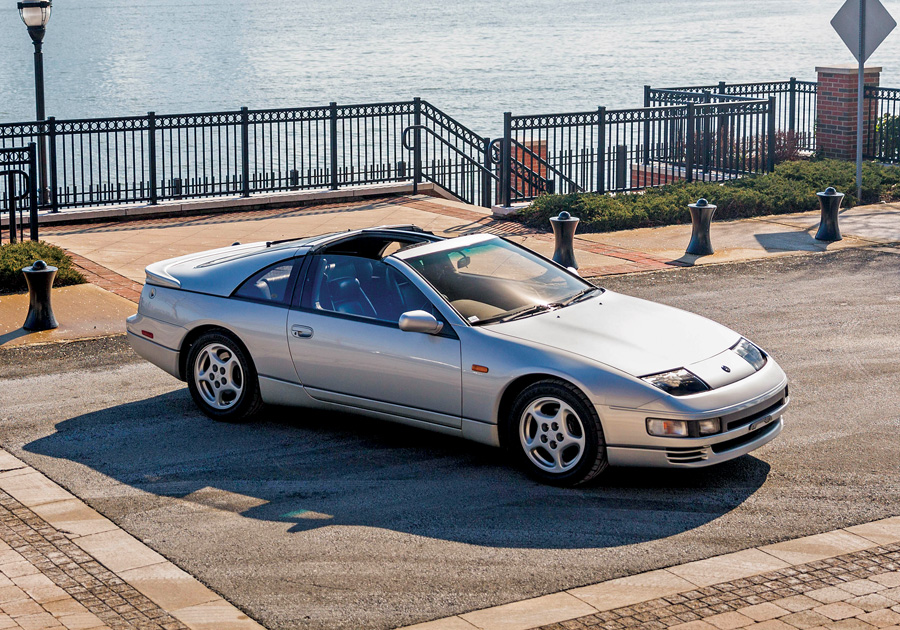
The Z32 (1989–2000) is the technological flagship Z: VG30DETT twin-turbo V6, Super HICAS four-wheel steering on higher grades, side-mount intercoolers, T-tops, and 300+ hp that put it in the same conversation as the Toyota Supra JZA80 and Mazda RX-7 FD3S. It is also the most labor-intensive Z to own — the twin-turbo packaging is tight, the timing-belt service window is non-negotiable, and wiring harness/IACV/PTU failure modes are well-documented across enthusiast forums.
The Z33 (2002–2009) is the recovery Z: launched after Renault's purchase of Nissan shares in 1999, engineered to compete with the Porsche Boxster, BMW Z4, and Ford Mustang at a sub-$30k US sticker. The VQ35DE was already in the FX/G35/Maxima parts bin; the 350Z borrowed it and made it work. Each of the three represents a different read of what a Z car should be — lightweight purist, technological halo, profitable volume sports car — and each generation's collector market reflects that brief.
The Toyota Celica died in 2006. The Mazda RX-7 ended with the FD in 2002. The Mitsubishi 3000GT ended in 2000, and the Honda Prelude ended in 2001. Nissan's Z is the only mainstream Japanese sports coupe nameplate to run unbroken from the late 1960s into the current decade — Nissan paused production exactly once, between the Z34 (370Z, ended 2020) and the RZ34 (Z, launched 2022 globally).
The reason is not commercial strength; the Z has lost money in multiple generations, particularly the late Z34 years. The reason is brand equity. By the late 1990s, when Nissan was near collapse and Renault was negotiating its acquisition, the Z badge was one of the three nameplates (alongside Skyline GT-R and Silvia) that internal Nissan documents identified as non-negotiable assets.
The 2001 Detroit Auto Show 350Z concept reveal — under Ghosn's leadership — was a strategic move to re-establish Nissan as a brand that built emotional cars, not rental-grade transportation. Twenty-five years later, the RZ34 inherits a 56-year-old name with continuous lineage. That lineage is a meaningful piece of why the platform still exists when nearly every competitor has been discontinued.
Editorial notes
Quick read
Constants
Chassis history
The Fairlady Z ran from 1969 all the way to today across seven generations. The S30 is the analog one everybody wants. The S130 went softer and more grand-touring. The Z31 was the first Z without an inline-six. The Z32 is the technological halo with the VG30DETT twin-turbo. The Z33 350Z brought the Z back as an affordable sports car under Renault. The Z34 370Z sharpened it. And the RZ34 is the modern one with the VR30DDTT making 400 hp. Each Fairlady Z feels like a different idea of what a Z car should be.
First generation — S30 (1969–1978)
Second generation — S130 (1978–1983)
Third generation — Z31 (1983–1989)
Fourth generation — Z32 (1989–2000)
Sixth generation — Z34 (2008–2020)
Buyer's call
The Fairlady Z is the longest-running Japanese sports car nameplate that's still alive, and that shows in how the strengths and weaknesses have evolved across the generations. What you give up depends on which Z you're buying. The S30 trades modern usability for analog purity. The Z32 trades reliability for that 300 hp twin-turbo experience. The Z33 and Z34 trade exclusivity for daily-driver durability.
Reliability
Every Fairlady Z generation has its known weak points, and almost all of them are well-documented. The S30 rusts everywhere it can find moisture. The Z32 timing belt service is non-negotiable at 60,000 miles. The Z33 and Z34 burn oil by design, and treating that as a fault is the fastest way to ruin a VQ engine. None of these are deal breakers if you know about them going in.
| Issue | Cause | Solution | Est. cost |
|---|---|---|---|
| Timing belt overdue (Z32) | Neglect; 60k/5yr interval ignored | Full belt kit: belt, idlers, tensioner, water pump | $1200-2500 |
| Overheating/heat soak | Old radiator, clogged fins, weak fans, air pockets | Radiator, hoses, thermostat, fan circuit service | $600-1800 |
| Rear main seal leak | Age; crankcase pressure; worn seal lip | Replace seal during clutch; inspect PCV system | $800-1800 |
| Valve cover gasket leaks | Hardened gaskets; warped covers; overtorque | New gaskets, grommets; reseal half-moons | $350-900 |
| Power steering leaks to alt | PS hose seep drips onto alternator (common) | Replace PS hoses; rebuild/replace alternator | $500-1400 |
| Fuel hose/fire risk (Z32) | Old ethanol-cracked hoses at plenum/firewall | Replace all fuel hoses with EFI-rated line/clamps | $250-900 |
| Injector failure (Z32) | Early-style injectors corrode; ethanol exposure | Upgrade to later injectors/rails; new connectors | $900-2200 |
| PTU/ignition dropout (Z32) | Early PTU overheats; brittle subharness | PTU upgrade kit + new subharness/grounds | $250-700 |
| Vacuum leaks/idle surge | Brittle hoses, cracked intake boots, IACV issues | Smoke test; replace hoses/boots; clean IACV | $200-900 |
| IACV short/ECU damage (Z32) | Coolant leak into IACV causes electrical short | Replace IACV; repair ECU traces; fix coolant leak | $400-1200 |
| MAF sensor/harness faults | Aging connector pins; broken wires near plug | Repair harness pigtail; replace MAF if needed | $120-450 |
| Turbo smoke (Z32TT) | Worn seals/bearings; oil coking from heat | Rebuild/replace turbos; add proper cooling/oil lines | $2500-6000 |
| Boost leaks (Z32TT) | Old couplers, cracked IC tanks, loose clamps | Pressure test; replace couplers/clamps; fix IC leaks | $150-900 |
| Exhaust manifold cracks | Heat cycling; thin castings; aggressive tunes | Replace manifolds; check studs; retune if needed | $600-2000 |
| Head gasket failure | Prior overheating; detonation on bad tune/fuel | Compression/leakdown; head gasket job; machine heads | $2500-6000 |
| Manual synchro grind | Worn 2nd/3rd synchros; wrong fluid; hard shifts | Fluid change; rebuild trans or swap known-good unit | $300-2500 |
| Clutch slave/master leaks | Old seals; heat; contaminated fluid | Replace master/slave; flush; inspect hard line | $200-650 |
| Dual-mass flywheel rattle | Worn DMF springs (common on Z33 manuals) | Replace with new DMF or convert to single-mass kit | $900-2000 |
| Differential bushing clunk | Aged diff/subframe bushings; wheel hop damage | Replace bushings; inspect mounts; align rear | $500-1800 |
| Rear tire inner wear | Worn rear arms/bushings; lowered w/o correction | Replace arms/bushings; alignment; camber correction | $400-1600 |
| Steering rack leaks | Seal wear; contaminated fluid; torn boots | Rebuild/replace rack; flush system; new boots | $700-1800 |
| ABS/VDC warning lights | Wheel speed sensors, tone rings, ABS module age | Scan; replace sensor/ring; module repair if needed | $150-1200 |
| Window regulator failure | Worn cables/rollers; dried tracks; water intrusion | Replace regulator; clean/lube tracks; fix leaks | $250-700 |
| T-top/hatch water leaks | Shrunk seals, clogged drains, misaligned panels | New seals; clear drains; adjust latches; reseal trim | $200-1200 |
| Heater core leak | Corrosion; old coolant; electrolysis | Replace heater core; flush system; new coolant | $900-1800 |
| A/C weak or inop | Leaks at o-rings, condenser, compressor wear | Leak test; replace failed parts; evac/recharge | $300-1600 |
| Alternator failure | Age/heat; PS fluid contamination; bearing wear | Replace alternator; fix PS leaks; check grounds | $250-800 |
| Rust at subframe mounts | Moisture traps; salted roads; poor prior repairs | Cut/repair metal; treat; undercoat; avoid bondo fixes | $1000-6000 |
| ECU capacitor leakage (Z32) | Aging electrolytic caps leak and damage traces | ECU rebuild/repair; replace caps; clean board | $200-600 |
| Knock from worn rod bearings | Low oil, track abuse, poor maintenance | Oil analysis; rebuild/replace engine; fix oiling issues | $3500-9000 |
| Catalyst/O2 sensor failures | Age, rich tune, oil burning, cheap aftermarket parts | Fix root cause; replace O2s/cats with quality parts | $300-2500 |
Market
The Fairlady Z badge was JDM-only. Every Z exported from Japan from 1969 onward wore a numeric designation that reflected its engine displacement (240Z = 2.4L L24, 260Z = 2.6L L26, 280Z = 2.8L L28, 300ZX = 3.0L VG30, 350Z = 3.5L VQ35, 370Z = 3.7L VQ37) until the RZ34, which dropped the displacement number entirely and is simply 'Z' in export markets and 'Fairlady Z' in Japan. Mechanically the JDM and USDM cars are largely the same, but the JDM-only specifications are meaningful: the S30 Fairlady Z 432 used the S20 inline-six from the Hakosuka Skyline GT-R (twin-cam, twin-carb, 160 hp) and is one of the rarest factory Zs ever built; the S130 280ZX-T turbo was sold in the US but a JDM-only 200ZR Z31 used the RB20DET inline-six rather than the VG-series V6; JDM Z32 grades like Version R and Version S were never sold in North America; and JDM Z33/Z34 trim names (Version T, Version ST, Type C) do not map directly to US Touring/Sport/NISMO badging. The 240Z launched in the US at $3,526 in 1970 — a price Mr. K's marketing team chose specifically to undercut the Jaguar E-Type by half, and to position the Z as the credible Japanese sports-car alternative to British and Italian imports.
1999 Z32 Nissan Fairlady Z 300ZX 2by2 (JDM RHD)
Specs
Four engine families ran across the Fairlady Z lineup. The L-series inline-six powered the S30 and S130 from 1969 to 1983. The VG-series V6 took over for the Z31 and Z32, and the VG30DETT twin-turbo made 280 PS in JDM trim and 300 hp in the US. The VQ-series naturally aspirated V6 ran the Z33 and Z34 from 2002 to 2020. The VR30DDTT twin-turbo V6 in the RZ34 makes 400 hp.
| Chassis | Engine | Displacement | Power | Boost | Notes |
|---|---|---|---|---|---|
| S30 | L20A | 2.0L | estimated | N/A | Carb I6; exact JDM ratings vary by year |
| HS30 | L24 | 2.4L | estimated | N/A | Carb I6; market/year dependent output |
| S30 | L26 | 2.6L | estimated | N/A | Carb I6; emissions tuning varies |
| S30 | L28 | 2.8L | estimated | N/A | Carb/EFI by market; output varies |
| S130 | L20E | 2.0L | estimated | N/A | EFI I6; JDM spec varies by year |
| S130 | L20ET | 2.0L | estimated | estimated | Turbo EFI I6; exact boost/output varies |
| Z31 | VG20ET | 2.0L | estimated | estimated | Turbo V6; JDM ratings vary by year |
| Z31 | RB20DET | 2.0L | estimated | estimated | 200ZR-only; limited production, spec varies |
| Z31 | VG30E | 3.0L | estimated | N/A | NA V6; market/year dependent output |
| Z31 | VG30ET | 3.0L | estimated | estimated | Single turbo V6; output varies by year |
| Z32 | VG30DE | 3.0L | estimated | N/A | DOHC V6; JDM/US ratings differ |
| Z32 | VG30DETT | 3.0L | estimated | estimated | Twin turbo DOHC V6; boost varies by market |
| Z33 | VQ35DE | 3.5L | estimated | N/A | Early Z33; output varies by year/market |
| Z33 | VQ35HR | 3.5L | estimated | N/A | High-Rev; dual intake, higher redline |
| Z34 | VQ37VHR | 3.7L | estimated | N/A | VVEL; JDM/US/EU ratings differ |
| RZ34 | VR30DDTT | 3.0L | estimated | estimated | Twin turbo DI V6; market ratings differ |
| Type | Ratios | Availability | Notes |
|---|---|---|---|
| 4-speed Manual | estimated | S30 early grades | Exact ratios vary by year/market |
| 5-speed Manual | estimated | S30/S130/Z31/Z32/Z33/Z34/RZ34 | Multiple FS5 variants; ratios vary |
| 3-speed Automatic | estimated | S30 late,S130 | JATCO 3AT; ratios vary by model |
| 4-speed Automatic | estimated | Z31,Z32 | 4AT varies by year; lockup by spec |
| 6-speed Manual | estimated | Z33,Z34,RZ34 | CD009/JK-series; ratios vary by year |
| 5-speed Automatic | estimated | Z33 | RE5R05A family; ratios vary |
| 7-speed Automatic | estimated | Z34 | JR710E; paddle shift on some grades |
| 9-speed Automatic | estimated | RZ34 | 9AT; NISMO uses 9AT only |
Lineup
JDM Fairlady Z trim names don't line up with what was sold in the US. The S30 had the Fairlady Z 432 with the S20 twin-cam from the Hakosuka GT-R. The Z31 had a JDM-only 200ZR with the RB20DET inline-six. The Z32 had Version R and Version S grades that never crossed the Pacific. The Z33 and Z34 had Version T, Version ST, and Type C trims that don't map to US Touring or NISMO. If you're shopping a JDM import, learn the JDM grade hierarchy first.
| Generation | Trim | Engine | Key features |
|---|---|---|---|
| S30 (Fairlady Z/240Z/260Z/280Z) | Fairlady Z (S30) | L20A I6 | RWD, 4MT/5MT, twin SU carbs, base interior |
| S30 (Fairlady Z/240Z/260Z/280Z) | Fairlady Z-L (S30) | L20A I6 | Luxury trim, upgraded interior, 4MT/5MT |
| S30 (Fairlady Z/240Z/260Z/280Z) | Fairlady Z 2+2 (GS30) | L20A I6 | 2+2 body, longer wheelbase, 4MT/5MT |
| S30 (Fairlady Z/240Z/260Z/280Z) | Fairlady Z 2-seater (HS30) | L24 I6 | 2-seater, export 240Z basis, 4MT/5MT |
| S30 (Fairlady Z/240Z/260Z/280Z) | Fairlady 260Z (S30) | L26 I6 | RWD, 4MT/5MT, emissions updates by year |
| S30 (Fairlady Z/240Z/260Z/280Z) | Fairlady 280Z (S30) | L28 I6 | RWD, 4MT/5MT/3AT, higher torque, later S30 |
| S130 (280ZX) | Fairlady Z (S130) | L20E I6 | EFI, 5MT/3AT, improved NVH, new chassis |
| S130 (280ZX) | Fairlady Z-L (S130) | L20E I6 | Luxury trim, power options, 5MT/3AT |
| S130 (280ZX) | Fairlady Z-T (S130) | L20ET I6 Turbo | Turbo, EFI, 5MT/3AT, higher output |
| S130 (280ZX) | Fairlady Z 2+2 (S130) | L20E I6 | 2+2 body, 5MT/3AT, touring focus |
| Z31 (300ZX) | Fairlady Z 200Z (Z31) | VG20ET V6 Turbo | Turbo V6, 5MT/4AT, digital dash option |
| Z31 (300ZX) | Fairlady Z 200ZR (Z31) | RB20DET I6 Turbo | RB20DET, 5MT, rare homologation-style model |
| Z31 (300ZX) | Fairlady Z 200ZG (Z31) | VG20ET V6 Turbo | Aero nose, turbo, 5MT/4AT, sport appearance |
| Z31 (300ZX) | Fairlady Z 300ZX (Z31) | VG30E V6 | 3.0 NA V6, 5MT/4AT, touring equipment |
| Z31 (300ZX) | Fairlady Z 300ZX Turbo (Z31) | VG30ET V6 Turbo | Single turbo, 5MT/4AT, higher output |
| Z31 (300ZX) | Fairlady Z 2+2 (Z31) | VG30E/VG30ET | 2+2 body, 5MT/4AT, touring oriented |
| Z32 (300ZX) | Fairlady Z (Z32) | VG30DE V6 | NA V6, 5MT/4AT, HICAS option by grade |
| Z32 (300ZX) | Fairlady Z 2by2 (Z32) | VG30DE V6 | 2+2 body, 5MT/4AT, touring equipment |
| Z32 (300ZX) | Fairlady Z Twin Turbo (Z32) | VG30DETT V6 Twin Turbo | Twin turbo, 5MT/4AT, larger brakes, intercoolers |
| Z32 (300ZX) | Fairlady Z Twin Turbo 2by2 (Z32) | VG30DETT V6 Twin Turbo | TT + 2+2, 5MT/4AT, touring + performance |
| Z32 (300ZX) | Fairlady Z Version S (Z32) | VG30DE V6 | Sport suspension, 5MT focus, sport seats |
| Z32 (300ZX) | Fairlady Z Version R (Z32) | VG30DETT V6 Twin Turbo | TT sport grade, 5MT, performance suspension |
| Z32 (300ZX) | Fairlady Z Version S 2by2 (Z32) | VG30DE V6 | 2+2 sport grade, suspension/brake upgrades |
| Z32 (300ZX) | Fairlady Z Version R 2by2 (Z32) | VG30DETT V6 Twin Turbo | 2+2 TT sport grade, 5MT/4AT availability |
| Z32 (300ZX) | Fairlady Z Version N/A (Z32) | VG30DE V6 | NA-focused grade, equipment packaging varies |
| Z32 (300ZX) | Fairlady Z Version T (Z32) | VG30DE/VG30DETT | Touring grade, leather options, 4AT common |
| Z32 (300ZX) | Fairlady Z Version J (Z32) | VG30DE/VG30DETT | Japan base grade, lighter equipment, 5MT/4AT |
| Z33 (350Z) | Fairlady Z (Z33) | VQ35DE V6 | RWD, 6MT/5AT, Brembo optional, VDC by grade |
| Z33 (350Z) | Fairlady Z Version S (Z33) | VQ35DE/VQ35HR V6 | Brembo, VLSD, sport suspension, 6MT focus |
| Z33 (350Z) | Fairlady Z Version T (Z33) | VQ35DE/VQ35HR V6 | Touring, leather/BOSE, 5AT common |
| Z33 (350Z) | Fairlady Z Version ST (Z33) | VQ35DE/VQ35HR V6 | Sport+Touring mix, larger wheels, VDC |
| Z33 (350Z) | Fairlady Z Roadster (Z33) | VQ35DE/VQ35HR V6 | Power soft top, chassis bracing, 6MT/5AT |
| Z33 (350Z) | Fairlady Z NISMO (Z33) | VQ35HR V6 | NISMO aero, tuned suspension, 6MT, limited run |
| Z34 (370Z) | Fairlady Z (Z34) | VQ37VHR V6 | RWD, 6MT/7AT, SynchroRev Match, VDC |
| Z34 (370Z) | Fairlady Z Version S (Z34) | VQ37VHR V6 | Brembo, VLSD, sport suspension, 19in wheels |
| Z34 (370Z) | Fairlady Z Version T (Z34) | VQ37VHR V6 | Touring, leather/BOSE, heated seats, 7AT avail |
| Z34 (370Z) | Fairlady Z Roadster (Z34) | VQ37VHR V6 | Power soft top, added bracing, 6MT/7AT |
| Z34 (370Z) | Fairlady Z NISMO (Z34) | VQ37VHR V6 | NISMO aero, Recaro, tuned dampers, 6MT/7AT |
| RZ34 (Fairlady Z / Nissan Z) | Fairlady Z (RZ34) | VR30DDTT V6 Twin Turbo | RWD, 6MT/9AT, 19in wheels, modern safety tech |
| RZ34 (Fairlady Z / Nissan Z) | Fairlady Z Version S (RZ34) | VR30DDTT V6 Twin Turbo | Sport brakes, mechanical LSD, 6MT/9AT |
| RZ34 (Fairlady Z / Nissan Z) | Fairlady Z Version T (RZ34) | VR30DDTT V6 Twin Turbo | Touring, leather, driver assist, 9AT common |
| RZ34 (Fairlady Z / Nissan Z) | Fairlady Z NISMO (RZ34) | VR30DDTT V6 Twin Turbo | NISMO tune, aero, chassis tuning, 9AT only |
Pricing
The 240Z launched in the US at $3,526 in 1970, which is what made it the bargain alternative to the Jaguar E-Type at $5,725 and the Corvette at $5,192. The numbers below are what a Fairlady Z costs today. Concours-grade S30 cars trade well into six figures. Driver-grade S130 and Z31 cars are still the cheapest way into Z ownership. Clean Z32 Twin Turbo cars are the 1990s collector pick and prices are climbing.
Original MSRP: $3,526 at launch in 1970. USD launch price of the 240Z in the United States. Contemporaries: Jaguar E-Type was approximately $5,725; Porsche 914-6 was approximately $6,099; Chevrolet Corvette base coupe was approximately $5,192. Nissan/Datsun deliberately set the price to undercut every European competitor in the segment. JDM Fairlady Z launch pricing was set in yen and varied by trim grade (Fairlady Z 432, with the S20 engine, was substantially more expensive than the L20A-powered base car).
Today's market range: $4,500 to $250,000 (median ~$38,000). Source: JDMBUYSELL / USS Auction.
S30 remains top-tier with premiums for rust-free originality. Z32 TT has climbed on 90s nostalgia; clean manuals lead. Z33/Z34 are steady with NISMO premiums. RZ34 prices are normalizing as supply improves, but low-mile cars still command strong money.
Inspect
Walk this checklist with the seller on the car, not from a printed sheet. The Critical items are walk-away items if there's no paperwork backing them up. On an S30 or S130 the rust check matters more than anything else. On a Z32 it's the timing belt history. On a Z33 or Z34 it's the oil consumption pattern and the clutch hydraulics. Spend 30 minutes driving it.
Cross-shop
If the Fairlady Z isn't the right Z car for you, the obvious alternatives are the Toyota Supra A80 for a JZ-powered grand tourer, the Mazda RX-7 FD for a lighter rotary-engined rival, and the Honda S2000 for an analog-feeling roadster. None of them have the 56-year nameplate continuity the Z does, but each one solves a different part of the same problem.
Modern turbo coupe; strong tuning; premium interior
Mid-engine balance; higher service costs; great dynamics
Compare
The Fairlady Z's competitors changed across the generations. The S30 took on the Jaguar E-Type and the Porsche 914-6. The Z32 fought the Supra JZA80 and the RX-7 FD. The Z33 was aimed at the Porsche Boxster and the BMW Z4. The RZ34 sits against the Supra A90 and what's left of the affordable sports car market. The table below leans toward the Z's strengths because that's where the Fairlady Z actually wins.
| Feature | Nissan Fairlady Z | Porsche 911 (G-body) | Toyota 2000GT |
|---|---|---|---|
| Era/segment | S30: 1970s sports coupe | 1970s sports coupe | 1970s sports coupe |
| Collector demand | S30 high; Z32 rising | Very high; blue-chip | High; JDM icon |
| Power output | Z32 TT: ~300 hp | 276-320 hp (market) | 255-280 hp (market) |
| Engine layout | Z32 TT: 3.0 V6 TT | 3.0 I6 TT | 1.3 rotary TT |
| Weight/feel | S30: light/analog | Heavier, refined | Light, raw |
| Reliability risk | Z32 TT: heat/vac lines | Cooling/hoses; pricey parts | Turbo/aging wiring |
| Maintenance cost | Z32: medium-high labor | High parts/labor | High complexity |
| Aftermarket support | Z33/Z34: huge | Huge | Strong |
| Track capability | 370Z NISMO: strong | Balanced, fast | Light, precise |
| Modern power | RZ34: ~400 hp | 382 hp | 455 hp |
| Transmission options | RZ34: 6MT or 9AT | 8AT only (most) | 6MT or 10AT |
| Tuning headroom | VR30: strong on bolt-ons | B58: very strong | LT1: NA gains modest |
| Practicality | Z: 2-seat hatch (most) | 2-seat coupe | 2+2 coupe |
| Value stability | Z34 firming; Z32 rising | High but volatile | Strong, premium priced |
| Classic entry price | S130/Z31: accessible | Often higher | Similar |
Gallery
Editorial
The first question when buying a Fairlady Z is which generation you actually want. The S30 is the collector pick and prices reflect it — a clean documented 1970 to 1973 240Z under $25,000 is rare now, and concours-grade cars trade well into six figures. Skip rough S30 cars unless you are prepared for a frame-up rust repair. The entry point with less risk is a documented S130 280ZX or a Z31 300ZX, both in the $8,000 to $18,000 range for driver-grade cars.
The Z32 300ZX Twin Turbo is the 1990s pick, and it is the Fairlady Z most likely to cost you if you buy the wrong car. Get the timing belt paperwork. If there isn't any, assume the belt is overdue and budget $1,200 to $2,500 for the full kit. The twin-turbo packaging makes every repair expensive, and deferred maintenance compounds fast.
The Z33 350Z and Z34 370Z are the daily-driver Zs. Both VQ engines burn oil by design, and owners who treat that as a defect rather than a maintenance task are the ones who damage engines. Get a 6MT car, check the clutch hydraulics, and budget for the CSC fix — NISMO trims command premiums when stock.
The RZ34 is too new for long-term data, but the VR30DDTT has been in service in the Infiniti Q50 and Q60 since 2016. If you're buying one to keep, get a stock 6MT NISMO, document every service, and let the market determine where Z car values land in 20 years.
FAQ
Citations
Sources last verified: