Buyer's guide
15 min read
Toyota Supra
Buyer's guide & specs
- Production
- 1978-present
- US legal
- 2018
- 25-yr rule
- Market range
- $12K–$250K
- median ~$65K
- For sale
- 202
- active now
On this page
Quick answer
Toyota Supra values hinge on generation: A80 Twin Turbo is the blue-chip, A90 is the modern performer, and A70/A60 are rising. Buy on originality, documentation, and rust/accident history; modified cars trade cheaper unless period-correct and well-documented.
Background
Overview
The Toyota Supra ran across four original chassis — A40/A50, A60, A70, and A80 — from 1978 to 2002, then returned as the BMW-co-developed A90 J29/DB. The A70 (1986) split from the Celica line and introduced the turbocharged 7M-GTE and later the 1JZ-GTE; the A80 (1993–2002) brought the 2JZ-GTE sequential twin-turbo rated at 280 PS JDM and 320 hp for the US Turbo. A Getrag V160/V161 six-speed manual paired with that drivetrain is now one of the most sought-after transmission combinations in the collector market. Stock A80 long-blocks have been documented handling 800 to 1,000+ hp with supporting modifications, a capability floor that has driven sustained auction demand.
The 2JZ-GTE story — overengineering as a marketing weapon
The 2JZ-GTE that arrived in the A80 in 1993 was a closed-deck iron-block, aluminum-head 3.0L inline-six with sequential twin Hitachi CT20A/CT15B turbochargers. Toyota built the bottom end for motorsport and luxury-sedan duty — Aristo/GS300, Lexus — with a forged crank, oil squirters, and a main-bearing girdle that far exceeded what the 280 PS JDM gentleman's-agreement figure required.
The result is a power floor most tuners never approach: bolt on a single turbo, upgrade injectors and fuel pump, and a stock long-block reliably handles 600–800 hp. With stronger head studs and a built fuel system, 1,000+ hp on pump gas plus methanol is routine.
That overengineering — never officially marketed by Toyota at launch — became its own brand asset by the late 1990s. By 2026, low-mile US Turbo cars cross the block on Bring a Trailer at six figures, with the strongest unmodified 6MT examples breaking $250,000.
Why the A80 outlived its discontinuation
Toyota stopped selling the A80 in the US in 1998 as coupe demand fell; the A90 returned in 2019 only because Toyota partnered with BMW for the chassis and the B58 inline-six. In the 25-year gap, three forces kept demand alive: the Fast and Furious franchise (the orange Mk4 in the 2001 original), drift culture's adoption of the 1JZ/2JZ as a default donor engine, and Japan's 25-year import rule turning 1993-build A80s legal in the US from 2018.
The A80 also benefited from Toyota's reluctance to release the J29/DB as a true mechanical successor. Enthusiasts who wanted a Toyota-engineered straight-six coupe had no factory option but a used A80, which compressed demand onto a shrinking supply of clean Twin Turbo 6MT cars.
That supply scarcity is the documented reason A80 auction results separated from the rest of the JDM market between 2019 and 2022 and have held a premium since. The production numbers explain why: US Turbo 6MT cars were never plentiful, and attrition over 30 years has thinned the supply further.
Editorial notes
Quick read
Key takeaways
- A80 TT 6MT is the market benchmark and most liquid
- Original, unmodified cars command the strongest premiums
- RHD vs LHD matters: LHD USDM A80s price higher
- Getrag V160 and 2JZ-GTE health are value-critical
- A70/A60 are appreciating but condition-sensitive
- A90 values track warranty, spec, and tuning history
Constants
Common across all Supra generations
- Front-engine, rear-wheel-drive layout across A60/A70/A80 generations
- Inline-six engine standard across all JDM generations
- 2+2 grand tourer body style in A60/A70; 2-seat coupe in A80
- Platform shared with Toyota Soarer in A60/A70 generations
- Right-hand drive in all JDM production runs
Chassis history
Generation timeline
The Supra ran from 1978 until 2002 across four generations, and then Toyota brought it back as the J29 in 2019. Each generation feels like a different car. The A40 and A60 are Celica based grand tourers. The A70 is where the Supra became its own model and got serious about turbocharging. The A80 is the 2JZ icon everyone thinks of when they hear Supra. The A90 is the BMW co-developed return that the purists are still arguing about.
Second generation — A60 (1981–1986)
Third generation — A70 (1986–1993)
Identification
Chassis-code reference
Generation names are broad families. The factory chassis codes below identify the variants represented in JDMBUYSELL's current Toyota Supra guide data.
- Third generation — A70 (1986–1993)
- Chassis codes: MA70 and JZA70
- Fourth generation — A80 (1993–2002)
- Chassis code: JZA80
Confirm the complete code on the vehicle's frame or VIN plate; drivetrain, body, and market variants can use different prefixes within one generation family.
Buyer's call
Should you buy a Toyota Supra?
The Supra is the rare JDM car where the strengths and the weaknesses are well known before you even start looking. You're buying into an icon with a massive parts network and a 2JZ engine that takes abuse, and you're also buying a car that thieves know about and that gets punished hard at resale for any compromise. Read the cons before you fall in love with the photos.
Why you'll love it
- Strong collector liquidity A80 TT 6MT trades frequently; broad buyer pool and strong comps support resale.
- 2JZ durability & tuning ceiling 2JZ-GTE supports big power with proper fuel/turbo; stock long blocks often survive well.
- Icon status drives demand Cultural relevance sustains premiums, especially for unmodified, documented examples.
- Aftermarket & parts ecosystem Deep global support for 2JZ/A80; plentiful upgrade paths and specialist knowledge.
- A90 performance per dollar B58 cars are fast stock, tune easily, and offer modern safety/comfort vs older Supras.
- Spec premiums are predictable 6MT, Turbo, LHD, low miles, rare colors, and OEM aero reliably add value.
Why you might not
- A80 prices punish compromises Accidents, rust, poor mods, and missing OEM parts can cut value sharply vs clean comps.
- Getrag V160/V161 costs 6MT parts and rebuilds are expensive; swaps and non-original drivetrains reduce value.
- JDM import variability Auction grades, odometer history, and prior repairs vary; verify with export docs.
- A70 7M-GTE weak points Cooling/head gasket history matters; neglected cars become money pits quickly.
- A90 'not a Toyota' stigma Some buyers discount BMW co-development; long-term collectability still forming.
- Insurance/theft attention A80s attract theft and high premiums; secure storage and agreed-value policies advised.
Who should not buy this
- Anyone needing real rear seats for adults
- Drivers over 6'3" wanting helmet clearance
- People who can't tolerate 25+ year old car quirks
- Buyers without $3k-8k annual repair buffer
- Anyone expecting modern crash safety
- Those needing cheap OEM interior/trim parts
- People who must pass strict emissions inspections
- Owners without a trusted JDM-capable mechanic
- Anyone who won't pay for proper tuning
- People wanting quiet cabin and low road noise
- Those who can't store it indoors (sun/water leaks)
- Buyers who hate modified-car troubleshooting
- Anyone expecting low theft risk without security
- People who want easy V160 transmission parts
- Drivers who won't do warm-up/cool-down routines
- Anyone needing low insurance costs
- Buyers who can't handle high tire/brake costs
- Those wanting modern infotainment and electronics
- People who need great fuel economy
- Anyone who can't live with targa squeaks/leaks
Reliability
Common issues & solutions
The Supra is mechanically tough, but the issues are real and they're chassis specific. On the A70 the 7M-GTE has a head gasket problem that comes from improperly torqued head bolts at the factory, and the only real fix is doing the head bolts properly with the right torque sequence. On the A80 the V160 6-speed manual gets expensive when 2nd and 3rd synchros wear out, and parts are getting hard to find. Across all generations the JDM headlight lenses haze badly from UV damage, and the coil pack clips break from heat. Imported cars also tend to have age related rust and weatherstripping problems that the photos won't show you.
| Issue | Cause | Solution | Est. cost |
|---|---|---|---|
| V160 2nd/3rd synchro grind | Hard shifts, old fluid, worn synchros | Rebuild w/ synchros; correct fluid; avoid power shifts | $3500-9000 |
| V160/V161 parts scarcity | NLA gears/synchros; limited rebuild parts | Source used parts early; consider Getrag specialist | $1000-6000 |
| Clutch master/slave leaks | Aging seals; heat; old fluid | Replace master/slave; flush; inspect hard line | $250-700 |
| Throwout bearing noise | Worn bearing; heavy clutch pressure plates | Replace TOB; inspect fork/pivot; clutch service | $700-2000 |
| Rear main seal leak | Age, crankcase pressure, poor prior install | Replace seal during clutch; check PCV/breather | $900-2200 |
| Turbo oil seal smoke | Worn CHRA; coked oil; high EGT; age | Rebuild/replace turbos; improve oiling/cooldown | $1200-4500 |
| Sequential turbo hesitation | Cracked vac lines, bad VSV, stuck actuator | Refresh hoses/VSVs; test actuators; proper routing | $200-1200 |
| Boost creep on stock twins | Exhaust mods reduce backpressure; wastegate limits | Port wastegates or go single; tune boost control | $300-4500 |
| Overheating in traffic | Old radiator, fan clutch weak, air in system | New rad, fan clutch, thermostat; bleed properly | $400-1200 |
| Head gasket failure (abuse) | Overheat, detonation, high boost on poor tune | MLS gasket, studs, machine head; fix tune/cooling | $2500-6500 |
| Rod bearing damage (rare) | Oil starvation, low oil pressure, track abuse | Inspect bearings; rebuild bottom end if needed | $4000-12000 |
| Oil pump/front seal leaks | Age; crank seal wear; timing service neglect | Replace seals during timing belt; inspect pump | $900-2200 |
| Timing belt overdue | Deferred maintenance; unknown history | Timing belt kit w/ water pump, idlers, seals | $900-2000 |
| Water pump bearing/weep | Age; cheap aftermarket pump; old coolant | OEM/Aisin pump; fresh coolant; proper bleed | $500-1200 |
| Heater core leak | Corrosion; old coolant; age | Replace heater core; flush system; new hoses | $900-1800 |
| Radiator plastic tank crack | Heat cycling; old cap; age | Replace radiator/cap; inspect hoses and clamps | $300-900 |
| Valve cover gasket leaks | Hardened gaskets; crankcase pressure | Replace gaskets/grommets; check PCV/breathers | $250-700 |
| Cam seals leaking | Age; heat; timing belt overdue | Replace cam seals during timing service | $700-1800 |
| Power steering pump whine | Aeration from leaks; worn pump; old fluid | Fix suction leaks; rebuild/replace pump; flush | $300-900 |
| PS hose seep/leak | Aging rubber; heat near turbo/downpipe | Replace hoses; add heat shielding; proper clamps | $200-700 |
| Steering rack leaks | Worn seals; contaminated fluid; age | Rebuild/replace rack; flush system; new tie rods | $700-1800 |
| Front lower ball joint wear | Age; lowered cars increase load; torn boots | Replace LBJs; align; avoid cheap parts | $300-900 |
| Rear subframe bushing collapse | Age; torque; oil contamination | Replace bushings; inspect mounts; align afterward | $800-2200 |
| Rear toe arm wear/bend | Curb hits; lowered alignment stress | Replace arms; set toe; check knuckles | $400-1400 |
| Seized brake calipers | Old fluid; corrosion; sitting long periods | Rebuild/replace calipers; new fluid; new pads/rotors | $600-2000 |
| Warped/cracked rotors | Track heat; cheap rotors; stuck caliper | Quality rotors/pads; fix caliper; bed properly | $400-1500 |
| ABS wheel speed sensor faults | Broken wiring; sensor gap; corrosion | Diagnose per corner; repair wiring; replace sensor | $200-900 |
| Targa roof water leaks | Shrunk seals; clogged drains; misadjusted latches | Replace seals; clear drains; adjust latches | $300-1500 |
| Hatch area water leaks | Old hatch seal; tail light gasket leaks | Replace seals/gaskets; reseal tail lights | $200-800 |
| Window regulator failure | Aging cables; dry tracks; motor wear | Replace regulator; lube tracks; check switches | $250-900 |
| AC weak/not cold | Leaks, tired compressor, old condenser | Leak test; replace drier/valve; recharge properly | $400-1800 |
| Cluster/odometer issues | Capacitors/gear wear; prior tampering | Cluster repair; verify mileage via records | $150-600 |
| Idle hunting/stalling | Dirty IACV, vac leaks, bad TPS, boost leaks | Smoke test; clean IACV; set TPS; fix leaks | $150-800 |
| Misfire under boost | Old coils, wrong plugs gap, weak igniter, tune | New coils/plugs; check igniter/grounds; retune | $200-1500 |
| Fuel pump failure | Age; running low fuel; ethanol exposure | Replace pump/filter; rewire if needed; check FPR | $250-900 |
| Injector seal fuel leaks | Hardened o-rings; disturbed during mods | Replace seals/insulators; torque rail properly | $150-500 |
| Detonation from bad tune | Boost raised w/o fuel/ECU; poor fuel quality | Proper ECU+tune; knock monitoring; upgrade fuel | $800-6000 |
| Cracked exhaust manifold | Heat cycling; high EGT; age | Replace manifold; check studs; manage EGT | $500-2500 |
| Exhaust stud/nut breakage | Rust/heat; repeated removals | Extract studs; replace hardware; use anti-seize | $200-1200 |
| Differential whine | Worn bearings; low fluid; abuse | Fluid service; rebuild diff if noise persists | $150-1800 |
| Center support bearing noise | Aged rubber carrier; driveline angles | Replace CSB; inspect driveshaft; correct angles | $400-1200 |
| Interior trim NLA costs | Discontinued plastics; sun damage; age | Source used/JDM; refurbish; protect from UV | $200-3000 |
Market
Differences between JDM & USDM
The A80 sold concurrently in Japan, the US, and Europe between 1993 and 1998, with JDM production continuing alone through 2002. Mechanical differences are smaller than reputation suggests but meaningful: the JDM 2JZ-GTE was rated 280 PS to honor the gentleman's agreement (real output measured higher), the US 2JZ-GTE was published at 320 hp with revised ECU mapping and a different intake, and the EU spec rated at 330 PS with another calibration variant. The Getrag V160 six-speed was standard on USDM Turbo and most EU Turbo cars; the JDM RZ paired the V161 (closely related, market-specific final drive). RHD JDM cars came with the SZ and SZ-R naturally-aspirated grades that USDM never received, a 6MT-optional SZ-R variant, and JDM-only trim packages. Today, USDM LHD A80 Turbo 6MT cars typically trade higher than equivalent JDM RHD imports in the US market, primarily on title, financing, and insurance friction — JDM cars carry stronger collector premium in Japan and Europe.
Toyota Supra - Old vs. New
Specs
Technical specifications
Every Supra except the A40 base and a few JDM 2.0 liter variants runs an inline six. The A70 introduced the 7M-GTE single turbo and later got the 1JZ-GTE twin turbo in Japan. The A80 is where the 2JZ-GTE sequential twin turbo showed up, and that's the engine that built the Supra's reputation. US A80 Turbo cars are rated at 320 hp, JDM and EU cars at 280 to 330 PS. The 4-speed automatic is fine, but if you want the tuning ceiling and the resale, you want the Getrag V160 6-speed manual.
Engine options
| Chassis | Engine | Displacement | Power | Boost | Notes |
|---|---|---|---|---|---|
| A40/A50 | 4M-E | 2.6L | 110hp @ 4800rpm | N/A | SOHC 12V, EFI |
| A40/A50 | M-EU | 2.0L | 125PS @ 5600rpm | N/A | SOHC 12V, EFI (JP) |
| A60 | 5M-GE | 2.8L | 145hp @ 4800rpm | N/A | DOHC 24V (US early) |
| A60 | 5M-GE | 2.8L | 160hp @ 5600rpm | N/A | DOHC 24V (US late) |
| A60 | 1G-GEU | 2.0L | 140PS @ 6400rpm | N/A | DOHC 24V (JP) |
| A60 | 1G-GTEU | 2.0L | 185PS @ 6200rpm | N/A (twin turbo) | Twin turbo (JP) |
| A70 (MA70) | 7M-GE | 3.0L | 200hp @ 6000rpm | N/A | DOHC 24V (US) |
| A70 (MA70) | 7M-GTE | 3.0L | 232hp @ 5600rpm | 6.8 psi | CT26 turbo, intercooled (late) |
| A70 (MA70 Turbo A) | 7M-GTEU | 3.0L | 270PS @ 5600rpm | N/A | Turbo A homologation (JP) |
| A70 (GA70) | 1G-GTE | 2.0L | 185PS @ 6200rpm | N/A (twin turbo) | Twin turbo (JP) |
| A70 (JZA70) | 1JZ-GTE | 2.5L | 280PS @ 6200rpm | N/A (twin turbo) | Twin turbo (JP) |
| A80 (JZA80) | 2JZ-GE | 3.0L | 220PS @ 5800rpm | N/A | NA (JP spec) |
| A80 (US) | 2JZ-GE | 3.0L | 220hp @ 5800rpm | N/A | NA (US spec) |
| A80 (JZA80) | 2JZ-GTE | 3.0L | 280PS @ 5600rpm | N/A (twin turbo) | Sequential twin turbo (JP) |
| A80 (US) | 2JZ-GTE | 3.0L | 320hp @ 5600rpm | 11.8 psi | Sequential twins, intercooler |
| A80 (EU) | 2JZ-GTE | 3.0L | 330PS @ 5600rpm | N/A (twin turbo) | EU spec, sequential twins |
| A90 (2019-2020) | B58B30 | 3.0L | 335hp @ 5000-6500rpm | Turbo | Single twin-scroll turbo |
| A91 (2021-2025) | B58B30 | 3.0L | 382hp @ 5800-6500rpm | Turbo | Revised output (most mk5) |
| A90/A91 | B48B20 | 2.0L | 255hp @ 5000-6500rpm | Turbo | Single twin-scroll turbo |
Transmission options
| Type | Ratios | Availability | Notes |
|---|---|---|---|
| 5-speed Manual (W50/W58 family) | 3.287/1.894/1.275/1.000/0.783 | A40/A50, A60 (varies) | Ratios vary by market/year |
| 4-speed Automatic (A40/A43/A340 family) | 2.804/1.531/1.000/0.705 | A40/A50, A60, A70, A80 (NA/TT) | A340 series; lock-up (varies) |
| 5-speed Manual (R154) | 3.251/1.955/1.310/1.000/0.753 | A70 Turbo, JZA70 1JZ-GTE | Heavy-duty; turbo applications |
| 5-speed Manual (W58) | 3.285/1.894/1.275/1.000/0.783 | A70 NA, some A80 NA | Common NA gearbox; ratios vary |
| 6-speed Manual (Getrag V160/V161) | 3.827/2.360/1.685/1.312/1.000/0.793 | A80 Twin Turbo (most markets) | V161 for some markets; final varies |
| 8-speed Automatic (ZF 8HP) | 5.000/3.200/2.143/1.720/1.314/1.000/0.823/0.640 | A90/A91 2.0 & 3.0 | Paddle shift; integrated launch control |
| 6-speed Manual (iMT) | 3.154/2.060/1.404/1.000/0.802/0.673 | A91 3.0 MT (2023+) | Rev-matching; 3.0 only |
Lineup
Variants & trims
The trim that matters most on the A80 is RZ vs SZ. RZ gets you the 2JZ-GTE twin turbo. SZ is the 2JZ-GE naturally aspirated car, and SZ-R is the better equipped NA with the 6-speed manual. On the A70 the Turbo is what you want, and the 1JZ-GTE 2.5GT Twin Turbo R is the late JDM hero. On the A60 the P-Type was the performance version with fender flares and the manual gearbox, and the L-Type was the luxury automatic. On the A90 the 3.0 with the B58 engine is the real Supra and the 2.0 is the budget version.
| Generation | Trim | Engine | Key features |
|---|---|---|---|
| A40/A50 (1st gen, Celica Supra) | Supra (US) | 4M-E 2.6L I6 | RWD, EFI, 5MT/4AT, liftback |
| A40/A50 (1st gen, Celica Supra) | Supra (JP) | M-EU 2.0L I6 | RWD, EFI, 5MT/4AT, liftback |
| A60 (2nd gen) | L-Type | 5M-GE 2.8L I6 | P-type wheels optional, luxury focus, 5MT/4AT |
| A60 (2nd gen) | P-Type | 5M-GE 2.8L I6 | Fender flares, wider tires, sport suspension, LSD opt |
| A60 (2nd gen) | 2.0GT (JP) | 1G-GEU 2.0L I6 | DOHC NA, RWD, 5MT/4AT, sport trim |
| A60 (2nd gen) | 2.0GT Twin Turbo (JP) | 1G-GTEU 2.0L I6 | Twin turbo, RWD, 5MT, Japan-only |
| A60 (2nd gen) | 2.8GT (JP) | 5M-GEU 2.8L I6 | DOHC NA, RWD, 5MT/4AT, Japan-only |
| A70 (3rd gen) | 3.0i (MA70) | 7M-GE 3.0L I6 | NA, RWD, 5MT/4AT, ABS optional |
| A70 (3rd gen) | Turbo (MA70) | 7M-GTE 3.0L I6 | Turbo, RWD, 5MT/4AT, intercooler (late) |
| A70 (3rd gen) | Turbo A (MA70) | 7M-GTEU 3.0L I6 | Homologation, CT26, 5MT, limited build |
| A70 (3rd gen) | 2.0GT Twin Turbo (GA70) | 1G-GTE 2.0L I6 | Twin turbo, RWD, 5MT/4AT, Japan-only |
| A70 (3rd gen) | 2.5GT Twin Turbo R (JZA70) | 1JZ-GTE 2.5L I6 | Twin turbo, RWD, 5MT/4AT, Japan-only |
| A80 (4th gen) | SZ (JZA80, JP) | 2JZ-GE 3.0L I6 | NA, 5MT/4AT, smaller brakes, Japan-only |
| A80 (4th gen) | SZ-R (JZA80, JP) | 2JZ-GE 3.0L I6 | NA, 6MT, sport brakes, LSD, Japan-only |
| A80 (4th gen) | RZ (JZA80, JP) | 2JZ-GTE 3.0L I6 | Twin turbo, 6MT/4AT, big brakes, LSD |
| A80 (4th gen) | RZ-S (JZA80, JP) | 2JZ-GTE 3.0L I6 | Twin turbo, 6MT/4AT, revised equipment, late JP |
| A80 (4th gen) | Base (US) | 2JZ-GE 3.0L I6 | NA, 5MT/4AT, US equipment, airbags |
| A80 (4th gen) | Turbo (US) | 2JZ-GTE 3.0L I6 | Twin turbo, 6MT/4AT, big brakes, rear spoiler |
| A80 (4th gen) | Turbo (EU/UK) | 2JZ-GTE 3.0L I6 | Twin turbo, 6MT, EU spec, larger rear fog |
| A90/A91 (5th gen, GR Supra) | SZ (JP) | B48B20 2.0L I4 | 2.0T, 8AT, smaller brakes, Japan-only name |
| A90/A91 (5th gen, GR Supra) | SZ-R (JP) | B48B20 2.0L I4 | 2.0T, 8AT, adaptive dampers, sport brakes |
| A90/A91 (5th gen, GR Supra) | RZ (JP) | B58B30 3.0L I6 | 3.0T, 8AT/6MT, active diff, adaptive dampers |
| A90/A91 (5th gen, GR Supra) | 3.0 | B58B30 3.0L I6 | 3.0T, 8AT/6MT, active diff, Brembo (varies) |
| A90/A91 (5th gen, GR Supra) | 3.0 Premium | B58B30 3.0L I6 | 3.0T, leather, JBL, HUD (market), 8AT/6MT |
| A90/A91 (5th gen, GR Supra) | 2.0 | B48B20 2.0L I4 | 2.0T, 8AT, lighter front end, smaller brakes |
| A90/A91 (5th gen, GR Supra) | Launch Edition (2020) | B58B30 3.0L I6 | 3.0T, unique wheels/trim, numbered (market) |
| A90/A91 (5th gen, GR Supra) | A91 Edition (2021) | B58B30 3.0L I6 | 3.0T, special color/graphics, limited (US) |
| A90/A91 (5th gen, GR Supra) | A91-CF Edition (2022) | B58B30 3.0L I6 | 3.0T, carbon fiber aero, limited (US) |
| A90/A91 (5th gen, GR Supra) | A91-MT Edition (2023) | B58B30 3.0L I6 | 3.0T, 6MT only, special color, limited (US) |
| A90/A91 (5th gen, GR Supra) | 45th Anniversary Edition (2024) | B58B30 3.0L I6 | 3.0T, decals/spoiler, 6MT/8AT, limited (US) |
Production
Sales numbers by year
Toyota built a lot of A60 and A70 Supras in the 1980s, peaking at around 34,000 units in 1986. Production fell off a cliff in the 1990s as coupe demand collapsed in North America, and by 1996 Toyota was building under 900 a year. The A80 sold in Canada through 1996 and the US through 1998, then continued in Japan until 2002. The numbers below tell you why finding a clean A80 is hard. There just weren't that many built in the later years.
| Year | Total | Notes |
|---|---|---|
| 1979 | 26,207 | First full year of A40/A50 production |
| 1980 | 21,542 | |
| 1981 | 16,146 | Final year of A40/A50; A60 transition |
| 1982 | 34,048 | A60 launch year |
| 1983 | 26,972 | |
| 1984 | 29,871 | |
| 1985 | 23,568 | |
| 1986 | 33,823 | A70 launch; Supra becomes its own model line |
| 1987 | 29,907 | |
| 1988 | 19,596 | Turbo A homologation special released in Japan |
| 1989 | 14,544 | |
| 1990 | 6,419 | 1JZ-GTE JZA70 introduced |
| 1991 | 3,623 | |
| 1992 | 1,193 | Final year of A70 production |
| 1993 | 2,901 | A80 launch year; 2JZ-GTE Twin Turbo introduced |
| 1994 | 3,405 | |
| 1995 | 2,266 | |
| 1996 | 852 | Toyota pulls A80 from Canada |
| 1997 | 1,379 | |
| 1998 | 1,232 | Final year of USDM A80 sales |
| 1999 | 24 | JDM-only run-out; trickle production |
| 2019 | 2,884 | A90 GR Supra launch year; BMW-co-developed J29/DB |
Pricing
Average prices & original MSRP
Today's market range: $12,000 to $250,000 (median ~$65,000). Source: JDMBUYSELL / USS Auction.
A80 TT 6MT remains blue-chip; top originals stay firm while average/modified cars soften. A70/A60 are climbing on scarcity. A90 prices normalize with depreciation, but 6MT/low-mile cars hold best; documentation and originality drive premiums.
Inspect
Pre-purchase inspection checklist
Walk the checklist with the seller and take your time. The Critical items mean walking away if there's no paperwork, especially on a 7M-GTE car where the head gasket history is the whole deal. The High severity items can be priced into the offer. Run the engine cold from the first start, drive it for 30 minutes, and watch the temperature gauge the whole way. A Supra that drives well at temperature usually is what it looks like.
Critical priority
High priority
Medium priority
Low priority
Cross-shop
Comparable alternatives
If the Supra ends up out of budget or just not the right car, the Nissan Skyline GT-R is the AWD answer with the RB26. The Mazda RX-7 FD3S gives you the same era and the same sequential twin turbo idea with a lighter rotary engine and higher upkeep. The Toyota Soarer JZZ30 is the cheapest way to get a 1JZ or 2JZ Toyota grand tourer, and the Nissan 300ZX Twin Turbo is the cheaper 90s twin turbo GT alternative.
Nissan 300ZX Twin Turbo
90s TT GT rival; cheaper entry; tighter engine bay
Mitsubishi 3000GT VR-4
Tech-heavy AWD TT; value play; complex maintenance
Compare
How it compares
Against the R34 GT-R the Supra is RWD instead of AWD, and against the FD3S the Supra is heavier but more tunable and easier to live with. The 2JZ-GTE is what wins this comparison. Nothing else in the segment takes 600 to 800 hp on stock internals the way the 2JZ does.
| Feature | Toyota Supra | Nissan Skyline R34 GT-R | Mazda RX-7 FD3S |
|---|---|---|---|
| Stock power | A80 US TT: 320 hp | 276 hp (JDM claim) | 320 hp |
| Engine layout | 3.0L I6 twin-turbo | 2.6L I6 twin-turbo | 1.3L twin-rotor TT |
| Drivetrain | RWD (A80) | AWD (ATTESA) | RWD |
| Transmission | Getrag V160 6MT | 6MT (Getrag) | 5MT (most markets) |
| Curb weight | ~3,450 lb (US TT) | ~3,400 lb | ~2,800-2,900 lb |
| Tuning headroom | Very high (2JZ) | High (RB26) | High but heat-sensitive |
| Reliability baseline | Strong if maintained | Strong; AWD adds upkeep | More fragile; rotary care |
| Collector premium | Top-tier (A80 TT 6MT) | Top-tier (V-Spec) | High (Spirit R peak) |
| Parts cost | Rising; V160 pricey | High; AWD/ATTESA parts | Moderate-high; rotary parts |
| US availability | 1993-1998 USDM | Import only (25-year) | 1993-1995 USDM |
| Driving character | GT feel; stable at speed | Grip/traction focus | Light, sharp, edgy |
| Modern rival power | A90 3.0: 382 hp | 400 hp | 382 hp |
| Modern tuning | Strong; ECU locked varies | Strong; VR30 support | Strong; B58 ecosystem |
| Modern value curve | Holds if low-mile/spec | Early demand strong | Depreciates like BMW |
Gallery
In pictures
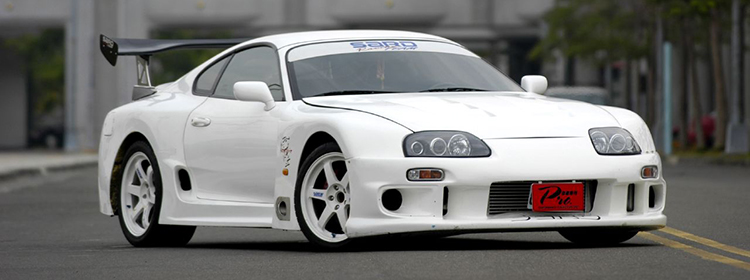
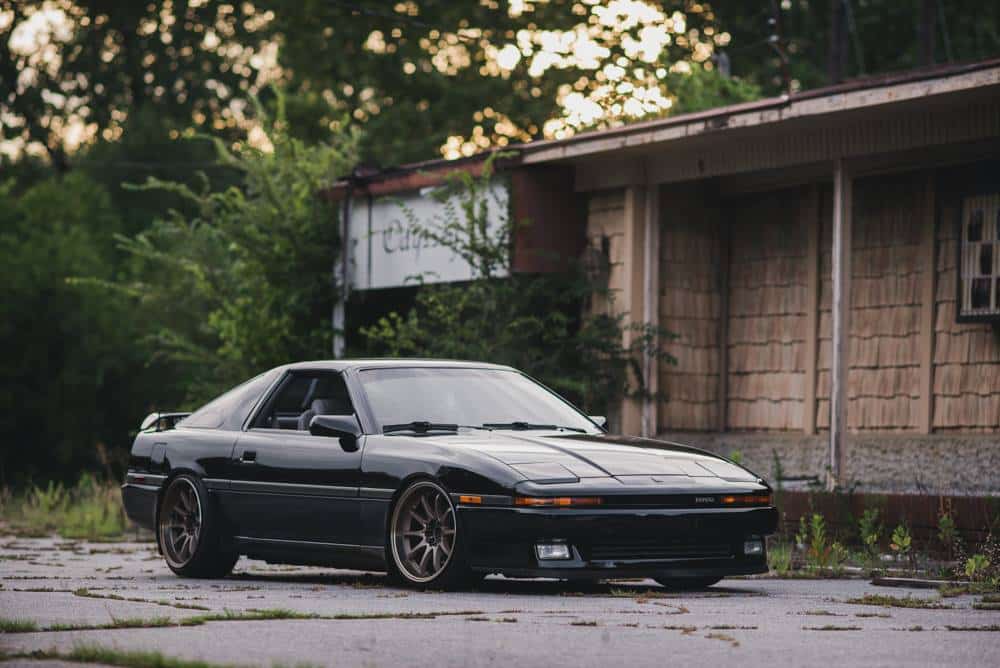
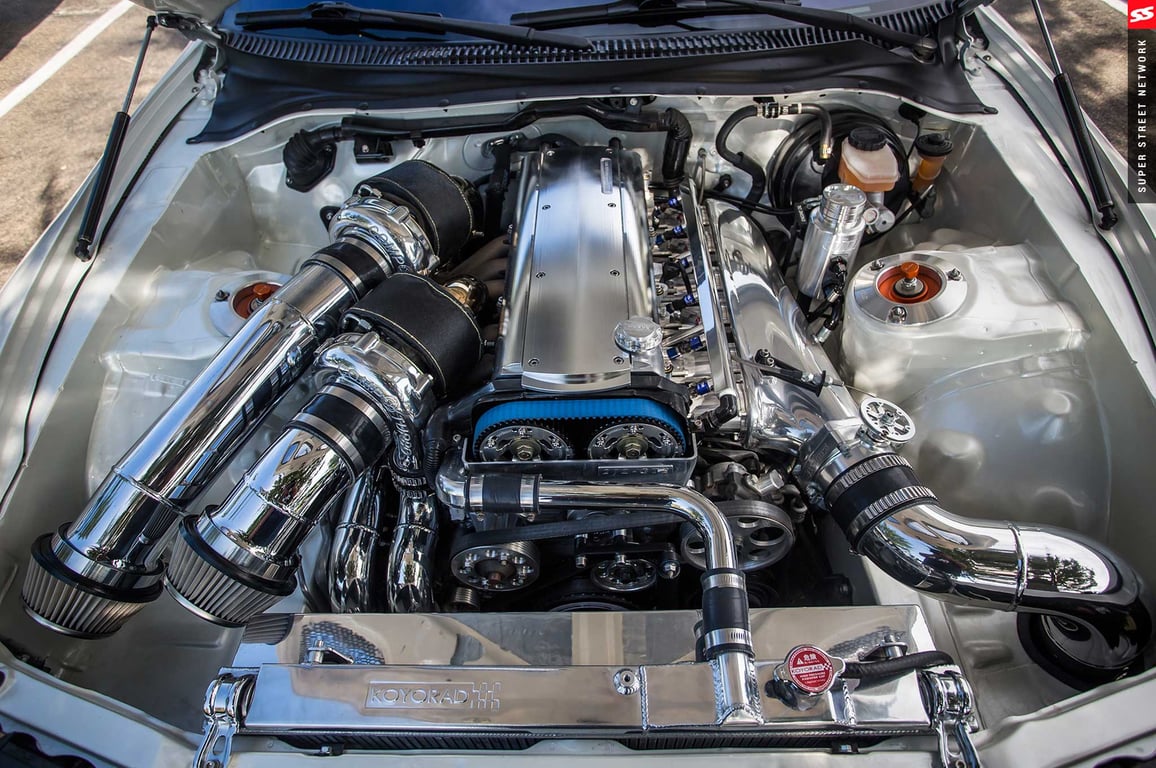
Drivetrain
Engine references
Editorial
The buyer's read
The pragmatic entry in 2026 is an A70 Turbo with documented head gasket work, or an unmodified A80 SZ-R 6-speed if A80 Twin Turbo prices are out of reach. An A70 Turbo with proven head bolt history runs substantially less than an A80 and still delivers a turbocharged Toyota inline-six. The SZ-R gives you the A80 chassis and the V160 6-speed manual without the twin turbo premium; a single turbo conversion remains an option later.
If budget allows and you want the collector-grade car, the target is a stock 1993 to 1998 A80 Twin Turbo with the Getrag V160 6-speed, complete OEM aero, and original paint. Stock 2JZ-GTE cars with documented mileage are what the market prices highest. Cars that look like deals at or under $15,000 typically have non-original turbos, replaced gearboxes, or accident history under a cheap respray.
For modern ownership, the A90 with the 382 hp B58 engine — 2021 and later — is the daily-driver path, and the 2023-plus 6-speed manual is the variant with the clearest long-term appeal. The car to avoid at any price is a rough A70 with undocumented 7M-GTE head gasket history. A head gasket job done incorrectly twice costs more than the car is worth, and correct parts are getting harder to source. The same caution applies to any A80 with a non-original drivetrain, a V160 with synchro wear, or a heavily modified build someone is describing as street-ready.
FAQ
Frequently asked questions
- Which Supra is the best investment?
- A80 Twin Turbo 6MT with stock parts, low miles, and clean history. Rare colors add premiums.
- Do automatics hurt A80 value?
- Yes. 6MT (V160/V161) commands the biggest premium; autos can be great drivers but trade lower.
- Is RHD JDM A80 worth less than LHD USDM?
- Typically yes in the US. LHD USDM is easier to insure/finance and has broader demand.
- What are the biggest A80 buyer checks?
- Verify VIN tags, accident repairs, rust, compression, turbo smoke, and missing OEM parts/mod quality.
- What makes the Getrag V160 special?
- It’s the factory 6-speed for TT A80s; strong and rare. Parts/rebuilds are costly, affecting bids.
- Are heavily modified Supras worth buying?
- Only if built by known shops with receipts and a clean tune. Most mods reduce value vs OEM-correct.
- When is the A80 Supra US-legal to import?
- Mk IV Supra eligibility under the US 25-year exemption advances by manufacturing date, not model year. 1993-built cars became eligible from 2018; cars built in early 2002 become eligible by mid-2027 and are not yet legal to import as of 2026. Buyers should check the manufacturer's data plate for the exact build month.
- Is the A90 Supra reliable and collectible?
- Generally solid with maintenance. Collectability will favor 6MT, low miles, and unmodified examples.
Citations
Sources & references
Sources (30)
- Toyota Supra — encyclopedic overview (fourth generation) — Wikipedia Verified
- Pros and cons of Supra ownership (community thread) — SupraForums Verified
- Mk5 Supra pros/cons community thread — SupraMkV Verified
- Toyota Supra common problems — Breakeryard Verified
- Supra common problems thread — SupraForums Verified
- Accurate Supra production numbers — SupraForums Verified
- US Toyota Supra sales history — CarSalesBase Link dead
- Celica Supra Mk1 history (archived) — celicasupra.com (Wayback Machine) Verified
- A90 Toyota Supra launched in Japan — Paul Tan's Automotive News Link dead
- Toyota Supra Mk4 specifications — Supras NZ Verified
- The 300-horsepower club comparison test — Road & Track Verified
- JDM vs USDM Toyota Supra differences — Import A Vehicle Verified
- Toyota Supra — full model encyclopedic entry — Wikipedia Verified
- GR Supra official model page — Toyota Motor North America Verified
- Toyota Supra long-term coverage — Car and Driver Verified
- Toyota Supra reviews and pricing — Edmunds Verified
- Toyota Supra auction results database — Bring a Trailer Verified
- TOYOTA ANNOUNCES MINOR CHANGES TO SUPRA — Toyota Motor Corporation Official Global Website (Aug 9, 1990 press release)
- 7MGTE - incorrect head torquing from factory? — Driftworks Forum
- Toyota Supra 2.5 Twin Turbo, JZA70, 1JZ-GTE, 08/90>05/93 — Fensport Performance
- 1988 Toyota Supra Turbo A Review: Driving the Ultimate MKIII Supra We Never Got — The Drive
- 49 CFR Part 591 — Importation of Vehicles and Equipment Subject to Federal Safety, Bumper and Theft Prevention Standards — eCFR
- Toyota Supra Buying Guide: Cost, Reliability and the Best Years to Buy — CarGurus
- Importation and Certification FAQs — NHTSA
- A70 SUPRA — GR HERITAGE PARTS, GAZOO Racing
- An A70 Toyota Supra Turbo has sold for almost $89,000 — Japanese Nostalgic Car
- Toyota Supra MK3 Head Gasket Repair — YotaMD
- 7M ARP Head Studs — SR-Fab
- W58 vs R154 transmission. Differences between the R154 vs W58 transmission — CUBE Speed
- Is rust a common problem on MK3's? — Supra Forums
Sources last verified: