Editorial notes
Key Takeaways
- Prices rising with 25-year US import demand
- Rear-engine layout = unique feel and packaging
- 4WD + low range are top value drivers
- Rust & parts sourcing are key ownership risks
- Supercharged trims bring notable premiums
- Condition > mileage; documentation matters
Technical Specifications
Engine Options
| Chassis | Engine | Displacement | Power — JDM | Notes |
|---|---|---|---|---|
| TV1/TV2 (Van, 1999-2012) | EN07 (NA) | 0.658L | estimated | Dias/van tunes vary; exact JIS varies |
| TV1/TV2 (Van, 1999-2012) | EN07 (SC) | 0.658L | estimated | Dias SC; boost/output vary by year |
Transmission Options
| Type | Ratios | Availability | Notes |
|---|---|---|---|
| 4-speed Manual | estimated | Early gens (1960s-1970s) | Exact ratios vary by year/model |
| 5-speed Manual | estimated | 1990-2012 (select trims) | Common on KS/KV/TT/TV |
| 3-speed Automatic | estimated | 1990s-2000s (select) | Kei-duty 3AT; ratios vary |
| ECVT | CVT | 1990s-2000s (select) | Subaru ECVT on some Sambar models |
| CVT | CVT | 2022- (rebadged models) | Donor-platform CVT |
Livability
- Headroom
- 39.0"
- Tall roof helps; seat height fixed, upright
- Rear Seats
- Varies by body
- Van seats small; truck has none; safety basic
- Cargo
- Varies
- Truck bed useful; van boxy but narrow and short
Should You Buy a Subaru Sambar TV1?
Why You'll Love It
- Rear-engine traction & packaging Weight over driven wheels helps grip; flat load floor and compact footprint.
- Tight turning circle Excellent maneuverability for farms, campuses, and city deliveries.
- 4WD and low range availability Many trims offer 4WD; some have extra-low gearing for work use.
- Strong cult following High enthusiast demand supports resale; lots of community knowledge online.
- Versatile body styles Truck, panel van, passenger van, and specialty trims cover many use cases.
- Supercharged variants SC models feel noticeably quicker; top-tier desirability for collectors.
- Simple, serviceable kei mechanics Basic layouts; many jobs are DIY-friendly with patience and correct parts.
- Low operating costs (when sorted) Small tires, small fluids, and light weight keep routine costs modest.
Why You Might Not
- Rust is the #1 value killer Sills, floors, arches, bed seams, and subframes can rot; repairs add up fast.
- Parts sourcing can be slow Some items are Japan-only; shipping delays and cross-referencing required.
- Slow by US standards 660cc performance is limited; highways and hills require realistic expectations.
- Safety is minimal Older kei vehicles lack modern crash structure, airbags, and stability aids.
- Import/registration variability State rules differ; some restrict kei trucks on roads or require inspections.
- Cab comfort is basic Narrow seats, noise, heat, and vibration; AC may be weak or absent.
- 4WD systems vary by trim Not all have low range; verify diff/transfer spec before buying.
- Deferred maintenance common Many are work vehicles; expect belts, seals, cooling, and brakes to need work.
Who Should NOT Buy This
- Anyone needing modern crash safety
- Highway commuters expecting 70+ mph comfort
- People who can't wrench or lack a kei specialist
- Rust-belt buyers without indoor storage
- Drivers wanting strong heat/AC year-round
- Anyone needing easy parts at local stores
- People sensitive to noise, vibration, and heat
- Families needing real rear-seat safety
- Those who tow or haul heavy loads regularly
- Buyers expecting cheap, trouble-free daily use
- States with strict kei/import registration rules
- California residents facing emissions compliance
- Drivers over 6'2" wanting relaxed ergonomics
- Anyone who won't keep tires perfectly matched
- Owners who ignore cooling system maintenance
- People expecting strong acceleration uphill
- Those without a safe place to park (theft/vandal)
- Buyers who can't wait for Japan parts shipping
Common Issues & Solutions
| Issue | Cause | Solution | Est. Cost |
|---|---|---|---|
| Overheating in traffic | Clogged rad, weak fan, air pockets, old hoses | Replace rad/thermostat/cap; bleed; verify fan | $400-1200 |
| Head gasket failure | Prior overheating, warped head, poor coolant care | Gaskets, machine head, new bolts, full coolant svc | $1200-2500 |
| Oil leaks (cam/valve) | Aged seals/gaskets; crankcase pressure from wear | Reseal covers/cam seals; check PCV/breather | $250-900 |
| Rear main seal leak | Hardened seal; crankcase pressure; age | Seal replacement during clutch service | $700-1400 |
| Timing belt overdue | Unknown history; age cracks; skipped intervals | Belt, tensioner, idlers, water pump, seals | $600-1400 |
| Carb hard start/hunt | Vac leaks, worn carb, bad choke pull-off | Vac line refresh; carb rebuild; set float/idle | $300-1200 |
| EFI idle surge (later) | Vac leaks, dirty IAC, weak sensors, bad grounds | Smoke test; clean IAC/TB; repair grounds/sensors | $150-800 |
| Fuel tank rust/debris | Condensation, old fuel, rusted filler neck | Clean/coat or replace tank; new filter/lines | $400-1500 |
| Fuel line cracking | Old rubber and heat; ethanol exposure | Replace all rubber lines with ethanol-safe hose | $150-450 |
| Hot soak no-start | Weak starter, heat soak, poor grounds | Starter rebuild/replace; add heat shield; clean grounds | $200-650 |
| Alternator weak output | Worn brushes/diodes; belt slip | Rebuild/replace alternator; new belt and tension | $250-650 |
| 2nd/3rd gear synchro grind | Worn synchros from hard shifts/old oil | Fluid change may help; otherwise rebuild gearbox | $150-2200 |
| Clutch slip/shudder | Worn disc, oil contamination, warped flywheel | Clutch kit; resurface flywheel; fix oil leak source | $700-1600 |
| CV axle clicking | Split boots, grease loss, joint wear | Replace axle or reboot early; align after | $250-700 |
| Wheel bearing hum | Age, water ingress, overload use | Replace bearing/hub; inspect spindle damage | $300-900 |
| Steering wander/play | Worn tie rods, idler/box wear, alignment off | Replace worn joints; align; check steering box lash | $250-900 |
| Ball joint failure | Torn boots, rust, lack of grease | Replace ball joints; inspect control arm seats | $250-700 |
| Brake line corrosion | Road salt; aged coating; trapped moisture | Replace hard lines; flush fluid; inspect hoses | $400-1400 |
| Seized calipers/sliders | Rusty pins, torn boots, infrequent use | Rebuild/replace calipers; new pads/rotors as needed | $300-900 |
| Spongy brake pedal | Air in system, old fluid, leaking wheel cyl | Fix leaks; full bleed; replace master if bypassing | $150-900 |
| Parking brake weak/seized | Rusty cables, stuck levers, worn shoes | Replace cables; service rear brakes; adjust properly | $200-700 |
| 4WD won't engage | Vac/actuator issues or linkage seized (by model) | Diagnose actuator/solenoids; free linkage; service | $200-1200 |
| Driveline bind in 4WD | Mismatched tires or using 4WD on dry pavement | Match tire sizes; use 4WD only on slip surfaces | $0-600 |
| Rear diff whine/leak | Low oil, worn bearings, pinion seal aging | Reseal; set preload/backlash; rebuild if noisy | $200-1800 |
| Exhaust rot/leaks | Thin steel, salt; broken hangers | Replace sections; fix hangers; check manifold cracks | $250-1200 |
| Cabin water leaks | Windshield seal, door seals, seam rust | Reseal glass; replace seals; repair rust properly | $200-2000 |
| Heater weak at idle | Air pockets, clogged heater core, weak water pump | Proper bleed; backflush core; replace pump if needed | $150-900 |
| AC not cold (if eqp) | Leaks, dead compressor, R12-to-R134a hack | Leak test; replace drier/seals; proper conversion | $500-1800 |
| Electrical gremlins | Corrosion, hacked stereo wiring, bad grounds | Clean grounds; repair harness; replace relays/switches | $100-1200 |
| Blower motor failure | Worn brushes, water intrusion, resistor failure | Replace blower/resistor; fix leak source | $150-600 |
| Wiper/washer issues | Weak motor, bad stalk, clogged jets, dead pump | Service linkage; replace motor/pump; clean jets | $80-450 |
| Door/slider misalign | Worn rollers/hinges; rusted tracks (vans) | Replace rollers; adjust; repair track rust | $150-900 |
| Seatbelt retractor weak | Aged springs, dirt, prior water intrusion | Replace belts; clean mechanisms if salvageable | $150-700 |
| Rust perforation repairs | Salt exposure; poor prior patching | Cut/weld metal; treat cavities; avoid filler-only | $800-6000 |
Differences between JDM & USDM
The Subaru Sambar was never officially sold in the United States. Every Sambar in the US arrived as a used import under the 25-year rule (49 USC 30142), which makes a JDM vehicle federally exempt from FMVSS compliance at 25 years past the build date. State-level rules vary independently of the federal exemption — some states register Sambars as on-road passenger vehicles without restriction, while others treat them as off-road-only farm or utility equipment regardless of federal status. The KS/KV (1990–1999) cars are now fully eligible; the TT/TV (1999–2012) cars are entering eligibility year by year, with 2001 builds becoming federally legal in 2026 and so on. Outside the US, Canada has a 15-year rule (allowing nearly all Sambars), Australia and the UK have separate frameworks, and a number of Sambars also reach the global market via Caribbean and Pacific Island re-exporters. For buyers, the practical implication is that no Sambar will have a manufacturer-issued US-market service history, an OEM-issued LHD layout, or US-spec safety equipment — every car is a JDM-spec RHD with kanji-marked controls and JDM emissions calibration.
Pre-Purchase Inspection Checklist
Critical Priority
High Priority
Medium Priority
Low Priority
Generation History
1st Gen Sambar (1961-1966)
- Early kei truck/van; simple mechanicals
- Rare outside Japan; collector curiosity
- Low power; basic utility focus
2nd Gen Sambar (1966-1973)
- Incremental updates; improved durability
- Still very rare export presence
- Primarily local-market workhorse
3rd Gen Sambar (1973-1982)
- More modern cab/van bodies
- Better ergonomics; broader variants
- Rising nostalgia in Japan
4th Gen Sambar (1982-1990)
- Classic boxy kei styling
- 4WD availability; strong utility appeal
- Older carb models; simplest to DIY
6th Gen Sambar (TT/TV) (1999-2012)
- More refined; better safety/comfort
- Fuel injection; improved drivability
- US eligibility begins 2024+ by year
Post-Subaru Sambar (2012-2017)
- Daihatsu-based; not Subaru-engine layout
- Less collector interest vs earlier gens
- Import legality depends on build year
Market Data
Production Numbers & Rarity
| Generation | Years | Total Built | Notes |
|---|---|---|---|
| 1st Gen (K53/K54) | 1961-1966 | estimated | Exact factory totals not consolidated publicly |
| 2nd Gen (K55/K56) | 1966-1973 | estimated | Records vary; totals not reliably published |
| 3rd Gen (K61/K62) | 1973-1982 | estimated | Pre-digital era; complete totals scarce |
| 4th Gen (550cc) | 1982-1990 | estimated | 550cc kei era; totals not consistently published |
| 6th Gen (TT/TV) | 1999-2012 | estimated | Last Subaru-built Sambar; SC variants rare |
| 7th Gen (Rebadged Suzuki-based) | 2012-2022 | estimated | Subaru-branded units depend on OEM supply |
| 8th Gen (Rebadged Daihatsu-based) | 2022- | estimated | Ongoing production; totals not yet final |
Rarest variant: Sambar Dias SC (MT)
How It Compares
| Feature | TV1 | Suzuki Carry (DB52/DA63) | Honda Acty (HA4/HH4) |
|---|---|---|---|
| Layout/drive | Rear-engine; RWD/4WD | Front-engine; RWD/4WD | Mid-engine; RWD/4WD |
| Engine family | EN07 660cc I4 (many) | F6A/K6A 660cc I3 | E07A 660cc I3 |
| Power (typical) | NA ~40-48 hp; SC higher | NA ~38-48 hp; turbo rare | NA ~38-45 hp |
| Supercharger/turbo | Supercharged trims exist | Turbo on some kei vans | Mostly NA; few sporty trims |
| 4WD availability | Common; verify low range | Common; many farm specs | Common; simple, durable |
| Low range gearing | Some trims w/ extra-low | Many have low range | Some have ultra-low |
| Turning radius | Excellent (class-leading feel) | Very good | Very good |
| Cab space/ergos | Compact; van is roomier | Often slightly roomier cab | Upright; good visibility |
| Ride comfort | Firm; rear-engine feel | Firm; work-truck bias | Often slightly smoother |
| Reliability reputation | Strong if maintained; watch rust | Strong; huge parts ecosystem | Strong; simple drivetrain |
| Parts availability (US) | Good via importers; some delays | Often best-supported | Good; some model-specific items |
| Collector desirability | High; SC/clean 4WD premium | High; rugged image | High; mid-engine novelty |
| Best use case | All-rounder; quirky enthusiast pick | Workhorse; farm/off-road bias | Urban utility; nimble van/truck |
Comparable Alternatives
Suzuki Carry (DB52/DA63)
Workhorse kei; broad parts support; many 4WD/low trims
Daihatsu Hijet (S110)
Common kei rival; practical vans; good 4WD availability
Mitsubishi Minicab (U42)
Often cheaper; simple mechanicals; solid utility value
Nissan Clipper (rebadged)
Often value-priced; similar kei utility; trim variety
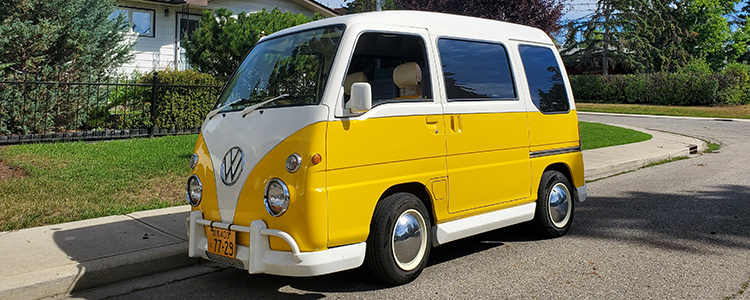
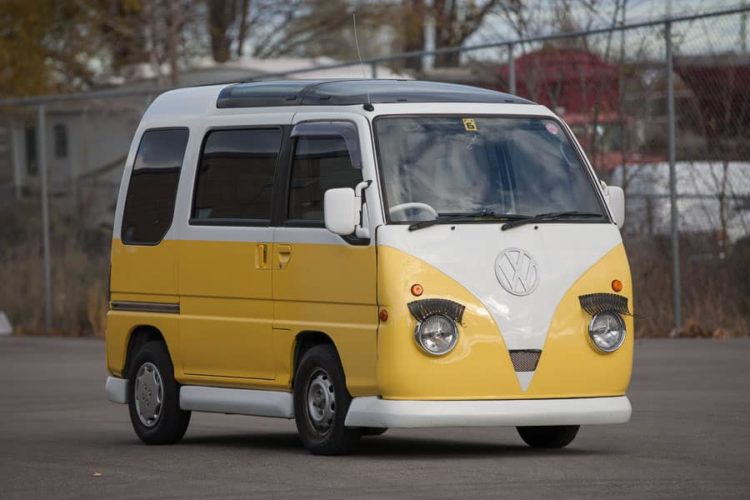
In Pictures
Frequently Asked Questions
- What years of Subaru Sambar are US-legal under the 25-year rule?
- Any Sambar becomes eligible at 25 years old by build date; e.g., 1999 = 2024, 2000 = 2025.
- Which Sambar trims are most desirable and why?
- 4WD trucks/vans lead demand; supercharged and clean, rust-free, documented examples bring the biggest premiums.
- Is the Sambar good for highway driving in the US?
- It can, but expect slow acceleration and high RPM. Best for local roads; verify tires, brakes, cooling, and gearing.
- What are the biggest rust areas to inspect?
- Check rockers/sills, floor pans, rear arches, bed seams, subframes, and around windshield and door bottoms.
- How do I choose between truck and van?
- Truck for utility/hauling; van for weatherproof cargo or camping. Vans often command more if clean and well-optioned.
- Are supercharged Sambars reliable?
- Generally yes if maintained, but inspect charger noise, belts, cooling, and service history. Neglect is the real risk.
- What transmission is best: 5MT or automatic?
- 5MT is preferred for control and resale. Autos are fine for errands but can feel slower; verify smooth shifts and fluid condition.
- What should I budget after purchase for baseline service?
- Plan for fluids, belts, filters, tires, and brake refresh. Add more if it needs cooling or rust remediation.
Sources & References
Sources (8)
- Subaru Sambar — original WordPress reference — JDMBUYSELL Verified
- Subaru Sambar — encyclopedic overview — Wikipedia Verified
- Subaru Sambar — Japanese encyclopedic overview — Wikipedia (Japanese) Verified
- Subaru Sambar — car review — BE FORWARD Verified
- Subaru Sambar — used car listings (Japan) — TradeCarView Verified
- MiniTruckTalk Subaru Sambar forum — MiniTruckTalk Verified
- 1991 Subaru Sambar RHD/RWD show van feature — Dead Clutch Verified
- Subaru Sambar mini-truck parts catalog — Minitruck.ca Verified
Sources last verified: