Chassis Code Explained
| Segment | Meaning | Detail |
|---|---|---|
| K | Platform series | K — KS/KV-series Subaru kei commercial platform |
| V | Body type | V — van body (KS = truck body) |
| 3 | Drive variant | 3 — 4WD van (KV4 = supercharged 4WD) |
KV3 is the 2WD van; KV4 is the supercharged 4WD van of the fifth-generation Sambar (1990–1999). The paired truck codes are KS3 (2WD) and KS4 (supercharged 4WD). The rear-engine layout is shared across all in-house Subaru Sambar generations.
Editorial notes
Key Takeaways
The Sambar ran for six generations from 1961 until 2012, and the gap between the first one and the last one is wider than almost any other kei vehicle. The early Sambars are charming little 2-cylinder oddballs that feel their age. The fifth-generation Sambar from 1990 to 1999 is the one most people actually want, because it's when the EN07 "Clover-4" engine showed up and the supercharged Dias became a thing. The sixth generation is fine but it's the run-out before Subaru handed the nameplate to Daihatsu in 2012.
- Prices rising with 25-year US import demand
- Rear-engine layout = unique feel and packaging
- 4WD + low range are top value drivers
- Rust & parts sourcing are key ownership risks
- Supercharged trims bring notable premiums
- Condition > mileage; documentation matters
Technical Specifications
Sambar engines went from a 356cc air-cooled 2-cylinder making 18 hp in 1961 to a 658cc EN07 four-cylinder making 40 hp naturally aspirated or 54 hp supercharged from 1990 onward. Gearboxes were 3-speed manual at the start, then 4-speed, then 5-speed manual, with an ECVT or 3-speed automatic available on later cars. The rear-engine RWD or 4WD layout is what makes the Sambar different from every other kei truck and van on the road.
Engine Options
| Chassis | Engine | Displacement | Power — JDM | Notes |
|---|---|---|---|---|
| KV3/KV4 (Van, 1990-1999) | EN07 (NA) | 0.658L | estimated | I4; van tuning differs by grade |
| KV3/KV4 (Van, 1990-1999) | EN07 (SC) | 0.658L | estimated | SC Dias; output depends on model year |
Transmission Options
| Type | Ratios | Availability | Notes |
|---|---|---|---|
| 4-speed Manual | estimated | Early gens (1960s-1970s) | Exact ratios vary by year/model |
| 5-speed Manual | estimated | 1990-2012 (select trims) | Common on KS/KV/TT/TV |
| 3-speed Automatic | estimated | 1990s-2000s (select) | Kei-duty 3AT; ratios vary |
| ECVT | CVT | 1990s-2000s (select) | Subaru ECVT on some Sambar models |
| CVT | CVT | 2022- (rebadged models) | Donor-platform CVT |
Livability
- Headroom
- 39.0"
- Tall roof helps; seat height fixed, upright
- Rear Seats
- Varies by body
- Van seats small; truck has none; safety basic
- Cargo
- Varies
- Truck bed useful; van boxy but narrow and short
Should You Buy a Subaru Sambar KV3?
The Sambar is cheap to run, easy to park, and useful in ways a regular truck or van isn't. What you give up is highway speed and parts availability outside Japan. The rear-engine layout is unique among kei trucks and vans, which is the fun part and also the part that makes a bad cooling repair more expensive than it should be.
Why You'll Love It
- Rear-engine traction & packaging Weight over driven wheels helps grip; flat load floor and compact footprint.
- Tight turning circle Excellent maneuverability for farms, campuses, and city deliveries.
- 4WD and low range availability Many trims offer 4WD; some have extra-low gearing for work use.
- Strong cult following High enthusiast demand supports resale; lots of community knowledge online.
- Versatile body styles Truck, panel van, passenger van, and specialty trims cover many use cases.
- Supercharged variants SC models feel noticeably quicker; top-tier desirability for collectors.
- Simple, serviceable kei mechanics Basic layouts; many jobs are DIY-friendly with patience and correct parts.
- Low operating costs (when sorted) Small tires, small fluids, and light weight keep routine costs modest.
Why You Might Not
- Rust is the #1 value killer Sills, floors, arches, bed seams, and subframes can rot; repairs add up fast.
- Parts sourcing can be slow Some items are Japan-only; shipping delays and cross-referencing required.
- Slow by US standards 660cc performance is limited; highways and hills require realistic expectations.
- Safety is minimal Older kei vehicles lack modern crash structure, airbags, and stability aids.
- Import/registration variability State rules differ; some restrict kei trucks on roads or require inspections.
- Cab comfort is basic Narrow seats, noise, heat, and vibration; AC may be weak or absent.
- 4WD systems vary by trim Not all have low range; verify diff/transfer spec before buying.
- Deferred maintenance common Many are work vehicles; expect belts, seals, cooling, and brakes to need work.
Who Should NOT Buy This
- Anyone needing modern crash safety
- Highway commuters expecting 70+ mph comfort
- People who can't wrench or lack a kei specialist
- Rust-belt buyers without indoor storage
- Drivers wanting strong heat/AC year-round
- Anyone needing easy parts at local stores
- People sensitive to noise, vibration, and heat
- Families needing real rear-seat safety
- Those who tow or haul heavy loads regularly
- Buyers expecting cheap, trouble-free daily use
- States with strict kei/import registration rules
- California residents facing emissions compliance
- Drivers over 6'2" wanting relaxed ergonomics
- Anyone who won't keep tires perfectly matched
- Owners who ignore cooling system maintenance
- People expecting strong acceleration uphill
- Those without a safe place to park (theft/vandal)
- Buyers who can't wait for Japan parts shipping
Common Issues & Solutions
Most Sambars are reliable and the cars that aren't reliable usually got there through neglect. Two things come up a lot. The CVT used between 1990 and 1995 had real problems and nobody outside Japan wants to service one anymore. The EN07 "Clover-4" engine used from 1990 through 2012 likes to weep oil from gaskets and seals as it ages. Neither is a deal breaker, but both are worth checking before you buy.
| Issue | Cause | Solution | Est. Cost |
|---|---|---|---|
| Overheating in traffic | Clogged rad, weak fan, air pockets, old hoses | Replace rad/thermostat/cap; bleed; verify fan | $400-1200 |
| Head gasket failure | Prior overheating, warped head, poor coolant care | Gaskets, machine head, new bolts, full coolant svc | $1200-2500 |
| Oil leaks (cam/valve) | Aged seals/gaskets; crankcase pressure from wear | Reseal covers/cam seals; check PCV/breather | $250-900 |
| Rear main seal leak | Hardened seal; crankcase pressure; age | Seal replacement during clutch service | $700-1400 |
| Timing belt overdue | Unknown history; age cracks; skipped intervals | Belt, tensioner, idlers, water pump, seals | $600-1400 |
| Carb hard start/hunt | Vac leaks, worn carb, bad choke pull-off | Vac line refresh; carb rebuild; set float/idle | $300-1200 |
| EFI idle surge (later) | Vac leaks, dirty IAC, weak sensors, bad grounds | Smoke test; clean IAC/TB; repair grounds/sensors | $150-800 |
| Fuel tank rust/debris | Condensation, old fuel, rusted filler neck | Clean/coat or replace tank; new filter/lines | $400-1500 |
| Fuel line cracking | Old rubber and heat; ethanol exposure | Replace all rubber lines with ethanol-safe hose | $150-450 |
| Hot soak no-start | Weak starter, heat soak, poor grounds | Starter rebuild/replace; add heat shield; clean grounds | $200-650 |
| Alternator weak output | Worn brushes/diodes; belt slip | Rebuild/replace alternator; new belt and tension | $250-650 |
| 2nd/3rd gear synchro grind | Worn synchros from hard shifts/old oil | Fluid change may help; otherwise rebuild gearbox | $150-2200 |
| Clutch slip/shudder | Worn disc, oil contamination, warped flywheel | Clutch kit; resurface flywheel; fix oil leak source | $700-1600 |
| CV axle clicking | Split boots, grease loss, joint wear | Replace axle or reboot early; align after | $250-700 |
| Wheel bearing hum | Age, water ingress, overload use | Replace bearing/hub; inspect spindle damage | $300-900 |
| Steering wander/play | Worn tie rods, idler/box wear, alignment off | Replace worn joints; align; check steering box lash | $250-900 |
| Ball joint failure | Torn boots, rust, lack of grease | Replace ball joints; inspect control arm seats | $250-700 |
| Brake line corrosion | Road salt; aged coating; trapped moisture | Replace hard lines; flush fluid; inspect hoses | $400-1400 |
| Seized calipers/sliders | Rusty pins, torn boots, infrequent use | Rebuild/replace calipers; new pads/rotors as needed | $300-900 |
| Spongy brake pedal | Air in system, old fluid, leaking wheel cyl | Fix leaks; full bleed; replace master if bypassing | $150-900 |
| Parking brake weak/seized | Rusty cables, stuck levers, worn shoes | Replace cables; service rear brakes; adjust properly | $200-700 |
| 4WD won't engage | Vac/actuator issues or linkage seized (by model) | Diagnose actuator/solenoids; free linkage; service | $200-1200 |
| Driveline bind in 4WD | Mismatched tires or using 4WD on dry pavement | Match tire sizes; use 4WD only on slip surfaces | $0-600 |
| Rear diff whine/leak | Low oil, worn bearings, pinion seal aging | Reseal; set preload/backlash; rebuild if noisy | $200-1800 |
| Exhaust rot/leaks | Thin steel, salt; broken hangers | Replace sections; fix hangers; check manifold cracks | $250-1200 |
| Cabin water leaks | Windshield seal, door seals, seam rust | Reseal glass; replace seals; repair rust properly | $200-2000 |
| Heater weak at idle | Air pockets, clogged heater core, weak water pump | Proper bleed; backflush core; replace pump if needed | $150-900 |
| AC not cold (if eqp) | Leaks, dead compressor, R12-to-R134a hack | Leak test; replace drier/seals; proper conversion | $500-1800 |
| Electrical gremlins | Corrosion, hacked stereo wiring, bad grounds | Clean grounds; repair harness; replace relays/switches | $100-1200 |
| Blower motor failure | Worn brushes, water intrusion, resistor failure | Replace blower/resistor; fix leak source | $150-600 |
| Wiper/washer issues | Weak motor, bad stalk, clogged jets, dead pump | Service linkage; replace motor/pump; clean jets | $80-450 |
| Door/slider misalign | Worn rollers/hinges; rusted tracks (vans) | Replace rollers; adjust; repair track rust | $150-900 |
| Seatbelt retractor weak | Aged springs, dirt, prior water intrusion | Replace belts; clean mechanisms if salvageable | $150-700 |
| Rust perforation repairs | Salt exposure; poor prior patching | Cut/weld metal; treat cavities; avoid filler-only | $800-6000 |
Differences between JDM & USDM
The Subaru Sambar was never officially sold in the United States. Every Sambar in the US arrived as a used import under the 25-year rule (49 USC 30142), which makes a JDM vehicle federally exempt from FMVSS compliance at 25 years past the build date. State-level rules vary independently of the federal exemption — some states register Sambars as on-road passenger vehicles without restriction, while others treat them as off-road-only farm or utility equipment regardless of federal status. The KS/KV (1990–1999) cars are now fully eligible; the TT/TV (1999–2012) cars are entering eligibility year by year, with 2001 builds becoming federally legal in 2026 and so on. Outside the US, Canada has a 15-year rule (allowing nearly all Sambars), Australia and the UK have separate frameworks, and a number of Sambars also reach the global market via Caribbean and Pacific Island re-exporters. For buyers, the practical implication is that no Sambar will have a manufacturer-issued US-market service history, an OEM-issued LHD layout, or US-spec safety equipment — every car is a JDM-spec RHD with kanji-marked controls and JDM emissions calibration.
Pre-Purchase Inspection Checklist
Walk this list with the seller, not in front of them. Pay extra attention to the rear-engine cooling system, since the layout makes overheating expensive when it goes wrong. Rust on the rocker seams, floor pans, and rear arches is the other thing that ends Sambars. The Critical items mean walking away without paperwork. The High items can usually be priced into the deal.
Critical Priority
High Priority
Medium Priority
Low Priority
Generation History
1st Gen Sambar (1961-1966)
- Early kei truck/van; simple mechanicals
- Rare outside Japan; collector curiosity
- Low power; basic utility focus
2nd Gen Sambar (1966-1973)
- Incremental updates; improved durability
- Still very rare export presence
- Primarily local-market workhorse
3rd Gen Sambar (1973-1982)
- More modern cab/van bodies
- Better ergonomics; broader variants
- Rising nostalgia in Japan
4th Gen Sambar (1982-1990)
- Classic boxy kei styling
- 4WD availability; strong utility appeal
- Older carb models; simplest to DIY
5th Gen Sambar (KS/KV) (1990-1999)
- EN07 660cc; 5MT/3AT; 4WD common
- Supercharged trims; fun, high-demand
- US-legal now; biggest import wave
Post-Subaru Sambar (2012-2017)
- Daihatsu-based; not Subaru-engine layout
- Less collector interest vs earlier gens
- Import legality depends on build year
Market Data
Sambar trims split between the work-spec trucks and the passenger Dias vans. The Dias is the family-oriented van with better seats, more sound deadening, and on the supercharged versions a real bump in power. KV3 is 2WD, KV4 is 4WD. If you want the cult Sambar, you want a 4WD Dias Supercharger with the 5-speed manual.
Production Numbers & Rarity
| Generation | Years | Total Built | Notes |
|---|---|---|---|
| 1st Gen (K53/K54) | 1961-1966 | estimated | Exact factory totals not consolidated publicly |
| 2nd Gen (K55/K56) | 1966-1973 | estimated | Records vary; totals not reliably published |
| 3rd Gen (K61/K62) | 1973-1982 | estimated | Pre-digital era; complete totals scarce |
| 4th Gen (550cc) | 1982-1990 | estimated | 550cc kei era; totals not consistently published |
| 5th Gen (KS/KV) | 1990-1999 | estimated | Includes truck+van; SC share relatively low |
| 7th Gen (Rebadged Suzuki-based) | 2012-2022 | estimated | Subaru-branded units depend on OEM supply |
| 8th Gen (Rebadged Daihatsu-based) | 2022- | estimated | Ongoing production; totals not yet final |
Rarest variant: Sambar Dias SC (MT)
How It Compares
Among the kei trucks and vans, the Sambar is the only one with a rear-engine layout for most of its life, which is why owners stay loyal to it. The Honda Acty has the same idea. The Hijet, Carry, and Minicab are all front-engine and easier to work on, but they don't drive the same. The table below leans toward the Sambar's strengths because that's where it actually wins, on layout character and 4WD usability.
| Feature | KV3 | Suzuki Carry (DB52/DA63) | Honda Acty (HA4/HH4) |
|---|---|---|---|
| Layout/drive | Rear-engine; RWD/4WD | Front-engine; RWD/4WD | Mid-engine; RWD/4WD |
| Engine family | EN07 660cc I4 (many) | F6A/K6A 660cc I3 | E07A 660cc I3 |
| Power (typical) | NA ~40-48 hp; SC higher | NA ~38-48 hp; turbo rare | NA ~38-45 hp |
| Supercharger/turbo | Supercharged trims exist | Turbo on some kei vans | Mostly NA; few sporty trims |
| 4WD availability | Common; verify low range | Common; many farm specs | Common; simple, durable |
| Low range gearing | Some trims w/ extra-low | Many have low range | Some have ultra-low |
| Turning radius | Excellent (class-leading feel) | Very good | Very good |
| Cab space/ergos | Compact; van is roomier | Often slightly roomier cab | Upright; good visibility |
| Ride comfort | Firm; rear-engine feel | Firm; work-truck bias | Often slightly smoother |
| Reliability reputation | Strong if maintained; watch rust | Strong; huge parts ecosystem | Strong; simple drivetrain |
| Parts availability (US) | Good via importers; some delays | Often best-supported | Good; some model-specific items |
| Collector desirability | High; SC/clean 4WD premium | High; rugged image | High; mid-engine novelty |
| Best use case | All-rounder; quirky enthusiast pick | Workhorse; farm/off-road bias | Urban utility; nimble van/truck |
Comparable Alternatives
If the Sambar isn't the right kei truck or van for you, the obvious alternatives are the Honda Acty, the Suzuki Carry, the Daihatsu Hijet, the Mazda Scrum, or the Mitsubishi Minicab. The Acty is the closest match because it's also rear-engine. The others are front or mid-engine, which makes them simpler but doesn't give you the same Sambar feel.
Suzuki Carry (DB52/DA63)
Workhorse kei; broad parts support; many 4WD/low trims
Daihatsu Hijet (S110)
Common kei rival; practical vans; good 4WD availability
Mitsubishi Minicab (U42)
Often cheaper; simple mechanicals; solid utility value
Nissan Clipper (rebadged)
Often value-priced; similar kei utility; trim variety
In Pictures
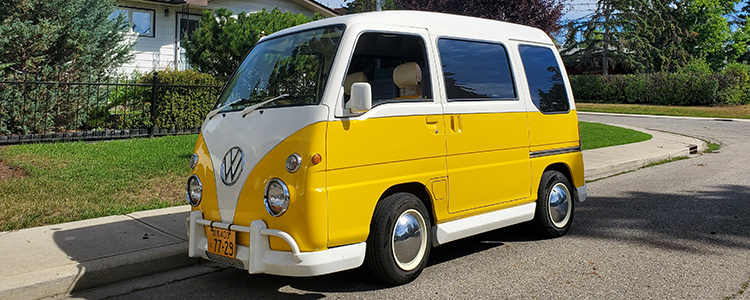
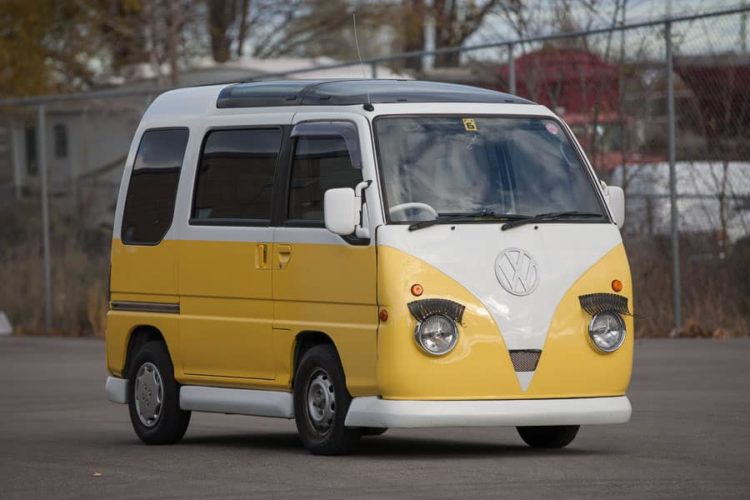
Frequently Asked Questions
- What years of Subaru Sambar are US-legal under the 25-year rule?
- Any Sambar becomes eligible at 25 years old by build date; e.g., 1999 = 2024, 2000 = 2025.
- Which Sambar trims are most desirable and why?
- 4WD trucks/vans lead demand; supercharged and clean, rust-free, documented examples bring the biggest premiums.
- Is the Sambar good for highway driving in the US?
- It can, but expect slow acceleration and high RPM. Best for local roads; verify tires, brakes, cooling, and gearing.
- What are the biggest rust areas to inspect?
- Check rockers/sills, floor pans, rear arches, bed seams, subframes, and around windshield and door bottoms.
- How do I choose between truck and van?
- Truck for utility/hauling; van for weatherproof cargo or camping. Vans often command more if clean and well-optioned.
- Are supercharged Sambars reliable?
- Generally yes if maintained, but inspect charger noise, belts, cooling, and service history. Neglect is the real risk.
- What transmission is best: 5MT or automatic?
- 5MT is preferred for control and resale. Autos are fine for errands but can feel slower; verify smooth shifts and fluid condition.
- What should I budget after purchase for baseline service?
- Plan for fluids, belts, filters, tires, and brake refresh. Add more if it needs cooling or rust remediation.
Sources & References
Sources (8)
- Subaru Sambar — original WordPress reference — JDMBUYSELL Verified
- Subaru Sambar — encyclopedic overview — Wikipedia Verified
- Subaru Sambar — Japanese encyclopedic overview — Wikipedia (Japanese) Verified
- Subaru Sambar — car review — BE FORWARD Verified
- Subaru Sambar — used car listings (Japan) — TradeCarView Verified
- MiniTruckTalk Subaru Sambar forum — MiniTruckTalk Verified
- 1991 Subaru Sambar RHD/RWD show van feature — Dead Clutch Verified
- Subaru Sambar mini-truck parts catalog — Minitruck.ca Verified
Sources last verified: