Chassis Code Explained
| Segment | Meaning | Detail |
|---|---|---|
| S | Model series | S — Subaru Forester series designation |
| G | Generation | G — second-generation Forester (SG5/SG9; 2002–2008) |
The SG5 used the EJ205 turbocharged engine in XT/STI specification; the SG9 used the EJ255 with more power for the STI variant.
Technical Specifications
Engine Options
| Chassis | Engine | Displacement | Power — JDM | Notes |
|---|---|---|---|---|
| SG | EJ251 | 2.5L | estimated | SOHC NA; early SG 2.5X |
| SG | EJ253 | 2.5L | estimated | SOHC NA; i-AVLS on later years |
| SG | EJ255 | 2.5L | estimated | Turbo; XT and JDM STi variants |
Livability
- Headroom
- 40.2"
- Upright seating; pano roof trims ~0.5-1.0 in
- Rear Seats
- Good for adults
- Legroom solid; 3-across tight; flat floor helps
- Cargo
- 31-35 cu ft
- Boxy, usable; wheel wells intrude; seats fold flat
Variants & Trims
| Generation | Trim | Engine | Key Features |
|---|---|---|---|
| SG (2nd gen, 2002-2008) | 2.5X | EJ251/EJ253 | AWD, 5MT/4AT, raised ride height |
| SG (2nd gen, 2002-2008) | 2.5XS | EJ253 | AWD, 5MT/4AT, sport suspension, alloys |
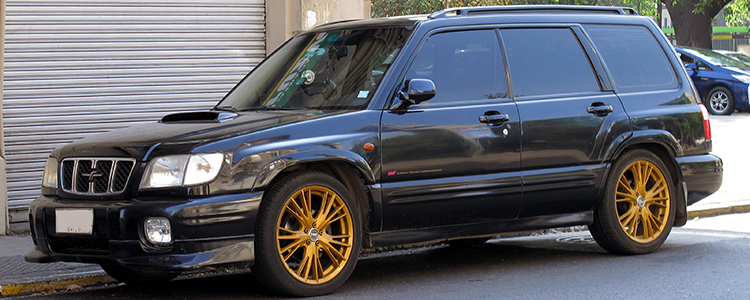
| SG (2nd gen, 2002-2008) | XT | EJ255 | Turbo, AWD, 5MT/4AT, hood scoop |
| SG (2nd gen, 2002-2008) | XT Limited | EJ255 | Turbo, AWD, leather, premium audio |
| SG (2nd gen, 2002-2008) | Cross Sports (JDM) | EJ20/EJ25 (market-dependent) | Aero kit, AWD, sport interior |
| SG (2nd gen, 2002-2008) | STi (JDM) | EJ255 | STi 6MT, Brembo, DCCD, sport chassis |
Should You Buy a Subaru Forester SG?
Why You'll Love It
- Excellent real-world AWD Symmetrical AWD + ground clearance make it a snow-state favorite; strong traction with good tires.
- Strong safety reputation High crash-test performance; EyeSight-equipped cars command premiums and sell faster.
- Practical packaging Boxy cargo area, low load floor, good visibility; easy daily + outdoor use.
- Resale value and liquidity High demand in used market; clean titles and service records bring top-of-range money.
- Simple NA trims are durable Well-maintained 2.5i models can be long-lived; fewer turbo heat/boost-related issues.
- Enthusiast appeal (XT) XT turbos offer strong torque; desirable to enthusiasts, especially unmodified examples.
Generation History
SG (Gen 2) (2002-2008)
- More rigid chassis; bigger cabin
- XT turbo introduced; strong tuning scene
- NA EJ25 still head gasket-prone
- Rust and suspension wear common now
SK (Gen 5) (2019-2024)
- Subaru Global Platform; quieter, safer
- 2.5L + CVT; strong ADAS availability
- Thermal management improved; fewer leaks
- High used prices; trims drive spread
SL (Gen 6) (2025-present)
- New design; tech-forward interior
- Market still forming; early depreciation
- Trim/option mix affects resale
- Warranty history matters most early on
Market Data
Production Numbers & Rarity
| Generation | Years | Total Built | Notes |
|---|---|---|---|
| SG (2nd gen) | 2002-2008 | estimated | Global total not consolidated in this dataset |
| SK (5th gen) | 2018-2024 | estimated | Global total not consolidated in this dataset |
| SL (6th gen) | 2025- | estimated | Ongoing production; totals not final |
How It Compares
| Feature | SG | Honda CR-V (Gen 5) | Toyota RAV4 (XA50) |
|---|---|---|---|
| AWD system | Full-time Symmetrical AWD | On-demand AWD | On-demand AWD |
| Ground clearance | Up to ~8.7 in (varies) | ~8.2 in | ~8.4 in |
| Base engine | 2.5L flat-4 (NA) | 1.5T I4 (Gen 5) | 2.5L I4 (NA/Hybrid) |
| Performance trim | XT turbo (older gens) | 2.0T option (some yrs) | Turbo option (some yrs) |
| Transmission | CVT (most 2014+) | CVT/AT (by year) | 8AT/Hybrid eCVT |
| Fuel economy focus | Good; not class best | Very strong hybrid mpg | Strong hybrid mpg |
| Off-pavement aids | X-Mode (most trims) | Trail modes (trim-based) | Terrain modes (trim-based) |
| Cabin space | Boxy, efficient | Roomy rear seat | Competitive cargo |
| Reliability profile | Good; watch HG/CVT | Strong; turbo+CVT care | Strong; hybrid complexity |
| Winter resale demand | Very high in snow states | High | High |
| Enthusiast market | XT + older 5MT niche | Limited | Moderate (turbo trims) |
| Towing capability | Modest; trim/year varies | Similar; varies by year | Often higher in some trims |
Comparable Alternatives
Toyota RAV4 (XA50)
Hybrid mpg, strong reliability, high resale; AWD available
Honda CR-V (Gen 5)
Roomy, efficient; on-demand AWD; strong parts support
Mazda CX-5 (KF)
Best on-road feel; optional turbo; upscale interior
VW Tiguan (Mk2)
Euro driving feel, 3-row option; AWD available; watch upkeep
Subaru Outback (BS/BT)
More cargo + comfort; similar AWD ethos; often pricier
In Pictures
The Buyer's Read
Start by deciding which Forester fits your situation. A clean SG XT with documented service history is the practical pick for most buyers — it carries the EJ255 turbo, parts are sourced domestically without import friction, and Bring a Trailer sold results give a reliable baseline on where clean examples are currently landing. Skip anything priced under $5,000 unless you're buying it for parts; the head gasket job alone on a neglected 2.5L EJ25 will cost more than the car did.
For import buyers, the SF5 STi became eligible under the 25-year rule in 2023. The EJ20K turbo, the 5-speed manual, Brembo brakes, and the hardware shared with the Impreza WRX STi of the same era make it a legitimate performance car in a wagon shell. The catch is supply: most clean SF5 STi cars remain in Japan, and the landed cost typically exceeds what a US-market SG XT commands.
The 2029 opening of the SG Forester STi is the longer-horizon play. EJ255 turbo, 6-speed manual with DCCD, Brembo brakes, an aluminum hood with a functional scoop, and WRX STi bucket seats — it is the rarest factory Forester variant ever built, and prices in Japan reflect that. On any turbo Forester regardless of generation, ask for paperwork covering the tune and the fuel used. A modified EJ20T or EJ255 run on a bad map or incorrect octane can carry ringland or knock damage that does not show up on a cold-start inspection or a short test drive.
Sources & References
Sources (7)
- Subaru Forester — encyclopedic overview — Wikipedia Verified
- Subaru Forester — used-car review and common problems — Samarins (used-car research site) Verified
- Subaru EJ engine — family history, EJ20T, EJ20K, EJ25, EJ255 — Wikipedia Verified
- Bring a Trailer — Subaru Forester sold results — Bring a Trailer Verified
- IIHS crash test ratings — Subaru Forester — Insurance Institute for Highway Safety Verified
- Subaru owner resources and maintenance schedules — Subaru of America Verified
- Subaru Forester — model overview and specs reference — CarBuzz Verified
Sources last verified: