Chassis Code Explained
| Segment | Meaning | Detail |
|---|---|---|
| J | Engine family | JZ-series inline-6 |
| Z | Turbo/performance | Turbocharged variant |
| X | Body platform | X-body (Mark II / Chaser / Cresta) |
| 100 | Generation code | 100-series X-platform (1996–2001) |
The JZX100 code is shared across Toyota's X-platform sedans of the 100-series: Chaser, Mark II (JZX100), and Cresta (JZX100). The distinction is badge and interior trim.
Key Takeaways
- JZX100 Tourer V is the value leader, manuals command big premiums
- Rust + accident history drive price more than mods or mileage
- R154 manual is prized; auto cars are cheaper but still desirable
- 1JZ-GTE is robust; budget for cooling, bushings, and wiring age
- US 25-year rule is expanding demand for 1996–2001 builds
- OEM + tasteful period mods sell best; extreme builds narrow buyers
Technical Specifications
Engine Options
| Chassis | Engine | Displacement | Power — JDM | Notes |
|---|---|---|---|---|
| X100 | 1G-FE | 2.0L | 140 PS @ 5600rpm | Common JDM rating; varies by year |
| X100 | 1JZ-GE | 2.5L | 200 PS @ 6000rpm | VVT-i on later models; rating varies |
| X100 | 2JZ-GE | 3.0L | 220 PS @ 5800rpm | NA 3.0L I6; JDM rating |
| X100 | 1JZ-GTE (VVT-i) | 2.5L | 280 PS @ 6200rpm | Single turbo VVT-i (late); JDM 280PS |
| X90/X100 | 2L-TE | 2.4L | estimated ~97-105 PS @ ~3800rpm | Estimated; turbo diesel varies by market |
Transmission Options
| Type | Ratios | Availability | Notes |
|---|---|---|---|
| 5-speed Manual | estimated (varies by engine/trim) | Tourer V (opt), some Tourer S | Exact ratios depend on gearbox code |
| 4-speed Automatic | estimated (varies by A/T family) | Most trims (common) | A340-series common; ratios vary |
| 5-speed Automatic | estimated (varies by year/engine) | Late X100 NA trims (market-dependent) | Some late models used 5AT; varies |
Livability
- Headroom
- 37.5"
- OK for ~6'2"; sunroof cars feel tighter
- Rear Seats
- Usable for adults
- Decent legroom; center seat is narrow/hard
- Cargo
- 15.0 cu ft
- Big sedan trunk; rear seats often don't fold
US Import Eligibility
Early builds of this chassis became eligible for US import under the 25-year rule in 2021; later production years become eligible through 2026. Calculate import costs →
Variants & Trims
| Generation | Trim | Engine | Key Features |
|---|---|---|---|
| X100 (6th gen, 1996-2001) | XL | 1G-FE/2L-TE (market-dependent) | Entry trim, comfort focus, RWD |
| X100 (6th gen, 1996-2001) | GL | 1G-FE/2L-TE (market-dependent) | Mid trim, added equipment, RWD |
| X100 (6th gen, 1996-2001) | Avante | 1JZ-GE/1G-FE (market-dependent) | Luxury trim, higher equipment, RWD |
| X100 (6th gen, 1996-2001) | Avante G | 1JZ-GE/2JZ-GE (market-dependent) | Top luxury, premium interior, RWD |
| X100 (6th gen, 1996-2001) | Tourer S | 1JZ-GE | Sport trim, firmer suspension, RWD |
| X100 (6th gen, 1996-2001) | Tourer V | 1JZ-GTE (VVT-i late) | Turbo I6, 5MT opt, LSD opt, RWD |
Should You Buy a Toyota Chaser X100?
Why You'll Love It
- Iconic 1JZ/2JZ powertrain options 1JZ-GTE turbo models are durable, tunable, and well-supported with parts and knowledge.
- RWD balance with sedan practicality Four doors, usable rear seats, and trunk while keeping classic FR handling and drift capability.
- Strong aftermarket + swap ecosystem Coilovers, diffs, ECUs, and body parts are widely available; cross-compatibility with Mark II/Cresta.
- High ceiling for performance builds Stock turbos respond well to bolt-ons; built engines support big power with proven recipes.
- Enthusiast liquidity for top specs Tourer V, factory manual, low-km, and clean-history cars are consistently easiest to resell.
- Period-correct JDM appeal 90s interiors, aero kits, and wheels have strong nostalgia value; great show-and-street presence.
Why You Might Not
- Rust and prior drift damage risk Sills, arches, floor, and rear subframe areas can rust; many cars were drifted or repaired poorly.
- Manual premium and scarcity Factory manuals are expensive; swaps vary in quality and can hurt value if not documented well.
- Aging wiring, sensors, and plastics Coil packs, igniters, brittle connectors, and interior trim age; troubleshooting can be time-consuming.
- Cooling and oiling neglect issues Old radiators, tired fans, and sludge from poor maintenance can cause overheating or turbo wear.
- Insurance/registration friction Import paperwork, emissions rules, and insurer unfamiliarity can add cost depending on your state.
- Clean OEM parts getting pricier Original aero, interior pieces, and uncracked dash/trim are harder to source and cost more.
Who Should NOT Buy This
- Anyone needing easy parts at local US stores
- Buyers without a JDM specialist nearby
- People who can't handle 25+ year old wiring
- Anyone expecting modern crash safety
- Drivers needing strong A/C in extreme heat
- People who hate chasing oil leaks
- Those who won't budget $2k+ baseline service
- Anyone wanting zero-mod, untouched examples
- Buyers in strict emissions states/counties
- People who need OBD2 plug-in inspections
- Anyone who can't verify tune on a modified car
- First-time turbo owners with no tools
- People who require perfect paint and trim
- Those who won't do rust inspection on a lift
- Anyone who needs great fuel economy
- Drivers who sit very tall with sunroof models
- People who need rear seat child-seat simplicity
- Anyone who can't tolerate occasional downtime
- Buyers expecting quiet, modern NVH levels
- Anyone planning big power on stock auto trans
- Drift/track buyers without rebuild budget
- People who won't pay for quality tires/alignment
- Anyone allergic to import insurance hassles
- Buyers who can't read/translate Japanese docs
- People who need dealer-level diagnostic support
Common Issues & Solutions
| Issue | Cause | Solution | Est. Cost |
|---|---|---|---|
| Timing belt overdue | Unknown history; skipped interval on imports | Full TB kit: belt, tensioner, idlers, pump | $900-1800 |
| Radiator end tank crack | Aged plastic tanks; heat cycles and pressure | Replace radiator + cap; flush and bleed properly | $350-900 |
| Overheating in traffic | Weak fan clutch, clogged rad, missing shroud | Fan clutch/shroud/rad service; verify thermostat | $300-1200 |
| Heater core leak | Age corrosion; neglected coolant changes | Replace heater core; renew hoses; flush system | $700-1600 |
| Cam/crank seal oil leak | Hardened seals; crankcase pressure from blowby | Replace seals; check PCV; reseal front covers | $500-1400 |
| Rear main seal leak | Age; crankcase pressure; worn seal lip | Replace rear main; inspect crank surface; new clutch | $900-2200 |
| Valve cover gasket leak | Gasket shrink; overtightened covers warp | New gaskets + grommets; clean PCV system | $200-600 |
| Turbo oil smoke | Worn turbo seals; restricted oil drain; high blowby | Rebuild/replace turbo; fix drain; check PCV | $800-2500 |
| Boost creep/overboost | Free-flow exhaust; weak wastegate control | Port wastegate or add EBC; verify boost cut | $250-1200 |
| Misfire under boost | Weak coils, wrong plug heat range/gap, lean fuel | Coils/plugs; verify fuel pressure and AFRs | $250-1200 |
| ECU capacitor leak | Aging electrolytic caps on 90s Toyota ECUs | ECU recap/repair; clean board; verify sensors | $250-900 |
| Hacked wiring gremlins | Bad alarm/immobilizer/audio installs | Remove hacks; re-loom; restore grounds/fuses | $300-2000 |
| Auto trans slipping | Heat + age; higher boost/power on stock A/T | Service if mild; rebuild with upgrades if slipping | $300-4500 |
| Manual 2nd gear grind | Worn synchros from hard shifts/old fluid | Fluid first; rebuild trans if persistent | $120-2500 |
| Clutch slip | Worn disc; oil contamination from rear main | New clutch kit; fix oil leak; resurface flywheel | $700-2000 |
| Driveshaft vibration | Worn center bearing; bad U-joints; lowered angles | Replace bearing/U-joints; correct pinion angle | $300-1200 |
| Diff clunk/whine | Worn mounts/bushings; low fluid; abused LSD | Bushings/mounts; reseal; rebuild diff if noisy | $250-2500 |
| Steering rack leak | Seal wear; torn boots trap fluid and dirt | Rebuild/replace rack; flush PS; new hoses | $600-1800 |
| PS pump whine | Aerated fluid from leaks; worn pump vanes | Fix leaks; flush; replace pump if still noisy | $250-900 |
| Front ball joint wear | Age; lowered cars stress joints | Replace ball joints/control arms; align after | $300-1200 |
| Rear arm bushing play | Aged rubber; drift use; seized eccentrics | Replace arms/bushings; free eccentrics; align | $500-2000 |
| Inner tire wear | Lowered without correction; worn arms/bushings | Correct arms + alignment; set sane camber/toe | $400-1800 |
| Brake caliper sticking | Seized slide pins; old fluid; torn dust boots | Rebuild calipers; new pins/boots; flush fluid | $250-900 |
| Warped rotors/shudder | Cheap rotors/pads; overheated from stuck caliper | Quality rotors/pads; fix caliper; bed properly | $300-900 |
| A/C not cold | Low refrigerant; leaking condenser/evap; old compressor | Leak test; replace failed parts; evacuate/recharge | $250-1800 |
| Window regulator failure | Aged grease/cables; worn motor brushes | Replace regulator/motor; clean tracks | $150-500 |
| Cluster/speedo issues | Capacitors/solder cracks; swapped clusters | Repair cluster; verify speed sensor wiring | $150-700 |
| Fuel pump dying | Age; running low tank; ethanol exposure | Replace pump + sock; check wiring and relay | $200-700 |
| Injector O-ring leaks | Old seals; disturbed during mods | Replace upper/lower seals; lube and seat correctly | $150-450 |
| Knock/rod bearing wear | Low oil, detonation, bad tune, track abuse | Stop driving; inspect; rebuild/replace long block | $2500-9000 |
| Head gasket failure | Overheating; detonation; high boost on stock setup | Machine head; MLS gasket/studs; fix cooling/tune | $1800-6000 |
| Crank pulley separation | Aged harmonic balancer rubber delaminates | Replace crank pulley; inspect keyway and bolt torque | $250-900 |
| Rust in rockers/floors | Japan coastal/snow use; clogged drains; poor repairs | Cut/weld properly; rustproof; avoid filler fixes | $800-6000 |
| Water leaks to cabin | Sunroof drains, cowl seams, door vapor barriers | Clear drains; reseal cowl; replace vapor barriers | $150-900 |
| Poor idle/hunting | Vac leaks, dirty IAC, bad MAF, wrong BOV setup | Smoke test; clean IAC/MAF; recirc BOV if needed | $100-700 |
| Fuel cut/limp on boost | Boost spikes; stock MAP/ECU limits; bad boost control | Fix boost control; proper tune; verify sensors | $200-1500 |
Pre-Purchase Inspection Checklist
Critical Priority
High Priority
Medium Priority
Low Priority
Generation History
X30/X40 Chaser (1977-1980)
- Early Celica-based sedan/coupe roots
- Carb I4/I6 era; collector niche today
- Very limited export awareness
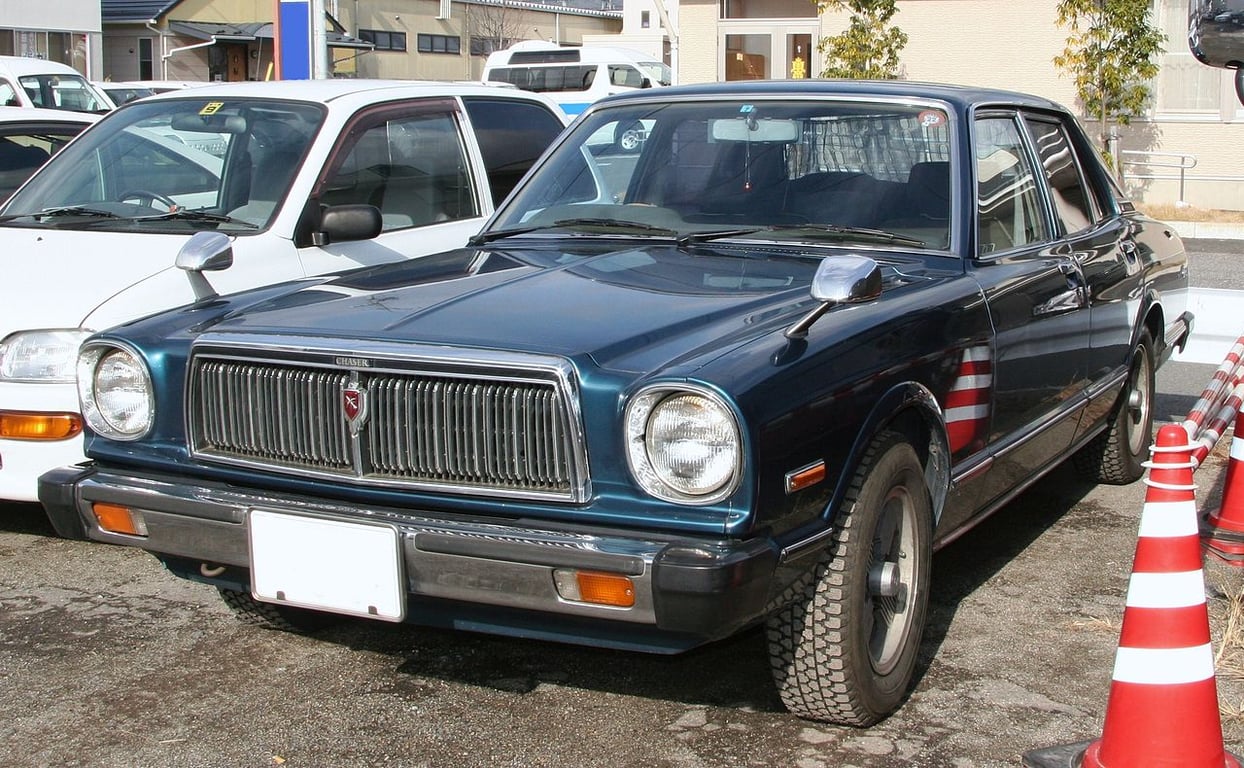
X60 Chaser (1980-1984)
- Boxy 80s styling; comfort focus
- I6 options; simple mechanicals
- Rare surviving clean examples
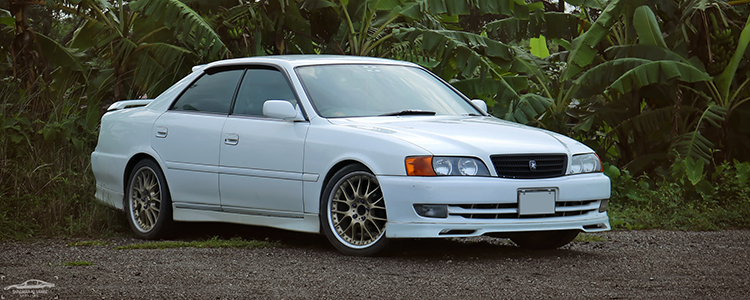
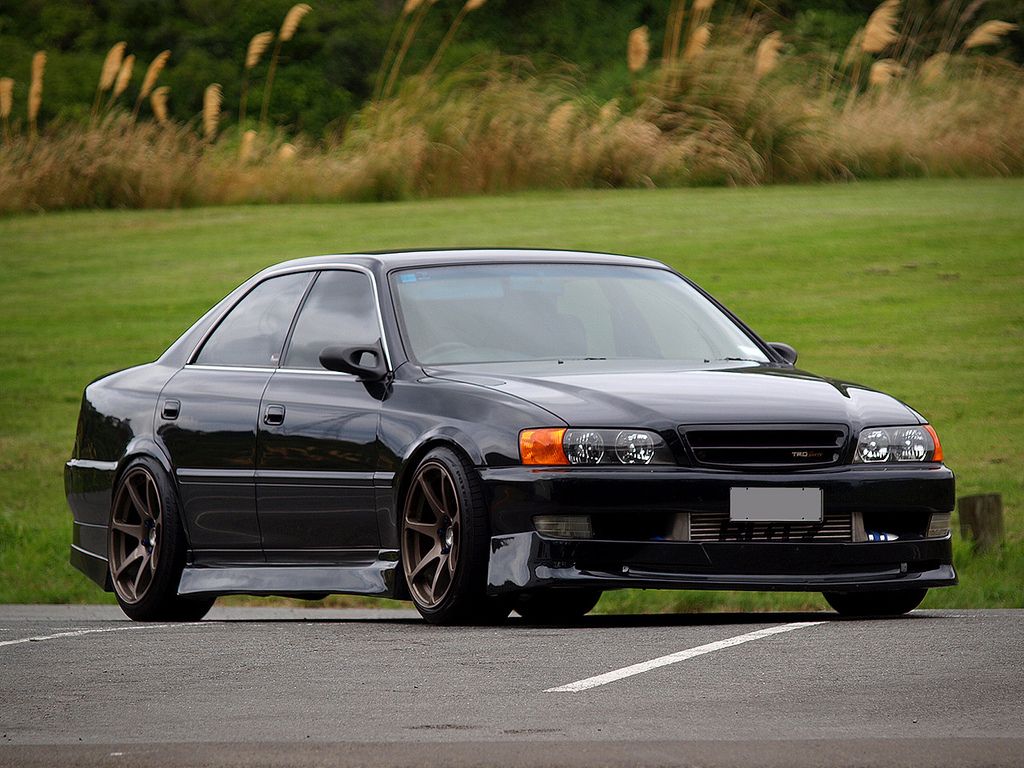
X100 Chaser (1996-2001)
- Peak popularity: JZX100 Tourer V
- 1JZ-GTE VVT-i; huge aftermarket support
- Strong drift demand; clean cars scarce
Market Data
Production Numbers & Rarity
| Generation | Years | Total Built | Notes |
|---|---|---|---|
| X30/X40 (1st gen) | 1977-1980 | estimated | Exact totals not consolidated; estimate only |
| X60 (2nd gen) | 1980-1984 | estimated | Exact totals not consolidated; estimate only |
| X100 (6th gen) | 1996-2001 | estimated | Exact totals not consolidated; estimate only |
Motorsport Heritage
D1 Grand Prix competition platform 1JZ-GTE: preferred drift engine
| Series | Years | Result | Car |
|---|---|---|---|
| D1 Grand Prix (drift) | 2001–2010 | Multiple event wins; JZX100 Chaser was a dominant drift competition platform | JZX100 Tourer V |
Sources: D1 Grand Prix official records
Comparable Alternatives
Toyota Mark II JZX100
Same platform; more sleeper look; similar 1JZ trims
In Pictures
Sources & References
Sources (15)
- Toyota Chaser — encyclopedic overview — Wikipedia Verified
- Whirlpool forums — JZX Chaser ownership thread — Whirlpool Verified
- Mighty Car Mods forums — VX/VY Clubsport or JZX100 Chaser Tourer V — Mighty Car Mods Verified
- Driftworks — calling JZX owners: JZX100 daily, common issues — Driftworks Verified
- Driftworks — 1JZ Chaser help thread — Driftworks Verified
- Toyota 75-year vehicle lineage — Chaser (id60011062) — Toyota Motor Corporation Verified
- Toyota Chaser — Automobile Wiki entry — Fandom Automobile Wiki Verified
- StanceNation — The Dream Chaser (feature) — StanceNation Link dead View archived ↗
- Toyota JZ engine family — encyclopedic overview — Wikipedia Verified
- The Toyota JZ engine family explained — Car and Driver Verified
- Toyota Chaser JZX100 buyers guide — Garage Dreams Verified
- Toyota Automobile Museum — Chaser exhibit — Toyota Automobile Museum Verified
- Toyota Cresta — sister-model encyclopedic overview — Wikipedia Verified
- Toyota Mark II — platform-parent encyclopedic overview — Wikipedia Verified
- Toyota Verossa — Chaser successor encyclopedic overview — Wikipedia Verified
Sources last verified: