Chassis Code Explained
| Segment | Meaning | Detail |
|---|---|---|
| B | Model series | B — Legacy B-platform |
| L | Generation/body code | L — fourth-generation Legacy sedan (2003–2009) |
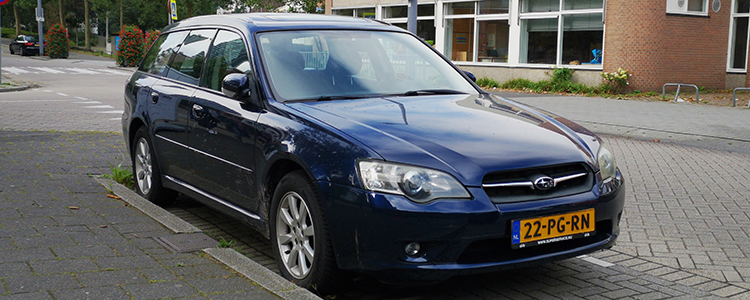
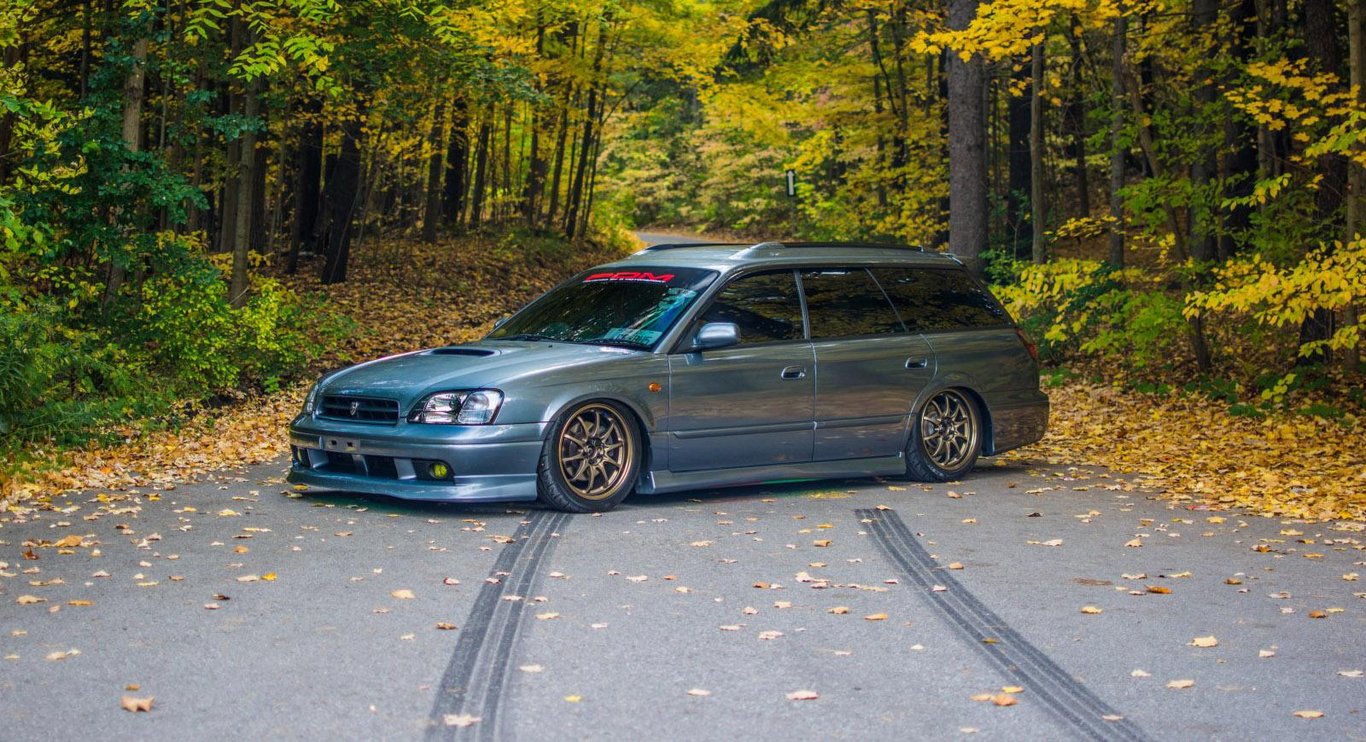
The BL sedan and BP wagon (2003–2009) form the fourth-generation Legacy pair; the BL B4 GT used the EJ255 turbocharged flat-four. The EZ30R flat-six and Spec.B trim (6MT available) were offered in select markets.
Editorial notes
Key Takeaways
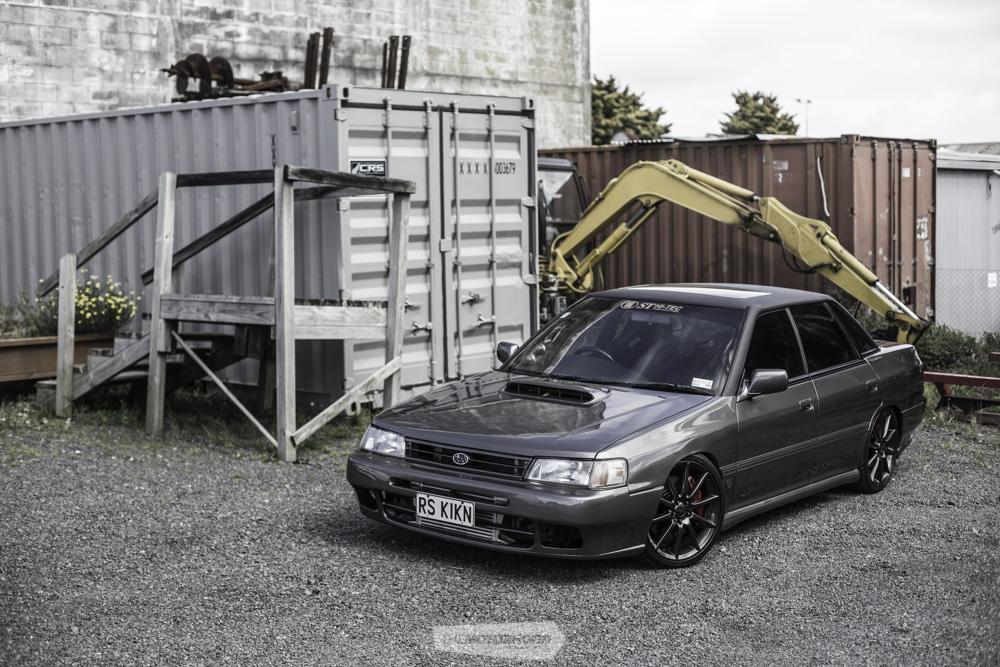
The Legacy ran from 1989 through to today, and the enthusiast story really sits in the BC/BF, BD/BG, BE/BH, and BL/BP cars. Each chassis kept symmetrical AWD as standard or near-standard, but the trims, the engines, and the body styles shift around a lot. The BG5 wagon and the BP5 wagon are the headline cars, and the sedans like the B4 RSK and the Spec.B sit close behind them.
- Turbo GT/Spec B trims lead demand and pricing
- Wagons command premiums vs sedans in clean condition
- Rust and head gaskets are the biggest ownership risks
- Manual + unmodified cars sell fastest at auction
- JDM twins (Legacy GT-B/RSK) are niche but rising
- Parts support is strong, but trim-specific bits are hard
Technical Specifications
Every enthusiast Legacy runs a Subaru boxer. The base cars used EJ18, EJ20, or EJ22 naturally aspirated, and the fast ones used turbo or twin-turbo EJ20 variants like the EJ20G, EJ20H, EJ20R, and EJ20X. The BL/BP era added the EJ255 single-turbo 2.5 and the EZ30 flat-six. Transmissions ran from a 4-speed automatic up to a 6-speed manual, and the 6-speed in the Spec.B is the one most people want.
Engine Options
| Chassis | Engine | Displacement | Power — JDM | Notes |
|---|---|---|---|---|
| BL/BP | EJ253 | 2.5L | estimated | SOHC NA; rating varies by market/year |
| BL/BP | EJ255 | 2.5L | estimated | Turbo; output varies by market/calibration |
| BL/BP | EJ204 | 2.0L | estimated | DOHC NA; market-specific tuning |
| BL/BP | EJ20X | 2.0L | estimated | JDM turbo; Spec.B/2.0GT variants |
| BL/BP | EZ30R | 3.0L | estimated | H6 NA with AVCS/AVLS (market) |
Transmission Options
| Type | Ratios | Availability | Notes |
|---|---|---|---|
| 5-speed Manual | estimated | Gen1-Gen4 select trims | Market/year dependent gearing |
| 6-speed Manual | estimated | Gen4 Spec.B, Gen5 2.5GT (some) | Performance-oriented applications |
| 4-speed Automatic | estimated | Gen1-Gen3 select trims | Early 4EAT; ratios vary |
| 5-speed Automatic | estimated | Gen4-Gen5 H6/GT select | 5EAT; market/year dependent |
| CVT (Lineartronic) | estimated | Gen5-Gen7 most trims | Chain CVT; final drive varies |
Livability
- Headroom
- 39.5"
- Good front space; sunroof trims ~1"
- Rear Seats
- Usable for adults
- Legroom decent; center seat is narrow/hard
- Cargo
- 15.0 cu ft
- Sedan trunk is solid; wagon much better if found
Variants & Trims
JDM Legacy trims like TS-R, 250T, Brighton, B4 RSK, GT-B, RS, and Spec.B are the ones to know. The TS-R is the sport profile with the NA EJ20. The 250T is the first Legacy with the EJ25. The Brighton is the budget BE sedan. The GT-B is the wagon with Bilstein and BBS, and the Spec.B is the BL/BP 6-speed manual at the top of the range. In Australia the whole car was sold as the Subaru Liberty, but it's the same Legacy underneath.
| Generation | Trim | Engine | Key Features |
|---|---|---|---|
| Gen4 (BL/BP) 2003-2009 | Legacy 2.5i (USDM) | EJ253 NA | SOHC, i-Active valve control, AWD |
| Gen4 (BL/BP) 2003-2009 | Legacy 2.5i Limited (USDM) | EJ253 NA | Leather, premium audio, moonroof, AWD |
| Gen4 (BL/BP) 2003-2009 | Legacy GT (USDM) | EJ255 Turbo | Turbo, intercooler, sport suspension, AWD |
| Gen4 (BL/BP) 2003-2009 | Legacy GT Limited (USDM) | EJ255 Turbo | Turbo, leather, premium trim, AWD |
| Gen4 (BL/BP) 2003-2009 | Legacy 3.0R (USDM/EU/JDM) | EZ30R NA | H6, 5EAT, premium trim, AWD |
| Gen4 (BL/BP) 2003-2009 | Legacy 2.0GT Spec.B (JDM/EU) | EJ20X Turbo | Bilstein, 6MT, Brembo (some mkts), AWD |
| Gen4 (BL/BP) 2003-2009 | Legacy 2.0R (EU/JDM) | EJ204 NA | DOHC, AVCS (market), AWD |
Should You Buy a Subaru Legacy BL?
The Legacy is a car where the give and take has been about the same across every generation. You get great symmetrical AWD, a low center of gravity from the boxer engine, and a usable wagon body. You give up some ground clearance, some fuel economy on the turbo cars, and you sign up for head gasket work eventually. None of that is hidden.
Why You'll Love It
- All-weather AWD usabilitySubaru AWD traction and stability make it a true year-round sedan/wagon choice.
- Turbo trims have real paceLegacy GT/2.5T and JDM GT-B/RSK offer strong midrange and easy tuning headroom.
- Wagon practicalityLegacy wagons blend cargo space with car-like driving; clean ones are increasingly scarce.
- Strong enthusiast ecosystemShared Subaru parts and knowledge base help with mods, maintenance, and troubleshooting.
- Value vs performance rivalsOften cheaper than Evo/STi-type icons while still delivering AWD grip and turbo torque.
- Manuals are engaging5MT/6MT cars feel analog and desirable; best for long-term enthusiast ownership.
Why You Might Not
- Rust is a deal-breakerRear quarters, subframes, and strut towers can rot; repairs quickly exceed car value.
- Head gasket reputationSome NA EJ25 eras are known for gasket issues; verify history and cooling system health.
- Turbo upkeep costsBoosted cars need strict oiling, timing, and tuning; neglect leads to expensive failures.
- Twin-turbo complexity (JDM)Sequential twin-turbo plumbing and vacuum lines age poorly; conversions are common.
- Modified car riskMany GTs were tuned; poor maps and cheap parts can hide engine/transmission damage.
- Trim-specific parts scarcityWagon, Spec B, and JDM-specific interior/exterior pieces can be hard to source.
Who Should NOT Buy This
- Anyone who won't check oil level every 1-2 weeks
- Buyers who refuse CVT fluid service on principle
- Rust-belt shoppers without lift inspection access
- People who need zero-drama cooling system reliability
- Owners who ignore tire matching and rotations
- Those who can't budget $2k+ surprise repairs
- Drivers who tow heavy without adding cooling capacity
- People who won't use OEM-quality gaskets/seals
- Shoppers needing best-in-class fuel economy
- Anyone expecting cheap AWD maintenance like FWD
- Buyers who can't handle intermittent electronics quirks
- People who do short trips only and skip warm-ups
- Those needing quiet cabin; road noise can be high
- DIYers without Subaru-specific scan tool access
- Anyone in CARB states buying JDM swaps/engines
- Shoppers who won't do pre-purchase compression test
Common Issues & Solutions
The Legacy is a pretty reliable car, but the EJ engine has known weak points and you should know them before you buy. Head gaskets leak. Twin-turbo plumbing on the BG5 and BH5 gets cranky. Oxygen sensors age out. The fuel pump can get tired on high-mileage cars. None of these are deal breakers if the car has the paperwork to back up the work.
| Issue | Cause | Solution | Est. Cost |
|---|---|---|---|
| EJ head gasket failure | OEM gasket design + heat cycles, poor coolant care | MLS gaskets, machine heads, new bolts, full reseal | $1800-3500 |
| FB oil consumption | Piston ring design, long OCI, stuck oil control rings | Short OCI, PCV, leakdown; short block if severe | $200-6500 |
| CVT valve body failure | Solenoid wear/contamination; heat; neglected fluid | Replace valve body, update TCM, CVT fluid service | $1200-2500 |
| CVT chain/bearing whine | Internal bearing wear; prolonged low/old CVT fluid | CVT rebuild/replace; add cooler if towing/hills | $4500-8500 |
| Torque bind (AT/CVT) | Transfer clutch wear or AWD clutch control issues | Diagnose duty solenoid/clutch pack; repair trans | $800-3500 |
| Wheel bearing failures | Water intrusion, rust belt corrosion, heavy loads | Replace hub/bearing; use quality parts, torque right | $350-900 |
| Rear subframe rust-through | Salt exposure; trapped mud; poor undercoating | Replace subframe; address lines; rustproof annually | $1200-3500 |
| Brake line corrosion leaks | Salt rusts hard lines near rear crossmember | Replace sections/entire lines; flush system | $600-1800 |
| Control arm bushing tear | Aging rubber; potholes; oil contamination | Replace arms or press bushings; align afterward | $400-1200 |
| Steering rack leaks | Seal wear; torn boots; contaminated fluid | Replace rack, flush system, new tie rods if worn | $900-2200 |
| Cooling fan failure | Fan motor wear or relay failure; heat cycling | Replace fan assembly/relays; verify temp sensor data | $250-700 |
| Radiator end tank crack | Plastic tank aging; heat; pressure spikes | Replace radiator, cap, thermostat; bleed properly | $450-900 |
| Catalytic converter failure | Oil burning or misfires overheat catalyst | Fix root cause; replace cat/O2; verify fuel trims | $900-2500 |
| Misfires (coils/plugs) | Overdue plugs; coil breakdown; oil in plug wells | Plugs, coils as needed; fix valve cover leaks | $250-900 |
| Valve cover oil leaks | Gasket shrink; PCV pressure; heat cycles | Replace gaskets/tube seals; clean and recheck PCV | $300-900 |
| Timing belt component failure | Skipped idlers/tensioner/water pump at service | Full timing kit; inspect valves if belt failed | $700-3500 |
| A/C compressor failure | Internal wear; low refrigerant; debris in system | Compressor + drier + flush; evacuate/recharge | $900-1800 |
| Infotainment/head unit bugs | Software glitches; failing touch digitizer | Update firmware; replace head unit if dead | $150-1200 |
| Sunroof drain leaks | Clogged drains; disconnected drain tubes | Clear drains, reseat tubes, dry carpets, treat mold | $100-600 |
| ABS/VDC warning lights | Wheel speed sensor or tone ring corrosion | Scan, replace sensor/hub; repair wiring | $200-900 |
| Seized alignment eccentrics | Rust bonds cam bolts to bushings | Cut out bolts, replace arms/bolts; align | $400-1500 |
| Oil pan/cover seepage | Sealant aging; road debris; improper prior reseal | Reseal pan/cover; inspect pickup and RTV quality | $300-900 |
Differences between JDM & USDM
The Subaru Legacy was sold in nearly every market, but the JDM Legacy got hardware the US Legacy never received. JDM-only variants include the BD-era Legacy GT-B (EJ20H sequential twin-turbo wagon, Bilstein, BBS, comfort-feature delete), the BE-era B4 RSK sedan (EJ20R twin-turbo, up to 280 hp on the manual), the limited-run Gen 3 Legacy STI (286 cars, 6-speed manual, twin-turbo EJ208), the BL-era 2.0 GT and 2.0 GT-B (EJ20X turbo, 6-speed manual on Spec.B), and the 402-unit Gen 4 Legacy STI with Brembo brakes from the WRX STI. JDM cars also got Bilstein and BBS as factory options on more trim levels, frameless doors that survived later in the model run, and the JDM-specific TS-R, 250T, and Brighton trims that have no US equivalent. The USDM Legacy was tamer: the 2.5i and Outback NA cars dominated the volume, the Legacy GT didn't get its 2.5T turbo until later years, and the Spec.B was the only US variant that approached the JDM enthusiast spec. In Australia the same car was sold as the Subaru Liberty.
Pre-Purchase Inspection Checklist
Walk this list with the seller, not in front of them. The Critical items mean walking away if the paperwork isn't there. Head gaskets, timing belt history, and turbo system condition are the three you really can't skip on an EJ Legacy. The High items can usually be priced into the deal. A 30 minute drive with cold and hot operation will surface most of what you need to know.
Critical Priority
High Priority
Medium Priority
Low Priority
Generation History
1st Gen BC/BF (1989-1994)
- Early AWD sedan/wagon; simple, light feel
- EJ-series engines; easy DIY, aging plastics
- JDM RS/GT trims set early sport image
2nd Gen BD/BG (1994-1999)
- Better chassis; popular wagon body
- JDM GT-B twin-turbo becomes cult favorite
- US 2.5L grows; head gasket era begins
3rd Gen BE/BH (1998-2004)
- Refined interior; strong wagon demand
- JDM B4 RSK/GT-B twin-turbo; complex upkeep
- US GT gets turbo later; manuals sought
4th Gen BL/BP (2003-2009)
- US Legacy GT 2.5T; big tuner following
- Spec B adds 6MT; peak enthusiast US Legacy
- Wagon rarer; clean examples appreciating
5th Gen BM/BR (2009-2014)
- Larger body; comfort focus, less tossable
- 2.5GT turbo continues; CVT appears on NA
- Spec B ends; manuals become scarce
6th Gen BN/BS (2014-2019)
- Mainstream sedan; wagon largely ends in US
- 3.6R smooth torque; strong daily-driver pick
- Safety tech boosts; enthusiast appeal drops
7th Gen BW (2019-present)
- Global Platform; better NVH and safety
- XT turbo returns briefly; then NA focus
- Best as modern AWD commuter, not collector
Market Data
JDM Legacy trims like TS-R, 250T, Brighton, B4 RSK, GT-B, RS, and Spec.B are the ones to know. The TS-R is the sport profile with the NA EJ20. The 250T is the first Legacy with the EJ25. The Brighton is the budget BE sedan. The GT-B is the wagon with Bilstein and BBS, and the Spec.B is the BL/BP 6-speed manual at the top of the range. In Australia the whole car was sold as the Subaru Liberty, but it's the same Legacy underneath.
Production Numbers & Rarity
| Generation | Years | Total Built | Notes |
|---|---|---|---|
| Gen1 (BC/BF) | 1989-1994 | estimated | Global production not consolidated here |
| Gen2 (BD/BG) | 1994-1999 | estimated | High-volume global model; exact totals vary |
| Gen3 (BE/BH) | 1998-2003 | estimated | Twin-turbo JDM variants are comparatively rare |
| Gen4 (BL/BP) | 2003-2009 | estimated | Spec.B and 3.0R lower volume than 2.5i |
| Gen5 (BM/BR) | 2009-2014 | estimated | 2.5GT manual is low-volume in US market |
| Gen6 (BN/BS) | 2014-2019 | estimated | 3.6R limited share vs 2.5i |
| Gen7 (BW) | 2019-present | estimated | Touring XT lower volume vs NA trims |
Motorsport Heritage
| Series | Years | Result | Car | Driver |
|---|---|---|---|---|
| World Rally Championship (WRC) Group A | 1990–1993 | Legacy RS launched Subaru World Rally Team program; Rally New Zealand 1993 win (Colin McRae's first WRC victory); platform succeeded mid-1993 by Impreza WRX | Legacy RS Group A | Colin McRae / Markku Alén / Ari Vatanen |
| Asia Pacific Rally Championship (APRC) | 1991–1993 | Multiple APRC competitive entries; Rally Australia class results | Legacy RS Group A | — |
Sources: FIA WRC historical records, APRC records
How It Compares
Among the AWD sedans and wagons of the era, the Legacy is the one that combines symmetrical AWD with a usable wagon body and a serious enthusiast turbo option. The Galant VR-4 is rarer and harder to keep running. The Forester is taller and easier to live with. The table below leans toward the Legacy's strengths because that's where it actually wins, on AWD balance, wagon practicality, and parts support.
| Feature | BL | BMW 3 Series E46 | Audi A4 B6 Quattro |
|---|---|---|---|
| Layout/Drivetrain | AWD, boxer I4/H6 | RWD, I6 | AWD, I4 turbo |
| Power (common trims) | 165-250 hp (US) | 170-235 hp | 200-255 hp |
| Turbo performance | 2.5T ~250 hp (LGT) | 2.0T 200 hp | 2.3T 260 hp |
| Handling character | Neutral AWD, safe | RWD balance, sharp | FWD/AWD, nose-heavy |
| Wagon desirability | High; rare clean cars | High; premium pricing | Moderate; niche |
| Manual availability | 5MT/6MT on key gens | Common 5/6MT | Limited; many autos |
| Reliability risk areas | HG, turbo, rust | Cooling, VANOS, bushings | Oil sludge, coils, timing |
| Tuning headroom | Strong on 2.5T | Strong but pricey | Strong; AWD limits parts |
| Interior/comfort | Practical, mid-pack | More premium feel | Sporty, tighter cabin |
| Running costs | Moderate; AWD wear | Higher parts/labor | Moderate; FWD simpler |
| Collector upside | Spec B, wagons rising | ZHP/330i already up | S-line/Avant niche |
Comparable Alternatives
If the Legacy isn't the right car, the natural alternatives are the Subaru Forester for more ground clearance with the same drivetrain, or the Impreza WRX if you want more power in a smaller body. The Mitsubishi Galant VR-4 is the other AWD turbo sedan from the same era. The Honda Accord is the comfortable alternative if you don't need AWD.
Subaru Outback
Legacy wagon cousin; more clearance, similar AWD feel
Mazdaspeed6
AWD turbo sedan; fast, rare, but parts can be tough
Audi A4 Avant B6
Premium AWD wagon alternative; higher upkeep, nicer cabin
Volvo V70R
Turbo wagon with character; expensive suspension and AWD repairs
BMW 330xi E46
AWD sport sedan feel; less utility, more RWD-like dynamics
In Pictures
The Buyer's Read
The two clearest targets on a Legacy buy list are a documented BG5 GT-B wagon and a BP5 Spec.B. The BG5 delivers the sequential twin-turbo EJ20H, Bilstein dampers, and BBS wheels in a wagon body that has aged well; the BP5 Spec.B pairs the EJ20X turbo with a 6-speed manual in the cleanest-looking BL/BP body. Both cars produce over 250 horsepower stock and have the strongest enthusiast parts networks behind them.
Skip anything priced under $5,000. Deferred maintenance on the EJ engine compounds quickly, and a car at 150,000 miles with no head gasket record warrants a budget line before signing.
Twin-turbo BG5 and BH5 cars add a layer on top — the sequential plumbing, solenoids, and vacuum routing all need inspection together. Many of these cars have already been converted to single-turbo by prior owners, which can be acceptable if the work is documented.
The geography risk on a BD or BG is rust: rear quarters, subframes, and strut towers on salt-belt cars over 25 years old can be severe. A dry Western US or Japanese-import BG5 with documented head gasket work and a sorted timing belt is a different proposition than a rough BG with rocker rust and no paperwork.
For a lower-commitment entry, a BL 2.5i or a BH 250T in clean condition covers daily-driver needs without the turbo upkeep. The Australian Liberty is the same car underneath for buyers shopping in that market.
Frequently Asked Questions
- Which Legacy generations are most collectible?
- BL/BP Legacy GT, Spec B, and clean wagons lead. Rare JDM GT-B/RSK also trend up.
- What are the biggest mechanical risks to check?
- Look for rust, cooling system health, oil leaks, and on turbos: compression, turbo play, and tune quality.
- Are head gaskets always a problem on Legacy?
- Not always. Risk varies by engine/era; verify service records and watch for overheating or coolant loss.
- Is a modified Legacy GT a bad buy?
- Not automatically. Demand proof of a reputable tune, quality parts, and logs; avoid unknown maps and cut corners.
- What trims should buyers target for value?
- Unmodified NA cars are cheapest; best value fun is a clean Legacy GT with maintenance and stock-like setup.
- Are wagons worth the premium?
- Usually yes if clean. Wagons are scarcer, more usable, and often hold value better than comparable sedans.
- How does the Legacy compare to WRX ownership?
- Legacy is more mature and comfortable. WRX has bigger aftermarket and sport focus; Legacy GT is the sleeper choice.
- What should I budget after purchase?
- Plan for timing service, fluids, tires, brakes, and on turbos: up-pipe/downpipe leaks, vacuum lines, and sensors.
Sources & References
Sources (13)
- Subaru Legacy Wikipedia overview — WikipediaVerified
- Subaru EJ engine family — design, variants, applications — WikipediaVerified
- Subaru Legacy (second generation, BD/BG) — WikipediaVerified
- Subaru Legacy (third generation, BE/BH) — WikipediaVerified
- Subaru Legacy (fourth generation, BL/BP) — WikipediaVerified
- Subaru Liberty — Australian-market Legacy naming and history — WikipediaVerified
- LegacyGT.com — owner forum, BL/BP buyer and tech archive — LegacyGT.comVerified
- Bring a Trailer — Subaru Legacy auction results — Bring a TrailerVerified
- Kelley Blue Book — Subaru Legacy used-car values — Kelley Blue BookVerified
- Edmunds — Subaru Legacy model overview and pricing — EdmundsVerified
- Car and Driver — Subaru Legacy reviews and reliability — Car and DriverVerified
- MotorTrend — Subaru Legacy long-term and comparison tests — MotorTrendVerified
- IIHS — Subaru Legacy 4-door sedan crash ratings — Insurance Institute for Highway SafetyVerified
Sources last verified: