Chassis Code Explained
| Segment | Meaning | Detail |
|---|---|---|
| N | Model series | NSX series |
| A | Body/platform | Aluminium monocoque platform (A-suffix) |
| 1 | Generation | First-generation 3.0L C30A variant (1990–2005) |
NA1 denotes first-generation cars with the 3.0L C30A VTEC V6, covering both the 5-speed manual and the 4-speed automatic; the 3.0L automatic continued as an NA1 through 2005 rather than being replaced by the NA2. The removable-roof NSX-T was also designated NA1. The NA2, rather than a later generation, is the concurrent 3.2L C32B six-speed car.
Editorial notes
Key Takeaways
- For the 1991 U.S.-market Acura NSX, Honda lists a 3.0-liter V6 making 270 hp with the 5-speed manual or 252 hp with the optional 4-speed automatic.
- All-aluminum monocoque and suspension — Honda's period materials call the NSX "the only car available in the U.S. with a 4-channel anti-lock braking system."
- Titanium connecting rods were, per Honda's own 1990 introduction, "the first application of titanium in a production car."
- NSX-T (removable roof panel) arrived for the 1995 model year, per Honda's own press materials.
- NSX Type R (1992-1995, Japan-only) omitted air conditioning and the audio system from standard equipment — Honda's original Type R release lists air conditioning and a BOSE sound system as options — and deleted power windows and sound deadening, per Honda's Type R history; 500 were sold in Japan.
- Confirm the individual car's manufacture date and current NHTSA and EPA import requirements before buying a JDM example.
Technical Specifications
Engine Options
| Chassis | Engine | Displacement | Power — JDM | Notes |
|---|---|---|---|---|
| NA1 | C30A | 3.0L | 270PS @ 7100rpm (JDM) | DOHC VTEC, aluminum block |
| NA1 | C30A | 3.0L | 274hp @ 7100rpm (US/Export, rated) | SAE-era rating; varies by market |
| NA1 | C30A | 3.0L | 280PS @ 7300rpm (late JDM, quoted) | estimated; market/yr dependent |
Livability
- Headroom
- 37.0"
- Helmet fit tight; tall drivers may brush roof
- Rear Seats
- None
- Strict 2-seater; no occasional rear perch
- Cargo
- 5.0 cu ft
- Small trunk; heat limits soft items; no spare
This chassis became eligible for US import under the 25-year rule in 2015. Calculate import costs →
Variants & Trims
| Generation | Trim | Engine | Key Features |
|---|---|---|---|
| NA1/NA2 (1st gen, 1990-2005) | NSX (Japan, early NA1) | C30A 3.0L NA V6 | Aluminum monocoque, VTEC, pop-up lamps |
| NA1/NA2 (1st gen, 1990-2005) | NSX (Export, early NA1) | C30A 3.0L NA V6 | Aluminum body, VTEC; 270 hp 5MT / 252 hp 4AT (US) |
| NA1/NA2 (1st gen, 1990-2005) | NSX Type R (NA1, 1992-1995) | C30A 3.0L NA V6 | Weight reduction, Recaro, no A/C, LSD |
| NA1/NA2 (1st gen, 1990-2005) | NSX Type S (Japan, NA1/NA2) | C30A 3.0L / C32B 3.2L | Lighter than base, sport suspension, fewer options |
| NA1/NA2 (1st gen, 1990-2005) | NSX-T (Targa, NA1/NA2) | C30A 3.0L / C32B 3.2L | Removable roof, added bracing; pop-up lamps (to 2001), fixed lamps (2002+) |
Should You Buy a Honda NSX NA1?
Why You'll Love It
- First production use of titanium connecting rods Honda's own 1990 specifications describe the connecting rods as "made of a specially patented titanium alloy" and state this was "the first application of titanium in a production car."
- All-aluminum monocoque and suspension Hagerty's 1991-96 buyer's guide notes the NSX "was the first to utilize an all-aluminum monocoque body, and it also features an aluminum suspension, both of which keep weight down."
- Only U.S. car with 4-channel ABS at launch Honda's own 1990 introduction materials state the NSX was "the only car available in the U.S. with a 4-channel anti-lock braking system."
- Ayrton Senna's chassis input Hagerty reports Senna tested a pre-production car at Suzuka in February 1989 and called it "a little fragile"; Honda stiffened the chassis and had Senna re-test it at the Nürburgring before launch. A separate Hagerty piece puts the stiffening figure at 50 percent.
- NSX-T removable roof from 1995 Honda's own materials describe the NSX-T, introduced for the 1995 model year, as featuring "a removable roof panel" that "broadened the appeal of the NSX."
Why You Might Not
- 1991 U.S. automatic: 18 hp less than the manual For the 1991 U.S.-market Acura NSX, Honda lists 270 hp for the 5-speed manual versus 252 hp for the 4-speed automatic, both on 210 lb-ft of torque.
- Timing belt: check age as well as mileage Check timing-belt service against the factory schedule for the car's model year and market, including both age and mileage. The 1991 U.S. Acura NSX schedule specifies replacement at 90,000 miles or 72 months, whichever comes first.
- Early ABS control-unit issues Hagerty: "Some early cars had issues with the ABS control unit, so make sure that's been addressed."
- 1991-92 five-speed countershaft snap-ring failures Hagerty: "Some 1991 and '92 five-speed models had bad transmission countershaft snap rings, so insist on proof that the problem has been fixed, lest your gearbox eat itself."
- Aluminum-body repair is costly and shop access is limited Hagerty: "Many shops won't touch it, and those that do will charge you handsomely. And then they have to paint it, which is its own expensive proposition."
- Coolant-reservoir leaks reported on 1991–96 cars Hagerty reports coolant-reservoir leaks in its 1991–96 Acura NSX buyer's guide.
Who Should NOT Buy This
- Buyers who cannot document timing-belt service against the factory schedule for the car's model year and market, including both age and mileage.
- Buyers unwilling to pay for a body shop experienced with aluminum-monocoque repair — Hagerty reports many shops won't attempt it
- Buyers of a 1991 or 1992 five-speed car who haven't had a specialist determine whether the reported countershaft snap-ring issue applies and, if it does, confirm documentation of the repair
- Anyone who can't verify the ABS control unit has been checked on an early car
- Buyers pursuing a JDM Type R without first confirming the individual car's manufacture date and current NHTSA/EPA import requirements
Common Issues & Solutions
| Issue | Cause | Solution | Est. Cost |
|---|---|---|---|
| Timing belt service overdue | Hagerty states the timing belt needs replacement every 90,000 miles; the factory schedule for the 1991 U.S. Acura NSX also caps the interval at 72 months, whichever comes first. | Check timing-belt service against the factory schedule for the car's model year and market, including both age and mileage. The 1991 U.S. Acura NSX schedule specifies replacement at 90,000 miles or 72 months, whichever comes first. | Get a written estimate for timing belt service. |
| ABS control-unit issues on early cars | Hagerty: "Some early cars had issues with the ABS control unit." | Confirm the ABS control unit has been inspected or replaced. | Get a written estimate for ABS diagnosis and repair. |
| Countershaft snap-ring failure (1991-92 five-speed) | Hagerty: "Some 1991 and '92 five-speed models had bad transmission countershaft snap rings." | For a 1991 or 1992 five-speed car, have a specialist determine whether the reported countershaft snap-ring issue applies and, if it does, obtain documentation of the repair. | Get a written estimate; Hagerty warns an unaddressed car risks the gearbox failing. |
| Coolant-reservoir leaks reported on 1991–96 cars | Hagerty reports coolant-reservoir leaks in its 1991–96 Acura NSX buyer's guide. | Inspect the coolant reservoir for cracks or seepage and pressure-test the cooling system. | Get a written estimate for reservoir replacement. |
| Prior aluminum-body damage and repair history | Hagerty notes many shops won't work on the aluminum body and "those that do will charge you handsomely." | Have any prior bodywork inspected by a shop experienced specifically with aluminum NSX repair. | Get a written estimate from an aluminum-specialist body shop. |
Differences between JDM & USDM
Honda's Type R history identifies the Japan-only NSX Type R as a Honda-branded model. The 1991 U.S.-market car was sold as the Acura NSX. Honda's own June 1990 specifications for the U.S. 5-speed car list 270 hp and 210 lb-ft of torque from the 3.0-liter V6, with the optional 4-speed automatic rated 252 hp on the same torque figure. The Japan-only NSX Type R (1992-1995) went the other direction: Honda's original 1992 Type R release lists air conditioning and a BOSE sound system as options omitted from standard equipment. Honda's Type R history states power windows and sound deadening were also deleted to cut more than 200 pounds, and that "Just 500 were sold." NHTSA permits a vehicle at least 25 years old to be imported without meeting the FMVSS; an HS-7 declaration is still required. Verify the individual car's manufacture date and EPA eligibility.
Pre-Purchase Inspection Checklist
Critical Priority
High Priority
Medium Priority
Generation History
NA1 (3.0) (1990-2005)
- C30A 3.0 V6 VTEC; 5MT/4AT, concurrent with the NA2 (not replaced by it)
- All-aluminum body; mid-engine RWD
- Light, communicative chassis; analog feel
- Early pop-up lights; iconic styling
- Acura NSX branding in North America
NA1 NSX-T (1995-2005)
- Targa roof adds weight; more touring bias
- Often higher production than coupes
- Great usability; slightly less rigid feel
- Values typically below comparable coupes
NSX Type R (NA1/NA2) (1992-2005)
- Japan-only; major weight reduction
- Track-focused suspension & gearing
- Extremely low supply; collector pinnacle
- Condition/originality drives huge spreads
Market Data
Production Numbers & Rarity
| Generation | Years | Total Built | Notes |
|---|---|---|---|
| NA1/NA2 (1st gen) | 1990-2005 | ~18,000 (estimated) | Global total commonly cited; verify by market |
Motorsport Heritage
| Series | Years | Result | Car | Driver |
|---|---|---|---|---|
| JGTC GT500 class | 1994–2005 | Drivers' Champion 2000 (Castrol Mugen NSX, Firman Jr./Michigami pairing); multiple race wins across the program | NSX GT500 | Ralph Firman Jr. / Ryo Michigami |
| Le Mans 24 Hours (GTS class) | 1995–2001 | GTS class entries; 3rd in GTS class, 1995 | NSX GTS | — |
Sources: Super GT historical records, ACO Le Mans historical results
How It Compares
| Feature | NA1 | Toyota Supra JZA80 | Mazda RX-7 FD3S |
|---|---|---|---|
| Layout/Drivetrain | Mid-engine RWD (NA) | Front-engine RWD | Front-engine RWD |
| Power (stock) | 270-290 hp (NA) | 276 hp (JDM claim) | 276 hp (JDM claim) |
| Weight/feel | Light, analog steering | Heavier, GT feel | Light, edgy turbo |
| Reliability | High for an exotic | Strong but aging electronics | Rotary upkeep sensitive |
| Service complexity | Moderate (NA) | High (twin-turbo packaging) | High (rotary + turbos) |
| Tuning headroom | Moderate NA; costly big gains | Very high (2JZ) | Very high (RB26) |
| Steering/feedback | Benchmark feel (NA) | Good, more GT | Sharp, lighter nose feel |
| Track capability | Balanced, consistent | Fast, AWD grip | Fast, boost-dependent |
| Cabin ergonomics | Excellent visibility | More cramped, sporty | More compromised |
| Collector premium | High; icon status | High; 2JZ halo | High; GT-R halo |
| NC1 powertrain | Hybrid AWD, 9DCT | Twin-turbo V8 RWD, DCT | NA V8 RWD, DCT |
| NC1 performance | Supercar-quick launches | Lighter, sharper | High-rev drama |
| NC1 daily usability | Very high | Good, but lower ground clearance | Very high |
Comparable Alternatives
Nissan GT-R R35
Modern performance bargain; AWD pace; broad support
Porsche 911 (996 Turbo)
Supercar speed with usability; strong parts network
Lotus Evora
Mid-engine feel and steering; simpler than hybrids
In Pictures
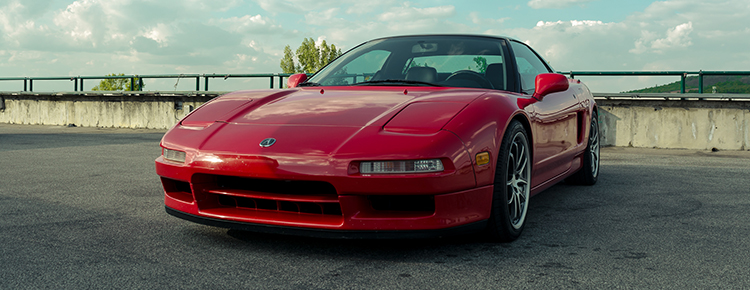
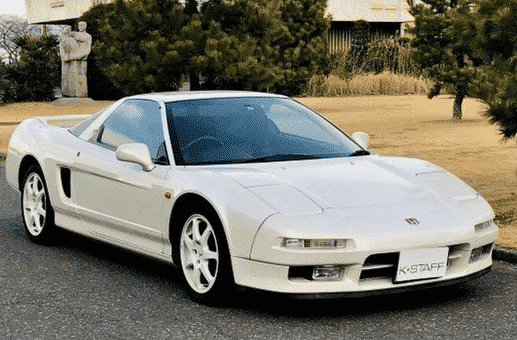
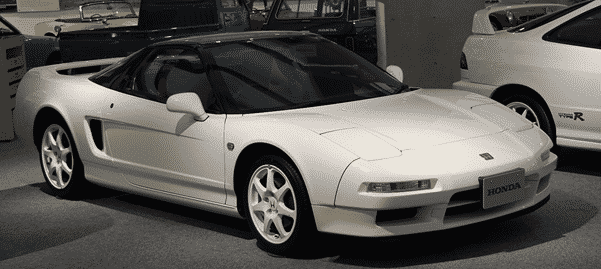
The Buyer's Read
For the 1991 U.S.-market Acura NSX, Honda lists a 3.0-liter, DOHC, 24-valve V6 rated 270 hp at 7,100 rpm with the 5-speed manual, or 252 hp at 6,600 rpm with the optional 4-speed automatic — both sharing 210 lb-ft of torque.
Inspection priorities include timing-belt records, early-car ABS issues and the reported countershaft snap-ring problem on some 1991–92 five-speed cars. Check timing-belt service against the factory schedule for the car's model year and market, including both age and mileage — the 1991 U.S. Acura NSX schedule specifies replacement at 90,000 miles or 72 months, whichever comes first. Have the car's ABS control unit checked; Hagerty reports issues on some early cars. On a 1991 or 1992 five-speed car specifically, Hagerty also flags "bad transmission countershaft snap rings" — have a specialist determine whether the issue applies and, if it does, obtain documentation of the repair; Hagerty warns an unaddressed car risks the gearbox eating itself.
The aluminum body is expensive to repair correctly: Hagerty reports "Many shops won't touch it, and those that do will charge you handsomely," with paint as "its own expensive proposition" on top. Have any prior bodywork checked by a shop with real aluminum-monocoque experience.
Honda added the removable-roof NSX-T for the 1995 model year. In Japan only, Honda's original 1992 Type R release lists air conditioning and a BOSE sound system as options omitted from standard equipment on the 1992-1995 NSX Type R; Honda's Type R history states power windows and sound deadening were also deleted, and that "Just 500 were sold." NHTSA permits a vehicle at least 25 years old to be imported without meeting the FMVSS; an HS-7 declaration is still required. Verify the individual car's manufacture date and EPA eligibility before committing to a JDM Type R import. Browse what's currently available across the NA1 range.
Frequently Asked Questions
- What engine and transmission did the first NSX use?
- For the 1991 U.S.-market Acura NSX, Honda lists a 3.0-liter, DOHC, 24-valve V6 rated 270 hp at 7,100 rpm with the 5-speed manual, or 252 hp at 6,600 rpm with the optional 4-speed automatic; both share 210 lb-ft of torque.
- What is the NSX-T?
- Honda introduced the NSX-T, with a removable roof panel, for the 1995 model year.
- How rare is the JDM NSX Type R?
- Honda's own Type R history states the 1992-1995 NSX Type R was Japan-only and that "Just 500 were sold."
- How often does the timing belt need replacement?
- Check timing-belt service against the factory schedule for the car's model year and market, including both age and mileage. The 1991 U.S. Acura NSX schedule specifies replacement at 90,000 miles or 72 months, whichever comes first.
- Can I import a JDM NSX Type R into the US?
- NHTSA permits a vehicle at least 25 years old to be imported without meeting the FMVSS; an HS-7 declaration is still required. Verify the individual car's manufacture date and EPA eligibility.
Sources & References
Sources (10)
- Honda NSX - encyclopedic overview — Wikipedia Verified
- The 1991 Acura NSX revolutionized the supercar segment — Hagerty Link dead
- Acura NSX maintenance - the long-term ownership view — Road & Track Verified
- When Senna drove the NSX street car — Speedhunters Access blocked
- Honda HP-X 1984 - the NSX concept origin — Old Concept Cars Verified
- Honda NSX - how the Japanese made a competitor for Ferrari — Dyler Verified
- NSX Type S model information — NSX Prime Link dead View archived ↗
- 10 mechanical issues you may have with the used Acura NSX — NSX Prime forum Verified
- Honda heritage timeline - automobile history — Honda Motor Corporation Link dead
- Honda NSX used review - 1990-2005 — What Car? Verified
Sources last verified: