Chassis Code Explained
| Segment | Meaning | Detail |
|---|---|---|
| D | Generation | D-series (3rd-generation Integra) |
| C | Body type | C = coupe body style |
| 2 | Spec code | 2 = VTEC-equipped variant |
DC2 spans all 3rd-gen Integra coupes; Type R uses DC2 with the B18C5 engine (200 PS, highest specific output of any naturally aspirated Honda at the time).
Key Takeaways
- Debuted in Japan in 1995, with the US car arriving for the 1997 model year
- A "hand-built engine with hand-polished intake and exhaust ports, high-compression pistons, revised intake system, a retuned exhaust and a helical limited-slip differential"
- 197 horsepower in Japan, 195 hp in the US — "the only Type R ever sold in the U.S. under the Acura brand"
- "Approximately 34,500 were sold globally, including about 2,700 in the U.S. over three years"
- Shell work included "additional spot welds and thicker sheet metal, thicker anti-roll bars, aluminium strut braces, slimmer and lighter windscreen"
- Rust is the fault to price for: "body corrosion on sills and wheel arches" is expected, not exceptional
Technical Specifications
Engine Options
| Chassis | Engine | Displacement | Power — JDM | Notes |
|---|---|---|---|---|
| DC2 (USDM 1994-2001 GS-R) | B18C1 | 1.8L | 170hp @ 7600rpm (estimated) | DOHC VTEC; 4-2-1 header (varies) |
| DC2 (USDM 1997-2001 Type R) | B18C5 | 1.8L | 195hp @ 8000rpm (estimated) | Hand-ported head, 8400rpm redline |
| DC2 (JDM Type R '96-spec) | B18C | 1.8L | 200ps @ 8000rpm (estimated) | JDM Type R; helical LSD; high compression |
| DC2 (JDM Type R '98-spec) | B18C | 1.8L | 200ps @ 8000rpm (estimated) | 98-spec updates; ECU/intake/exhaust revisions |
| DC2 (JDM SiR/SiR-G) | B18C | 1.8L | 180ps @ 7600rpm (estimated) | Non-Type R B18C; output varies by year |
Livability
- Headroom
- 37.5"
- Low roof; tall drivers may brush head with helmet
- Rear Seats
- Tight 2+2
- Adults fit short trips; legroom limited behind tall driver
- Cargo
- 12-16 cu ft
- Hatchbacks practical; coupes/sedans less flexible
Early builds of this chassis became eligible for US import under the 25-year rule in 2018; later production years become eligible through 2026. Calculate import costs →
Variants & Trims
| Generation | Trim | Engine | Key Features |
|---|---|---|---|
| DC2/DC4 (4th gen JDM/EDM, 3rd gen USDM) | Integra SJ (JDM sedan) | D15B/D16A SOHC | Sedan, SOHC economy, 4AT available |
| DC2/DC4 (4th gen JDM/EDM, 3rd gen USDM) | Integra SiR (JDM) | B18C 1.8 DOHC VTEC | B18C, 5MT, sport suspension, 4W disc |
| DC2/DC4 (4th gen JDM/EDM, 3rd gen USDM) | Integra SiR-G (JDM) | B18C 1.8 DOHC VTEC | B18C, 5MT, higher spec interior, LSD (some) |
| DC2/DC4 (4th gen JDM/EDM, 3rd gen USDM) | Integra Type R (JDM DC2 '96-spec) | B18C 1.8 DOHC VTEC | Type R, helical LSD, seam welds, 5MT |
| DC2/DC4 (4th gen JDM/EDM, 3rd gen USDM) | Integra Type R (JDM DC2 '98-spec) | B18C 1.8 DOHC VTEC | 98-spec, improved brakes, revised aero, helical LSD |
| DC2/DC4 (4th gen JDM/EDM, 3rd gen USDM) | Integra Type R (JDM DC2 '00-spec) | B18C 1.8 DOHC VTEC | 00-spec, final updates, helical LSD, 5MT |
| DC2/DC4 (USDM 1994-2001) | Integra RS (USDM) | B18B1 1.8 DOHC | 1.8 DOHC, 5MT/4AT, base trim |
| DC2/DC4 (USDM 1994-2001) | Integra LS (USDM) | B18B1 1.8 DOHC | 1.8 DOHC, 5MT/4AT, more equipment |
| DC2/DC4 (USDM 1994-2001) | Integra GS (USDM) | B18B1 1.8 DOHC | 1.8 DOHC, premium equipment, 5MT/4AT |
| DC2/DC4 (USDM 1994-2001) | Integra GS-R (USDM) | B18C1 1.8 DOHC VTEC | VTEC, 5MT/4AT, 4W disc, sport suspension |
| DC2/DC4 (USDM 1997-2001) | Integra Type R (USDM) | B18C5 1.8 DOHC VTEC | Type R, helical LSD, seam welds, close 5MT |
Should You Buy a Honda Integra DC2?
Why You'll Love It
- A hand-built engine, literally "Extensive modifications in the Integra Type R included a hand-built engine with hand-polished intake and exhaust ports, high-compression pistons, revised intake system, a retuned exhaust and a helical limited-slip differential."
- Chassis work you can see "Geekier types purred about its additional spot welds and thicker sheet metal, thicker anti-roll bars, aluminium strut braces, slimmer and lighter windscreen, lightened wheels and minimal sound deadening, all of it true to Honda's Type R ethos."
- The differential does the hard part "Because it's a VTEC engine, it all happens north of 6500rpm, so choose your gear (there are five), give the accelerator a hefty prod and let the fun begin, confident that, thanks to a torque-sensitive helical limited-slip differential, the steering wheel won't snap your wrists."
- Mechanically tough "Although the engines have proved to be tough and reliable", the car is known for "Honda-grade reliability".
- A purist's specification "Being a purist's car, the Integra Type R features few fripperies. Even air-con was optional. Instead, only those things that heightened the experience were permitted, such as figure-hugging Recaros (with holes for the seatbelt harness), a chin spoiler and a rear wing."
Why You Might Not
- Rust is close to universal "Rare is the Integra that doesn't show signs of tin worm, especially around the rear wheel arches and the underside."
- Old rustproofing can make it worse "Ironically, old anti-rust treatment can trap water and allow rot to set in. Prod away with a screwdriver to check all's well."
- Water finds the boot "Check the boot floor isn't swimming with water." "It comes in via perished seals on the rear lights."
- Synchros and clutch wear together "A worn clutch will mean the gearbox struggles to cope at high revs", and you should "listen for worn second- and third-gear synchros".
- Thin glass chips The lightweight windscreen is a weight saving with a consequence: "ensure the thin windscreen glass isn't chipped".
Who Should NOT Buy This
- Buyers who will not do an underbody inspection — "a thorough underbody inspection is essential before buying any Integra"
- Buyers expecting a rust-free survivor: "rare is the Integra that doesn't show signs of tin worm"
- Buyers who want comfort features as standard — "even air-con was optional"
- Buyers who would accept unknown modifications: "be wary of inexpert aftermarket mods"
- Buyers who cannot keep to "oil changes... every 6000 miles, the cambelt every 60,000 and coolant every three years"
Common Issues & Solutions
| Issue | Cause | Solution | Est. Cost |
|---|---|---|---|
| Corrosion at the sills, arches and underside | "You should expect to see some body corrosion on sills and wheel arches", and an owner's account puts the cause plainly: "it's to do with the car sitting so low to the ground. The underside gets wet and filthy." | "Genuine enthusiasts make sure undersealing is kept up and road salt washed off." Inspect with a screwdriver rather than by eye. | Get a written estimate for corrosion work; "a fresh MOT indicates it's not structural" yet. |
| Water in the boot floor | "Check the boot floor isn't swimming with water. (It comes in via perished seals on the rear lights.)" | Lift the boot carpet, then replace the rear light seals before the floor corrodes. | Seals are cheap; a rotted boot floor is not. |
| Worn clutch and second/third-gear synchros | "A worn clutch will mean the gearbox struggles to cope at high revs." | "Check for oil leaks from the slave cylinder. Feel for any drag and listen for worn second- and third-gear synchros. Changes may feel notchy too." | Get a written estimate for clutch and gearbox work. |
| Oil consumption | "The engine uses a little oil." | "Dip it to check the correct level has been maintained." | Free to check; a low level tells you about the previous owner. |
| Rattle or buzz on a throttle blip | "Rattling or buzzing when you blip the throttle is likely to be a loose exhaust shield." | Identify the shield before assuming a more expensive fault. | Usually a minor fix. |
Differences between JDM & USDM
This is one of the few Type R models where a US buyer has a genuine domestic choice. "The Integra Type R debuted in Japan in 1995, powered by a 197-horsepower 1.8-liter VTEC" four. It then "came to the U.S. market for the 1997 model year and remains the only Type R ever sold in the U.S. under the Acura brand" — "initially available only in Championship White, the U.S Integra Type R packed 195 hp and shared the majority of the modifications of its Japanese counterpart". Honda also brought it back after a gap: "after a single-year absence, the Integra Type R returned to the U.S. market for the 2000 model year with standard air conditioning and new available colors, Phoenix Yellow and Flamenco Black Pearl". US volume was small — of "approximately 34,500" sold globally, "about 2,700" were US cars over three years. Japanese-market cars also circulate outside Japan as imports; Autocar notes that "mechanically identical Japanese domestic market, or JDM, grey imports built from 1996 to 1998 continued to arrive" in the UK after local sales ended. For a Japanese-market car, US import eligibility runs on 49 CFR 591.5's condition that "the vehicle is 25 or more years old".
Pre-Purchase Inspection Checklist
Critical Priority
High Priority
Medium Priority
Generation History
1st Gen DA1/DA2/DA3 (1985-1989)
- Pop-up headlamps; early sporty Honda coupe
- D-series/ZC engines; light curb weights
- Period-correct classic; limited US collector focus
3rd Gen DC/DB (1993-2001)
- Peak Integra era; DC2/DB8 chassis is the icon
- Type R (JDM/USDM) sets benchmark for FWD handling
- B18C variants; huge parts ecosystem and tuning scene
Market Data
Production Numbers & Rarity
| Variant | Years | Units built | Notes |
|---|---|---|---|
| DC2 Type R (JDM, 1st batch) | 1995–1996 | 4,786 | Highest-spec; red interior; club license |
| DC2 Type R (JDM, 2nd batch) | 1996–1998 | 5,560 | |
| DC2 Type R (JDM, 3rd batch) | 1998–2001 | 5,200 | Championship white available; minor detuning vs 1st gen |
Motorsport Heritage
| Series | Years | Result | Car | Driver |
|---|---|---|---|---|
| BTCC (British Touring Car Championship) | 1995–1999 | Multiple podiums; works Honda/Mugen program | Honda Integra (works BTCC) | James Thompson / David Brabham |
Sources: BTCC historical records
Comparable Alternatives
Acura Integra Type R
USDM DC2R; LHD, easier parts; still pricey
Acura RSX Type-S
K20 power, modern chassis; cheaper than JDM DC5R
In Pictures
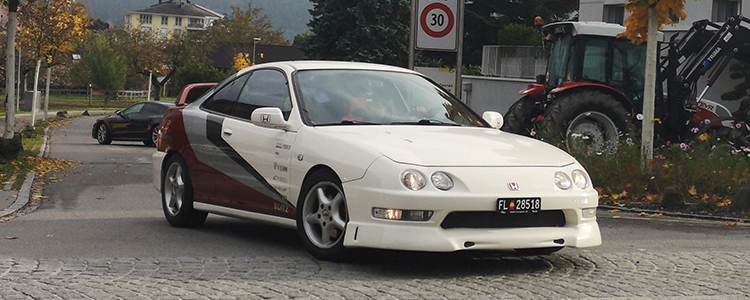
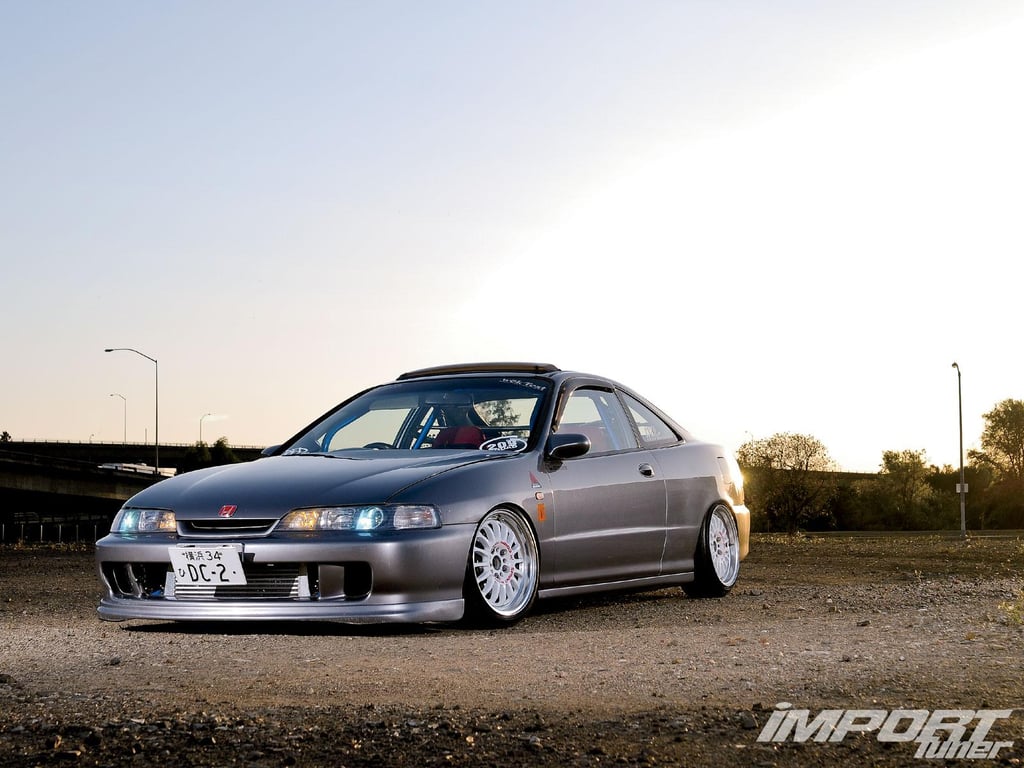
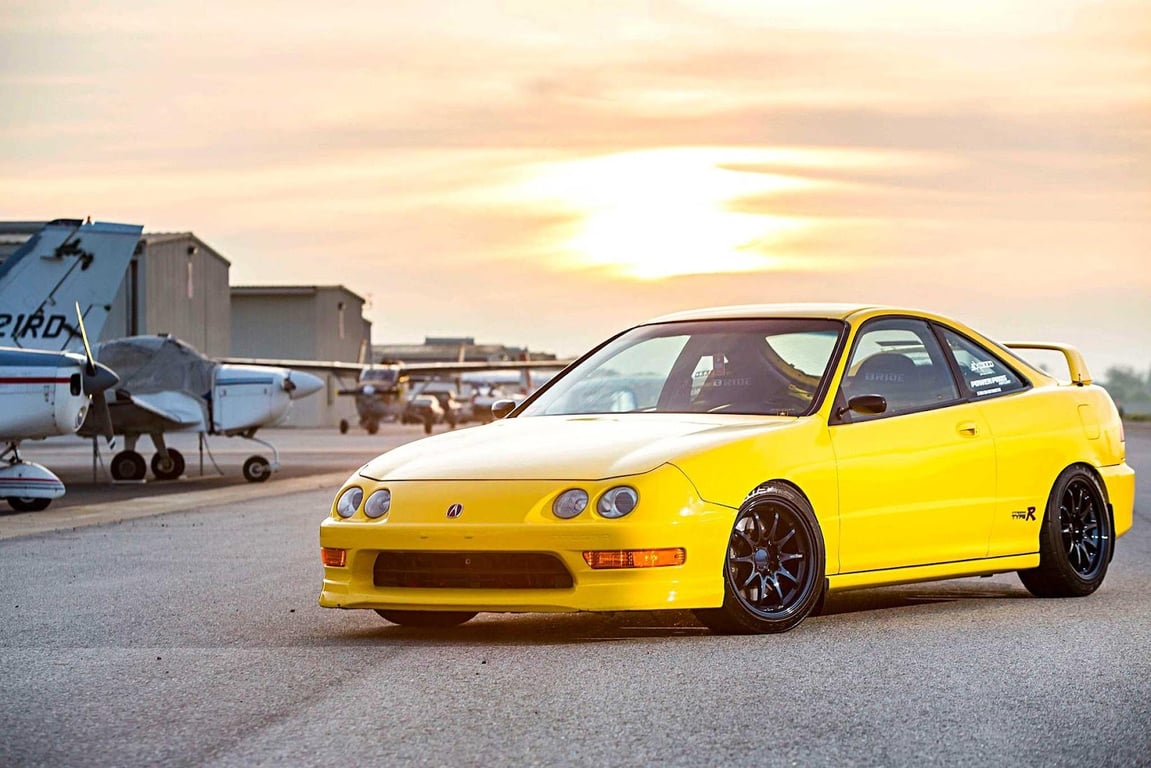
The Buyer's Read
The DC2 Integra Type R is the car that made front-wheel drive respectable among people who had spent a decade insisting it could not be. "The Integra Type R debuted in Japan in 1995, powered by a 197-horsepower 1.8-liter VTEC" four, and the specification is what it sounds like: "a hand-built engine with hand-polished intake and exhaust ports, high-compression pistons, revised intake system, a retuned exhaust and a helical limited-slip differential". The shell got the same treatment — "additional spot welds and thicker sheet metal, thicker anti-roll bars, aluminium strut braces, slimmer and lighter windscreen, lightened wheels and minimal sound deadening".
On the road it asks you to use it. "Because it's a VTEC engine, it all happens north of 6500rpm, so choose your gear (there are five), give the accelerator a hefty prod and let the fun begin, confident that, thanks to a torque-sensitive helical limited-slip differential, the steering wheel won't snap your wrists." Equipment is deliberately sparse: "being a purist's car, the Integra Type R features few fripperies. Even air-con was optional."
Now the part that decides which car to buy. "Although the engines have proved to be tough and reliable, you should expect to see some body corrosion on sills and wheel arches", and more bluntly, "rare is the Integra that doesn't show signs of tin worm, especially around the rear wheel arches and the underside". A former owner's summary is worth reading twice: "it was totally reliable and a blast to drive. It had just one problem: rust." So "a thorough underbody inspection is essential before buying any Integra", and treat existing protection with suspicion, because "old anti-rust treatment can trap water and allow rot to set in. Prod away with a screwdriver to check all's well."
The rest is ordinary diligence. "Check the boot floor isn't swimming with water" — it arrives "via perished seals on the rear lights". "Feel for any drag and listen for worn second- and third-gear synchros", and "check for oil leaks from the slave cylinder". Servicing wants "oil changes... every 6000 miles, the cambelt every 60,000 and coolant every three years", and you should "be wary of inexpert aftermarket mods". Get a solid shell and the mechanicals will look after themselves.
Frequently Asked Questions
- When did it appear, and where?
- "The Integra Type R debuted in Japan in 1995." It "came to the U.S. market for the 1997 model year", and in the UK it "arrived in UK showrooms in 1997" after being "on sale since 1995" in Japan.
- How much power does it have?
- Japan's car was "a 197-horsepower 1.8-liter VTEC" four. "The U.S Integra Type R packed 195 hp and shared the majority of the modifications of its Japanese counterpart."
- What makes it different from an ordinary Integra?
- "A hand-built engine with hand-polished intake and exhaust ports, high-compression pistons, revised intake system, a retuned exhaust and a helical limited-slip differential", plus "additional spot welds and thicker sheet metal, thicker anti-roll bars, aluminium strut braces, slimmer and lighter windscreen, lightened wheels and minimal sound deadening".
- How many were made?
- "Approximately 34,500 were sold globally, including about 2,700 in the U.S. over three years."
- What is the biggest risk when buying one?
- Rust. "Rare is the Integra that doesn't show signs of tin worm, especially around the rear wheel arches and the underside", and "a thorough underbody inspection is essential before buying any Integra".
- Was it sold under the Acura brand?
- In the US, yes — it "remains the only Type R ever sold in the U.S. under the Acura brand", initially "available only in Championship White".
Sources & References
Sources (15)
- Honda Integra — encyclopedic overview — Wikipedia Verified
- Honda Integra Type R — model history and specifications — Wikipedia Verified
- Honda B engine family reference — Wikipedia Verified
- Honda K engine family reference — Wikipedia Verified
- VTEC — Variable valve Timing and lift Electronic Control — Wikipedia Verified
- Honda Civic Type R — sister Type R lineage — Wikipedia Verified
- Honda / Acura Integra Type R auction results — Bring a Trailer Verified
- Honda Integra market comps and sale data — Classic.com Verified
- Acura Integra market comps — Classic.com Verified
- Honda Integra owner technical community — Honda-Tech Verified
- Honda Integra review archive — CarsGuide Verified
- Spoon Sports — long-time Integra tuner-house — Spoon Sports Verified
- Mugen Motorsports — works tuner — Mugen Verified
- Garage Dreams — Integra buyer's-guide reference — Garage Dreams Verified
- The Motorhood — period road-test archive — The Motorhood Verified
Sources last verified: