Mazda MX-5 Miata NA/NB
Cheaper, simpler RWD fun; huge parts support
Buyer's guide
15 min read
Buyer's guide & specs
Quick answer
Toyota MR2 values hinge on generation: AW11 is the affordable classic, SW20 is the turbo icon with the widest spread, and ZZW30 is the light, modern driver’s pick. Prices are steady-to-rising for clean, unmodified cars; top SW20 Turbos and rare trims command strong premiums.
Background
Toyota built three generations of mid-engine, rear-drive two-seaters under the MR2 badge between 1984 and 2007. The AW11 (W10) ran a 1.6L 4A-GE and optional 4A-GZE supercharger; the SW20 (W20) added a 2.0L 3S-GTE turbo and the 'baby Ferrari' profile; the ZZW30 (W30) reset to a lightweight 1.8L 1ZZ-FE roadster. About 295,000 units across all three generations, each with distinct handling and reliability signatures buyers should understand before committing.
The SW20 launched in 1989 350-400 lbs heavier than the AW11 — roomier cabin, stiffer body, 3S-GTE drivetrain. The rearward weight bias and tires too narrow for the car's grip ceiling produced lift-throttle oversteer that Japanese and American magazines documented extensively through the early 1990s.
Toyota issued five revisions across the W20's life). The January 1992 facelift brought wider rear tires, larger 15-inch wheels, and revised suspension geometry; the June 1996 update added damper, brake, and ECU calibration changes.
Late JDM cars (Rev3-Rev5, 1996-99) are measurably more predictable than 1989-91 Rev1 cars. Any SW20 on correct staggered tires and a proper alignment is stable — tire spec and bushing condition have more day-to-day effect than which revision year the chassis is.
Toyota launched the ZZW30 in 1999 alongside the Honda S2000, which arrived with a 9,000 rpm 2.0L F20C at 240 hp and a 50:50 weight distribution. The W30 answered with a 1.8L 1ZZ-FE at 138 hp, a 5-speed manual (later 6-speed and 6-speed SMT), and a curb weight near 2,200 lbs — roughly 600 lbs lighter than the S2000 but more than 100 hp short.
North American sales ran from 2000 to 2005 at 27,941 units; Japan and Europe continued through July 2007. Toyota's bet was on lightness and a Targa-style folding roof over the S2000's redline-assault approach; the market split.
The pre-cat manifold on early 2000-2002 cars is the known failure point — it can shed material into the engine and cause compounding oil consumption. The S2000 wins on power and resale; the ZZW30 wins on cost of entry and retaining the mid-engine balance that defined the badge from 1984 onward.
Editorial notes
Quick read
Constants
Chassis history
The MR2 had three generations from 1984 to 2007, and each one feels like a different car. The AW11 is the lightest and most analog. The SW20 is the fast one with the snap-oversteer reputation Toyota spent five chassis revisions fixing. The W30 Spyder is the softest and the easiest to live with, and it's also the cheapest MR2 to buy today.
First generation — W10 (AW10/AW11; 1984–1989)
Third generation — W30 (ZZW30, MR2 Spyder/MR-S; 1999–2007)
Identification
Generation names are broad families. The factory chassis codes below identify the variants represented in JDMBUYSELL's current Toyota MR2 guide data.
Confirm the complete code on the vehicle's frame or VIN plate; drivetrain, body, and market variants can use different prefixes within one generation family.
Buyer's call
What you give up on an MR2 is just as obvious as what you get. Toyota built it light and mid-engine first, and practical second, so the strong points and the weak points have stayed pretty consistent across all three generations.
Reliability
The MR2 is a reliable car for what it is, but each generation has its own thing. The AW11 rusts in the sills and the long under-body coolant pipes corrode. The SW20 chews tires and stresses the turbo if you drive it hard without watching heat soak. The W30 pre-cat sheds material into the engine on early cars and that's where the oil consumption stories come from. None of it is hidden, so a careful pre-purchase inspection catches most of it.
| Issue | Cause | Solution | Est. cost |
|---|---|---|---|
| Overheating from air pockets | Poor bleeding; long coolant lines trap air | Proper bleed procedure; check caps, fans, leaks | $150-600 |
| Corroded coolant hard pipes | Road salt; dents trap moisture under clamps | Replace pipes/hoses; flush; use correct coolant | $600-1800 |
| Radiator end tank leaks | Age-cracked plastic tanks or corroded core | Replace radiator and cap; verify fan operation | $350-900 |
| Heater core leak | Internal corrosion; old coolant; electrolysis | Replace heater core; flush system; new hoses | $700-1600 |
| Timing belt overdue/failure risk | Unknown history; age cracking; tensioner wear | Belt, tensioner, idlers, water pump, seals | $900-2000 |
| Distributor O-ring oil leak | Hardened O-ring; oil wicks into harness | Replace O-ring; clean connector; inspect cap/rotor | $80-350 |
| Cam/crank seal leaks | Aged seals; crankcase pressure; poor prior work | Replace seals during timing service; check PCV | $300-900 |
| Valve cover gasket leak | Flattened gasket; overtorque; clogged PCV | New gasket and grommets; clean PCV system | $120-450 |
| Rear main seal seep | Age; crankcase pressure; worn seal lip | Replace during clutch job; verify PCV | $900-1800 |
| Idle hunting/stalling | Vacuum leaks; dirty ISC/IAC; AFM boot cracks | Smoke test; replace hoses/boot; clean ISC/IAC | $150-700 |
| ECU capacitor leakage | Aged electrolytic caps leak and damage traces | ECU recap/repair or replace with tested unit | $250-900 |
| Alternator heat failure | Mid-engine heat soak; worn bearings/diodes | Replace alternator; check belt tension and grounds | $350-900 |
| Starter heat soak no-crank | Worn solenoid; heat from exhaust area | Rebuild/replace starter; add heat shielding | $250-700 |
| Fuel pump weak/noisy | Age; clogged sock/filter; low tank running | Replace pump and filter; clean tank if needed | $300-900 |
| Injector seal fuel smell | Hardened O-rings/insulators leak under pressure | Replace injector seals; inspect rail and lines | $200-600 |
| Manual trans synchro wear | Hard shifts; old fluid; high mileage | Fluid change; adjust cables; rebuild if grinding | $120-2500 |
| Clutch master/slave leaks | Aged seals; contaminated fluid; rusted bores | Replace master/slave; flush; inspect hard line | $250-700 |
| Clutch wear/slip | Age; oil contamination; turbo torque abuse | Clutch kit; resurface flywheel; fix oil leaks | $900-2200 |
| Shifter cable wear/binding | Aged cable liners; heat; torn boots | Replace cables; lube linkage; adjust shifter base | $450-1200 |
| Rear toe link/bushing play | Worn bushings; bent links from curb hits | Replace toe links/bushings; full alignment | $500-1500 |
| Snap oversteer (SW20 early) | Early geometry + bad tires/alignment + lift-off | Correct tires, alignment; later arms/updates | $200-2000 |
| Steering rack leaks | Aged seals; torn boots let grit in | Rebuild/replace rack; new boots; align | $600-1600 |
| Brake caliper seizure | Corrosion; old fluid; stuck sliders/pistons | Rebuild/replace calipers; flush fluid; new hoses | $400-1200 |
| Rusty brake hard lines | Road salt; moisture under line clips | Replace lines; inspect proportioning valve | $500-1500 |
| Wheel bearing noise | Age; water intrusion; track use | Replace hub/bearing; inspect knuckle wear | $350-900 |
| Pop-up headlight failure | Worn gears/bushings; dirty limit switches | Rebuild motor; clean switches; align buckets | $150-600 |
| T-top leaks/wind noise | Shrunk seals; misadjusted latches; clogged drains | New seals; adjust latches; clear drains | $300-1200 |
| Cabin water intrusion rust | T-top/door leaks soak carpets and floor pans | Fix leaks; dry; repair floor rust properly | $300-4000 |
| Turbo oil smoke (SW20 turbo) | Worn seals/bearings; poor oiling; coked oil | Rebuild/replace turbo; fix PCV; improve cooling | $900-2500 |
| Boost leaks/poor spool | Cracked couplers; loose clamps; split IC hoses | Pressure test; replace couplers; proper clamps | $150-800 |
| Detonation/knock on boost | Bad fuel, heat soak, lean tune, weak ignition | Fix tune, plugs, coils; intercooler; verify AFR | $200-3000 |
| Exhaust manifold cracks | Heat cycling; thin cast sections; turbo stress | Replace manifold; new studs/gaskets; check mounts | $400-1800 |
| Catalyst clog/restriction | Oil burning; rich running; melted substrate | Replace cat; fix root cause (oil/tune/misfire) | $300-1500 |
| Rust: sills/quarters/floors | Water traps, clogged drains, winter salt | Proper metal repair; avoid filler-only fixes | $800-8000 |
| Bent suspension arms | Curb strikes; tow hook misuse; potholes | Replace arms/links; alignment; check subframe | $400-2000 |
| A/C weak or inop | R12 leaks; old hoses; compressor wear | Leak test; replace drier/hoses; proper conversion | $600-1800 |
Market
The MR2 line diverged sharply between Japan and the US, generation by generation. On the AW11 (1984-89), USDM cars got the 4A-GE NA at 112-128 hp and the supercharged 4A-GZE; JDM kept the G-Limited and Super Edition special trims with higher-equipment interiors that never crossed the Pacific. On the SW20 (1989-99), the US got the 3S-GTE turbo (badged MR2 Turbo or GT-S, rated around 200 hp) but lost it after 1995 when Toyota pulled the turbo from the US market; Japan kept the 3S-GTE through 1999, gained the CT20b turbo on late JDM cars (245 hp), and kept the 3S-GE NA G-Limited as a parallel option. The TRD2000GT widebody kit was JDM-only. On the W30 (1999-2007), the divergence is the cleanest: USDM got the 1ZZ-FE NA Spyder only — no turbo, no SMT until later years — while Japan got the MR-S badge, the TTE Turbo dealer conversion through Toyota Team Europe (rare, around 200 limited builds), and the VM180 special edition. For US buyers the JDM-import math is: SW20 Turbo availability after 1995, late SW20 245 hp builds, and W30 TTE/VM180 trims are the main reasons to import a JDM car rather than buy a USDM example.
Specs
Every MR2 is mid-engine and rear-drive. The AW11 runs the 1.6 liter 4A-GE, or the supercharged 4A-GZE on later cars. The SW20 stepped up to the 2.0 liter 3S-GE naturally aspirated, or the 3S-GTE turbo that made anywhere from 200 to 245 hp depending on year and market. The W30 went back to a smaller 1.8 liter 1ZZ-FE at 138 hp, and put the focus back on weight instead of power.
| Chassis | Engine | Displacement | Power | Boost | Notes |
|---|---|---|---|---|---|
| AW11 (early, JDM/US) | 4A-GE (16V) | 1.6L | 112hp @ 6600rpm | N/A | DOHC 16V, early spec (market varies) |
| AW11 (late, some markets) | 4A-GE (16V) | 1.6L | 120hp @ 6600rpm | N/A | Revised intake/exhaust; market varies |
| AW11 (JDM late) | 4A-GE (20V) | 1.6L | 160hp @ 7400rpm | N/A | 20V swap not factory AW11; exclude if strict |
| AW11 (Supercharged) | 4A-GZE | 1.6L | 145hp @ 6400rpm | 8 psi | SC12 roots, intercooler (market varies) |
| SW20 (NA, some markets) | 3S-FE | 2.0L | 130hp @ 5400rpm | N/A | DOHC 16V economy NA; market varies |
| SW20 (NA, JDM/EU) | 3S-GE (Gen2) | 2.0L | 165hp @ 6800rpm | N/A | High-output NA; early SW20 |
| SW20 (NA, later JDM/EU) | 3S-GE (Gen3) | 2.0L | 180hp @ 7000rpm | N/A | Revised head/intake; later SW20 |
| SW20 (Turbo, early) | 3S-GTE (Gen2) | 2.0L | 200hp @ 6000rpm | 11 psi | CT26 turbo; early SW20 |
| SW20 (Turbo, JDM later) | 3S-GTE (Gen3) | 2.0L | 245hp @ 6000rpm | 13 psi | CT20b turbo; JDM late SW20 |
| SW20 (Turbo, USDM) | 3S-GTE (Gen2) | 2.0L | 200hp @ 6000rpm | 11 psi | US rating; torque varies by year |
| ZZW30 | 1ZZ-FE | 1.8L | 138hp @ 6400rpm | N/A | VVT-i; US/EU typical rating |
| ZZW30 (JDM) | 1ZZ-FE | 1.8L | 140hp @ 6400rpm | N/A | JDM rating; minor calibration differences |
| ZZW30 (TTE/VM180) | 1ZZ-FE + turbo | 1.8L | 180hp @ 6400rpm | estimated 6 psi | Dealer/TTE kit; not full factory line build |
| Type | Ratios | Availability | Notes |
|---|---|---|---|
| 5-speed Manual (C50/C52 family) | 3.166/1.904/1.310/0.969/0.815 | AW11 NA | Typical AW11 NA gearing; market varies |
| 4-speed Automatic | 2.810/1.549/1.000/0.705 | AW11 NA | Optional; ratios vary by market/year |
| 5-speed Manual (E51) | 3.230/1.913/1.258/0.918/0.731 | AW11 Supercharged | Stronger SC transaxle; LSD optional |
| 5-speed Manual (S54) | 3.285/1.960/1.322/1.028/0.820 | SW20 NA | Common NA transaxle; market varies |
| 4-speed Automatic (A241E family) | 2.810/1.549/1.000/0.705 | SW20 NA (some markets) | Optional; not on many performance trims |
| 5-speed Manual (E153) | 3.230/1.913/1.258/0.918/0.731 | SW20 Turbo (GT/GT-S) | Heavy-duty turbo transaxle; LSD optional |
| 5-speed Manual (C56/C59 family) | 3.166/1.904/1.310/0.969/0.815 | ZZW30 5MT | Lightweight; final drive varies by market |
| 6-speed Manual | 3.166/2.050/1.481/1.166/0.916/0.725 | ZZW30 (some markets/years) | Later models; market-specific availability |
| 6-speed SMT (Sequential Manual Transmission) | 3.166/2.050/1.481/1.166/0.916/0.725 | ZZW30 SMT | Electro-hydraulic clutch/shift; no torque conv |
Lineup
The MR2 variant list is where things get interesting if you import. The AW11 had G-Limited and Super Edition trims that stayed in Japan. The SW20 had the JDM-only G-Limited NA and the TRD2000GT widebody that Toyota Racing Development sold through Japanese dealers, and that's the rarest factory-blessed MR2 ever built. The W30 had the TTE Turbo dealer conversion through Toyota Team Europe and the VM180 special edition, and both are JDM or Euro only.
| Generation | Trim | Engine | Key features |
|---|---|---|---|
| W10 (AW10/AW11, 1st gen, 1984-1989) | MR2 (base, NA) | 4A-GE 1.6L NA | Mid-engine RWD, 5MT/4AT, pop-up lamps |
| W10 (AW10/AW11, 1st gen, 1984-1989) | MR2 Supercharged | 4A-GZE 1.6L SC | Supercharger, intercooler, stronger trans/axles |
| W10 (AW10/AW11, 1st gen, 1984-1989) | G (JDM) | 4A-GE 1.6L NA | Higher equipment, sport seats, options-heavy |
| W10 (AW10/AW11, 1st gen, 1984-1989) | G-Limited (JDM) | 4A-GE 1.6L NA | Top NA grade, luxury trim, options-heavy |
| W10 (AW10/AW11, 1st gen, 1984-1989) | Super Edition (JDM/US special) | 4A-GE 1.6L NA | Special colors/trim, limited-run package |
| W10 (AW10/AW11, 1st gen, 1984-1989) | T-Bar (where offered) | 4A-GE 1.6L NA | Removable roof panels, added bracing |
| W20 (SW20, 2nd gen, 1989-1999) | MR2 (base, NA) | 3S-FE 2.0L NA | Mid-engine RWD, 5MT/4AT, pop-up lamps |
| W20 (SW20, 2nd gen, 1989-1999) | MR2 GT (JDM turbo) | 3S-GTE 2.0L Turbo | Turbo, intercooler, stronger E153 trans, LSD opt |
| W20 (SW20, 2nd gen, 1989-1999) | MR2 GT-S (US turbo) | 3S-GTE 2.0L Turbo | Turbo, intercooler, E153 5MT, sport suspension |
| W20 (SW20, 2nd gen, 1989-1999) | MR2 Turbo (EU/Gen) | 3S-GTE 2.0L Turbo | Turbo, intercooler, 5MT, market-specific spec |
| W20 (SW20, 2nd gen, 1989-1999) | G (JDM NA) | 3S-GE 2.0L NA | High-output NA, 5MT, sport interior |
| W20 (SW20, 2nd gen, 1989-1999) | G-Limited (JDM NA) | 3S-GE 2.0L NA | Top NA grade, luxury trim, options-heavy |
| W20 (SW20, 2nd gen, 1989-1999) | GTS (some markets NA) | 3S-GE 2.0L NA | High-output NA, sport suspension, 5MT |
| W20 (SW20, 2nd gen, 1989-1999) | T-Bar (where offered) | 3S-FE/3S-GE/3S-GTE | Removable roof panels, added bracing |
| W20 (SW20, 2nd gen, 1989-1999) | MR2 GT-S 'TRD 2000GT' (Japan) | 3S-GTE 2.0L Turbo | Widebody, aero, TRD parts, very limited |
| W30 (ZZW30, 3rd gen, 1999-2007) | MR-S (JDM) | 1ZZ-FE 1.8L NA | Roadster, SMT/5MT/6MT, lightweight chassis |
| W30 (ZZW30, 3rd gen, 1999-2007) | MR2 Spyder (US) | 1ZZ-FE 1.8L NA | Roadster, 5MT/SMT, soft top |
| W30 (ZZW30, 3rd gen, 1999-2007) | VM180 / TTE Turbo (limited, market-specific) | 1ZZ-FE 1.8L Turbo (dealer/TTE) | Turbo kit, uprated cooling, limited-run |
| W30 (ZZW30, 3rd gen, 1999-2007) | S Edition / Special packages (market-specific) | 1ZZ-FE 1.8L NA | Aero/trim packages, wheel/seat upgrades |
Production
The MR2 sold steadily but never in huge numbers. Toyota built around 295,000 across all three generations from 1984 to 2007. The AW11 carried the line through the late 80s, the SW20 was the volume seller with the longest run, and the W30 closed the book with 27,941 cars sold in North America before the US dropped it in 2005.
| Year | Notes |
|---|---|
| 1984 | AW11 production starts in June; debut at Tokyo Motor Show |
| 1986 | Supercharged 4A-GZE variant introduced (145 hp); stronger transaxle |
| 1989 | AW11 production ends; SW20 launched in October |
| 1992 | SW20 first facelift (Rev2) — wider rear tires, larger wheels, revised suspension geometry |
| 1995 | Toyota withdraws SW20 Turbo from US market |
| 1996 | SW20 second update (Rev3) — further damper, brake, and ECU calibration changes; later Rev4/Rev5 follow |
| 1999 | SW20 production ends; ZZW30 launches in Japan as MR-S, in US as MR2 Spyder for 2000 model year |
| 2005 | Final year of MR2 sales in the United States |
| 2007 | Final year of MR2 production worldwide (July 2007, Japan/Mexico/Europe); 27,941 total MR2 Spyder units built for the North American market |
Pricing
The AW11 launched in the US around $11,000 in 1985. The SW20 Turbo opened near $20,000 in 1991. The W30 Spyder hit about $24,000 in 2000. The numbers below are what one costs today. SW20 Turbo cars lead the market with the widest spread, the AW11 is climbing steadily as clean ones thin out, and the W30 is still the value play if you want a mid-engine Toyota without spending big.
Original MSRP: $11,000 at launch in 1985. USDM AW11 MR2 launch price in the United States for the 1985 model year, approximated from period buff-book road tests. A 1986 supercharged AW11 listed higher; SW20 Turbo cars opened around $20,000 in 1991 USD; W30 MR2 Spyder launched near $24,000 in 2000 USD. JDM Celsior-style trim-grade pricing was set in yen and varied by Super Edition / G-Limited / Supercharged packaging.
Today's market range: $6,000 to $65,000 (median ~$22,000). Source: JDMBUYSELL / USS Auction.
Clean, stock MR2s trend upward; SW20 Turbo leads with the widest spread. ZZW30 remains the value play but good cars are tightening. AW11 is steadily appreciating as survivors thin; top-condition, documented examples should outperform.
Inspect
Walk this list with the seller, not in front of them. The Critical items mean walking away if there's no paperwork. The High items can usually be priced into the deal. An MR2 hides almost nothing once you put it on a lift and look at the sills, the rear subframe, and the coolant pipes that run the length of the car.
Cross-shop
If the MR2 isn't the right car, the natural alternatives depend on which generation you were chasing. The Honda S2000 is the direct W30 rival with more power and more cachet. The Mazda MX-5 is the easier-to-live-with roadster. The Nissan 240SX or Silvia is the rear-drive alternative if you want a back seat. The Toyota AE86 is the analog corner-carver if the AW11 spoke to you.
Cheaper, simpler RWD fun; huge parts support
Mid-engine like MR2; more power, higher upkeep
Ultra-light mid-engine benchmark; pricey but pure
More torque and practicality; heavier, easier to live with
Compare
Among mid-engine sports cars of its era, the MR2 is the one that lasted. The Fiat X1/9 ended in 1989, the Pontiac Fiero in 1988, and the Honda S2000 in 2009. The Lotus Elise is the closer comparison on weight and feel, but it costs more to buy and a lot more to keep on the road. The MR2 wins on parts, reliability, and how much car you get for the money.
| Feature | Toyota MR2 | Mazda RX-7 FD3S | Nissan 300ZX Z32 |
|---|---|---|---|
| Layout/drive | Mid-engine, RWD | Front-engine, RWD | Front-engine, RWD |
| Iconic turbo era | SW20 3S-GTE Turbo | 13B-REW twin-turbo | RB26DETT AWD |
| Stock power (typ.) | SW20 Turbo ~200-245hp | FD ~255hp (USDM) | Z32 TT ~300hp (US) |
| Weight (approx.) | ZZW30 ~2,150-2,250lb | NB ~2,300-2,450lb | S2000 ~2,800-2,900lb |
| Handling character | Neutral; rotates on throttle | Playful, forgiving | High-grip, sharp at limit |
| Practicality | 2-seat; limited storage | 2+2 hatch; more cargo | 2+2 coupe; usable rear |
| Reliability baseline | Strong if maintained | Rotary upkeep sensitive | Complex; aging electronics |
| Running costs | ZZW30 lowest; SW20 mid | Higher (rotary/turbos) | Higher (TT packaging) |
| Tuning headroom | SW20 Turbo strong | Strong but heat/rotary | Strong; drivetrain robust |
| Collector liquidity | Best: SW20 Turbo, AW11 SC | Very strong; pricey | Strong; broader buyer pool |
| Entry price | AW11/ZZW30 accessible | Often higher for clean | Similar or higher |
| Track-day suitability | Excellent; cooling key | Excellent; consumables low | Excellent; pricier tires/brakes |
| Rarity premiums | TRD/GT-S/Rev5 Turbo | Type R/Spirit R | Nismo/limited trims |
Gallery
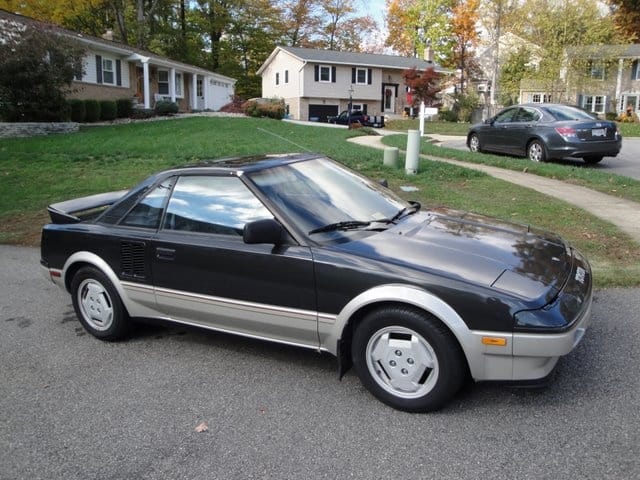
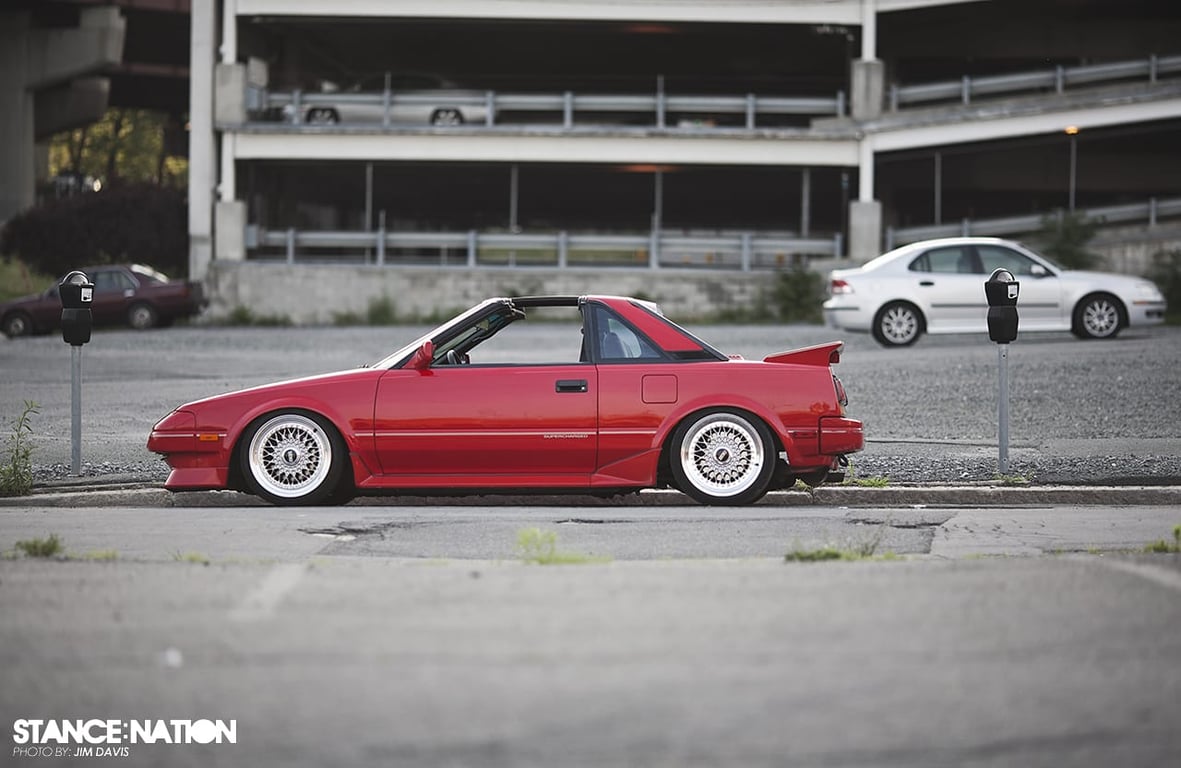
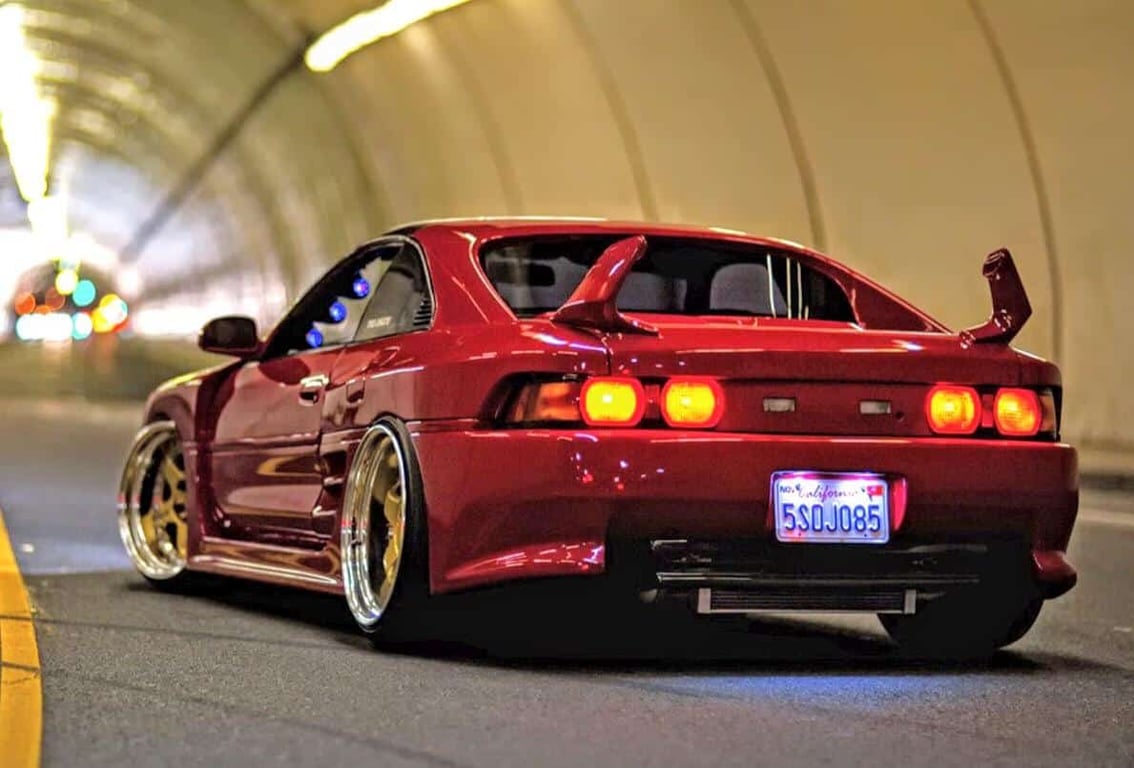
Drivetrain
Editorial
The first decision is which generation. The AW11 is the cheapest documented MR2 entry right now, though clean examples are thinning. The SW20 Turbo is where most buyers end up, and a 3S-GTE car with service paperwork commands the market's highest premiums.
For an AW11, prioritize stock or lightly modified cars with documented timing belt history. The supercharged 4A-GZE cars carry a meaningful premium over NA 4A-GE examples; the SC12 supercharger is durable when properly maintained. Rust in the sills and arches, corroded under-floor coolant pipes, or dead pop-up headlight motors are the deal breakers — none are cheap repairs on a car worth $15,000.
For an SW20, tire spec and bushing condition matter more than revision year. Late JDM Rev3 to Rev5 cars (1996-99) are more predictable than 1989-91 Rev1 examples, though any car on correct staggered tires and a fresh alignment is manageable. The 245 hp CT20b builds and G-Limited NA trim are available only through JDM import; the TRD2000GT widebody was a limited dealer-kit conversion.
For a W30 ZZW30 Spyder, the pre-cat manifold on 2000-2002 cars is the primary concern — it can shed material into the engine and compound oil consumption over time. A compression test and documented oil-change history are the two checks that matter most before purchase. TTE Turbo and VM180 trims exist but are JDM or Euro-only; most US buyers end up in a stock 1ZZ-FE Spyder and should budget for a pre-cat delete or manifold swap if the build year falls in the 1991-era early window.
FAQ
Citations
Sources last verified: