Lexus LX 470
100 Series twin; often better kept; AHC to inspect
Buyer's guide
15 min read
Buyer's guide & specs
Quick answer
Toyota Land Cruiser values hinge on generation: 80/100/200 are the sweet spot for durability and global support, while 40/60 are collector-grade. Prices remain firm due to low supply, overland demand, and Toyota reliability, with top-condition examples commanding strong premiums.
Background
The Toyota Land Cruiser has run 75 years across ten generations — J20 through J300 — making it the longest-running nameplate in Toyota's catalog, named in June 1954 after a 3.4L Type B inline-six prototype completed a Mt. Fuji ascent no vehicle had managed before. Most buyers now shop the J80, J100, or J200 — the J40 and J60 are collector territory, and the J70 is the only generation still in production in 2026 with no successor. In JDM markets the full-size Land Cruiser sold alongside the separate Land Cruiser Prado nameplate (J70/J90/J120/J150/J250), a distinction that doesn't exist in North America.
The 1HD-FTE is the engine that built the Land Cruiser's overland reputation. Introduced in the 1998 HDJ100, it is a 4.2L SOHC inline-six turbo-diesel with 24 valves, intercooled, direct-injected, producing 204 PS and 430 N·m of torque.
Its predecessors — the 1HZ (naturally aspirated, indirect-injection), 1HD-T (single overhead cam, 12 valves), and 1HD-FT (24-valve update) — earned a reputation through conservative tuning and parts commonality with Toyota's commercial truck line. The 1HD-FTE refined that lineage with electronic injection control, meeting Japanese 1998 emissions while remaining field-repairable from Outback Australia to the Sahel.
This engine was never sold in the United States; Toyota's North American strategy used gasoline V8s instead — the 2UZ-FE in the UZJ100, then the 3UR-FE. A J100 HDJ101 with the 1HD-FTE, continuing through the J100 and 70 Series and the Prado HDJ120, is the configuration to seek for long-distance off-grid work — but it requires an Australian, Middle Eastern, or Japanese import.
The J80 (1990-1997 production, sold in some markets through 2008) was the last full-size Land Cruiser with a solid front axle. Coil springs replaced leaf springs at all four corners for the first time, full-time 4WD became standard, and the 1FZ-FE 4.5L gasoline inline-six (212 hp, 275 lb-ft) anchored North American sales.
The J100, launched September 1997 for the 1998 model year, replaced the solid front axle with independent front suspension (IFS) using torsion bars and double wishbones — rack-and-pinion steering replaced the J80's recirculating ball. Toyota introduced the 2UZ-FE 4.7L V8 (235 hp, 320 lb-ft) for North American J100s, while Australia and the Middle East kept the 1FZ-FE gas and 1HZ / 1HD-FTE diesel inline-sixes on the HZJ105 and HDJ100.
The J80 remains the benchmark for buyers who want solid axles, mechanical simplicity, and parts that interchange with the 70 Series. The J100 suits buyers who want a capable luxury SUV — but budget for AHC suspension repairs as those systems reach end-of-life.
Editorial notes
Quick read
Constants
Chassis history
The Land Cruiser has six generations you'll actually shop for: J40, J70, J80, J100, J200, and J300. They feel like different vehicles. The J40 is collector territory now. The J70 is the only Land Cruiser with no successor and it's still being built today. The J80 is the last one with a solid front axle. The J100 brought independent front suspension and Toyota's first V8. The J200 added the twin turbo diesel that JDM and Australian buyers still chase. The J300 is the current truck.
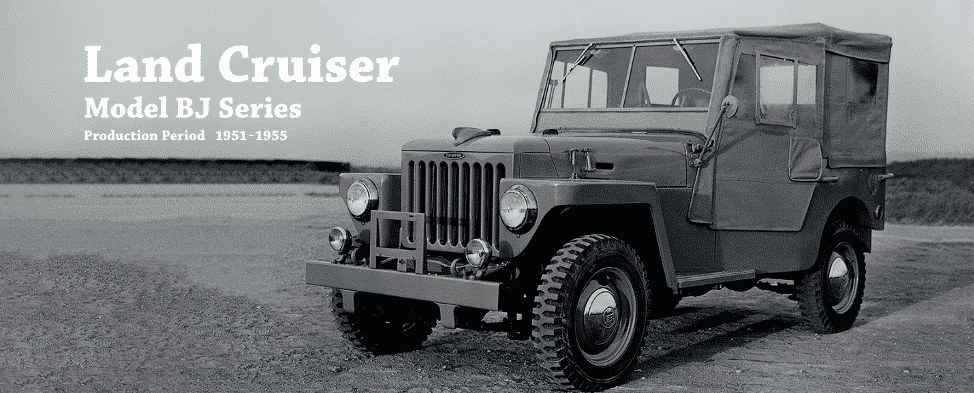
J40 (FJ/BJ/HJ40/43/45/47; 1960–1984)
J60 (FJ/HJ/BJ60/61/62; 1980–1990)
J70 (70/71/73/74/75/76/77/78/79; 1984–present)
Buyer's call
The Land Cruiser is built for one thing first, which is to keep working. That focus is what makes the pros so strong and the cons so predictable. You give up fuel economy and modern infotainment polish. You get a truck that will outlast almost anything else on the road.
Reliability
The Land Cruiser is one of the most reliable trucks ever built. Most of the trouble traces to age, not engineering. Head gasket failure shows up on early 1FZ-FE engines built before 1995. The 2UZ-FE in the J100 is robust but the brake master and ABS unit fails and runs $1,000 to $2,000 to replace. AHC suspension on JDM and ROW high spec trims sags when the rear bags give up, and most owners convert to coil springs. Turbo failure on older turbodiesels usually traces to oil starvation and carbon buildup on the EGR valve.
| Issue | Cause | Solution | Est. cost |
|---|---|---|---|
| Frame rust perforation | Salt exposure; trapped mud in boxed sections | Avoid; repair requires cutting/welding sections | $3000-15000 |
| Seized brake calipers | Corrosion in pistons/slide pins; infrequent service | Replace calipers, pads, rotors; flush fluid | $800-2200 |
| KDSS hydraulic leaks | Corroded hard lines/valve block seals aging | Replace lines/valve block; bleed with Techstream | $1200-4000 |
| AHC sag/harsh ride | Weak accumulators; leaking struts; tired pump | Accumulators/struts; flush; convert to coils if bad | $1500-6000 |
| Front diff pinion leak/whine | Worn seal/bearing from age, towing, low oil | Reseal; rebuild diff if whine persists | $400-2500 |
| Rear axle seal leak | Worn seals/bearings; clogged breather builds pressure | Replace seals/bearings; service breather | $600-1800 |
| Transfer case actuator stuck | Infrequent 4LO use; moisture corrodes actuator | Exercise system; remove/clean or replace actuator | $300-1800 |
| Driveshaft clunk on takeoff | Dry slip yokes; neglected greasing intervals | Grease all zerks; replace slip yoke if worn | $50-600 |
| U-joint vibration/failure | Rust intrusion; high angles from lifts; age | Replace driveshaft/U-joints; balance shaft | $400-1200 |
| Lower ball joint failure | Boot tears; grease loss; heavy tires/lifts | Replace LBJs ASAP; align; inspect knuckle | $400-1200 |
| Steering rack leak | Seal wear; torn boots trap grit; corrosion | Replace rack; flush PS fluid; align | $1200-2800 |
| Power steering pump whine | Aerated/old fluid; worn pump vanes | Flush; replace pump if noise persists | $150-900 |
| Timing chain rattle | Worn tensioner/guides; long oil intervals | Replace tensioners/guides; inspect chain stretch | $1200-3500 |
| Water pump leak | Seal wear; coolant neglected; age heat cycles | Replace pump, thermostat, coolant; inspect belt | $500-1200 |
| Radiator end tank crack | Plastic aging; heat cycling; off-road vibration | Replace radiator and cap; inspect hoses | $450-1100 |
| Heater T-fitting failure | Plastic tees become brittle and split suddenly | Replace with updated/metal tees; refresh hoses | $150-600 |
| Exhaust manifold crack/tick | Thermal cycling; studs loosen; casting cracks | Replace manifolds/gaskets; extract studs | $800-2500 |
| Catalytic converter failure | Age/heat; misfires overheat substrate; oil burning | Fix root cause; replace cats and O2 sensors | $1200-4500 |
| Ignition coil misfires | Heat-soak; oil in plug wells; aged coils | Replace coils/plugs; fix valve cover leaks | $250-900 |
| Valve cover oil leak | Gasket hardening; PCV pressure; age | Replace gaskets; service PCV; clean plug wells | $300-900 |
| Transmission shift flare | Worn valve body/solenoids; degraded ATF | Drain/fill; adapt reset; valve body rebuild if needed | $250-3500 |
| Trans cooler line leak | Crimp seepage; rusted hard lines in salt states | Replace lines; consider upgraded hoses/clamps | $250-1200 |
| Wheel bearing hum | Water intrusion; heavy tires; age wear | Replace hub/bearing assembly; torque correctly | $450-1200 |
| ABS/VSC warning lights | Wheel speed sensor wiring damage; tone ring rust | Scan; repair wiring; replace sensor/hub as needed | $150-1200 |
| Blend door actuator failure | Plastic gears strip; actuator motor wears | Replace actuator; recalibrate HVAC if required | $250-900 |
| A/C compressor leak/noise | Seal wear; low refrigerant; clutch wear | Replace compressor/drier; evacuate and recharge | $900-2200 |
| Rear HVAC blower failure | Blower motor wear; resistor/module failure | Replace blower and/or resistor; clean ducts | $250-800 |
| Door lock actuator failure | Motor wear; cold weather accelerates failure | Replace actuator in affected doors | $250-700 |
| Tailgate wiring harness breaks | Repeated flexing at hinge; insulation cracks | Repair harness; replace camera/lock wiring as needed | $150-600 |
| Sunroof drain leaks | Clogged drains overflow into headliner/A-pillars | Clear drains; reseal; dry carpets to prevent mold | $100-500 |
| Heater core leak | Corrosion; coolant neglect; electrolysis | Replace heater core; flush system; new coolant | $900-2200 |
| Fuel pump module failure | Age; running low fuel overheats pump | Replace pump/module; inspect tank sock | $500-1200 |
| TPMS sensor battery dead | Sensor batteries expire around 8-12 years | Replace sensors during tire service; relearn IDs | $200-600 |
Market
The JDM Land Cruiser and the USDM Land Cruiser are not always the same vehicle — and during certain windows, they were not even related products. Through the J40 and J50 generations, North American sales tracked the JDM model with minor trim differences (and US-spec emissions plumbing on FJ40s from 1972 onward). The 70 Series got a brief 1990 US release (BJ74 and HZJ75) with limited dealer support before being withdrawn — most US-market 70 Series Cruisers are now grey-market imports under the 25-year rule. The biggest divergence is diesel: the US never received the 1HD-FTE (HDJ100), 1HZ, 1KD-FTV, or any factory diesel option in a Land Cruiser; every US Cruiser from the J60 onward was gasoline-only, while JDM and ROW (Rest-of-World) markets had a full diesel lineup. The JDM market also kept a separate 'Land Cruiser Prado' nameplate — a smaller, lighter Cruiser sold as the J70 short-wheelbase, then the J90 (1996), J120 (2002), J150 (2009), and J250 (2024) — that the US either never received or sold under a different name (the J120/J150 Prado was sold in the US as the Lexus GX 470/460). For US buyers importing a JDM Land Cruiser today, the 1HD-FTE HDJ100 and the 1FZ-FE / 1HD-FTE HZJ80 / FZJ80 are the JDM configurations that don't exist as USDM cars and justify the import paperwork.
FJ80 vs FZJ80 — which is better?
Specs
Engine choice depends entirely on which market the truck came from. The US got gasoline only from the J60 onward, which means the 1FZ-FE 4.5 liter inline six in the J80, the 2UZ-FE 4.7 liter V8 in the J100, and the 5.7 liter V8 in later J200s. JDM, Australian, and Middle Eastern trucks got the diesel inline sixes that built the Land Cruiser's overland reputation, including the 1HZ, 1HD-T, 1HD-FT, and the 1HD-FTE 4.2 liter making 204 PS and 430 N·m. The J200 added the 1VD-FTV 4.5 liter twin turbo V8 diesel at 286 hp and 479 lb-ft.
| Chassis | Engine | Displacement | Power | Boost | Notes |
|---|---|---|---|---|---|
| FJ20/FJ25/FJ28/FJ29 | F | 3.9L | estimated | N/A | Early OHV I6; exact rating varies by market |
| FJ40/FJ43/FJ45/FJ55 | F | 3.9L | estimated | N/A | Carb OHV I6; ratings vary by year/market |
| FJ40/FJ43/FJ45/FJ55 | 2F | 4.2L | estimated | N/A | Carb OHV I6; emissions-market dependent |
| BJ40/BJ42/BJ60 | B | 3.0L | estimated | N/A | Diesel I4; output varies by calibration |
| HJ45/HJ47/HJ60 | H | 3.6L | estimated | N/A | Diesel I6; early heavy-duty applications |
| HJ60/HJ61 | 2H | 4.0L | estimated | N/A | Diesel I6; NA; market/year dependent |
| HJ61 | 12H-T | 4.0L | estimated | estimated | Turbo diesel I6; exact boost varies by spec |
| FJ62 | 3F-E | 4.0L | estimated | N/A | EFI I6; output varies by emissions market |
| FZJ80 | 1FZ-FE | 4.5L | estimated | N/A | DOHC I6; ratings differ by region/year |
| HZJ80/HZJ105/HDJ70/HDJ80 | 1HZ | 4.2L | estimated | N/A | NA diesel I6; widely used; market dependent |
| HDJ80 | 1HD-T | 4.2L | estimated | estimated | Turbo diesel I6; early 80-series diesel |
| HDJ80 | 1HD-FT | 4.2L | estimated | estimated | 24V turbo diesel I6; mid-cycle update |
| HDJ100 | 1HD-FTE | 4.2L | estimated | estimated | Turbo diesel I6; intercooler on some specs |
| UZJ100 | 2UZ-FE | 4.7L | estimated | N/A | V8 petrol; VVT-i on later years/markets |
| URJ200 | 3UR-FE | 5.7L | estimated | N/A | V8 petrol; output varies by market calibration |
| VDJ200/VDJ76/VDJ78/VDJ79 | 1VD-FTV | 4.5L | estimated | estimated | V8 turbo diesel; single/twin turbo by market |
| VJA300 | F33A-FTV | 3.3L | estimated | estimated | V6 twin-turbo diesel; market dependent ratings |
| FJA300 | V35A-FTS | 3.5L | estimated | estimated | V6 twin-turbo petrol; market dependent ratings |
| GRJ76/GRJ79 (market) | 1GR-FE | 4.0L | estimated | N/A | V6 petrol; 70-series; output varies by market |
| PZJ70/73/75 (market) | 1PZ | 3.5L | estimated | N/A | NA diesel I5; 70-series; market dependent |
| Type | Ratios | Availability | Notes |
|---|---|---|---|
| 4-speed Manual | estimated | J20/J40 early (market) | Early LC manuals vary by year/market |
| 3-speed Manual | estimated | J40/J55 early (market) | Market dependent; often column/ floor shift |
| 4-speed Manual | estimated | J40/J55/J60 (market) | Common heavy-duty manual; multiple variants |
| 5-speed Manual | estimated | J60/J70/J80/J100 (market) | H-series/R-series; ratios vary by gearbox |
| 4-speed Automatic | estimated | FJ62/80/100 (market) | Aisin automatics; calibration varies |
| 5-speed Automatic | estimated | J100/J200 (market) | Aisin 5AT; engine/market dependent |
| 6-speed Automatic | estimated | J200 (market) | Aisin 6AT; used with some petrol/diesel |
| 10-speed Automatic | estimated | J300 (market) | Direct Shift-10AT; market dependent |
Lineup
The Land Cruiser comes in two distinct shapes you need to keep straight. The full size Land Cruiser is what most people mean, and it's the J40 through J300 line. The JDM market also sold the Land Cruiser Prado as a separate nameplate, which is the smaller and lighter truck through the J70 short wheelbase, J90, J120, J150, and now J250. The US sold the Prado as the Lexus GX 470 and GX 460 instead. That distinction doesn't exist in North America and it's the source of most of the confusion when you're cross shopping JDM imports.
| Generation | Trim | Engine | Key features |
|---|---|---|---|
| J20 (BJ/FJ20/25/28/29; 1955-1960) | Land Cruiser (soft top) | F 3.9L I6 | Part-time 4WD, leaf springs, soft top |
| J20 (BJ/FJ20/25/28/29; 1955-1960) | Land Cruiser (hard top) | F 3.9L I6 | Part-time 4WD, leaf springs, steel hardtop |
| J20 (BJ/FJ20/25/28/29; 1955-1960) | Pickup | F 3.9L I6 | Part-time 4WD, leaf springs, pickup bed |
| J40 (FJ/BJ/HJ40/43/45/47; 1960-1984) | FJ40 | F 3.9L I6 | Short wheelbase, leaf springs, part-time 4WD |
| J40 (FJ/BJ/HJ40/43/45/47; 1960-1984) | FJ43 | F 3.9L I6 | Medium wheelbase, leaf springs, part-time 4WD |
| J40 (FJ/BJ/HJ40/43/45/47; 1960-1984) | FJ45 Pickup | F 3.9L I6 | Pickup, leaf springs, part-time 4WD |
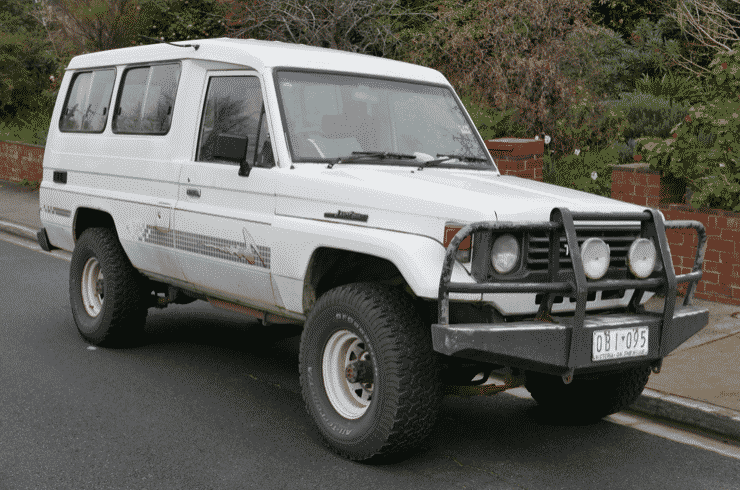
| J40 (FJ/BJ/HJ40/43/45/47; 1960-1984) | FJ45 Troop Carrier | F 3.9L I6 | Troopy, leaf springs, part-time 4WD |
| J40 (FJ/BJ/HJ40/43/45/47; 1960-1984) | BJ40 | B 3.0L I4 diesel | Diesel, leaf springs, part-time 4WD |
| J40 (FJ/BJ/HJ40/43/45/47; 1960-1984) | HJ45/HJ47 | H 3.6L I6 diesel | Diesel, heavy duty, leaf springs |
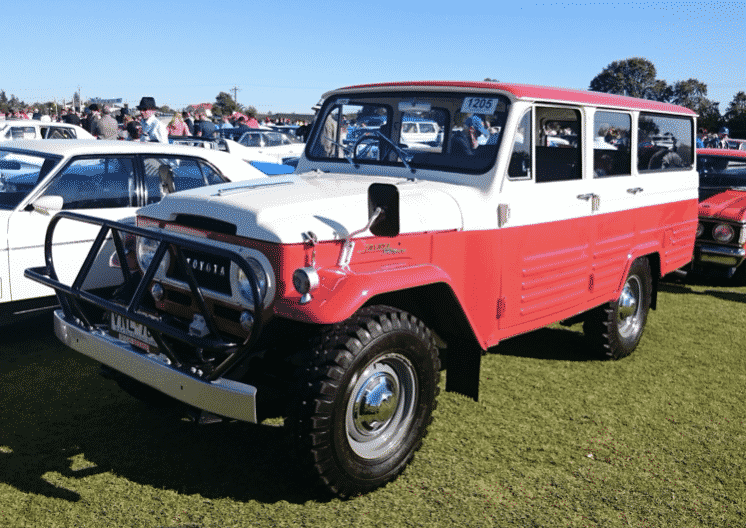
| J50 (FJ55; 1967-1980) | FJ55 Station Wagon | F 3.9L I6 | Wagon body, leaf springs, part-time 4WD |
| J60 (FJ/HJ/BJ60/61/62; 1980-1990) | FJ60 | 2F 4.2L I6 | Wagon, leaf springs, part-time 4WD |
| J60 (FJ/HJ/BJ60/61/62; 1980-1990) | FJ62 | 3F-E 4.0L I6 | EFI, wagon, part-time 4WD |
| J60 (FJ/HJ/BJ60/61/62; 1980-1990) | HJ60 | 2H 4.0L I6 diesel | Diesel, wagon, part-time 4WD |
| J60 (FJ/HJ/BJ60/61/62; 1980-1990) | HJ61 | 12H-T 4.0L I6 turbo diesel | Turbo diesel, wagon, part-time 4WD |
| J70 (BJ/FJ/HJ/PZJ/HDJ70/71/73/74/75/76/77/78/79; 1984-present) | 70 Series (Short/Medium WB) | 1HZ/1PZ/1GR-FE/1VD-FTV (market) | Heavy-duty, solid axles, part-time 4WD |
| J70 (BJ/FJ/HJ/PZJ/HDJ70/71/73/74/75/76/77/78/79; 1984-present) | Troop Carrier (78) | 1HZ/1VD-FTV (market) | Troopy, heavy-duty frame, solid axles |
| J70 (BJ/FJ/HJ/PZJ/HDJ70/71/73/74/75/76/77/78/79; 1984-present) | Pickup (79) | 1HZ/1VD-FTV (market) | Pickup, heavy-duty, solid axles |
| J80 (FZJ/HDJ/HZJ80/81; 1990-1997) | GX | 1FZ-FE/1HZ/1HD-T (market) | Coil springs, solid axles, full-time 4WD |
| J80 (FZJ/HDJ/HZJ80/81; 1990-1997) | VX | 1FZ-FE/1HD-T/1HD-FT (market) | Full-time 4WD, ABS (market), higher spec |
| J80 (FZJ/HDJ/HZJ80/81; 1990-1997) | VX Limited | 1FZ-FE/1HD-FT/1HD-FTE (market) | Leather (market), lockers (market), premium trim |
| J100 (UZJ/HDJ/HZJ100/105; 1998-2007) | Standard (100) | 2UZ-FE/1HD-FTE (market) | IFS front (100), full-time 4WD, comfort |
| J100 (UZJ/HDJ/HZJ100/105; 1998-2007) | VX | 2UZ-FE/1HD-FTE (market) | Higher spec, AHC (market), premium interior |
| J100 (UZJ/HDJ/HZJ100/105; 1998-2007) | VX Limited | 2UZ-FE/1HD-FTE (market) | Top grade, leather, AHC (market) |
| J100 (UZJ/HDJ/HZJ100/105; 1998-2007) | 105 Series (solid axle) | 1FZ-FE/1HZ (market) | Solid front axle, heavy-duty spec, full-time 4WD |
| J200 (URJ/UZJ/VDJ200; 2007-2021) | GX | 1VD-FTV/3UR-FE (market) | Full-time 4WD, KDSS (market), base grade |
| J200 (URJ/UZJ/VDJ200; 2007-2021) | GXL | 1VD-FTV/3UR-FE (market) | Mid grade, added comfort, full-time 4WD |
| J200 (URJ/UZJ/VDJ200; 2007-2021) | VX | 1VD-FTV/3UR-FE (market) | Premium trim, advanced safety (market) |
| J200 (URJ/UZJ/VDJ200; 2007-2021) | Sahara/ZX | 1VD-FTV/3UR-FE (market) | Top grade, leather, multi-terrain (market) |
| J300 (VJA300/FJA300; 2021-present) | GX | F33A-FTV/3.5TT (market) | TNGA-F, full-time 4WD, base grade |
| J300 (VJA300/FJA300; 2021-present) | GXL | F33A-FTV/3.5TT (market) | Mid grade, added tech, full-time 4WD |
| J300 (VJA300/FJA300; 2021-present) | VX | F33A-FTV/3.5TT (market) | Premium trim, off-road aids, full-time 4WD |
| J300 (VJA300/FJA300; 2021-present) | ZX | F33A-FTV/3.5TT (market) | Top grade, luxury interior, advanced safety |
| J300 (VJA300/FJA300; 2021-present) | GR Sport | F33A-FTV/3.5TT (market) | E-KDSS (market), off-road tuned, GR styling |
Pricing
A J100 Land Cruiser carried a $45,000 MSRP at US launch in 1998, which is around $84,000 in 2026 money. The numbers below are what one costs today. Clean 80 or 100 series Cruisers landed in the US can be had for around $20,000, which is a bargain for what you get. Rough projects soften first when the market cools, but documented rust free trucks set new records every year.
Original MSRP: $45,000 at launch in 1998. Approximate USDM MSRP for the J100 Land Cruiser at US launch (1998 model year); approximately $84,000 in 2026 dollars. JDMBUYSELL editorial reference. JDM launch pricing was set in yen and varied by trim grade.
Today's market range: $8,000 to $250,000 (median ~$55,000). Source: JDMBUYSELL / USS Auction.
Market is bifurcated: 40/60 are collector-led and condition-sensitive; 80/100/200 stay firm on overland demand. Prices cooled from peak frenzy but clean, stock, rust-free trucks still set records; rough projects soften first.
Inspect
Walk this list with the seller, not in front of them. The Critical items mean walking away if there's no paperwork backing them up, especially on the timing belt and the diesel injectors. The High items can usually be priced into the deal. Pay extra attention to frame rust at the rear crossmember, leaf spring hangers on J40s, and rocker panels on anything that lived in a salted state.
Cross-shop
If the Land Cruiser doesn't end up being the right truck, the natural alternatives depend on what you wanted out of it. For overland duty look at the Nissan Patrol Y61, which is the closest direct competitor and got factory diesels that the US never saw. For the luxury SUV side the Lexus LX 470 and LX 570 are the same trucks with different badges. For something smaller, the Land Cruiser Prado or the Mitsubishi Pajero covers the mid size category.
100 Series twin; often better kept; AHC to inspect
200 Series twin; luxury spec; similar costs and strength
Cheaper, simpler SUV; strong aftermarket; less plush
Closest global rival; solid axles; US availability limited
More hardcore trail rig; cheaper entry; less long-haul comfort
Compare
Among the global heavy duty 4WDs, the Land Cruiser is the most reliable, the Patrol is the closest mechanical match, and the Defender is the most charismatic but the least durable. The table below leans toward the Land Cruiser's strengths because that's where it actually wins, on durability, global parts support, and resale stability.
| Feature | Toyota Land Cruiser | Jeep Wrangler TJ | Land Rover Defender 110 |
|---|---|---|---|
| Reliability reputation | Class-leading | Strong, but variable | Good, higher complexity |
| Off-road hardware | Low range; lockers on some | Solid axles; lockers avail | Solid axles; lockers avail |
| On-road comfort | High (100/200) | Moderate; noisy | High; luxury-leaning |
| Parts availability | Excellent worldwide | Excellent in US | Good; pricier supply |
| Rust resistance | Varies; older rust-prone | Often rust-prone | Often rust-prone |
| Aftermarket support | Huge (80/100/200) | Massive | Strong (overland) |
| Collector upside | High (40/60/80) | High (early examples) | High but volatile |
| Typical running costs | Medium-high | Medium | High |
| Fuel economy | Poor (esp. V8) | Poor | Better (diesel markets) |
| Towing confidence | Strong (100/200) | Strong | Strong |
| Interior durability | Very strong | Good; wear varies | Good; electronics age |
| Off-road value | High but pricey | High; cheaper entry | High; fewer in US |
| Luxury alternative | LC200 upscale | More luxury; higher risk | Luxury; very expensive |
Gallery
Editorial
The safest starting point is a documented FZJ80 from 1995 to 1997. That places the 1FZ-FE 4.5 liter inline six after the head gasket issue was sorted, coil springs at all four corners, full time 4WD, and a chassis simple enough to run at 300,000 miles. The locked diff trim commands a premium and is worth chasing.
Skip anything under $15,000 unless the paperwork is complete. A cheap Land Cruiser almost always means deferred maintenance and rust — what you save on purchase goes twice over into the frame and the cooling system.
For the diesel that built the Land Cruiser's overland reputation, the 1HD-FTE HDJ100 is the configuration. That engine was never sold in the US, so you're importing from JDM, Australian, or Middle Eastern stock. Budget for AHC suspension repairs as those systems reach end of life, and plan on a coil conversion when the bags give up.
The 2UZ-FE gasoline J100 is the easier US buy at around $20,000 landed, but the brake master and ABS unit will eventually need the $1,000 to $2,000 replacement.
A rough J40 without service records or a frame inspection is the one to walk away from. Rust on the rear crossmember, the leaf spring hangers, and the rockers can quietly total a truck whose engine and drivetrain are fine. Clean dry-climate FJ40s from Arizona or inland Australia with the original drivetrain intact are a different category — expect collector money.
FAQ
Citations
Sources last verified: