Chassis Code Explained
| Segment | Meaning | Detail |
|---|---|---|
| Z | Model series | Z — Z-series GTO/3000GT platform |
| 16 | Engine code | 16 — 3.0L 6G72 V6 engine (turbo or NA) |
| A | Variant | A — AWD body variant designation |
Z16A covers all GTO variants (twin-turbo 280 PS and naturally aspirated); the 3000GT export version uses the same Z16A internal Mitsubishi chassis designation. The twin-turbo variant uses the 6G72TT engine.
Editorial notes
Key Takeaways
The Mitsubishi GTO ran from 1990 until 2000 in Japan and from 1990 until 1999 in the US, where it was sold as the 3000GT. The early Z16A is the wildest one, with all the active hardware turned on. The mid-life Z15A/Z16A facelift got the 6-speed Getrag and the 320 hp rating, and a few of the fragile early systems started getting deleted. The late Z15AM is the easiest one to live with because most of the stuff that breaks on early cars is already gone.
- VR-4 twin-turbo cars command the strongest premiums
- Original, unmodified examples sell fastest and highest
- Active aero/ECS/4WS add appeal but raise repair risk
- Timing belt/60k service history is a major value driver
- RHD JDM GTO vs US 3000GT: spec and parts vary
- Prices firming for top cars; rough cars lag
Technical Specifications
Every GTO uses some version of the 6G72 3.0L V6. The base SOHC version made around 168 hp. The DOHC NA made 222 hp. The Twin Turbo VR-4 was rated at 280 PS on paper to keep the JDM regulators happy, but the same hardware was rated at 300 hp in the US in 1991 and 320 hp from 1994 on. The early Twin Turbo got a 5-speed Getrag. From 1994 on you got the 6-speed Getrag, which is the one you want.
Engine Options
| Chassis | Engine | Displacement | Power — JDM | Notes |
|---|---|---|---|---|
| Z16A | 6G72 DOHC TT (early) | 3.0L (2972cc) | 280PS @ 6000rpm (276hp) | JDM cap; twin TD04 turbos |
| Z16A | 6G72 DOHC TT (mid/late) | 3.0L (2972cc) | 280PS @ 6000rpm (276hp) | Later ECU/boost control revisions |
| Z16A | 6G72 DOHC NA | 3.0L (2972cc) | 225PS @ 6000rpm (222hp) | JDM DOHC NA; output varies by year |
| Z16A | 6G72 SOHC NA | 3.0L (2972cc) | 170PS @ 5500rpm (168hp) | Base SOHC NA; early/low grades |
Transmission Options
| Type | Ratios | Availability | Notes |
|---|---|---|---|
| 5-speed Manual (AWD TT) | estimated (varies by year/market) | Twin Turbo, Twin Turbo MR/SR/R | Getrag 5MT used on many TT cars |
| 6-speed Manual (AWD TT) | estimated (varies by year/market) | Late Twin Turbo (some markets) | Limited availability; year/market dependent |
| 4-speed Automatic | estimated (varies by year/market) | NA and some TT (market dependent) | INVECS-type 4AT on many automatic cars |
| 5-speed Manual (FWD NA) | estimated (varies by year/market) | NA grades (GS/GSR/SR/NA) | FWD manual; exact gearing varies |
Livability
- Headroom
- 37.0"
- Low roof; helmet clearance is tight
- Rear Seats
- Very tight 2+2
- Best for kids/bags; adults suffer quickly
- Cargo
- 10.0 cu ft
- Hatch helps; strut brace/spare limits height
This chassis became eligible for US import under the 25-year rule in 2015. Calculate import costs →
Variants & Trims
The trim story is messy because the JDM GTO, the US 3000GT, and the Dodge Stealth are all the same car with different badges and different option lists. The JDM Twin Turbo got the full active aero and active exhaust package as standard. The US VR-4 got AWD but not the active aero. The Stealth ran from 1990 until 1996 and got the same 6G72 in SOHC and twin-turbo R/T flavors. The Beckenbauer Edition is the rarest factory GTO at 30 units total, all in Lamborghini yellow with Remus exhaust and OZ wheels.
| Generation | Trim | Engine | Key Features |
|---|---|---|---|
| Z16A (1st gen, pre-facelift) | GTO Twin Turbo | 6G72 3.0L TT DOHC 24V | AWD, AWS, active aero, ECS, 4-piston fronts |
| Z16A (1st gen, pre-facelift) | GTO Twin Turbo MR | 6G72 3.0L TT DOHC 24V | AWD, AWS delete, active aero, ECS, lighter spec |
| Z16A (1st gen, pre-facelift) | GTO Twin Turbo SR | 6G72 3.0L TT DOHC 24V | AWD, AWS, active aero, ECS, sport-oriented spec |
| Z16A (1st gen, pre-facelift) | GTO Twin Turbo R | 6G72 3.0L TT DOHC 24V | AWD, AWS, active aero, ECS, higher equipment |
| Z16A (1st gen, pre-facelift) | GTO NA | 6G72 3.0L NA DOHC 24V | FWD, ECS (market/grade dep.), ABS (dep.) |
| Z16A (1st gen, pre-facelift) | GTO SR (NA) | 6G72 3.0L NA DOHC 24V | FWD, sport trim, ABS (dep.), aero (dep.) |
| Z16A (1st gen, pre-facelift) | GTO GSR (NA) | 6G72 3.0L NA DOHC 24V | FWD, higher equipment, ABS (dep.), ECS (dep.) |
| Z16A (1st gen, pre-facelift) | GTO GS (NA) | 6G72 3.0L NA SOHC 12V | FWD, base grade, lighter equipment |
| Z16A (1st gen, facelift) | GTO Twin Turbo | 6G72 3.0L TT DOHC 24V | AWD, active aero (dep.), ECS (dep.), 4WS (dep.) |
| Z16A (1st gen, facelift) | GTO Twin Turbo MR | 6G72 3.0L TT DOHC 24V | AWD, AWS delete, active aero (dep.), ECS (dep.) |
| Z16A (1st gen, facelift) | GTO Twin Turbo SR | 6G72 3.0L TT DOHC 24V | AWD, sport spec, ECS (dep.), aero (dep.) |
| Z16A (1st gen, facelift) | GTO Twin Turbo R | 6G72 3.0L TT DOHC 24V | AWD, higher equipment, ECS (dep.), aero (dep.) |
| Z16A (1st gen, facelift) | GTO NA | 6G72 3.0L NA DOHC 24V | FWD, ABS (dep.), ECS (dep.) |
| Z16A (1st gen, facelift) | GTO SR (NA) | 6G72 3.0L NA DOHC 24V | FWD, sport trim, ABS (dep.), aero (dep.) |
| Z16A (1st gen, facelift) | GTO GSR (NA) | 6G72 3.0L NA DOHC 24V | FWD, higher equipment, ABS (dep.), ECS (dep.) |
| Z16A (1st gen, facelift) | GTO GS (NA) | 6G72 3.0L NA SOHC 12V | FWD, base grade, lighter equipment |
| Z16A (2nd gen, late) | GTO Twin Turbo | 6G72 3.0L TT DOHC 24V | AWD, ECS (dep.), AWS (dep.), active aero delete |
| Z16A (2nd gen, late) | GTO Twin Turbo MR | 6G72 3.0L TT DOHC 24V | AWD, AWS delete, ECS (dep.), lighter spec |
| Z16A (2nd gen, late) | GTO NA | 6G72 3.0L NA DOHC 24V | FWD, ABS (dep.), simplified aero |
Should You Buy a Mitsubishi GTO Z16A?
The GTO is one of those cars where the strengths and weaknesses come from the same place. Mitsubishi crammed every active system they had into the VR-4, and that's what makes the GTO interesting and what makes it expensive to own. Going in with eyes open is the difference between loving the car and resenting it.
Why You'll Love It
- Flagship 90s tech package AWD, 4WS, active aero, ECS made VR-4 a true tech showcase vs rivals.
- Strong straight-line performance Twin-turbo 6G72 delivers big midrange; easy to tune with supporting mods.
- Grand tourer comfort Refined ride, long-gear cruising, and solid NVH for distance driving.
- Value vs icon rivals Often cheaper than Supra/GT-R/NSX for similar era performance and presence.
- Distinct styling and presence Wide stance and 90s design cues; VR-4 has real road presence at shows.
- Rarity supports collectability Clean VR-4s and late JDM GTOs are scarce; rarity helps long-term values.
Why You Might Not
- High complexity, high labor Tight bay and layered systems make routine jobs expensive; DIY requires patience.
- Parts availability tightening OEM sensors, active aero, ECS, interior bits can be scarce or costly.
- Deferred maintenance kills value Overheating, oil leaks, worn turbos, and missed belt service are common pitfalls.
- Weight and handling feel Heavy curb weight dulls agility vs RX-7/NSX; brakes/suspension must be fresh.
- Modded cars are risky buys Poor tunes, boost creep, hacked wiring reduce reliability; originality is rewarded.
- Auto trans limits upside Automatics trade cheaper; manuals are more liquid and command higher premiums.
Who Should NOT Buy This
- Anyone needing reliable daily transport
- Owners without a specialist shop nearby
- People who can’t wrench or pay labor
- Budget buyers expecting cheap parts
- Drivers who hate chasing vacuum/boost leaks
- Anyone needing good fuel economy
- People in strict emissions states without plan
- Those who want modern safety/airbags
- Anyone who hates electrical troubleshooting
- Track users without cooling and brake upgrades
- Buyers unwilling to do timing belt on schedule
- People who need usable rear seats
- Anyone who can’t tolerate long downtime
- Buyers wanting quiet, rattle-free cabins
- People who dislike heavy clutch/old ergonomics
- Anyone buying a heavily modded car without logs
- Rust-belt buyers without lift/inspection access
- Collectors who need perfect active aero/ECS
- Drivers who expect easy OBD2 diagnostics
- Anyone who can’t source JDM-only trim parts
Common Issues & Solutions
The GTO is mechanically pretty stout. The 6G72 is the same engine Mitsubishi used in the Pajero and the Diamante, and it'll go a long way if you change the timing belt on schedule. Most of the trouble is the active hardware aging out. The hydraulic lines on the active aero crack. The ECS struts leak. The ECU capacitors leak onto the board on early cars. None of these are dealbreakers, but they all cost real money to fix.
| Issue | Cause | Solution | Est. Cost |
|---|---|---|---|
| Timing belt failure | Neglected interval; oil contamination | Full belt kit + pump + seals; verify timing | $900-2200 |
| ECU capacitor leakage | Aging electrolytic caps leak onto board | ECU rebuild/recap; repair traces; verify tune | $250-900 |
| Rod bearing failure | Low oil, detonation, poor tune, abuse | Engine rebuild/replace; fix oiling and tune | $4500-12000 |
| Lifter tick (lash adjusters) | Sludge/air in HLAs; wrong oil viscosity | Flush, correct oil, replace HLAs if needed | $150-900 |
| Overheating at idle | Aging radiator, fans, trapped air, undertray | Radiator/fans/thermostat; bleed properly | $400-1500 |
| Water pump leak | Age; bearing wear; poor-quality pump | Replace pump with timing service; new coolant | $900-2200 |
| Valve cover oil leaks | Hardened gaskets; PCV issues | Gaskets + grommets; service PCV system | $200-700 |
| Cam/crank seal leaks | Aged seals; crankcase pressure | Replace seals during belt job; check PCV | $900-2500 |
| Turbo smoking | Worn seals/bearings; oil coking; high EGT | Rebuild/replace turbos; fix oil feed/return | $1800-6000 |
| Boost leaks | Aged couplers, cracked hoses, loose clamps | Pressure test; replace couplers/lines; retune | $100-800 |
| Overboost/detonation | Bad boost control, vacuum routing, poor tune | Restore lines/solenoids; proper tune & wideband | $300-2000 |
| Fuel pump failure | Age, varnish, low tank overheating pump | Replace pump + filter; verify wiring/relay | $250-900 |
| Injector O-ring fuel leak | Hardened seals; disturbed during service | Replace injector seals; inspect rail for cracks | $150-600 |
| Idle surge/stalling | ISC motor failure, TPS drift, vacuum leaks | Smoke test; set TPS; replace ISC if bad | $200-1200 |
| Getrag 2nd/3rd gear grind | Worn synchros; wrong fluid; hard shifting | Rebuild trans; correct fluid; clutch hydraulics | $2500-6500 |
| Clutch hydraulic failure | Aged master/slave seals; fluid neglect | Replace master/slave; bleed; inspect lines | $200-700 |
| Clutch slip | Worn disc; oil contamination; high torque mods | Clutch kit + flywheel service; fix rear main leak | $900-2500 |
| Transfer case leak/whine | Seal wear; low fluid; bearing wear | Reseal or rebuild; refill with correct fluid | $400-2000 |
| Driveshaft center bearing | Rubber carrier deterioration; age | Replace carrier bearing or driveshaft assembly | $400-1200 |
| Rear diff mount clunk | Worn mounts/bushings; aggressive launches | Replace mounts/bushings; inspect subframe | $300-1200 |
| ECS strut failure/leaks | Age; seal failure; corrosion | Replace ECS struts or convert to coilovers | $800-3500 |
| ECS warning light | Bad strut actuators, sensors, wiring | Diagnose sensors; repair wiring; replace actuators | $150-1500 |
| Active aero not working | Hydraulic leaks, pump failure, position switches | Repair leaks; rebuild pump; replace switches | $300-2500 |
| Active aero fluid leaks | Cracked lines/actuator seals; age | Replace lines/seals; refill/bleed system | $300-1800 |
| Power steering rack leak | Seal wear; torn boots; contaminated fluid | Rebuild/replace rack; flush system | $600-1800 |
| Brake caliper seizure | Corrosion on slide pins/pistons; old fluid | Rebuild/replace calipers; new fluid/hoses | $300-1200 |
| ABS sensor faults | Cracked tone rings, sensor wiring damage | Replace sensor/repair wiring; clean tone rings | $150-800 |
| Window regulator failure | Worn cables/gears; dried tracks | Replace regulator; lube tracks; check switches | $200-700 |
| Pop-up headlight issues | Worn gears, tired motors, bad relays | Rebuild motor/gears; replace relays; align | $150-800 |
| A/C weak or dead | Leaks, old compressor, R12-to-R134a issues | Leak test; replace drier/comp; proper conversion | $400-1800 |
| Heater core leak | Corrosion; old coolant; electrolysis | Replace heater core; flush system; new coolant | $700-1800 |
| Rust at sills/jack points | Moisture traps; poor repairs; salted roads | Cut/weld metal; treat; undercoat properly | $800-6000 |
| Rear arch/quarter rust | Inner lip traps dirt; aged seam sealer | Cut/patch; repaint; clear drain paths | $600-4000 |
| Electrical gremlins | Bad grounds, hacked wiring, aging connectors | Ground refresh; repair harness; remove hacks | $150-1500 |
| O2 sensor/closed-loop issues | Aged sensors; exhaust leaks; rich tune | Fix leaks; replace sensors; verify fuel trims | $200-900 |
| Knock sensor failure | Heat cracks sensor; harness brittle | Replace sensor/harness; retune if modified | $300-900 |
| Crank angle sensor faults | Sensor aging; wiring heat damage | Replace sensor; inspect wiring; set base timing | $200-800 |
| PCV system clogging | Blow-by and sludge; neglected maintenance | Replace PCV valve/hoses; clean breathers | $50-300 |
Differences between JDM & USDM
The GTO (JDM) and the 3000GT (USDM) are the same car at the chassis and 6G72 engine level, but the trim, drivetrain, and feature mix diverge sharply. In Japan, most twin-turbo cars shipped with the full active package — active aero, active exhaust, ECS, AWS, AWD — plus electric mirrors, factory navigation, and rear bucket seats. In the United States, only the VR-4 was sold with AWD; base 3000GT trims were front-wheel drive, and even the US VR-4 went without the JDM-standard active aero / active exhaust hardware. The Dodge Stealth (1990–1996) was Chrysler's badge-engineered version of the 3000GT, built on the same platform with the same 6G72 engine family — the differences were the front and rear fascias and the badge. The Stealth used the SOHC 6G72 in its base form and the twin-turbo 6G72 in the R/T Turbo. JDM-spec Twin Turbo cars are listed at 280 PS to comply with the 1988 Gentlemen's Agreement; US-spec VR-4s were rated 300 hp in 1991–1993 and 320 hp from 1994 onward with the same hardware, suggesting JDM cars were similarly underrated on paper. The 1995–1996 3000GT Spyder VR-4 — built with Chrysler and American Specialty Cars — has an electronically operated convertible roof that the JDM GTO never received; the JDM equivalent is a manually removable Targa-style top that cannot be stowed in the car.
Pre-Purchase Inspection Checklist
Don't skip the compression and leakdown test on a GTO. The engine bay is tight, the active systems all have to be tested while running, and the rust spots are the kind you can't see without getting underneath. Bring a flashlight and budget an hour. The Critical items are walk-away items if there's no paperwork. The High items can be priced into the offer.
Critical Priority
High Priority
Medium Priority
Low Priority
Generation History
Z16A GTO / 3000GT (1990-1993)
- Debut: AWD+4WS+active aero (VR-4)
- 6G72 DOHC; TT VR-4 flagship
- Pop-up headlights; heaviest curb weights
- Early electronics/vacuum systems most complex
Z16A Facelift (Gen 2) (1994-1996)
- Fixed headlights; cleaner aero
- Interior/trim updates; improved drivability
- Some markets reduced active aero content
- Better parts commonality vs early cars
Z16A Late (Gen 3) (1997-2000)
- Simplified equipment on many trims
- Reliability improved via de-contenting
- VR-4 remains halo; rarer late examples
- Best buy for use: fewer fragile systems
Z16A Final (Gen 4) (2001-2005)
- Japan-focused late production; low volumes
- Most cars are NA; VR-4 very scarce
- Collector premium for late, clean RHD cars
- Parts scarcity most acute on late-only items
Sales Numbers by Year
| Year | Notes |
|---|---|
| 1990 | Z16A launch. JDM GTO and US 3000GT both enter production; Dodge Stealth introduced as Chrysler's badge-engineered version. |
| 1991 | First full production year. JDM Twin Turbo VR-4 rated 280 PS on paper, ~300 hp in reality; US 3000GT VR-4 rated 300 hp. |
| 1992 | Mitsubishi formally introduces the 3000GT VR-4 trim in the US — larger rear wing, sport-tuned suspension, sport interior accents. |
| 1994 | Z16A → Z15A/Z16A second-generation facelift. Twin-turbo output increased to 320 hp; 6-speed Getrag manual introduced. JDM cars begin losing some active-aero and active-exhaust content under cost pressure. |
| 1995 | 3000GT Spyder VR-4 launched as a Mitsubishi / Chrysler / American Specialty Cars (ASC) collaboration with an electronically operated convertible roof. |
| 1996 | Dodge discontinues the Stealth at the end of the model year. JDM GTO MR (Mitsubishi Racing) and Beckenbauer Edition (30 units, Lamborghini yellow) sold only in Japan. |
| 1999 | US production ends. Mitsubishi discontinues the 3000GT in North America. |
| 2000 | JDM GTO production ends in 2000–2001. WP source cites declining sales and inability to meet new side-impact safety regulations as the discontinuation drivers. |
Market Data
The trim story is messy because the JDM GTO, the US 3000GT, and the Dodge Stealth are all the same car with different badges and different option lists. The JDM Twin Turbo got the full active aero and active exhaust package as standard. The US VR-4 got AWD but not the active aero. The Stealth ran from 1990 until 1996 and got the same 6G72 in SOHC and twin-turbo R/T flavors. The Beckenbauer Edition is the rarest factory GTO at 30 units total, all in Lamborghini yellow with Remus exhaust and OZ wheels.
Production Numbers & Rarity
| Generation | Years | Total Built | Notes |
|---|---|---|---|
| Z16A (all years) | 1990-2000 | estimated ~60,000-70,000 (GTO only) | Exact JDM GTO totals vary by source |
| Z16A (early) | 1990-1993 | estimated | Highest tech content; active aero common |
| Z16A (mid) | 1994-1996 | estimated | Revisions; equipment rationalization begins |
| Z16A (late) | 1997-2000 | estimated | Lower volumes; MR more prominent |
Original MSRP & Pricing
Original MSRP: $32,000 at launch in 1991. USD launch price band for the 1991 Mitsubishi 3000GT VR-4 in the United States, per Car and Driver's archived instrumented test. Base 3000GT trims listed lower. JDMBUYSELL's source post does not cite a JDM launch price in yen.
How It Compares
Among the 90s JDM coupes, the GTO is the heaviest, the most feature-loaded, and the cheapest to buy in equivalent condition. The Supra has the bigger aftermarket. The RX-7 is lighter and sharper. The R32 GT-R has the motorsport pedigree. The table below leans toward the GTO's actual strengths, which are AWD traction, twin-turbo midrange, and the active-aero tech that nothing else in the segment had.
| Feature | Z16A | Toyota Supra JZA80 | Mazda RX-7 FD3S |
|---|---|---|---|
| Layout/Drivetrain | Front-eng, AWD (VR-4) | Front-eng, RWD | Front-mid, RWD |
| Power (stock) | VR-4 TT ~280-320hp | 2JZ-GTE ~280-320hp | 13B-REW ~255-280hp |
| Torque character | Strong midrange; TT surge | Big torque; high headroom | Peaky; loves revs |
| Curb weight | Heavy ~3,600-3,900 lb | ~3,300-3,500 lb | ~2,800-2,900 lb |
| Handling feel | Stable GT; less nimble | Balanced; fast GT | Sharp; lightweight sports |
| Tech features | 4WS/ECS/active aero | Simpler; strong base | Lightweight focus |
| Tuning headroom | Good; needs supporting mods | Excellent; 2JZ legend | Good but heat-sensitive |
| Reliability baseline | Fair; maintenance-critical | Good; robust drivetrain | Fair; rotary upkeep |
| Service difficulty | High; tight bay | Medium; better access | Medium-high; rotary quirks |
| AWD traction | Yes (VR-4) | No | No |
| Collector demand | Rising; VR-4 favored | Very high; blue-chip | High; purity premium |
| Price vs condition | Sensitive to maintenance | Strong even with miles | Strong for clean cars |
| Interior/GT comfort | GT-focused; solid NVH | GT-focused; roomy | Sporty; tighter cabin |
| Rarity (top trims) | VR-4 scarce; late rarer | Turbo models sought | FD supply limited |
| Direct AWD rival | AWD TT V6 GT | AWD TT I6 coupe | AWD turbo I4 coupe |
| Power (AWD rivals) | ~280-320hp | RB26DETT ~280hp | EJ20T ~250-280hp |
| Use case | GT + highway pace | Track/rally-bred grip | Light AWD fun; sedan/coupe |
| Ownership costs | High; labor + parts | High; RB26 upkeep | Medium; better parts flow |
Comparable Alternatives
If the GTO doesn't end up being the right car, the obvious alternatives are the Toyota Supra JZA80 if you want the 2JZ-GTE and the bigger aftermarket, the Mazda RX-7 FD3S if you want something lighter and sharper, or the Nissan 300ZX Z32 if you want a twin-turbo GT that's a bit simpler to live with. The Skyline GT-R R32 is the GTO's closest AWD rival on paper but it's a different kind of car to drive.
Nissan 300ZX Z32
Similar era twin-turbo GT; RWD; still complex
In Pictures
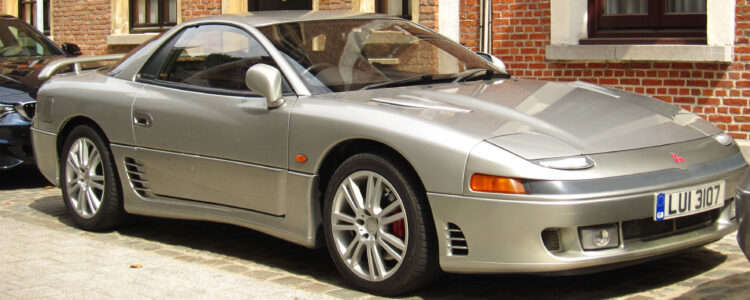
The Buyer's Read
A documented 1994 to 1996 Twin Turbo VR-4 with the 6-speed Getrag is the value starting point. That window gives you the 320 hp rating, the gearbox that fixed the 5-speed's 2nd-to-3rd shift problems, and the partial de-content of the most fragile early active systems. Skip anything under $15,000 if it's a VR-4 — that price almost always means deferred maintenance on a car that punishes deferred maintenance harder than most. The 6-speed Getrag is the transmission you want under any high-mileage car, and it's the one you need to verify is present when evaluating any 1994-and-later example.
If you want the full-tech early Z16A — pop-up headlights, active aero, AWS rear-steer — require documentation showing the hydraulic system was serviced, the ECU re-capped, and the timing belt history is current. Budget three to five thousand on top of the purchase price for the first round of active-aero and ECS work over the initial ownership years. If the active hardware is already deleted, the car is worth less and you should pay accordingly — the originality loss is hard to undo.
The car to avoid is a rough Z16A with the aero or AWS deleted and no records. The 6G72 engine family is durable — it's the active support hardware that aged badly, and an undocumented early GTO is a parts hunt rather than a car you can use immediately. Poor tunes and hacked wiring on a twin-turbo 6G72 are how engines end up with bent rods.
Clean late Z15AM Twin Turbo MR and Beckenbauer examples with paperwork are a different conversation, but most remain in Japan. Importing one is its own project; verify US legal year and 25-year rule eligibility before committing.
Frequently Asked Questions
- What’s the best Mitsubishi GTO trim to buy?
- For value and demand, target a VR-4 manual with records. NA cars are cheaper but less collectible.
- What are the must-do maintenance items?
- Proof of timing belt/water pump, fluids, cooling system, and turbo health. Deferred service is the #1 risk.
- Are active aero, ECS, and 4WS reliable?
- They work well when maintained, but failures are common with age. Budget for diagnostics and parts hunting.
- Is the GTO expensive to work on?
- Yes. The bay is tight and labor is high; many jobs are “while you’re in there.” Choose a car with recent major service.
- Manual vs automatic: which holds value?
- Manual cars are more liquid and command premiums. Automatics can be fine cruisers but have lower ceiling values.
- What mods hurt value the most?
- Poor tunes, hacked wiring, cheap coilovers, and missing emissions/ancillaries. Collectors pay for OEM+ and documentation.
- What should I check on a pre-purchase inspection?
- Compression/leakdown, cooling, oil leaks, transfer case/driveline, ECU codes, and function of 4WS/ECS/aero.
- When is a Mitsubishi GTO US-legal to import?
- Under the 25-year rule, 1990 cars were legal in 2015; each model year becomes legal 25 years after build date.
Sources & References
Sources (10)
- Mitsubishi GTO — encyclopedic overview — Wikipedia Verified
- Mitsubishi 3000GT — encyclopedic overview — Wikipedia Verified
- 三菱・GTO — Japanese encyclopedic overview — Wikipedia (Japanese) Verified
- Dodge Stealth — encyclopedic overview — Wikipedia Verified
- Dodge Stealth vs. Mitsubishi 3000GT VR-4 — comparison test — Car and Driver Verified
- Mitsubishi 3000GT auction history and market data — Bring a Trailer Verified
- Dodge Stealth auction history — Bring a Trailer Verified
- Mitsubishi 3000GT / GTO market values and sale comps — Classic.com Verified
- 3SGTO owners forum — 3000GT / GTO / Stealth technical reference — 3SGTO.org Verified
- Team3S owners community and technical archive — Team3S Verified
Sources last verified: