Acura Integra Type R
USDM DC2R; LHD, easier parts; still pricey
Buyer's guide
15 min read
Buyer's guide & specs
Quick answer
The Honda Integra is a high-revving, front-drive icon best known for Type R models and bulletproof B-series engines. Prices are strongest for DC2/DB8 Type R and clean, unmodified cars; base trims remain the value play but are rising with JDM demand.
Background
The Honda Integra ran from 1985 to 2006 across four generations, from the DA pop-up-headlamp coupes through the DC2 Type R that set the FWD handling benchmark and the DC5 that replaced the B-series with the K20A. Most buyers now want either the DC2 — built around the hand-ported B18C, helical LSD, and seam-welded shell — or the DC5 with its chain-driven K20A and 6-speed manual. Clean, unmodified Type R examples in either generation lead current pricing; GS-R and SiR cars are the value entry point on the same chassis.
The DC2 Type R (1995–2001) used the 1.8L B18C with hand-ported intake and exhaust ports, undercut valve seats, and an 11.1:1 compression ratio — higher than the GS-R's B18C1. The USDM B18C5 produced 195 hp at an 8,400 rpm redline; the JDM B18C reached 200 ps at 8,500 rpm. Curb weight was 2,639 lb (USDM) or roughly 2,425 lb (JDM stripped), kept low by seam welding, deleted sound deadening, and Recaro front buckets.
The chassis also received a Torsen-style helical front LSD and, from the 98-spec onward in JDM form, four-piston front Brembo calipers on 16-inch wheels. USDM cars ran 15-inch wheels with the close-ratio 5-speed. Both were JDM-exclusive for most of their run — the USDM Acura ITR sold from 1997 through 2001 only, with a gap in 1999.
The DC5 Type R (2001–2006) rebuilt the platform around the chain-driven K20A 2.0L i-VTEC — 220 ps at 8,000 rpm, redline at 8,600 rpm, paired with a 6-speed manual versus the DC2's 5-speed. Honda raised torsional rigidity significantly and added Brembo brakes front and rear. The DC5 is quicker on a stopwatch; the DC2 is lighter and carries the steering feel that has put clean examples into six-figure auction territory.
The K20A that arrived in the 2001 DC5 Integra Type R — and subsequently the EP3 Civic Type R and the FD2 Civic Type R — was a clean-sheet design rather than a B-series evolution. It used a roller-rocker valvetrain, a chain-driven cam, individual-cylinder ignition coils, and dual-stage i-VTEC where both lift and duration change at the high-cam crossover. JDM Type R output reached 110 ps per litre at 8,000 rpm, with peak torque shifted high into the 7,000 rpm region.
Spoon Sports and Mugen built dry-sump K20A variants that have powered FIA touring cars and time-attack record holders for two decades. The bottom end tolerates 9,000+ rpm with valvetrain upgrades, and Honda Civic parts-bin sourcing keeps consumables available at dealer pricing.
Editorial notes
Quick read
Constants
Chassis history
The Integra ran from 1985 until 2006 across four generations, and they really do feel like different cars. The DA cars are the lightweight 80s coupes with pop-up headlights and the first VTEC engine in the JDM Si and SiR trims. The DC2 is the icon, with the Type R that set the FWD handling benchmark. The DC5 swapped the B-series for the K20A and went stiffer, heavier, and faster. The first-gen AV cars are interesting historically but not what most buyers are after.
DC2 Integra Type R (B18C; 1995–2001)
Identification
Generation names are broad families. The factory chassis codes below identify the variants represented in JDMBUYSELL's current Honda Integra guide data.
Confirm the complete code on the vehicle's frame or VIN plate; drivetrain, body, and market variants can use different prefixes within one generation family.
Buyer's call
The Integra is a Honda, so you get the usual upside. Cheap parts, easy mechanical work, engines that take a beating, and an aftermarket that can build you anything. The downsides are also Honda problems. Theft, rust on the rear quarters, an interior that didn't age well, and front-wheel drive that some buyers see as a dealbreaker. None of it is a surprise once you've owned one.
Reliability
The Integra is a tough car mechanically. Most of what goes wrong on one is age, not design. The rear quarter panels rust. The taillight gaskets leak and the trunk gets wet. The door locks and other electronics get flaky. Oil seeps from the valve cover gasket and the cam seals. The B and K series engines themselves rarely cause trouble if the timing belt or chain has been kept on top of.
| Issue | Cause | Solution | Est. cost |
|---|---|---|---|
| 2nd/3rd gear synchro grind | Worn synchros from hard shifting/old fluid | Rebuild trans w/synchros; use correct MTF | $1200-3000 |
| Manual trans input bearing whine | Bearing wear, low/dirty fluid, high mileage | Transmission rebuild; replace bearings/seals | $1500-3500 |
| Clutch slip or chatter | Worn disc/pressure plate; oil contamination | Replace clutch kit; resurface flywheel; fix leaks | $700-1600 |
| Rear main seal oil leak | Aged seal; crankcase pressure; high mileage | Replace rear main seal during clutch service | $600-1400 |
| VTEC solenoid gasket leak | Hardened gasket and screen clogging | Replace gasket/screen; clean; verify oil pressure | $80-250 |
| Cam seal/cap oil leak | Aged seals; poor prior service; crankcase pressure | Replace cam seals/cap seal; reseal as needed | $200-600 |
| Oil pan seep/leak | Old RTV, pan dents, over-torqued bolts | Reseal pan; straighten/replace if dented | $200-500 |
| Blue smoke on decel | Valve stem seals worn from age/heat | Replace valve seals; inspect guides; valve job if needed | $900-2200 |
| Blue smoke on accel | Worn rings/cylinder wear; poor maintenance | Engine rebuild or replacement long block | $2500-7000 |
| Idle hunting/surging | Dirty IACV/FITV, vacuum leaks, TB carbon | Clean/repair IACV/FITV; smoke test; base idle set | $150-600 |
| Random misfire at idle | Bad plugs/wires/coil, valve lash, grounds | Tune-up; adjust valves; repair grounds/wiring | $150-800 |
| Valve lash noise/tick | Valves out of adjustment; neglected service | Adjust valve lash; inspect cam lobes | $200-500 |
| Timing belt overdue (B-series) | Skipped service interval; unknown history | Replace belt, tensioner, water pump, seals | $600-1200 |
| Timing chain/tensioner wear | K-series tensioner wear; low oil; high miles | Replace chain/tensioner/guides; inspect VTC gear | $900-2200 |
| Overheating in traffic | Bad fan switch/relay, clogged rad, stuck thermostat | Diagnose fans; replace radiator/thermostat as needed | $250-900 |
| Radiator end tank crack | Aged plastic tanks; heat cycling | Replace radiator and cap; bleed system properly | $250-650 |
| Head gasket failure | Prior overheating; detonation; poor tune | Head gasket job; check head flatness; new bolts | $1200-2800 |
| Heater core leak | Corrosion/age; coolant neglect | Replace heater core; flush system; new hoses | $800-1600 |
| Power steering pump whine | Old fluid, pump wear, suction leak at O-ring | Replace O-ring; flush; rebuild/replace pump | $80-600 |
| Steering rack leak/play | Worn seals/bushings; torn boots; age | Replace/reseal rack; align; replace tie rods | $700-1600 |
| Front LCA bushing failure | Aged rubber; lowered cars stress bushings | Replace bushings or arms; align afterward | $300-900 |
| Ball joint wear/failure | Age, torn boots, lowered suspension angles | Replace ball joints/arms immediately; safety item | $250-800 |
| Wheel bearing hum | Bearing wear; track use; impacts | Replace hub/bearing; check knuckle condition | $300-900 |
| CV axle vibration/click | Worn joints; torn boots; cheap reman axles | Use quality axles; replace seals; torque axle nut | $250-700 |
| Brake caliper slider seize | Lack of grease; torn boots; corrosion | Rebuild/replace calipers; new hardware; flush fluid | $250-800 |
| Rusty brake hard lines | Road salt; aged coatings; neglected underbody | Replace lines; inspect hoses; full bleed | $400-1200 |
| ABS sensor/wiring faults | Broken sensor wires; rust at tone rings | Repair wiring; replace sensors; clean tone rings | $200-900 |
| Hatch/trunk water leaks | Bad seals, tail light gaskets, clogged drains | Replace seals/gaskets; clear drains; reseal seams | $100-600 |
| Sunroof drain overflow | Clogged drains; cracked drain tubes | Clear/replace drains; dry interior; treat mold | $100-500 |
| Floor/spare well rust | Chronic water intrusion; salt exposure | Cut/patch weld; treat rust; fix leak source | $500-2500 |
| Rear quarter/arch rust | Trapped debris in arch lip; poor prior repairs | Proper metal repair; avoid filler-only fixes | $800-4000 |
| Cracked dash/rattles | UV exposure; age; prior interior removal | Dash cap/replace; add clips/foam for rattles | $150-1200 |
| Window regulator failure | Worn cables/plastic guides; dry tracks | Replace regulator; lube tracks; check switches | $200-500 |
| Door lock actuator weak | Motor wear; sticky linkages; low voltage | Replace actuator; service linkage; verify grounds | $150-450 |
| Alternator weak/charging drop | Worn brushes/diodes; heat; oil contamination | Replace alternator; fix oil leaks; belt tension | $250-650 |
| Aftermarket wiring gremlins | Alarm/audio hacks; poor grounds; twisted splices | Remove hacks; re-pin/repair harness; add grounds | $200-1500 |
| Engine swap integration issues | Wrong ECU/harness; sensor mismatch; bad mounts | Correct ECU/harness; proper mounts; professional tune | $500-4000 |
| Catalyst missing/clogged | Stolen cat; cheap exhaust; rich tune melts cat | Install correct cat; fix fueling; new O2 sensors | $300-1800 |
| O2 sensor slow response | Aged sensor; exhaust leaks; wiring damage | Fix leaks; replace O2; verify fuel trims | $150-450 |
| Fuel pump whining/failure | Old pump; clogged sock; running low on fuel often | Replace pump/filter; clean tank if contaminated | $250-700 |
| Fuel smell/leaking lines | Aged rubber lines; cracked filler neck hoses | Replace hoses/clamps; inspect hard lines | $150-600 |
| Engine mounts torn | Age; aggressive driving; stiff aftermarket mounts | Replace mounts; avoid ultra-stiff street setups | $250-900 |
| Exhaust manifold crack/leak | Heat cycling; thin aftermarket headers | Weld/replace manifold; new gaskets; check studs | $200-900 |
| A/C weak or inop | Leaks at seals; compressor wear; condenser damage | Leak test; replace failed parts; evacuate/recharge | $300-1500 |
Market
The Honda Integra (JDM) and Acura Integra (USDM/Canada/Mexico) share the same chassis codes and core hardware, but the Type R lineage diverged significantly. In Japan, the Integra Type R was a continuous JDM offering from August 1995 (DC2 96-spec) through July 2006 (DC5 final-run). In the United States, the Acura Integra Type R was sold only across 1997, 1998, 2000, and 2001 — Honda paused USDM production in 1999. The USDM B18C5 (Type R) is mechanically nearly identical to the JDM B18C (Type R) — both hand-ported, both helical LSD — but the JDM car has slightly more aggressive cams, a higher redline (8,500 vs 8,400 rpm), the 4-piston front Brembo in 98-spec form, and quieter exhaust tuning to suit Japanese noise regulations. The DC5 split was sharper: Japan got the K20A-powered DC5 Integra Type R with 220 ps, while the United States received only the Acura RSX (DC5 chassis) with the K20A2 in Type-S form (200 hp) — there was no USDM Acura RSX Type R. The DC5 generation never sold in the United States under either the Honda or Acura Integra name. RHD applies to all JDM Integras; LHD applies to all USDM and Canadian Acura Integras.
Specs
Every Integra is front-wheel drive. The AV cars run the 1.5 EW5 or 1.6 ZC. The DA and DC2 era cars get the B-series, with the B16A and B18C being the engines you actually want. The B18C in Type R tune makes 200 ps. The DC5 switched to the K20A i-VTEC, which makes 220 ps in JDM Type R spec. The 5-speed manual is the gearbox on the B-series cars and the DC5 Type R got a 6-speed.
| Chassis | Engine | Displacement | Power | Boost | Notes |
|---|---|---|---|---|---|
| DA (USDM 1986-1989) | D16A1 | 1.6L | 118hp @ 5800rpm (estimated) | N/A | DOHC 16V; US figures vary by year |
| DA (JDM late 1980s) | ZC | 1.6L | 130ps @ 6800rpm (estimated) | N/A | DOHC ZC; output varies by market/year |
| DA6/DA8 (JDM) | B16A | 1.6L | 160ps @ 7600rpm (estimated) | N/A | DOHC VTEC; early B16A spec varies |
| DB1/DB2/DC1 (USDM 1990-1993) | B18A1 | 1.8L | 130hp @ 6000rpm (estimated) | N/A | DOHC non-VTEC; OBD0/OBD1 transition |
| DB2 (USDM 1992-1993) | B17A1 | 1.7L | 160hp @ 7600rpm (estimated) | N/A | DOHC VTEC; US first VTEC engine |
| DC4/DC1 (USDM 1994-2001) | B18B1 | 1.8L | 142hp @ 6300rpm (estimated) | N/A | DOHC non-VTEC; common LS/RS/GS |
| DC2 (USDM 1994-2001 GS-R) | B18C1 | 1.8L | 170hp @ 7600rpm (estimated) | N/A | DOHC VTEC; 4-2-1 header (varies) |
| DC2 (USDM 1997-2001 Type R) | B18C5 | 1.8L | 195hp @ 8000rpm (estimated) | N/A | Hand-ported head, 8400rpm redline |
| DC2 (JDM Type R '96-spec) | B18C | 1.8L | 200ps @ 8000rpm (estimated) | N/A | JDM Type R; helical LSD; high compression |
| DC2 (JDM Type R '98-spec) | B18C | 1.8L | 200ps @ 8000rpm (estimated) | N/A | 98-spec updates; ECU/intake/exhaust revisions |
| DC2 (JDM SiR/SiR-G) | B18C | 1.8L | 180ps @ 7600rpm (estimated) | N/A | Non-Type R B18C; output varies by year |
| DC5 (USDM base RSX) | K20A3 | 2.0L | 160hp @ 6500rpm (estimated) | N/A | i-VTEC economy cam; 5MT/5AT |
| DC5 (USDM RSX Type-S) | K20A2 | 2.0L | 200hp @ 7400rpm (estimated) | N/A | i-VTEC performance; 6MT; 7900rpm redline |
| DC5 (JDM Integra Type R) | K20A | 2.0L | 220ps @ 8000rpm (estimated) | N/A | JDM Type R; high-lift cams; LSD; 8600rpm |
| DE5 (JDM Integra Type R) | K20A | 2.0L | 220ps @ 8000rpm (estimated) | N/A | FD2-based; LSD; Brembo; Recaro |
| Type | Ratios | Availability | Notes |
|---|---|---|---|
| 5-speed Manual | varies by engine/market | Most trims (1985-2006) | Cable/hydraulic by era; close ratios on sport |
| 4-speed Automatic | varies by engine/market | Many non-Type R trims | Hydraulic/ECT by era; not on most Type R |
| 6-speed Manual | varies by model | DC5/DE5 Type S/Type R | Close ratio; LSD on Type R |
| 5-speed Automatic | varies by model | DC5 base/iS, some JDM iS | SportShift on some markets |
Lineup
The trim that matters most on the Integra is Type R. The JDM DC2 Type R got the hand-ported B18C, a helical LSD, a seam-welded shell, and a curb weight near 1,100 kg. The USDM Acura Integra Type R is similar but the JDM car got more aggressive cams, higher compression, and a 200 ps rating versus 195 hp on the Acura. The non-Type R SiR, GS-R, and Si-VTEC trims share the same chassis and most of the suspension hardware, which is why they're the value play.
| Generation | Trim | Engine | Key features |
|---|---|---|---|
| DA (2nd gen JDM/EDM, 3rd gen USDM) | Integra XSi (JDM) | ZC 1.6 DOHC | DOHC ZC, sport suspension, 4W disc (varies) |
| DA (2nd gen JDM/EDM, 3rd gen USDM) | Integra Si (JDM) | B16A 1.6 DOHC VTEC | VTEC, close-ratio 5MT, 4W disc, sport seats |
| DA (2nd gen JDM/EDM, 3rd gen USDM) | Integra Si-VTEC (JDM) | B16A 1.6 DOHC VTEC | VTEC, 5MT, 4W disc, sport aero (varies) |
| DA (2nd gen JDM/EDM, 3rd gen USDM) | Integra ZXi (JDM) | D16A 1.6 SOHC | SOHC 1.6, comfort trim, 4AT available |
| DA (2nd gen JDM/EDM, 3rd gen USDM) | Integra RXi (JDM) | B18A/B 1.8 DOHC | 1.8 DOHC, higher torque, 5MT/4AT |
| DA (2nd gen JDM/EDM, 3rd gen USDM) | Integra Type R (JDM, DA8/DA6-based) | B16A 1.6 DOHC VTEC | Type R tune, LSD (varies), weight reduction, Recaro |
| DA (USDM 1986-1989) | Integra RS (USDM) | D16A1 1.6 DOHC | DOHC 1.6, 5MT/4AT, pop-up lamps |
| DA (USDM 1986-1989) | Integra LS (USDM) | D16A1 1.6 DOHC | DOHC 1.6, more equipment, 5MT/4AT |
| DA (USDM 1986-1989) | Integra GS (USDM) | D16A1 1.6 DOHC | DOHC 1.6, premium interior, 5MT/4AT |
| DA (USDM 1986-1989) | Integra GS-R (USDM) | D16A1 1.6 DOHC | DOHC 1.6, sport suspension, 4W disc (varies) |
| DB/DC (3rd gen JDM/EDM, 2nd gen USDM) | Integra Xi (JDM) | D15B/D16A SOHC | SOHC economy, 4AT available, comfort options |
| DB/DC (3rd gen JDM/EDM, 2nd gen USDM) | Integra SiR (JDM) | B16A 1.6 DOHC VTEC | VTEC, 5MT, 4W disc, sport suspension |
| DB/DC (3rd gen JDM/EDM, 2nd gen USDM) | Integra SiR-G (JDM) | B18C 1.8 DOHC VTEC | B18C, 5MT, LSD (some), higher redline |
| DB/DC (3rd gen JDM/EDM, 2nd gen USDM) | Integra ZXi (JDM) | D16A 1.6 SOHC | SOHC 1.6, 4AT available, comfort trim |
| DB/DC (3rd gen JDM/EDM, 2nd gen USDM) | Integra RXi (JDM) | B18B 1.8 DOHC | 1.8 DOHC, torque-focused, 5MT/4AT |
| DB/DC (3rd gen JDM/EDM, 2nd gen USDM) | Integra Type R (JDM DC2) | B18C 1.8 DOHC VTEC | Type R, helical LSD, seam welds, Brembo (varies) |
| DB/DC (USDM 1990-1993) | Integra RS (USDM) | B18A1 1.8 DOHC | 1.8 DOHC, 5MT/4AT, base equipment |
| DB/DC (USDM 1990-1993) | Integra LS (USDM) | B18A1 1.8 DOHC | 1.8 DOHC, 5MT/4AT, cruise (varies) |
| DB/DC (USDM 1990-1993) | Integra GS (USDM) | B18A1 1.8 DOHC | 1.8 DOHC, more equipment, 5MT/4AT |
| DB/DC (USDM 1990-1993) | Integra GS-R (USDM) | B17A1 1.7 DOHC VTEC | VTEC, 5MT, 4W disc, sport suspension |
| DC2/DC4 (4th gen JDM/EDM, 3rd gen USDM) | Integra SJ (JDM sedan) | D15B/D16A SOHC | Sedan, SOHC economy, 4AT available |
| DC2/DC4 (4th gen JDM/EDM, 3rd gen USDM) | Integra SiR (JDM) | B18C 1.8 DOHC VTEC | B18C, 5MT, sport suspension, 4W disc |
| DC2/DC4 (4th gen JDM/EDM, 3rd gen USDM) | Integra SiR-G (JDM) | B18C 1.8 DOHC VTEC | B18C, 5MT, higher spec interior, LSD (some) |
| DC2/DC4 (4th gen JDM/EDM, 3rd gen USDM) | Integra Type R (JDM DC2 '96-spec) | B18C 1.8 DOHC VTEC | Type R, helical LSD, seam welds, 5MT |
| DC2/DC4 (4th gen JDM/EDM, 3rd gen USDM) | Integra Type R (JDM DC2 '98-spec) | B18C 1.8 DOHC VTEC | 98-spec, improved brakes, revised aero, helical LSD |
| DC2/DC4 (4th gen JDM/EDM, 3rd gen USDM) | Integra Type R (JDM DC2 '00-spec) | B18C 1.8 DOHC VTEC | 00-spec, final updates, helical LSD, 5MT |
| DC2/DC4 (USDM 1994-2001) | Integra RS (USDM) | B18B1 1.8 DOHC | 1.8 DOHC, 5MT/4AT, base trim |
| DC2/DC4 (USDM 1994-2001) | Integra LS (USDM) | B18B1 1.8 DOHC | 1.8 DOHC, 5MT/4AT, more equipment |
| DC2/DC4 (USDM 1994-2001) | Integra GS (USDM) | B18B1 1.8 DOHC | 1.8 DOHC, premium equipment, 5MT/4AT |
| DC2/DC4 (USDM 1994-2001) | Integra GS-R (USDM) | B18C1 1.8 DOHC VTEC | VTEC, 5MT/4AT, 4W disc, sport suspension |
| DC2/DC4 (USDM 1997-2001) | Integra Type R (USDM) | B18C5 1.8 DOHC VTEC | Type R, helical LSD, seam welds, close 5MT |
| DC5 (5th gen JDM/EDM/USDM) | Integra iS (JDM/EDM) | K20A3/K20A 2.0 i-VTEC | i-VTEC, 5MT/5AT, comfort sport mix |
| DC5 (5th gen JDM/EDM/USDM) | Integra Type S (USDM Acura RSX Type-S) | K20A2 2.0 i-VTEC | 200hp class, 6MT, sport suspension, 4W disc |
| DC5 (5th gen JDM/EDM/USDM) | Integra Type R (JDM DC5) | K20A 2.0 i-VTEC | Type R, LSD, Brembo, Recaro, close 6MT |
| DC5 (5th gen JDM/EDM/USDM) | Integra Type R (JDM DC5 '05+) | K20A 2.0 i-VTEC | facelift, revised ECU, LSD, Brembo, 6MT |
| DE4/DE5 (6th gen JDM) | Integra iS (JDM) | K20A 2.0 i-VTEC | i-VTEC, 5AT, comfort trim, 4W disc |
| DE4/DE5 (6th gen JDM) | Integra Type S (JDM) | K20A 2.0 i-VTEC | sport tune, 6MT, aero, larger brakes |
| DE4/DE5 (6th gen JDM) | Integra Type R (JDM DE5) | K20A 2.0 i-VTEC | Type R, LSD, Brembo, Recaro, 6MT |
Pricing
The Acura Integra launched in the US at $11,280 in 1986 for the RS three-door, and the 1997 Acura Integra Type R landed at $23,800. The numbers below are what one costs today. Clean DC2 Type R cars have crossed $80,000 to $100,000 at auction since 2021, and the USDM Phoenix Yellow and Championship White ITRs routinely break $60,000. The non-Type R GS-R and SiR cars are where you find a real Integra without paying Type R money.
Original MSRP: $11,280 at launch in 1986. USDM Acura Integra RS three-door launch price for the 1986 model year (source: Wikipedia Acura Integra entry; period MotorTrend). 1997 USDM Acura Integra Type R launched at $23,800. JDM launch pricing was set in yen and varied by trim; the USDM dollar figure is the most-cited launch benchmark.
Today's market range: $6,000 to $95,000 (median ~$28,000). Source: JDMBUYSELL / USS Auction.
Type R prices remain firm; best cars trade at a premium while modified/rusty examples lag. Demand is supported by nostalgia, limited clean supply, and ongoing 25-year import eligibility; expect steady appreciation for documented, stock DC2/DC5R.
Inspect
Walk this list with the seller, not in front of them. The Critical items mean walking away if there's no paperwork backing them up. The High items can usually be priced into the deal. On any Integra, the rust check on the rear quarters and the timing belt history on the B-series matter more than anything else. Type R cars need an extra pass for swap evidence, since an engine swap on a Type R is a value killer.
Cross-shop
If the Integra doesn't end up being the right car, the natural alternatives are the Honda Civic EK9 Type R if you want the hot hatch version of the same idea, or the Acura RSX Type-S if you want a DC5 chassis car at a fraction of JDM Type R money. The Acura Integra Type R is the same DC2 with US specs and easier paperwork. The Nissan Silvia S15 is the obvious sideways step if front-wheel drive is the dealbreaker.
USDM DC2R; LHD, easier parts; still pricey
K20 power, modern chassis; cheaper than JDM DC5R
Compare
The Integra sits in an odd spot. It's faster than most hot hatches, lighter than the sports cars in its price bracket, and front-wheel drive in a segment that's mostly rear-wheel drive. The table below leans toward the Integra's strengths because that's where it actually wins, on chassis discipline, parts availability, and the way a stock Type R drives versus anything else with two driven wheels.
| Feature | Honda Integra | Nissan Skyline R33 GTS25T | Toyota Supra JZA80 |
|---|---|---|---|
| Layout/Drive | FWD, I4 NA | RWD, I6 TT | RWD, I6 NA/TT |
| Icon trim | DC2/DB8 Type R | FD3S Type R/RS | Evo IV-VI GSR/RS |
| Power (stock) | DC2R ~197hp (JDM) | FD3S ~255hp (JDM) | Evo V ~276hp (JDM) |
| Weight (approx) | DC2R ~2,350 lb | FD3S ~2,800 lb | Evo V ~3,000 lb |
| Handling feel | Light, precise, playful | Balanced, RWD, boosty | AWD grip, heavier nose |
| Engine family | B-series / K-series | 13B-REW rotary | SR20DET turbo I4 |
| Reliability baseline | High if maintained | Higher upkeep (rotary) | Good; turbo adds heat |
| Running costs | Low-moderate | Moderate-high | Moderate-high |
| Tuning headroom | NA gains modest; swaps | Big gains w/ boost | Big gains w/ boost |
| Collector demand | Very strong (Type R) | Strong (clean turbo cars) | Strong (halo model) |
| Practicality | Hatch/sedan, usable | Coupe, tight rear | 2+2, larger footprint |
| USDM counterpart | Integra GS-R / Type R | Civic Si/SiR | RSX Type-S |
| Track-day value | Excellent consumables | Higher tire/brake costs | Higher tire/brake costs |
Gallery
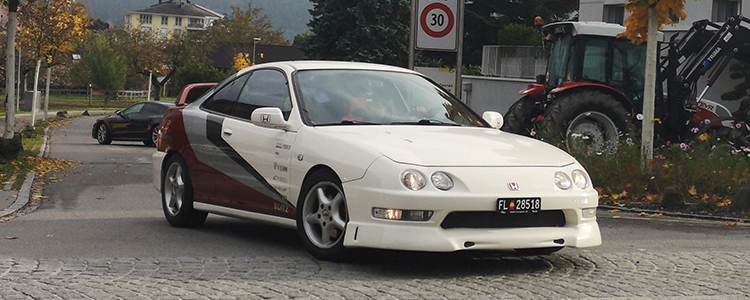
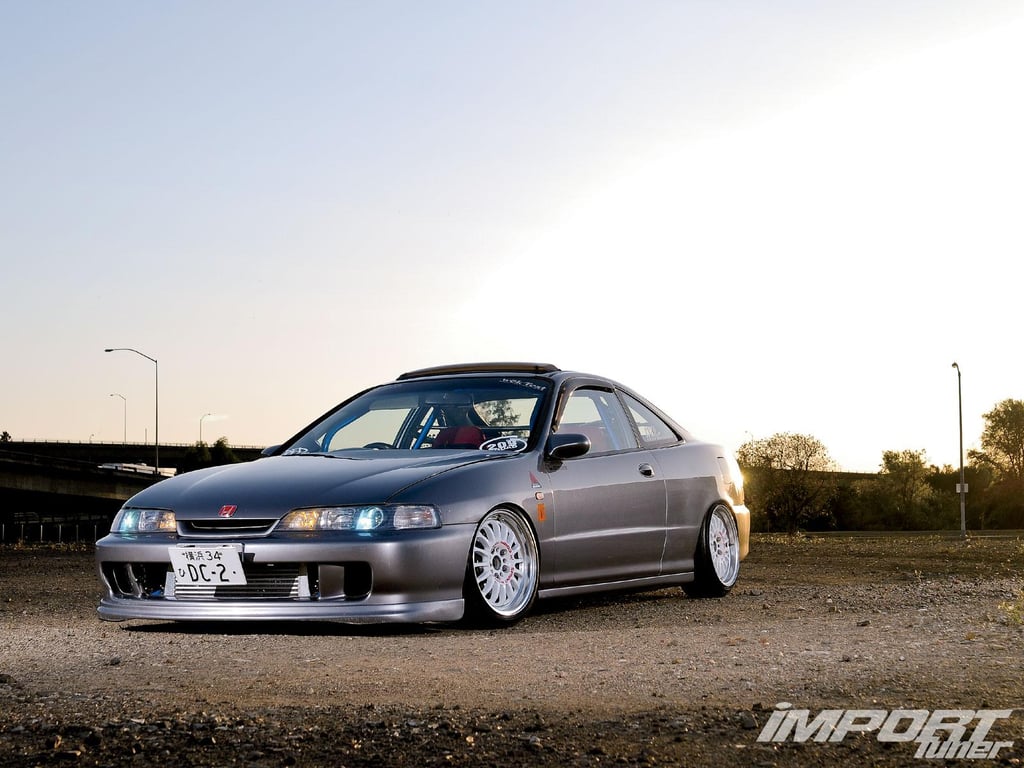
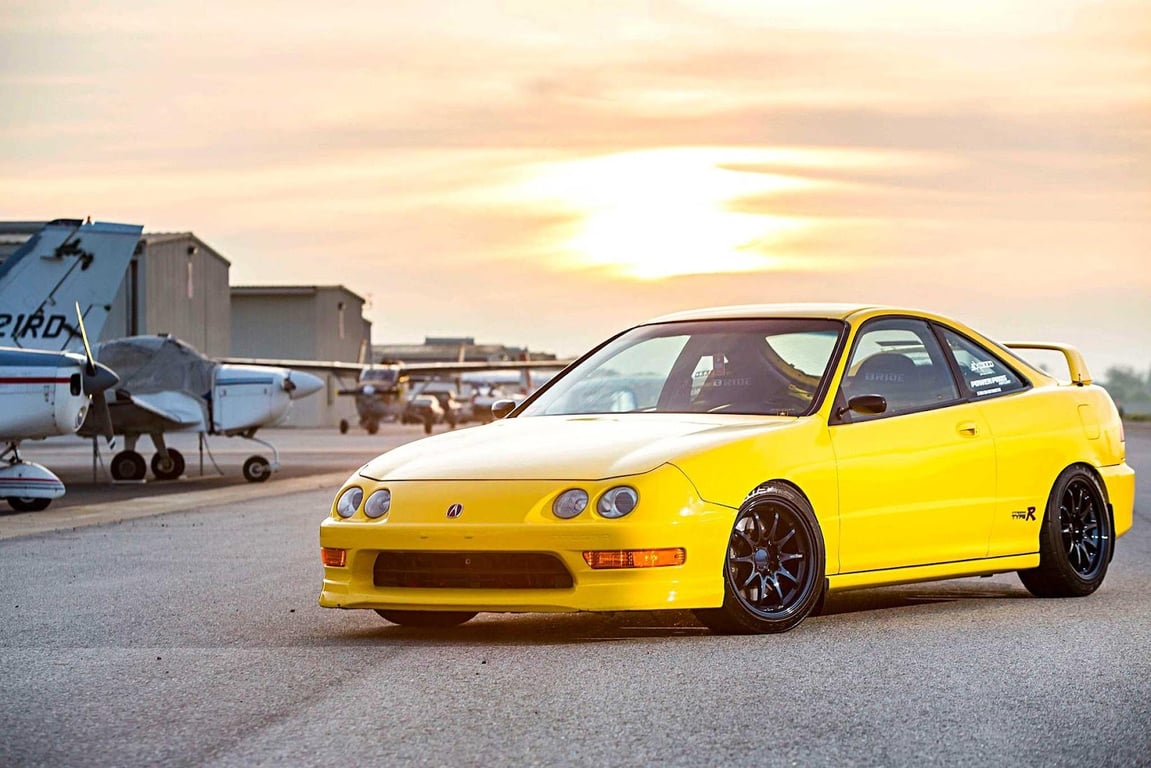
Drivetrain
Editorial
If you're buying an Integra, the first question is whether you want a Type R or just an Integra — the conversations are different. A clean, documented DC2 Type R is the icon of the model and prices reflect that: expect $60,000 plus for a USDM ITR in original paint, and $80,000 to $100,000 plus for a JDM 98-spec or 00-spec car. Modifications kill value harder on the Type R than anywhere else in the Honda range, so the cars worth targeting are unmolested with seam-welds intact, no swap, and a documented timing belt history.
If you don't need the Type R badge, the GS-R and SiR cars are the value play: same chassis, most of the suspension hardware, and the B18C in non-Type R tune making 170 to 180 hp. Budget $10,000 to $20,000 for a clean DC2 GS-R or JDM SiR-G. The USDM Acura RSX Type-S uses the K20A2 at 200 hp and trades around $10,000 to $20,000 for tidy examples; JDM DC5 Type R cars sit at $40,000 to $70,000 for clean low-mile examples.
The Integra to pass on is a cheap modified one with no paperwork. Rust on the rear quarters is the deal-breaker — if the arches are bubbling or the rear bumper is sagging, the repair requires welding, not filler, and the cost doesn't come back in resale.
Any Type R with swap evidence, missing seam-welds, or an unrecorded track history is also a pass. A documented, original Integra is worth waiting for; a cheap one almost always costs more than the patient buy.
FAQ
Citations
Sources last verified: