Chassis Code Explained
| Segment | Meaning | Detail |
|---|---|---|
| GX81 | 2.0-litre six | 1G-GTE in the 1989 GT Twin Turbo; Toyota's code summary gives GX81 as 2000 cc |
| SX80 | 1.8-litre four | 4S-FE in the 1990 Super Custom |
| MX83 | 3.0-litre six | 7M-GE in the 1989 Super Lucent G |
| JZX81 | 2.5-litre JZ six | 1JZ-GTE in the 1990 GT Twin Turbo |
| LX80 | 2.4-litre diesel | 2L-T in the 1990 Super Custom |
Pairs are taken from Toyota heritage and catalogue entries. No letter-by-letter breakdown was found.
Key Takeaways
- Three engine phases: 2.0-litre 1G sixes at the August 1988 launch, a 3.0-litre 7M-GE from August 1989, and 2.5-litre JZ sixes from August 1990.
- Two different GT Twin Turbos: GX81 with the 210 PS 1G-GTE in 1989, then JZX81 with the 280 PS 1JZ-GTE in the 1990 catalogue.
- Gearboxes differ: the 1989 GX81 turbo lists a five-speed manual; the 1990 JZX81 turbo lists a four-speed automatic.
- Manuals were not turbo-only: Toyota lists a five-speed manual on the Super Lucent Twin Cam 24 and on the base turbo-diesel Super Custom.
- Equipment varied: on the JZX81 turbo, LSD and the driver airbag are options, while ABS and traction control are standard.
- Power is net PS: Toyota's figures are net ratings, so do not quote them as gross or wheel horsepower.
Background
Codes and engines
Toyota's heritage summary gives GX81 as the 2.0-litre six, SX80 as the 1.8-litre four and LX80 as the 2.4-litre diesel, and its catalogue lists the 3.0-litre as E-MX83 and the 2.5-litre GT Twin Turbo as E-JZX81. The launch range was the 24-valve 1G sixes (twin-turbo 1G-GTE, supercharged 1G-GZE, 1G-GE and 1G-FE) plus a 1.8-litre petrol four and 2.4-litre diesels. The Crown's 3.0-litre DOHC 7M-GE joined in August 1989, and 2.5-litre JZ sixes, naturally aspirated and twin-turbo, in the August 1990 minor change. A chassis code can cover more than one engine: GX81 is also the naturally aspirated Super Lucent Twin Cam 24 and the supercharged G-L specification.
GT Twin Turbo, 1989 and 1990
Toyota's 1989 GX81 GT Twin Turbo has the 1G-GTE at 210 PS and 275 N·m, a five-speed manual, rear-wheel drive and a 1,420 kg mass, with a 4.300 final drive and optional LSD. The 1990 JZX81 has the 1JZ-GTE at 280 PS and 362.8 N·m with an ECT-S four-speed automatic, and weighs 1,540 kg. On the JZX81, LSD and the driver airbag are options, ABS and traction control are standard, discs are ventilated front and rear and the fuel is premium unleaded. Toyota's test-cycle figure is 7.2 km/L; that is a catalogue number, not a measured result.
The other grades
The 3.0 Super Lucent G (MX83) is a 200 PS four-speed automatic of 1,520 kg. The Super Lucent G-L specification uses the supercharged 1G-GZE at 170 PS and 226 N·m, a four-speed automatic, at 1,470 kg. The 1990 Super Lucent Twin Cam 24 is a naturally aspirated 150 PS 1G-GE with a five-speed manual and regular petrol. The base 1.8 Super Custom (SX80, 4S-FE, 115 PS) weighs 1,270 kg, and the Super Custom turbo diesel (LX80, 2L-T, 94 PS) has a five-speed manual and weighs 1,390 kg. A Super Custom Extra special edition was introduced in February 1989.
Body, build and sales
Toyota describes framed pressed doors, with black centre pillars giving a hardtop look. Front suspension is struts; six-cylinder cars have rear double wishbones and four-cylinder cars a five-link rigid axle.
Kanto Auto Works built the car at Higashifuji and Toyota Vista stores sold it. The early GX81 turbo measures 4,690 × 1,695 × 1,375 mm, the MX83 is 1,710 mm wide and the 1990 JZX81 catalogue entry lists 4,760 × 1,710 × 1,375 mm. Toyota calls this the best-selling generation when the Mark II and Chaser are counted with it, and gives no Cresta-only total. Outputs are Toyota's net PS.
Technical Specifications
Outputs are Toyota's net PS from catalogue pages for the grade and date shown. Engines Toyota lists for the range but this table does not break out, such as the 1G-FE and the 2.5-litre naturally aspirated six, have no individually verified row.
Engine Options
-
GX81 GT Twin Turbo 1989 catalogue
1G-GTE- Displacement
- 1,988 cc
- Aspiration
- Twin turbo
- Power
- 210 PS (154 kW) @ 6,200 rpm
- Torque
- 275 Nm @ 3,800 rpm
- Transmission
- 5MT, rear-wheel drive
1,420 kg; LSD optional
-
GX81 Super Lucent G-L 1989 catalogue
1G-GZE- Displacement
- 1,988 cc
- Aspiration
- Supercharged
- Power
- 170 PS (125 kW) @ 6,000 rpm
- Torque
- 226 Nm @ 3,600 rpm
- Transmission
- 4AT, rear-wheel drive
1,470 kg
-
GX81 Super Lucent Twin Cam 24 1990 catalogue
1G-GE- Displacement
- 1,988 cc
- Aspiration
- Naturally aspirated
- Power
- 150 PS (110 kW) @ 6,200 rpm
- Torque
- 182.4 Nm @ 5,600 rpm
- Transmission
- 5MT
Regular petrol
-
MX83 3.0 Super Lucent G Added Aug 1989
7M-GE- Displacement
- 2,954 cc
- Aspiration
- Naturally aspirated
- Power
- 200 PS (147 kW) @ 5,600 rpm
- Torque
- 264.8 Nm @ 3,600 rpm
- Transmission
- 4AT
1,520 kg
-
JZX81 GT Twin Turbo Aug 1990 catalogue
1JZ-GTE- Displacement
- 2,491 cc
- Aspiration
- Twin turbo
- Power
- 280 PS (206 kW) @ 6,200 rpm
- Torque
- 362.8 Nm @ 4,800 rpm
- Transmission
- 4AT (ECT-S)
1,540 kg; premium petrol
-
SX80 1.8 Super Custom 1990 catalogue
4S-FE- Displacement
- 1,838 cc
- Aspiration
- Naturally aspirated
- Power
- 115 PS (85 kW) @ 5,600 rpm
- Torque
- 156.9 Nm @ 4,400 rpm
- Transmission
- Automatic (documented grade)
1,270 kg
-
LX80 Super Custom diesel 1990 catalogue
2L-T- Displacement
- 2,446 cc
- Aspiration
- Turbo diesel
- Power
- 94 PS (69 kW) @ 4,000 rpm
- Torque
- 215.7 Nm @ 2,400 rpm
- Transmission
- 5MT
1,390 kg
Transmission Options
| Type | Availability | Notes |
|---|---|---|
| 5-speed manual | GX81 GT Twin Turbo (1989), Super Lucent Twin Cam 24 (1990), LX80 Super Custom diesel (1990) | The early turbo has a 4.300 final drive with optional LSD. |
| 4-speed automatic (ECT-S) | JZX81 GT Twin Turbo (1990 catalogue) | Rear-wheel drive. Toyota's entry lists an automatic, not a manual. |
| 4-speed automatic | Super Lucent G-L (1G-GZE) and 3.0 Super Lucent G (7M-GE), 1989 catalogue | Documented rear-drive grades of 1,470 kg and 1,520 kg. |
Variants & Trims
Grades come from Toyota's catalogue pages. Engine and gearbox pairings change by date, so match the code plate.
| Generation | Trim | Engine | Key Features |
|---|---|---|---|
| X80 (Japan, 1988–1992) | GT Twin Turbo (GX81) | 1G-GTE | 1989: 210 PS, five-speed manual, rear-wheel drive; LSD optional |
| X80 (Japan, 1988–1992) | GT Twin Turbo (JZX81) | 1JZ-GTE | From August 1990: 280 PS, ECT-S four-speed automatic in the catalogue; LSD and driver airbag optional, ABS standard |
| X80 (Japan, 1988–1992) | Super Lucent G-L specification | 1G-GZE | 1989: supercharged, 170 PS, four-speed automatic |
| X80 (Japan, 1988–1992) | 3.0 Super Lucent G (MX83) | 7M-GE | From August 1989: 200 PS, four-speed automatic, 1,520 kg |
| X80 (Japan, 1988–1992) | Super Lucent Twin Cam 24 | 1G-GE | 1990: 150 PS, five-speed manual, regular petrol |
| X80 (Japan, 1988–1992) | Super Custom | 4S-FE or 2L-T (documented grades) | Entry grade, 1990: 1.8 petrol at 115 PS, or turbo diesel at 94 PS with a five-speed manual |
| X80 (Japan, 1988–1992) | Super Custom Extra | As Super Custom | Special edition introduced February 1989 with enhanced equipment on the basic model |
Should You Buy a Toyota Cresta X80?
Why You'll Love It
- Documented by Toyota Toyota's catalogue pages give output, torque, mass and equipment for individual X80 grades, so a car can be matched to a specific entry.
- A wide range of grades One body covers the 1.8-litre Super Custom, the 3.0-litre Super Lucent G, the supercharged G-L and the turbo GT Twin Turbo.
- Rear double wishbones on the sixes Toyota's heritage entry gives six-cylinder cars a rear double-wishbone layout; four-cylinder cars use a five-link rigid axle.
- Brakes and aids on the 1990 turbo The JZX81 GT Twin Turbo catalogue lists ventilated discs front and rear, with ABS and traction control standard.
Why You Might Not
- Equipment is optional On the documented JZX81 turbo, LSD and the driver airbag are options, so check what each car actually has.
- The documented 1990 turbo is an automatic Toyota's JZX81 GT Twin Turbo entry lists a four-speed automatic. Do not assume a manual.
- Fuel and economy The JZX81 turbo specifies premium unleaded, and the catalogue test-cycle figure is 7.2 km/L. It is a test figure, not a measured result.
- Electronics age A specialist repair article describes ECU capacitor leakage causing stalling and a high idle on a Mark II JZX81. It is one documented case.
Who Should NOT Buy This
- Anyone who assumes a JZX81 turbo is a factory manual: Toyota's 1990 catalogue entry lists an automatic.
- Anyone who wants a true pillarless hardtop: the Cresta has framed doors, and only the black centre pillars give a hardtop look.
- Anyone planning a US import who has not checked the build date and engine: EPA expects the original-design engine or an EPA-certified replacement, so a swapped car is a separate question.
Common Issues & Solutions
One documented case reported by a specialist repairer; it is not a failure rate.
| Issue | Cause | Solution | Est. Cost |
|---|---|---|---|
| ECU capacitor leakage | A UsedCarNews repair article describes a Mark II JZX81 GT Twin Turbo that stalled and idled high; its ECU board had leaked capacitors. It is one documented case, not a failure rate. | Have a competent electronics repairer diagnose it. The documented repair replaced the capacitors, cleaned the board and checked the traces. | Specialist quote |
Differences between JDM & USDM
This page covers the Japanese-market Cresta using Toyota Japan's catalogue and heritage specifications; outputs are Toyota's net PS. Export Cressida specifications are not used here. For a US import, the federal age declaration (HS-7) applies to vehicles 25 or more years old, and EPA's separate provision for vehicles over 21 years expects the original-design engine or an EPA-certified replacement.
Pre-Purchase Inspection Checklist
Critical Priority
High Priority
Medium Priority
Low Priority
Generation History
X80 Cresta model span (Japan) (1988–1992)
- On sale 24 August 1988 with four 24-valve 1G sixes plus 1.8-litre petrol and 2.4-litre diesel fours
- Built by Kanto Auto Works at Higashifuji and sold through Toyota Vista stores
- Replaced by the next generation in October 1992
- Years are the sales span, from the on-sale date to the next generation; Toyota's records reviewed give no production dates
X80: 3.0-litre 7M-GE added (1989)
- August 1989: the Crown's 3.0-litre DOHC 7M-GE arrives as the top model
- Super Custom Extra special edition introduced in February 1989
X80: JZ sixes added (1990)
- August 1990 minor change adds a 2.5-litre inline six and a twin-turbo version
- JZX81 GT Twin Turbo: 280 PS 1JZ-GTE
In Pictures
The Buyer's Read
Start with the code plate and build date, not the badge. GX81, MX83 and JZX81 are different cars, and "GT Twin Turbo" covers two engines.
If you want the turbo, decide between the 1989 GX81 with its 210 PS 1G-GTE and five-speed manual, and the JZX81 with the 280 PS 1JZ-GTE from the August 1990 change. Toyota's catalogue entry for the JZX81 GT Twin Turbo lists an automatic, so a manual JZX81 needs paperwork that explains it.
Check equipment car by car. On the documented JZX81 turbo, LSD and the driver airbag are options, while ABS and traction control are standard.
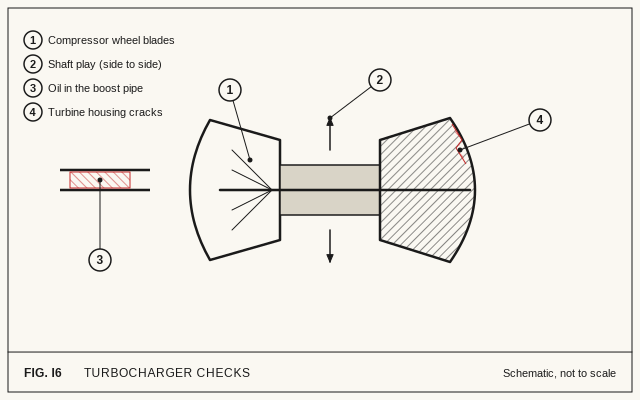
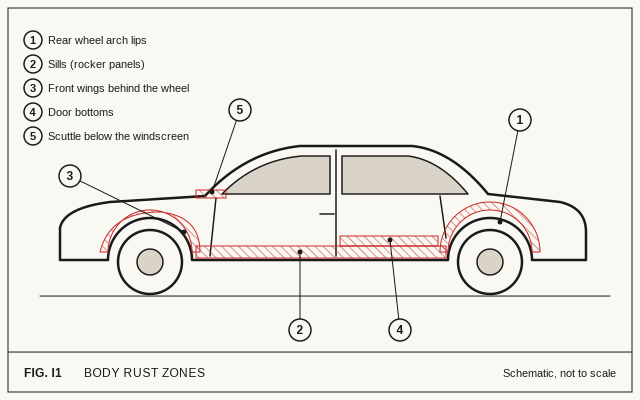
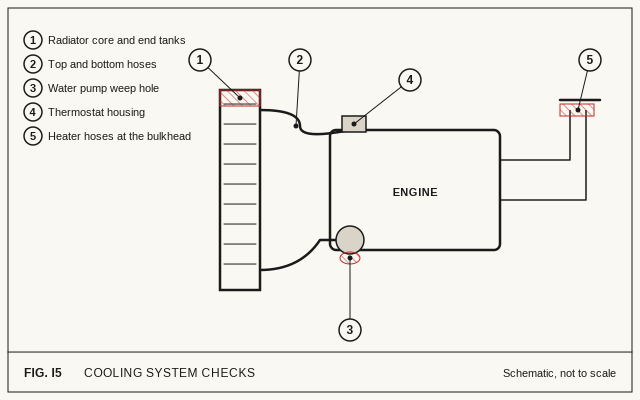
Treat age-related checks as inspection points, not failure rates. A specialist repair article describes ECU capacitor leakage on a Mark II JZX81, and a Japanese parts specialist lists radiator leaks, the alternator, the A/C compressor and rust.
For a US import, the 25-year age declaration and EPA's rules for older vehicles are separate. EPA expects the original-design engine or an EPA-certified replacement, so a swapped car needs its own answer.
Frequently Asked Questions
- What is the difference between a GX81 and a JZX81 Cresta?
- GX81 is the 2.0-litre six. Toyota's 1989 GX81 GT Twin Turbo has the 210 PS 1G-GTE and a five-speed manual. JZX81 is the 2.5-litre JZ car added in the August 1990 minor change; its GT Twin Turbo has a 280 PS 1JZ-GTE and, in the catalogue entry, a four-speed automatic.
- When did the X80 Cresta get the 1JZ?
- In the August 1990 minor change, when 2.5-litre inline sixes, naturally aspirated and twin-turbo, joined the range.
- Did the JZX81 GT Twin Turbo come with a factory manual?
- Toyota's 1990 catalogue entry lists an ECT-S four-speed automatic and rear-wheel drive. The earlier GX81 turbo lists a five-speed manual. If a JZX81 is advertised as a manual, ask for documents showing how it was specified or converted.
- Which Cresta had the supercharged engine?
- The 1G-GZE, a supercharged 2.0-litre six rated 170 PS at 6,000 rpm and 226 N·m, in the Super Lucent G-L specification of the August 1989 catalogue. The documented car is a four-speed automatic weighing 1,470 kg.
- What is different about the MX83 three-litre Cresta?
- It has the 3.0-litre 7M-GE, which Toyota describes as the Crown's DOHC engine, added in August 1989. The documented Super Lucent G is a 200 PS four-speed automatic of 1,520 kg and 1,710 mm width; the early turbo is 1,695 mm wide.
- Are X80 Cresta and Chaser body parts interchangeable?
- Do not assume so. Toyota describes the Cresta as a personal four-door sedan with framed pressed doors. Sharing a family with the Mark II and Chaser does not prove that panels, glass or trim fit, so confirm by part number.
- What should I inspect on an X80's ECU and cooling system?
- A repair article on a Mark II JZX81 tied stalling and a high idle to leaking ECU capacitors; the repair replaced them, cleaned the board and checked the traces. A Japanese parts specialist also lists radiator leakage. Neither source gives a failure rate.
Sources & References
Sources (33)
- Toyota 75-Year History: third-generation Cresta — Toyota Motor Corporation Verified
- Toyota 75-Year History: fourth-generation Cresta — Toyota Motor Corporation Verified
- Toyota 75-Year History: fifth-generation Cresta — Toyota Motor Corporation Verified
- Toyota 75-Year History: sixth-generation Chaser — Toyota Motor Corporation Verified
- Toyota 75-Year History: eighth-generation Mark II — Toyota Motor Corporation Verified
- Toyota historical Cresta catalogue (overview) — Toyota Motor Corporation Verified
- Toyota catalogue: Super Lucent G-L specification — Toyota Motor Corporation Verified
- Toyota catalogue: three-litre Super Lucent G — Toyota Motor Corporation Verified
- Toyota catalogue: 1989 GT Twin Turbo — Toyota Motor Corporation Verified
- Toyota catalogue: turbo-diesel Super Custom — Toyota Motor Corporation Verified
- Toyota catalogue: 1.8 Super Custom — Toyota Motor Corporation Verified
- Toyota catalogue: Super Lucent Twin Cam 24 — Toyota Motor Corporation Verified
- Toyota catalogue: 1990 GT Twin Turbo — Toyota Motor Corporation Verified
- Toyota catalogue: 2.5 Super Lucent — Toyota Motor Corporation Verified
- Toyota catalogue: 2.0 Super Lucent — Toyota Motor Corporation Verified
- Toyota catalogue: Tourer V five-speed manual — Toyota Motor Corporation Verified
- Toyota catalogue: Tourer V automatic — Toyota Motor Corporation Verified
- Toyota catalogue: Super Lucent Four — Toyota Motor Corporation Verified
- Toyota catalogue: early Super Lucent manual — Toyota Motor Corporation Verified
- Toyota catalogue: launch Roulant G — Toyota Motor Corporation Verified
- Toyota catalogue: facelift Roulant S — Toyota Motor Corporation Verified
- Toyota catalogue: facelift 2.0 Super Lucent Four — Toyota Motor Corporation Verified
- EPA: Learn about importing vehicles and engines — US EPA Verified
- NHTSA HS-7 import declaration — NHTSA Verified
- 部品屋のウラ話: Cresta used-car weak points — 部品屋のウラ話 Verified
- UsedCarNews: ECU capacitor repair article (Makoto Shimamura) — UsedCarNews Verified
- Wikimedia Commons file page: 1990 Cresta 2.5 GT Twin Turbo — Wikimedia Commons Verified
- Wikimedia Commons file page: late-model Cresta Exceed G — Wikimedia Commons Verified
- Wikimedia Commons file page: late-model Cresta 2.5 Super Lucent — Wikimedia Commons Verified
- Toyota catalogue: Super Lucent Exceed (December 1994) — Toyota Motor Corporation Verified
- Toyota catalogue: 2.0 Super Lucent Exceed (April 1995) — Toyota Motor Corporation Verified
- Toyota catalogue: 2.5 Super Lucent Exceed (April 1995) — Toyota Motor Corporation Verified
- NHTSA: nonconforming-vehicle eligibility list (25-year note) — NHTSA Verified
Sources last verified: