Buyer's guide

15 min read

Toyota Celsior XF20

Buyer's guide & specs

Production
1989-2006
US legal
2019
25-yr rule
Market range
$6K–$45K
For sale
10
active now
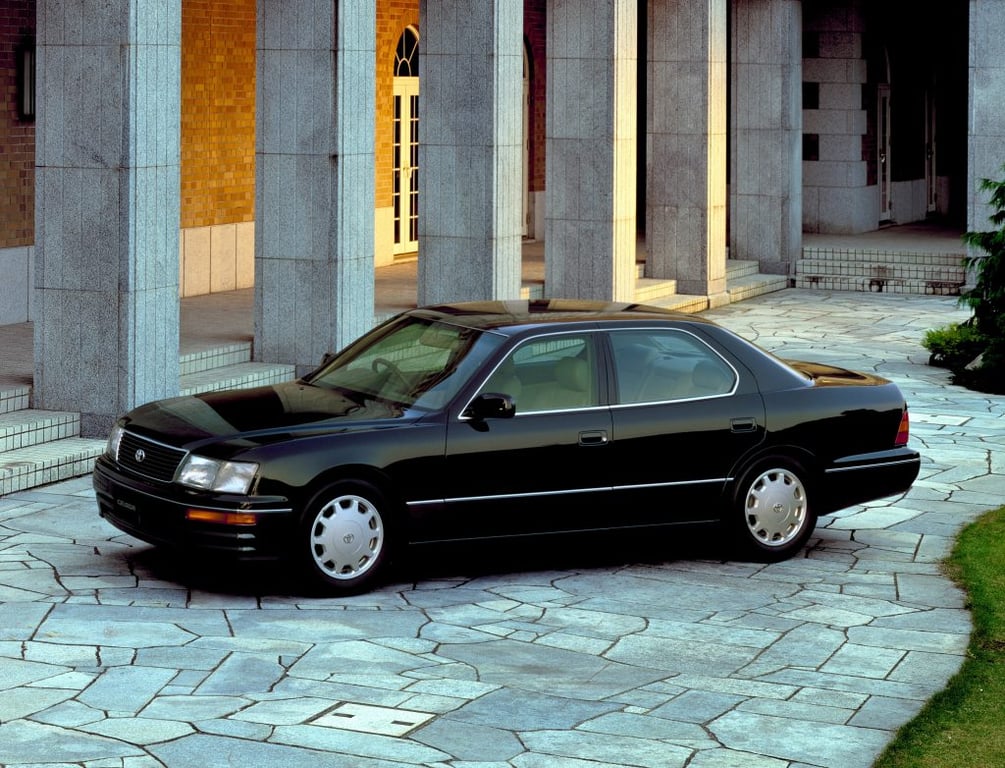
Toyota Celsior XF20 (UCF20/UCF21) — JDM hero image
Toyota Celsior XF20 (UCF20/UCF21). Photo: Tennen-Gas (CC BY-SA 3.0). Source: Wikimedia Commons.

Quick answer

The Toyota Celsior is Japan’s flagship luxury sedan (Lexus LS twin) prized for refinement, 1UZ/3UZ V8 durability, and VIP style. Values are strongest for clean, low-mile UCF30/31 and early UCF21; rough imports stay affordable but parts, electronics, and air suspension can add cost.

Background

Overview

The second-generation Celsior (UCF20/UCF21, November 1994 to 2000) is the value sweet spot in today's market. The 1UZ-FE gained refinements — better cooling, revised valvetrain, and from 1997 the VVT-i upgrade that added roughly 30 hp and 41 N·m. A 36 mm wheelbase stretch added 66 mm of rear legroom. The 1997 update introduced a 5-speed automatic gearbox alongside the original 4-speed.

For most buyers, a documented 1997–2000 UCF20 is the right entry point: VVT-i power, modern transmission, mature electronics, and parts crossover from the Lexus LS 400 that keeps maintenance costs reasonable. Air suspension remains optional and the same caveat applies — budget for coil conversion if the system is past its prime.

Chassis Code Explained

UEngine family
CPlatform
FModel series
20Generation
SegmentMeaningDetail
UEngine familyU — 1UZ-FE V8 engine
CPlatformC — Celsior/LS platform
FModel seriesF — F-series Celsior/LS body
20Generation20 — second-generation Celsior (1994–2000)

UCF20 is the standard wheelbase; UCF21 is the extended-wheelbase variant. Both continued the 1UZ-FE V8 with revised suspension. Lexus LS 400 equivalent.

Editorial notes

Key Takeaways

The Celsior had three generations from 1989 until 2006, and each one feels like a different car to own. The XF10 keeps things simple. The XF20 is generally considered the best value of the three. The XF30 has the most modern tech and the strongest VIP scene appeal, but it also has the most electronics waiting to fail.

  • Lexus LS twin: same core platform, JDM trims
  • UCF20/UCF30 are the sweet spot for value + tech
  • Air suspension can be costly; coils are simpler
  • Grade, mileage, history drive price more than mods
  • VIP demand supports clean, stock, low-mile cars
  • Import costs (shipping, compliance) change totals
From JDMBUYSELL

Find a Toyota Celsior for sale

Browse listings

Variants & Trims

JDM Celsiors came in A, B, C, F Package, eR Version, and on the XF30 the Ultra Luxury Selection. The differences are about features, not the engine or chassis. The eR Version is the sportier one with firmer suspension. The Ultra Luxury Selection is the top of the range with rear seat features and the best audio.

GenerationTrimEngineKey Features
XF20 (UCF20/UCF21, 1994-2000)Celsior A1UZ-FE 4.0L V8Base grade, improved safety, air suspension opt
XF20 (UCF20/UCF21, 1994-2000)Celsior B1UZ-FE 4.0L V8Mid grade, upgraded interior, enhanced audio options
XF20 (UCF20/UCF21, 1994-2000)Celsior C1UZ-FE 4.0L V8High grade, leather, premium audio, more standard equip
XF20 (UCF20/UCF21, 1994-2000)Celsior F Package1UZ-FE 4.0L V8Luxury focus, rear comfort, higher standard equipment
XF20 (UCF20/UCF21, 1994-2000)Celsior eR Version1UZ-FE 4.0L V8Sport-tuned suspension, sport trim, handling focus
From JDMBUYSELL

How to import a JDM car — complete guide

Read the guide

Should You Buy a Toyota Celsior XF20?

The Celsior is one of those cars where what you give up is just as clear as what you get. Toyota built it to be reliable first and exciting second, so the strong points and weak points have stayed the same across the whole production run.

Why You'll Love It

  • Flagship refinementExceptional NVH isolation, ride quality, and cabin quiet; still feels premium at speed.
  • Durable Toyota/Lexus V8s1UZ/3UZ are long-lived with routine service; strong cooling and bottom-end reliability.
  • Strong parts interchangeMany mechanical parts cross with Lexus LS/GS; easier sourcing than niche JDM sedans.
  • VIP platform credibilityIconic base for VIP builds: stance, wheels, aero; strong community and style demand.
  • Comfort-first daily driverSoft ride, stable highway manners, great seats; ideal long-distance cruiser.
  • Value vs German luxurySimilar comfort to S-Class/7-Series era with fewer catastrophic drivetrain failures.
  • High spec JDM optionsSome trims get curtains, radar cruise, air suspension, rear controls, upgraded audio.

Why You Might Not

  • Air suspension costsAir struts, height sensors, and compressors age; repairs can exceed car value on cheap buys.
  • Aging electronics/modulesOld nav screens, climate panels, and ECUs can fail; used parts vary by generation.
  • Fuel economy and weightHeavy V8 sedan; city mpg can be poor, especially short trips and worn O2 sensors.
  • Import/registration complexity25-year rule timing, paperwork, and state rules add cost; RHD insurance can vary.
  • Deferred maintenance riskCheap imports often need bushings, mounts, cooling, brakes, and timing service catch-up.
  • Not a sports sedanComfort tuning and soft steering; performance mods exist but it’s not a factory handler.
  • Trim/option confusionCelsior grades differ from US LS; verifying air/coil, radar, and packages takes homework.

Who Should NOT Buy This

  • Anyone without budget for catch-up maintenance
  • Buyers who need modern safety tech and ADAS
  • People who can't source JDM-specific parts
  • Owners without a trusted shop for older luxury cars
  • Those expecting 25+ mpg; real-world is often 16-21
  • Drivers wanting sporty handling; it's heavy and soft
  • People who hate electrical gremlins in old luxury cars
  • Anyone in strict emissions areas without a compliance plan
  • Buyers unwilling to delete/convert failing air suspension
  • Those needing cheap tires/brakes; quality parts cost more
  • People who can't tolerate RHD quirks (if RHD import)
  • Anyone who can't garage it; sun/heat kills interiors
  • Drivers who do lots of short trips; sludge risk increases
  • Buyers expecting plug-and-play infotainment upgrades
  • People who won't do fluid changes on schedule
  • Anyone who needs maximum rear-seat headroom with sunroof

Common Issues & Solutions

The Celsior is a bulletproof car mechanically. Most of the trouble comes from age, not the engineering. Three things tend to cause headaches. The power steering pump leaks onto the alternator. The air suspension gives up. The LCD screens in the climate and instrument panels start to fade. None of these are deal breakers if the paperwork shows the work was done.

IssueCauseSolutionEst. Cost
PS pump leak kills alternatorPump shaft seal leaks onto alternator belowReseal/replace pump and alternator; flush PS fluid$700-1600
Timing belt overdueNeglected interval; unknown history on importsTiming belt kit + water pump + seals + drive belts$900-1800
Radiator plastic tank crackAge heat-cycles; neck/tank splits under pressureReplace radiator, cap, hoses; pressure test after$450-900
Heater core leakCorrosion/age; coolant neglect accelerates failureReplace heater core; flush system; new coolant$900-1800
Valve cover gasket leakGaskets harden; half-moons seep onto exhaustReplace gaskets, grommets; clean PCV system$350-800
Cam/crank seal seepAged seals; often found during belt serviceReplace seals during timing service; clean oil pump$250-700
Idle hunt / stallingDirty IAC/throttle body; vacuum leaks; old hosesClean IAC/TB; smoke test; replace brittle hoses$200-600
MAF sensor drivabilityContaminated MAF; intake leaks after MAFClean/replace MAF; fix intake boots and clamps$120-450
A341E shift flare/harshWorn clutches/valve body; old ATF; solenoidsService ATF/filter; solenoids; rebuild if slipping$250-3500
Delayed D/R engagementInternal seal wear; low ATF; valve body wearVerify level; service; rebuild if persistent$250-3500
ATF cooler line seepAged rubber/flare fittings; radiator end tank seepReplace lines/clamps; consider external cooler$150-600
Diff pinion seal leakSeal wear; vent clog raises pressureReplace seal; clean vent; refill gear oil$250-650
Driveshaft vibrationCenter bearing wear; U-joint wear; imbalanceReplace center bearing/U-joints; balance shaft$350-900
Front lower ball joint wearAge/boot tear; grease loss; heavy chassis loadReplace ball joints ASAP; align after$300-800
LCA bushing failureRubber tears; causes shimmy and tire wearReplace arms or press bushings; alignment$450-1200
Steering rack leakRack seals wear; contaminated PS fluidRebuild/replace rack; flush PS; new tie rods$900-1800
Air suspension sagAir strut bags crack; valve block leaksReplace air struts/lines; or convert to coils$900-3500
Air compressor overrunSystem leak; dryer saturated; weak compressorFix leaks; replace dryer/compressor as needed$400-1600
Brake pulsationRotor runout; seized caliper slides; cheap rotorsQuality rotors/pads; service slides; flush fluid$300-900
ABS wheel speed sensorSensor failure or cracked tone ring wiringScan codes; replace sensor/repair wiring$200-650
Climate control LCD failureAging capacitors/LCD bleed; heat damageRebuild unit or replace with known-good module$200-700
Blend/mode door servo failServo gears strip; potentiometer wearReplace servo; recalibrate; verify linkages$250-900
A/C weak or intermittentLow refrigerant; compressor wear; condenser leaksLeak test; replace O-rings/condenser/compressor$250-1600
Window regulator failureCable frays; plastic guides break; motor strainReplace regulator; lube tracks; verify switches$200-600
Door lock actuator weakMotor wear; grease hardens; low voltage issuesReplace actuator or rebuild motor; check battery$150-500
Power antenna mast stripsNylon cable strips; mast bent; dirt intrusionReplace mast cable; clean/lube antenna drive$80-250
Cluster backlight/pixelsAged bulbs/solder joints; LCD degradationReflow solder; replace bulbs; cluster refurb$150-600
Soft-close door failureLatch motor wear; misalignment; cracked gearsAdjust latch; replace soft-close actuator/latch$250-900
Fuel pump noisy/weakAge; clogged sock/filter; low tank runningReplace pump and strainer; check wiring voltage$250-700
Evap/vacuum hose cracksOld rubber; heat cycling; causes lean codesReplace hoses; smoke test; new clamps$100-400
Exhaust manifold leakGasket fatigue; studs corrode; heat cyclingReplace gaskets/studs; inspect for cracks$400-1200
Catalyst rattle/failureAge; misfire damage; substrate breaks apartFix misfire; replace cats; verify O2 sensors$600-2500
O2 sensor agingSlow response with age; rich/lean trims driftReplace upstream sensors; clear trims; retest$200-600
Parasitic battery drainAging modules, trunk light, aftermarket alarmsDraw test; isolate circuit; repair module/wiring$150-800

Differences between JDM & USDM

The Celsior and the Lexus LS 400 / LS 430 share the same platform, drivetrain, and most mechanical hardware — but the cars are not identical. JDM Celsiors received factory specifications that never reached export markets: air suspension on more grades, radar cruise control on UCF30 from 2003, soft-close doors on certain trim levels, JDM-only audio and navigation modules (incompatible with North American head units), rear-seat curtain controls, and interior-trim packages like 'eR Version' (sport-tuned) and 'Ultra Luxury Selection' (top spec) that have no LS equivalent. The driving position is RHD throughout Celsior production. For VIP-style builds, these factory cues are the authenticity markers that separate an imported Celsior from a re-trimmed Lexus.

Toyota Celsior vs Lexus LS 400 — JDM vs USDM differences

Pre-Purchase Inspection Checklist

Walk this list with the seller, not in front of them. The Critical items mean walking away if there's no paperwork backing them up. The High items can usually be priced into the deal. Ten minutes at idle and a 30 minute drive will surface most of what you need to know.

Critical Priority

High Priority

Medium Priority

Low Priority

Generation History

Celsior UCF10 (1989-1994)

  • Debut of 1UZ-FE 4.0 V8
  • Overbuilt NVH, flagship build quality
  • Early electronics aging; simple by later standards
  • Classic VIP base; boxy 90s luxury look

Celsior UCF20/21 (1994-2000)

  • Refined 1UZ-FE; better safety and rigidity
  • More modern interior; strong daily usability
  • Optional air suspension on higher grades
  • Best value: comfort, reliability, parts crossover

Celsior UCF30/31 (2000-2006)

  • 3UZ-FE 4.3 V8; more torque and smoothness
  • More tech: nav, radar cruise on some cars
  • Stronger VIP demand; best looking to many
  • Air struts, screens, modules raise ownership risk
From JDMBUYSELL

Find a verified JDM dealer near you

View dealers

Sales Numbers by Year

YearExportsDomesticNotes
198911,574Launch year; partial-year production
199041,90142,806
199141,22836,995
199232,47232,561
199328,18723,783
199421,39022,443UCF10 → UCF20 transition
199522,43323,657
199622,81022,237
199717,78219,618VVT-i upgrade for 1UZ-FE; 5-speed automatic introduced
199822,73020,790
199917,19816,357
200011,09815,871UCF20 → UCF30 transition; 3UZ-FE 4.3L V8
200131,47331,110
200227,03326,261
200321,46123,895Dynamic radar cruise control added
200431,69732,272Mid-cycle facelift; restyled fascias, LED tail lamps
200528,90226,043
200630,90819,546Final year of Celsior production; LS 460 launched globally

Market Data

JDM Celsiors came in A, B, C, F Package, eR Version, and on the XF30 the Ultra Luxury Selection. The differences are about features, not the engine or chassis. The eR Version is the sportier one with firmer suspension. The Ultra Luxury Selection is the top of the range with rear seat features and the best audio.

Production Numbers & Rarity

GenerationYearsTotal BuiltNotes
XF10 (UCF10/UCF11)1989-1994estimatedExact JDM Celsior-only totals not published
XF20 (UCF20/UCF21)1994-2000estimatedExact JDM Celsior-only totals not published
XF30 (UCF30/UCF31)2000-2006estimatedExact JDM Celsior-only totals not published

Original MSRP & Pricing

Original MSRP: $35,000 at launch in 1989. USD launch price of the equivalent Lexus LS 400 in the United States. A contemporary Mercedes-Benz 420 SEL listed at approximately $63,500. JDM Celsior launch pricing varied by trim grade and was set in yen; the Lexus US price is the most-cited launch benchmark.

How It Compares

Among the JDM flagship sedans, the Celsior is the most reliable, the Cima is the most VIP coded, and the President is the rarest. The table below leans toward the Celsior's strengths because that's where it actually wins, on durability, parts, and resale stability.

FeatureXF20Nissan Cima Y33Nissan President JG50
Engine layoutV8 NA (1UZ/3UZ)I6 NA/TT (RB25/RB26)V8 NA (VH45DE)
Power (typical)1UZ 260hp / 3UZ 280hpVH41 ~266hpVH45 ~270hp
Torque (typical)1UZ ~260lb-ft / 3UZ ~320VH41 ~280lb-ftVH45 ~290lb-ft
Transmission4AT/5AT/6AT (gen dependent)4AT/5AT4AT/5AT
Ride focusUltra quiet, soft luxurySofter, floaty VIP feelLimo-like, very soft
Reliability reputationExcellent; LS-level durabilityGood, but more electrical riskMixed; age + parts scarcity
Parts availabilityStrong via Lexus LS crossoverModerate; some JDM-only itemsWeaker; niche body/interior parts
VIP scene demandVery high; iconic VIP baseHigh; popular in VIP buildsMedium; rarer, more niche
Cabin tech (era)High; radar/nav on some UCF30High; luxury options varyHigh; chauffeur features
Driving positionRHD (JDM); LHD as Lexus LSRHD (JDM)RHD (JDM)
Best buy years1997-2000, 2001-20041997-20011990s-early 2000s
Ownership cost riskLow-med; air/electronics main riskMed; electronics + partsMed-high; scarcity + age
Collector upsideRising for low-mile UCF30/31Moderate; fewer global buyersNiche; rarity helps but thin market

Comparable Alternatives

If the Celsior doesn't end up being the right car, the natural alternatives are the Toyota Aristo if you want something sportier with the 2JZ-GTE, or the Nissan Cima if you want quieter and more VIP coded. The Lexus LS 400 or LS 430 is the same car with US specs and easier parts.

Lexus LS400/LS430

LHD equivalent; easier US parts/support

In Pictures

Toyota Celsior (LS400)
First-generation Toyota Celsior, front three-quarter view
First-generation Toyota Celsior — the JDM-market Lexus LS 400.FlickrImage by MIKI Yoshihito
1994 Toyota Celsior second-generation UCF20
Second-generation UCF20 Celsior (1994–2000) — the value sweet spot in today's market.EditorialImage by JDMBUYSELL editorial
From JDMBUYSELL

Browse JDM listings from dealers and private sellers worldwide

Browse all listings

The Buyer's Read

The safest entry point is a documented 1997–2000 UCF21. That pairing gives you the VVT-i 1UZ-FE, the 5-speed automatic, and electronics modern enough to still work without the price premium that cleaner UCF30 cars now carry. Anything priced under $8,000 warrants scrutiny — deferred maintenance on a Celsior tends to surface quickly once you start driving it.

For the full VIP spec — air suspension, curtained rear cabin, XF30 proportions — the Ultra Luxury Selection is the car. The V8 is bulletproof; the electronics package beneath it is not.

Air struts fail, navigation screens fade, and soft-close door motors need rebuilding. Budget three to five thousand dollars beyond the purchase price over the first few years and the car stays enjoyable.

The XF10 without service records is the one to pass on. The chassis holds up, but the early electronics do not — ECU capacitors leak on cars built between 1990 and 1997, causing hard starts, rough running, and cascading faults.

An undocumented XF10 is a diagnosis project, not a daily driver. A clean, re-capped, timing-belt-sorted example is a different proposition, but those cars are mostly still in Japan, and importing one costs more than buying a documented UCF20 already in your country.

Frequently Asked Questions

Is the Toyota Celsior the same as a Lexus LS?
Yes—Celsior is the JDM-market Lexus LS twin. Specs/options differ by grade and year.
Which generation is best to buy today?
Best value is UCF20/21 (1994-2000); best tech/looks is UCF30/31 (2000-2006).
What are the biggest reliability issues?
Main risks are air suspension, aging electronics, and deferred maintenance (bushings, cooling).
Does it have air suspension and should I avoid it?
Some higher grades do. Air ride is great when healthy, but struts/compressor can be expensive.
Are parts easy to get in the US?
Mechanical parts are often easy via LS400/LS430 crossover. JDM-only trim and modules can be hard.
What should I check before buying an imported Celsior?
Verify auction grade, rust, timing service, air/coil setup, dash lights, and all screen functions.
How much does a good one cost in today’s market?
Drivers often trade in the $8k–$15k range; clean low-mile UCF30/31 can reach $20k–$35k+.
When is a Celsior US-legal under the 25-year rule?
It depends on build year. Example: 2000 becomes legal in 2025, 2001 in 2026, and so on.

8 sources cited below

Sources & References

Sources (8)
  1. Unofficial LS 400 Buyers Guide — r/Lexus subredditVerified
  2. Lexus LS 400 (2000) — long-term review — EdmundsVerified
  3. Falling in love instantly with the Toyota Celsior — BE FORWARDVerified
  4. Lexus LS 400 1990–2000 review — RACVerified
  5. Lexus LS — encyclopedic overview — WikipediaVerified
  6. Toyota Celsior — Japanese encyclopedic overview — Wikipedia (Japanese)Verified
  7. 1UZ-FE Engine Development History — Toyota Motor CorporationLink dead
  8. Lexus LS 400 long-term reliability reporting — Car and DriverVerified

Sources last verified:

Market & demand on JDMBUYSELL

Reported sold prices and buyer-inquiry trend for the Toyota Celsior XF20 on the JDMBUYSELL marketplace.

Source:/api/market-data/toyota/celsior/xf20.json· Sold prices aggregated from listings marked sold by private-party sellers on JDMBUYSELL — seller-reported, not verified hammer prices. Inquiry counts are distinct buyer-to-seller conversations referencing at least one listing for this chassis.

Report a correction

Spotted something wrong on this page? Tell us and we'll review.