Buyer's guide
15 min read
Nissan Cima
Buyer's guide & specs
- Production
- 1988-2021
- US legal
- 2026
- 25-yr rule
- Market range
- $6K–$45K
- median ~$17K
- For sale
- 9
- active now
On this page
Quick answer
The Nissan Cima is a Japan-only flagship luxury sedan prized for VIP style, smooth V6/V8 power, and strong value versus Toyota’s Crown Majesta. Prices are rising for clean, low-km, unmodified cars. The Cima lineup includes Y33 and F50 generations; it has no Y34 generation. Early F50 examples may qualify for the U.S. 25-year exemption; eligibility depends on the individual vehicle's manufacture date.
Background
Overview
The Nissan Cima ran four generations (Y31, Y32, Y33, F50) from 1988 to 2010, then returned as the HGY51 hybrid from 2012 to 2022. The Y31 turbo launched the 'Cima phenomenon' — 36,400 sales in its first year, 129,000 across the generation — and the name became shorthand for bubble-era Japanese conspicuous consumption. From Y32, the VH41DE V8 joined the lineup alongside the carried-over VG30DET turbo six; from Y33, the Cima was exported to North America as the second-generation Infiniti Q45. The F50 (2001-2010) brought the direct-injection VK45DD V8 and ATTESA E-TS AWD before Nissan shut down both Cima and President in August 2010.
The Cima Phenomenon
The 'Cima phenomenon' (シーマ現象) entered Japanese motoring vocabulary when the Y31 turbo sold 36,400 units in its first year — a number that made the car a symbol of the Japanese asset bubble rather than just a luxury sedan. The first generation sold a combined 129,000 units across its run.
The Y31 was sold as 'Cedric Cima' at Nissan Store and 'Gloria Cima' at Nissan Prince, offered exclusively as a four-door pillarless hardtop. The 255 PS VG30DET turbo drove the demand; the 200 PS VG30DE NA was the quieter option. The platform planted Nissan's flag in the flagship segment the Toyota Crown had previously owned outright.
The Y32 launched in August 1991, four months after the bubble peaked. Wikipedia documents the outcome plainly: the collapse produced lower Y32 sales than the runaway Y31, despite the Y32 being a better car. Y32 also introduced the VH41DE V8 — a short-stroke version of the President's VH45DE — kept exclusive to the Cima so the President retained the larger engine.
F50 hybrid pioneering and the road to the Y51 hybrid
The F50 (2001-2010) was built on the Nissan President platform with a revised body recognisable by its seven-reflector headlights. Wikipedia lists the engine pair as the VK45DD direct-injection V8 and the carried-over VQ30DET turbo V6, both rated 280 PS under the JDM 280 PS gentleman's agreement; ATTESA E-TS AWD was available on V8 trims. The Japanese-market Q45 ended in August 1997 and the F50 Cima became its de facto replacement; Wikipedia credits the car as 'the first Nissan with laser adaptive cruise control'.
The VQ30DET was dropped in July 2005 under tightening emissions regulations, and Q45 exports to the US ended after MY 2006. Wikipedia documents the August 2010 shutdown as a regulatory decision: safety compliance costs for both the Cima and the President could not be justified against projected sales, ending 46 years of Nissan V8 flagship production in Japan.
April 2012 brought the nameplate back as the HGY51 — a long-wheelbase Fuga Hybrid variant carrying a VQ35HR V6, a 68 PS HM34 motor, and a JR710E 7-speed automatic with a combined output of ~364 PS. Final discontinuation followed in 2022, closing the 50-plus-year Cima/President lineage.
Editorial notes
Quick read
Key takeaways
- The Cima lineup includes Y33 and F50; there is no Y34 Cima. Early F50 eligibility for the U.S. 25-year exemption depends on manufacture date
- Low-km, stock cars command the biggest premiums
- VH41/VH45 V8 cars are smooth but costlier to keep
- Air suspension is the #1 ownership risk on many trims
- VIP demand supports prices; modified cars sell narrower
- Parts are workable, but trim/electronics can be tough
Constants
Common across all Cima generations
- JDM-market full-size luxury flagship sedan
- Front-engine, rear-wheel-drive layout across the imported generations
- V6 and V8 petrol engines depending on generation and trim
- F50 generation shares its platform with the Infiniti Q45
- Right-hand drive throughout all JDM production
Chassis history
Generation timeline
The Cima had four V8/V6-era generations from 1988 until 2010, and each one feels like a different car to own. The Y31 is the original bubble-era hardtop that started the Cima phenomenon. The Y32 brought the VH41DE V8 in, the Y33 made the Cima exportable as the Infiniti Q45, and the F50 is the most modern Cima you can buy.
First generation — Y31 (1988–1991)
Second generation — Y32 (1991–1996)
Fourth generation — F50 (2001–2010)
Identification
Chassis-code reference
Generation names are broad families. The factory chassis codes below identify the variants represented in JDMBUYSELL's current Nissan Cima guide data.
- Third generation — Y33 (1996–2001)
- Chassis code: FGY33
- First generation — Y31 (1988–1991)
- Chassis codes: FPAY31, FPY31, and FGY31
- Second generation — Y32 (1991–1996)
- Chassis codes: FGDY32 and FPY32
- Fourth generation — F50 (2001–2010)
- Chassis codes: GF50 and GNF50
- Y51
- Chassis code: HGY51
Confirm the complete code on the vehicle's frame or VIN plate; drivetrain, body, and market variants can use different prefixes within one generation family.
Buyer's call
Should you buy a Nissan Cima?
The Cima is a car where the strong points and the weak points have stayed the same across the whole run. Nissan built it to be quiet and smooth and VIP coded, and the things it gives up are exactly what you'd expect from that brief.
Why you'll love it
- Flagship ride comfort Long-wheelbase feel, quiet cabin, and plush damping make it a true highway cruiser.
- Strong VIP styling upside Natural fit for VIP builds; wheels/aero/stance culture keeps demand consistent.
- V8 smoothness (VH41/VH45) Silky torque delivery and refined character; ideal for effortless cruising.
- Value vs Crown Majesta Often cheaper than equivalent Toyota luxury sedans with similar equipment and presence.
- High equipment levels Many trims offer leather, power everything, premium audio, and advanced climate control.
- Importable sweet spots Y33 already legal; early F50 approaching eligibility, supporting future demand.
Why you might not
- Air suspension failures Air struts, compressors, and height sensors age; conversion to coils is common but affects originality.
- Aging electronics/trim Climate control, displays, seat modules, and interior plastics can be hard to source in the US.
- Fuel economy and taxes Large displacement V8s drink fuel; Japan ownership taxes pushed many to neglect later in life.
- Rust and underbody wear Coastal/snow-region cars can hide corrosion; check subframes, sills, and suspension mounts.
- Narrower buyer pool Luxury sedans sell slower than sports cars; heavily modified builds can limit resale audience.
- Deferred maintenance risk Cheap entry prices led to skipped servicing; timing, cooling, and bushings may be overdue.
Who should not buy this
- Anyone needing easy parts at local stores
- Buyers without a JDM-capable scan tool
- People who can't tolerate electrical gremlins
- Those who won't budget $2k/yr for catch-up work
- Rust-belt buyers without indoor storage
- Drivers wanting modern crash safety/ADAS
- Anyone who needs strong fuel economy
- Owners who won't do proactive cooling service
- People who hate chasing suspension clunks
- Anyone avoiding premium fuel costs
- Buyers needing dealer support and recalls
- Those who must pass strict emissions testing
- People who can't handle long repair downtime
- Anyone expecting 'turn-key' reliability at 20+ yrs
- Drivers who want sporty handling over comfort
- Buyers who can't pay for air suspension repairs
- People who need folding rear seats for cargo
- Anyone with no trusted import/JDM mechanic nearby
- Owners who won't replace aging rubber hoses/seals
- People sensitive to cabin noise from worn seals
Reliability
Common issues & solutions
The Cima is mechanically sound, but it's old. Most of the trouble comes from age rather than design. The VH41DE V8 is durable, and the VQ30DET turbo is durable too if it's been serviced. The active and air suspension setups are the biggest cost risk, and the bubble-era electronics on the Y31 and Y32 need attention.
| Issue | Cause | Solution | Est. cost |
|---|---|---|---|
| Air strut leaks/sagging | Aging rubber bags, cracked bellows, dry rot | Replace air struts; inspect lines; recalibrate | $1200-3500 |
| Compressor runs constantly | Air leak or weak compressor/dryer saturated | Leak test; replace compressor + dryer; fix leaks | $700-1800 |
| Height sensor/link failure | Broken plastic links, corroded sensor pivots | Replace links/sensors; clean mounts; calibrate | $200-700 |
| Front brake shimmy | Torn tension rod hydro-bushings, warped rotors | Replace tension rods/bushes; rotors/pads; align | $500-1200 |
| Rear inner tire wear | Worn rear toe/camber arm bushings, bad alignment | Replace arms/bushings; 4-wheel alignment | $600-1600 |
| Steering rack leak | Worn rack seals; torn boots trap grit | Rebuild/replace rack; flush fluid; new boots | $900-2000 |
| PS pump whine/aeration | Suction hose O-ring leak, low fluid, worn pump | Replace suction hose/O-ring; flush; pump if needed | $150-700 |
| Timing chain rattle | Worn guides/tensioner from poor oil maintenance | Replace chains/guides/tensioners; inspect sprockets | $1500-3500 |
| Oil leaks valve covers | Hardened gaskets, PCV restriction raising pressure | Valve cover gaskets; service PCV; clean breathers | $300-900 |
| Rear main seal seep | Age/hard seal; crankcase pressure; high mileage | Replace seal during trans-out; address PCV | $900-1800 |
| Overheating at idle | Radiator clog, weak fan clutch/module, air in system | New radiator; verify fans; proper bleed; thermostat | $400-1200 |
| Radiator end tank crack | Plastic aging and heat cycling | Replace radiator and cap; inspect hoses | $300-800 |
| Heater core seep/odor | Corrosion, old coolant, electrolysis | Replace heater core; flush system; new coolant | $900-1800 |
| Misfires under load | Aging coilpacks, oil in plug wells, worn plugs | Plugs + coils; fix valve cover leaks; clear trims | $300-900 |
| MAF/lean codes | Dirty MAF, intake boot cracks, vacuum leaks | Smoke test; replace boots; clean/replace MAF | $150-600 |
| Catalyst efficiency codes | Aging cats from misfires/oil burning | Fix root cause; replace cats/O2 as needed | $800-2500 |
| AT shift flare/harshness | Old ATF, valve body wear, solenoid issues | Correct ATF service; adapt reset; valve body repair | $300-2200 |
| Torque converter shudder | Degraded ATF, worn lockup clutch | ATF exchange; add cooler; converter if persists | $250-1800 |
| Delayed D/R engagement | Internal seal wear, low line pressure, old fluid | Pressure test; service; rebuild if severe | $300-4500 |
| Diff pinion seal leak | Aged seal, worn yoke surface, overfilled diff | Replace seal; sleeve yoke if grooved; refill | $250-700 |
| Driveshaft vibration | Worn center support bearing or U-joint play | Replace CSB or driveshaft assembly; balance | $400-1200 |
| ABS/VDC warning lights | Wheel speed sensor failure or cracked tone ring | Scan; replace sensor/repair wiring; clean hubs | $150-700 |
| Brake hard line corrosion | Road salt; trapped moisture at clips | Replace lines; flush fluid; inspect calipers | $400-1500 |
| Window regulator failure | Worn cables/plastic guides; dry tracks | Replace regulator; lube channels; check switches | $200-600 |
| Door lock actuator failure | Weak motor/gears; high cycle count | Replace actuator; verify keyless module output | $200-700 |
| Cluster pixel/backlight | Aging LCD ribbon or bulbs/LED driver failure | Cluster repair service; reflow ribbon; replace LEDs | $150-500 |
| HID flicker/no start | Failing ballast/igniter or tired bulbs | Replace bulbs in pairs; ballast/igniter as needed | $200-900 |
| Battery drain overnight | Trunk/door module sleep issue, aftermarket audio | Parasitic draw test; repair module/wiring; remove add-ons | $150-800 |
| HVAC blend door clicking | Stripped actuator gears or stuck door | Replace actuator; free door; recalibrate | $200-700 |
| AC weak at idle | Low charge, condenser blockage, weak compressor | Leak test; recharge; replace condenser/compressor | $200-1500 |
| Sunroof drain overflow | Clogged drains; cracked drain tubes | Clear drains; replace tubes; dry interior thoroughly | $100-500 |
| Trunk water intrusion | Tail light seals, trunk gasket, body seam cracks | Reseal lights/seams; replace gasket; treat rust | $150-800 |
| Ground/connector corrosion | Water intrusion, salt exposure, poor prior repairs | Clean grounds; repair pins; dielectric grease | $100-600 |
Market
Differences between JDM & USDM
The Y31 and Y32 Cimas were JDM-only — no export equivalent was sold. From the third generation (Y33, 1996-2001), the Cima was exported to North America as the second-generation Infiniti Q45; the fourth-generation (F50, 2001-2010) Cima was similarly exported as the third-generation Q45. Two structural differences matter for buyers comparing imports to the US Q45. First, the JDM Cima retained the VH41DE V8 throughout Y33 and the VK45DD direct-injection V8 plus VQ30DET turbo six in the F50, both rated at the 280 PS JDM gentleman's agreement; the export Infiniti Q45 used different engines (most notably a 340 hp version of the V8 in the F50 generation, per Wikipedia). Second, the JDM Cima retained Japan-specific trim grades — 30TR/30T/30L/30LV/41TR/41LV on Y33 and 450VIP/450XV/450XL/450GT on F50, plus AWD 'FOUR' variants using ATTESA E-TS — that were never replicated on the Q45. For VIP-style builds the JDM-grade trim, rear-seat package availability and right-hand drive driving position are the markers that separate a Cima from a re-trimmed Q45.
Specs
Technical specifications
The Cima ran two engine families across its life. The Y31 used the VG30DE and VG30DET V6s. Every Cima from the Y32 onward got the VH41DE V8, and the F50 added the direct-injection VK45DD V8 alongside the carried-over VQ30DET turbo six. The gearbox stayed at a 4-speed automatic for most of the run, and RWD was standard with ATTESA E-TS AWD optional on V8 cars from the Y32 onward.
Engine options
| Chassis | Engine | Displacement | Power | Boost | Notes |
|---|---|---|---|---|---|
| FGY31/FPAY31/FGNY31 | VG30DET | 3.0L | 255PS @ 6000rpm | N/A | Turbo V6; boost varies by market/year |
| FHY31 | VG30DE | 3.0L | 200PS @ 6000rpm | N/A | NA V6; spec varies by year/grade |
| FGDY32/FGNY32 | VG30DET | 3.0L | 255PS @ 6000rpm | N/A | Turbo V6; emissions tune varies |
| FGY33/FGNY33 | VQ30DET | 3.0L | 270PS @ 6000rpm | N/A | Turbo VQ; intercooled; year dependent |
| FGY33/FGNY33 | VQ30DE | 3.0L | 220PS @ 6400rpm | N/A | NA VQ; output varies by year |
| FGY33/FGNY33 | VH41DE | 4.1L | 270PS @ 6000rpm | N/A | NA V8; output varies by year |
| GF50/GNF50 | VK45DD | 4.5L | 280PS @ 6000rpm | N/A | DI V8; JDM 280PS era rating |
| HGY51 | VQ35HR | 3.5L | 306PS @ 6800rpm | N/A | Hybrid engine component; system output higher |
| HGY51 | HM34 (motor) | N/A | 68PS @ 1770rpm | N/A | Hybrid motor; combined system ~364PS |
Transmission options
| Type | Ratios | Availability | Notes |
|---|---|---|---|
| 4-speed Automatic (RE4R01A family) | 2.785/1.545/1.000/0.694 | Y31/Y32 (most trims) | Hydraulic 4AT; spec varies by engine |
| 5-speed Automatic (RE5R05A family) | 3.842/2.353/1.529/1.000/0.834 | Y33 (most trims) | Electronically controlled 5AT |
| 5-speed Automatic (RE5R05A AWD) | 3.842/2.353/1.529/1.000/0.834 | F50 FOUR (GNF50) | With ATTESA AWD transfer |
| 5-speed Automatic (RE5R05A RWD) | 3.842/2.353/1.529/1.000/0.834 | F50 RWD (GF50) | VK45DD applications |
| 7-speed Automatic (JR710E) | 4.923/3.193/2.042/1.412/1.000/0.864/0.775 | HGY51 Hybrid | Hybrid control; torque converter |
Lineup
Variants & trims
JDM Cima trims are about features rather than the engine or chassis. The Y33 and F50 add ATTESA AWD on the 'S-Four' and 'FOUR' badged cars. The Y32 added the Type II Limited S-Four in 1992 as the first AWD Cima, and the F50 450VIP FOUR is the rarest of the run.
| Generation | Trim | Engine | Key features |
|---|---|---|---|
| Y31 (FGY31/FPAY31/FGNY31) 1988-1991 | Type I | VG30DET | Digital dash, air suspension (opt), active audio (opt) |
| Y31 (FGY31/FPAY31/FGNY31) 1988-1991 | Type II | VG30DET | Higher spec interior, air suspension (opt), LSD (opt) |
| Y31 (FGY31/FPAY31/FGNY31) 1988-1991 | Type III | VG30DET | Top grade, air suspension, traction control (opt) |
| Y31 (FHY31) 1988-1991 | Type I | VG30DE | Digital dash, power seats, ABS (opt) |
| Y31 (FHY31) 1988-1991 | Type II | VG30DE | Higher spec trim, ABS (opt), LSD (opt) |
| Y31 (FHY31) 1988-1991 | Type III | VG30DE | Top grade, premium audio, air suspension (opt) |
| Y32 (FGDY32/FGNY32) 1991-1996 | Type I | VG30DET | HICAS (opt), air suspension (opt), ABS |
| Y32 (FGDY32/FGNY32) 1991-1996 | Type II | VG30DET | Upgraded interior, traction control, air suspension (opt) |
| Y32 (FGDY32/FGNY32) 1991-1996 | Type III | VG30DET | Top grade, HICAS (opt), Bose (opt), leather (opt) |
| Y32 (FGDY32/FGNY32) 1991-1996 | Type II-S | VG30DET | Sport tune, firmer suspension, aero (market dependent) |
| Y33 (FGY33/FGNY33) 1996-2001 | 30TR | VQ30DET | Sport grade, firmer suspension, 16in wheels |
| Y33 (FGY33/FGNY33) 1996-2001 | 30T | VQ30DET | Turbo VQ, traction control, leather (opt) |
| Y33 (FGY33/FGNY33) 1996-2001 | 30L | VQ30DE | NA VQ, comfort suspension, power seats |
| Y33 (FGY33/FGNY33) 1996-2001 | 30LV | VQ30DE | Luxury grade, leather, premium audio, rear aircon |
| Y33 (FGY33/FGNY33) 1996-2001 | 41LV | VH41DE | 4.1 V8, luxury grade, leather, traction control |
| Y33 (FGY33/FGNY33) 1996-2001 | 41TR | VH41DE | V8 sport grade, firmer suspension, larger brakes |
| F50 (GF50/GNF50) 2001-2010 | 450XL | VK45DD | Direct injection V8, leather, xenon (opt) |
| F50 (GF50/GNF50) 2001-2010 | 450XV | VK45DD | Higher grade, rear power seats (opt), Bose (opt) |
| F50 (GF50/GNF50) 2001-2010 | 450VIP | VK45DD | Chauffeur spec, rear ottoman (opt), privacy curtains |
| F50 (GF50/GNF50) 2001-2010 | 450GT | VK45DD | Sport grade, aero, larger wheels, firmer suspension |
| F50 (GF50/GNF50) 2001-2010 | 450GT FOUR | VK45DD | ATTESA AWD, sport grade, traction control, VDC |
| F50 (GF50/GNF50) 2001-2010 | 450XL FOUR | VK45DD | ATTESA AWD, comfort grade, heated seats (opt) |
| F50 (GF50/GNF50) 2001-2010 | 450VIP FOUR | VK45DD | ATTESA AWD, VIP rear package (opt), curtains |
| HGY51 2012-2021 | Hybrid | VQ35HR + HM34 | 1-motor hybrid, 7AT, VDC, radar cruise (opt) |
| HGY51 2012-2021 | Hybrid VIP | VQ35HR + HM34 | VIP rear seats, ottoman (opt), curtains, Bose (opt) |
Production
Sales numbers by year
The Y31 sold 36,400 cars in its first year and 129,000 across the generation per Wikipedia. That's the Cima phenomenon. After the bubble collapsed, the Y32 sold less than the Y31 even though it was the better car. Sales settled into the 6,000 to 12,000 per year range for the Y33 and F50, and Nissan ended production in August 2010.
| Year | Domestic | Notes |
|---|---|---|
| 1988 | 36,400 | First-year Y31 sales — the 'Cima phenomenon' figure (per Wikipedia) |
| 1991 | — | Y31 → Y32 transition August 1991; first-generation total ~129,000 units cumulative (per Wikipedia) |
Pricing
Average prices & original MSRP
The Cima never had a fixed US MSRP because it was a JDM-only car. The Infiniti Q45 export sibling is the closest comparable, and that car launched in the US around $38,000 in 1989. The numbers below are what a Cima costs today. Clean Y33 examples sit in the middle of the market because they balance VH41DE durability against parts that cross with the Q45, and documented low-mile F50 cars are starting to climb as the 25-year rule catches up.
Today's market range: $6,000 to $45,000 (median ~$16,500). Source: JDMBUYSELL / USS Auction.
Market is firming as VIP sedans gain collectors and Y33 supply shrinks. Stock, low-km cars rise fastest; modified/high-km examples lag. Early F50 interest is building ahead of 25-year eligibility, supporting gradual upside.
Inspect
Pre-purchase inspection checklist
Walk this list with the seller, not in front of them. The Critical items mean walking away if there's no paperwork backing them up. The High items can usually be priced into the deal. Twenty minutes at idle and a 30 minute drive will surface most of what you need to know about a Cima.
Critical priority
High priority
Medium priority
Low priority
Cross-shop
Comparable alternatives
If the Cima doesn't end up being the right car, the natural alternatives are the Toyota Celsior if you want quieter and more reliable, the Toyota Crown Majesta if you want the broader trim ladder, or the Nissan President if you want chauffeur-grade rarity. The second-generation Infiniti Q45 is the same car as the Y33 Cima with US specs and easier parts.
Compare
How it compares
Among the JDM flagship sedans, the Cima is the most VIP coded, the Celsior is the most reliable, and the President is the rarest. The table below compares the Cima honestly, including where the Celsior wins on parts and durability and where the Cima wins on presence and turbo V6 option.
| Feature | Nissan Cima | Toyota Crown Majesta S170 | Toyota Celsior UCF20 |
|---|---|---|---|
| Era/segment | JDM flagship luxury sedan | JDM flagship luxury sedan | JDM flagship luxury sedan |
| Typical engines | VH41DE V8; VG30DET (Y31) | 1UZ-FE V8 | 1JZ-GE I6; 1UZ-FE V8 |
| Power (typical) | Approx 255-280 hp (VH41 era) | Approx 260-290 hp (1UZ era) | Approx 200-280 hp (1JZ/1UZ) |
| Drivetrain | RWD; some trims w/ traction aids | RWD; some 4WD Majesta variants | RWD |
| Suspension | Multi-link; air/active on high trims | Air/active on select grades | Coil; air on some LS400 grades |
| Reliability reputation | Good, but air/electronics age | Very strong; parts availability better | Strong; complex options can bite |
| Parts availability | Mechanical OK; trim can be hard | Excellent global support | Good in Japan; mixed abroad |
| VIP culture demand | High; iconic Nissan VIP base | High; Majesta is VIP staple | Moderate; more OEM luxury focus |
| Driving character | Soft, refined, torque-forward | Softer, isolated, very quiet | Balanced; some trims feel sportier |
| Interior feel | Plush, tech-heavy, period JDM | Top-tier fit/finish for era | Luxury + executive rear options |
| Typical US import value | $7k-$25k (Y33 common range) | $12k-$40k (clean UCF20) | $10k-$35k (clean S170) |
| Best buyer profile | VIP cruiser; Nissan loyalists | Set-and-forget luxury buyer | Executive VIP + Toyota reliability |
| Common big-ticket issue | Air struts/compressor; modules | Air struts (if equipped); PS leaks | Air/active faults; steering racks |
Gallery
In pictures
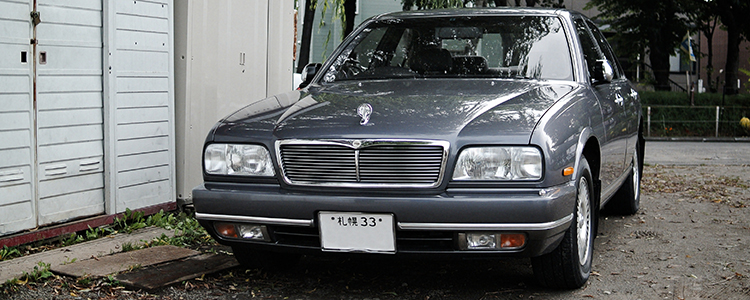
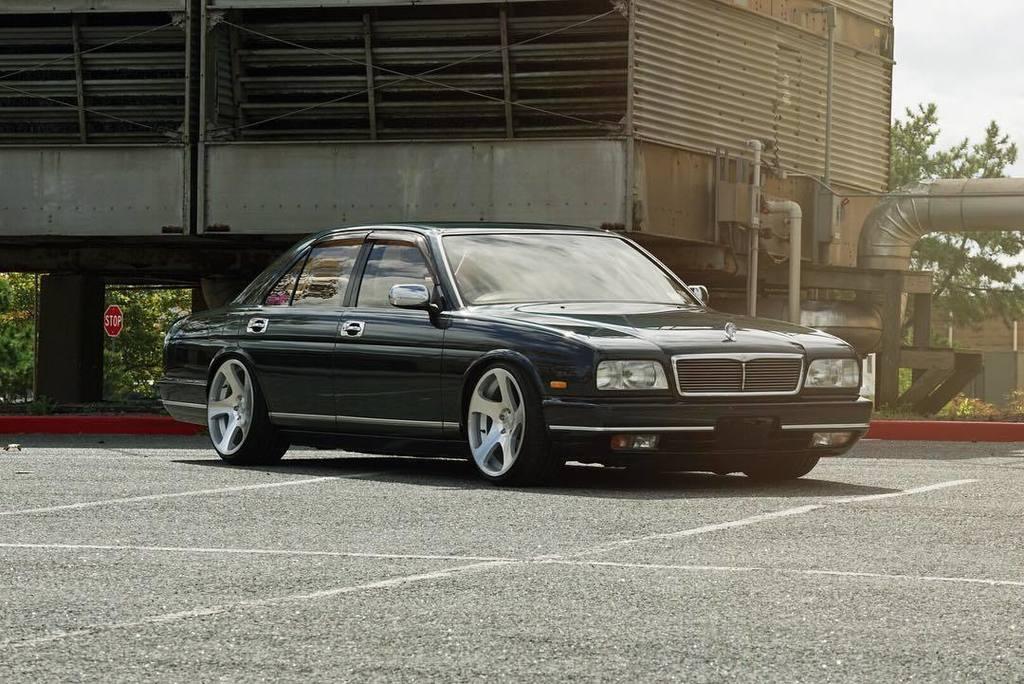
Editorial
The buyer's read
The documented Y33 with the VH41DE V8 is the clearest entry point. Parts cross with the second-generation Infiniti Q45 that's findable in North America, and the chassis is old enough to import but recent enough that electronics hold together. Skip examples under $8,000 — a cheap Cima almost always means a VQ30DET that hasn't seen a fluid change in years, or a Y31 that needs everything.
The Y31 is for buyers who want the original Cima phenomenon car and accept what that means: 35-plus years of age, pillarless hardtop bodywork, JDM-only interior trim, and bubble-era electronics. The VG30DET turbo is the name, but the NA VG30DE is the lower-risk ownership choice if a clean one surfaces. A Y31 without paperwork is a parts search, not a driver.
The Y32 introduced the VH41DE V8 alongside Hydraulic Full-Active Suspension on upper trims — the suspension is expensive when it fails, and bubble-collapse-era interior colour limitations (black/grey only) complicate trim matching. A clean, documented Y32 with a healthy active suspension is a good car; an undocumented one is not.
The F50 exported as the third-generation Infiniti Q45, so parts crossover is workable. The VK45DD direct-injection V8 brings carbon buildup risk, and aging navigation modules are F50-specific. Budget a few thousand above purchase price for catch-up work; the earliest F50s clear the 25-year import rule now, with the rest of the run becoming legal through 2035.
FAQ
Frequently asked questions
- Which Nissan Cima generation is best to buy?
- Most buyers target Y33 (1996-2001) for value and usability. Y32 is older/complex; F50 is newer but heavier and more tech.
- What are the most common problems on a Cima?
- Air suspension failures, aging electronics, worn bushings, and cooling system neglect. Check for warning lights and uneven ride height.
- Is the VH41DE/VH45DE reliable?
- Generally strong bottom-end and smooth, but age-related issues matter: cooling, leaks, sensors, and neglected fluids cause most failures.
- Should I avoid air suspension cars?
- Not necessarily. Budget for struts/compressor or buy one with documented replacement. Coil conversions improve reliability but reduce originality.
- What should I inspect before buying/importing?
- Verify auction sheet, rust, air system operation, cold start, transmission shifts, and all interior functions. Confirm mileage consistency and service records.
- Are modified VIP Cimas worth more?
- Clean, tasteful mods can help, but the highest premiums go to stock, low-km examples. Extreme stance/audio builds often narrow the buyer pool.
- How does it compare to a Toyota Celsior?
- Celsior is typically more reliable and easier for parts; Cima offers stronger VIP identity and often better value for similar luxury.
- What’s the market outlook for Cima prices?
- Expect steady support from 25-year imports and VIP demand. Best appreciation is in low-km, unmodified cars with documented maintenance.
Citations
Sources & references
Sources (8)
- Nissan Cima — encyclopedic overview (history, generations, Cima phenomenon) — Wikipedia Verified
- Infiniti Q45 — export sibling reference — Wikipedia Verified
- Nissan President — JDM flagship sibling (VH45DE / shared F50 platform) — Wikipedia Verified
- Nissan VG engine family (VG30DE, VG30DET) — Wikipedia Verified
- Nissan VH engine family (VH41DE, VH45DE) — Wikipedia Verified
- Nissan VK engine family (VK45DD direct injection) — Wikipedia Verified
- Japanese asset price bubble — economic context for the Cima phenomenon — Wikipedia Verified
- Nissan Cima: The Ultimate Guide — JDMBUYSELL Verified
Sources last verified: