Editorial notes
Key Takeaways
- Rust and underbody condition drives value more than mileage.
- 4WD + diesel variants command the strongest premiums.
- Friendee camper trims (Auto Free Top) are most collectible.
- Cooling system health is a top ownership risk and cost.
- Parts support is decent, but trim/camper bits can be scarce.
- Import legality improves demand as later years hit 25-year rule.
Should You Buy a Mazda Bongo SD?
Why You'll Love It
- Camper-ready packaging Friendee layouts and flat floor make compact camping easy; huge interior for footprint.
- 4WD availability Selectable/part-time 4WD trims add winter and light off-road capability; boosts resale.
- Diesel efficiency Popular diesel variants offer strong low-end torque and better range; ideal for touring.
- Simple commercial roots Many trims use straightforward mechanicals; easier DIY than modern vans if maintained.
- Strong niche demand Camper/overland buyers keep liquidity high for clean, rust-free examples.
- Compact exterior size City-friendly dimensions with van-like cargo volume; fits small parking spaces.
Why You Might Not
- Rust is the deal-breaker Sills, arches, floors, and subframes rot; repairs can exceed purchase price quickly.
- Cooling system sensitivity Overheating risk if neglected; radiators, hoses, and fans must be kept perfect.
- Camper parts scarcity Auto Free Top, interior plastics, and trim pieces can be hard to source and pricey.
- Cab-over crash safety Driver sits over axle; older vans lack modern crash structures and airbags.
- Slow by modern standards Performance is modest; highway grades and headwinds expose limited power.
- Import/registration variability State rules, inspections, and insurance vary; paperwork quality affects total cost.
Who Should NOT Buy This
- Anyone unwilling to monitor real coolant temps
- Buyers who can’t handle sudden overheating risk
- People needing modern crash safety/airbags
- Those who can’t DIY or pay specialist labor
- Rust-averse buyers in salted-road climates
- Anyone needing easy parts at local auto stores
- Drivers expecting quiet, refined highway manners
- People who tow heavy without trans cooling upgrades
- Owners with no place to store a tall van/camper
- Those who need consistent rear-seat safety features
- Anyone who hates chasing water leaks and damp
- Buyers expecting modern MPG from a heavy brick
- People who won’t maintain ATF/transfer/diff fluids
- Short-trip only drivers (diesel soot/EGR issues)
- Anyone needing guaranteed emissions compliance
- Those who can’t inspect hidden rust thoroughly
- People who want set-and-forget reliability
- Owners who can’t tolerate slow steering/braking feel
- Anyone relying on one vehicle for critical commuting
- Buyers who can’t verify conversion gas safety
Common Issues & Solutions
| Issue | Cause | Solution | Est. Cost |
|---|---|---|---|
| Head gasket failure | Overheating from weak cooling system/airlocks | Pressure test, skim if needed, new HG/bolts, flush | $1800-4500 |
| Cracked cylinder head | Repeated overheating; hot spots from low coolant | Replace head, inspect block, renew cooling system | $3500-7500 |
| Radiator end tank leaks | Aged plastic tanks, corrosion, poor coolant mix | Replace radiator, cap, flush and correct coolant | $350-900 |
| Heater pipe corrosion | Underbody steel lines rot; road salt exposure | Replace pipes/hoses; consider stainless upgrades | $500-1400 |
| Cooling system airlocks | Poor bleeding after service; long coolant runs | Vacuum fill/bleed properly; check for leaks | $150-400 |
| Water pump failure | Age, contaminated coolant, bearing wear | Replace pump, belt, thermostat; flush system | $450-1100 |
| Thermostat sticking | Old coolant deposits; cheap aftermarket stats | Install OEM-quality thermostat; bleed system | $150-350 |
| Fan clutch/e-fan failure | Worn viscous clutch or failed fan switch/relay | Replace clutch or diagnose fan circuit; verify temps | $250-900 |
| Temp gauge misleading | Damped gauge logic; sender issues hide spikes | Add real temp gauge/OBD monitor; replace sender | $120-450 |
| Auto trans slipping | Burnt ATF, worn clutches, overheating towing/camper | Service ATF/filter early; rebuild if slipping | $350-3800 |
| Delayed gear engagement | Low ATF, worn valve body seals, tired pump | Correct level, service; valve body or rebuild | $250-3200 |
| Transfer case chain stretch | High mileage, mismatched tires, poor fluid service | Replace chain/bearings; match tire sizes | $900-2200 |
| 4WD binding/shudder | Mismatched tire diameters or seized viscous coupling | Replace tires as set; service/replace coupling | $600-2500 |
| Rear diff bearing whine | Old oil, overload, water ingress via breather | Rebuild diff; replace bearings/seals; change oil | $900-2200 |
| CV boot failure | Age/heat; lifted campers increase angles | Replace boots or complete axle; align suspension | $250-700 |
| Front ball joint wear | Age, poor lubrication, heavy loads/rough roads | Replace joints/arms; immediate if any play | $350-1100 |
| Steering rack leaks | Seal wear; contaminated fluid; torn boots | Rebuild/replace rack; flush fluid; new boots | $700-1800 |
| Brake hard line rust | Road salt; factory coating fails with age | Replace lines with copper-nickel; bleed system | $450-1400 |
| Caliper slider seizure | Dry pins, torn boots, corrosion | Rebuild/replace calipers; new pads/rotors as needed | $300-900 |
| Wheel bearing failure | Age, water ingress, incorrect torque | Replace bearing/hub; inspect spindle surfaces | $350-900 |
| Injector blow-by (diesel) | Failed copper washers; carbon builds under injectors | Pull injectors, clean seats, new washers/bolts | $400-1200 |
| Glow plug/relay faults | Aged plugs, relay contacts, corroded bus bar | Test resistance; replace plugs/relay; clean terminals | $200-650 |
| Turbo oil leaks/smoke | Worn seals from poor oil changes or overheat | Rebuild/replace turbo; check crankcase breather | $900-2500 |
| EGR/intake clogging | Diesel soot + oil mist; short trips | Clean intake/EGR; consider catch can where legal | $250-900 |
| Fuel pump/line leaks | Aged seals/hoses; vibration; poor clamps | Replace hoses/seals; renew filter head if cracked | $200-900 |
| Cabin heat soak | Engine under-seat; missing insulation or seals | Restore insulation, seal covers; check exhaust leaks | $150-600 |
| Exhaust manifold cracks | Heat cycling; turbo backpressure; age | Replace manifold/gaskets; check mounts and EGT | $600-1800 |
| Rusty sills/rails | Poor factory protection; salt; trapped moisture | Proper cut/weld repair; cavity wax; avoid cover-ups | $1500-8000 |
| Windshield frame rust | Stone chips + trapped moisture under trim | Glass out repair, weld as needed, repaint, reseal | $800-2500 |
| Sliding door roller wear | Dry track, misalignment, rusted mounts | Replace rollers, clean/lube track, align door | $250-900 |
| Water leaks into cabin | Roof gutter seams, door seals, pop-top seals | Trace with hose test; reseal; replace seals | $200-2000 |
| Camper wiring faults | DIY installs, undersized cables, poor fusing | Rewire with proper fuses/relays; inspect for heat | $400-2500 |
| Rear leaf spring sag | Constant camper load; age and corrosion | Replace springs/shackles; add helper springs if needed | $600-1800 |
Differences between JDM & USDM
The Mazda Bongo was never officially sold in the United States. There is no USDM Bongo and no Lexus or Mercury equivalent. Every Bongo in North America is a gray-market import: either NHTSA's 25-year exemption (the standard US route, which makes 1999 build-year cars eligible in 2024 and progressively newer years thereafter), Canada's 15-year RIV rule, or a state-level Show-or-Display / commercial-exempt path. Outside Japan, the Bongo was sold through badge engineering: Ford Econovan / Spectron (Australia, Asia-Pacific, E-series), Kia Wide Bongo (Korea, third generation), Nissan Vanette (1994 onward), and Mitsubishi Delica Cargo (fourth generation). JDM-spec Bongos came with right-hand drive throughout production. The Friendee Auto Free Top is a JDM-only product; no factory pop-up Friendee was ever sold under any non-Mazda badge in any export market.
Pre-Purchase Inspection Checklist
Critical Priority
High Priority
Medium Priority
Generation History
Bongo (1st gen) (1966-1975)
- Early cab-over Bongo van/truck
- Simple RWD commercial platform
- Rare in export/JDM collector market
Bongo (2nd gen) (1977-1983)
- Updated cab-over body and payload
- Workhorse spec; limited enthusiast pull
- Survivors mainly utilitarian restorations
Bongo (3rd gen) (1983-1999)
- 4WD and diesel options broaden appeal
- Camper conversions common; check quality
Market Data
Production Numbers & Rarity
| Generation | Years | Total Built | Notes |
|---|---|---|---|
| Bongo (1st gen) | 1966-1975 | estimated | Factory totals not publicly consolidated |
How It Compares
| Feature | SD | Toyota Hiace H100 | Mitsubishi Delica L400 |
|---|---|---|---|
| Body style focus | Van/truck; Friendee camper | Van; Super Custom/Hiace | Van; Space Gear camper |
| Drivetrain | RWD or 4WD (trim dependent) | RWD/4WD (market dependent) | 4WD common; off-road bias |
| Diesel popularity | High; diesel 4WD most wanted | High; diesel workhorse demand | Very high; diesel 4WD core appeal |
| Camper desirability | Friendee + Auto Free Top halo | Aftermarket campers common | Factory/aftermarket campers common |
| Parts availability | Good mechanical; trim can be hard | Strong global support; easier parts | Mixed; some parts pricier than Bongo |
| Rust risk | High; inspect sills/floors/subframes | High; depends on region and use | High; underbody and rear arches |
| Driving feel | Compact, car-like vs big vans | Bigger, more commercial steering | Tall, trucky; more body roll |
| Market pricing | Lower entry; big premium for AFT/4WD | Higher baseline; Toyota tax | Similar to higher; 4WD tax strong |
| Best buyer profile | Compact camper, daily utility, city use | Commercial hauling, long-distance vanlife | Overland, snow, rough-road touring |
Comparable Alternatives
Nissan Vanette Serena C23
Similar size/era; often cheaper entry to JDM van life
Suzuki Every/Carry (kei)
Smaller, cheaper, easier to park; less highway capable
Honda Stepwgn (early)
More MPV comfort; less 4WD/camper niche than Bongo
In Pictures
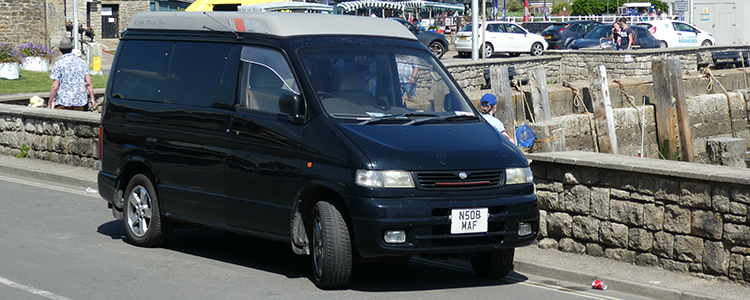
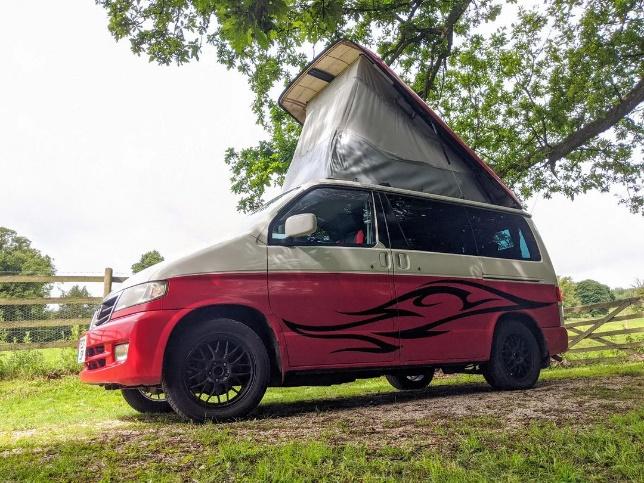
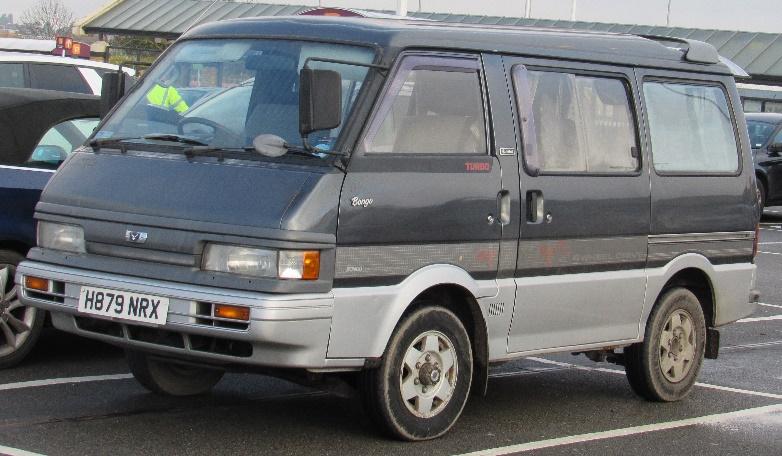
Frequently Asked Questions
- What Bongo trims are most desirable?
- Top demand is Friendee with Auto Free Top, plus 4WD and diesel. Clean, rust-free examples bring the biggest premiums.
- What are the biggest mechanical risks?
- Overheating/cooling issues and neglected maintenance are the big killers. Budget for radiator, hoses, thermostat, and fan checks immediately.
- Where do Bongos rust most?
- Check sills, wheel arches, floorpans, subframes, and around rear suspension mounts. Fresh undercoat can hide serious corrosion.
- Is 4WD worth paying extra for?
- Usually yes: 4WD improves usability and resale. If you’re city-only, a clean RWD can be better value and simpler to maintain.
- Are camper conversions a red flag?
- Not always, but inspect wiring, propane, and water systems. Poor conversions hurt value; factory-like Friendee interiors are safest buys.
- How do prices vary by condition?
- Rust-free, documented vans trade at multiples of rough ones. Service history and underbody photos matter more than odometer readings.
- What should I check on an Auto Free Top?
- Verify smooth operation, seals, and water ingress. AFT canvas/seals and mechanisms can be expensive and time-consuming to refurbish.
- When is a Mazda Bongo US-legal?
- Under the 25-year rule, eligibility depends on build year. Many imports are 1990s; later 1999+ models become legal starting in 2024 onward.
Sources & References
Sources (10)
- Mazda Bongo — encyclopedic overview (generations, chassis codes, badge-engineering history) — Wikipedia Verified
- Mazda Bongo Friendee — Auto Free Top trim and SG/SGE chassis codes — Wikipedia Verified
- Mazda F engine family (F8/FE) — 1.8L and 2.0L gasoline four-cylinders — Wikipedia Verified
- Mazda J engine — 2.5L V6 (J5-D) used in Bongo Friendee — Wikipedia Verified
- Nissan Vanette — shared platform from 1994 onward (rebadged Bongo) — Wikipedia Verified
- NHTSA 25-year import exemption — vehicle importation rules — NHTSA Verified
- U.S. Customs and Border Protection — importing a vehicle — U.S. Customs and Border Protection Verified
- JDMEXPO Bongo stock listings — current market supply — JDMEXPO Verified
- Bongo Fury owners' community (UK Bongo Friendee specialists) — Bongo Fury Verified
- Mazda corporate history — Mazda Motor Corporation Verified
Sources last verified: