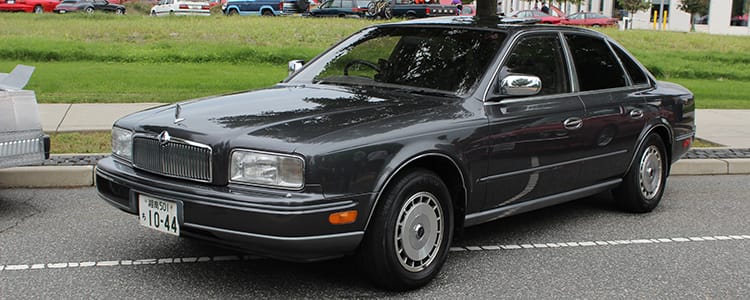
Chassis Code Explained
| Segment | Meaning | Detail |
|---|---|---|
| J | Platform prefix | J — President-series platform |
| H | Wheelbase variant | H — extended wheelbase (formal limousine) |
| G | Engine | G — VH45DE 4.5L V8 |
| 50 | Generation | 50 — G50-series body (1990–2002) |
The JHG50 is the extended-wheelbase formal variant; the standard-wheelbase equivalent is the JG50. Both used the VH45DE 4.5L V8. Government and formal limousine orders typically specified the JHG50 extended body.
Editorial notes
Key Takeaways
The President ran from 1965 until 2010 across four generations, and each one was a different car for a different decade. The H150 and H252 are old-school chauffeur sedans with the early V8s. The HG50 is where the modern VH45DE V8 arrives and where most import buyers start. The PGF50 is basically a top-trim Cima Y50 with a President badge.
- Rarity and VIP presence drive demand more than speed
- VH45DE V8 is smooth; maintenance history is crucial
- Cima/LS400 are easier to own; President is rarer
- Rust, air suspension, electronics are top cost risks
- Best value: clean JHG50/JG50 with records
- Prices: wide spread; top-grade cars command premiums
Should You Buy a Nissan President JHG50?
The President trades a lot to be what it is. You get a Japan-only flagship V8 with chauffeur DNA and almost nobody else has one. You also get parts hunts, niche electronics, and a small buyer pool when you go to sell. The good and the bad on the President come from the same place, which is rarity.
Why You'll Love It
- True JDM flagship rarity Japan-only halo sedan; stands out at events and auctions versus common Cima/LS400.
- Smooth, torquey V8 power VH45DE/VK45DE deliver effortless cruising; ideal for VIP builds and highway comfort.
- VIP presence & stance potential Long wheelbase, formal design, and wheel fitment support classic VIP styling.
- High-spec comfort features Many trims offer rear amenities, soft-close, power everything, and high NVH isolation.
- Shared mechanical ecosystem Some drivetrain/service parts cross with Q45/Cima, improving serviceability vs rarer rivals.
- Undervalued vs hype icons Often cheaper than Supra/GT-R money; niche luxury collectors keep entry costs reasonable.
Why You Might Not
- Parts scarcity (trim & body) Model-specific interior, glass, and exterior pieces can be difficult and expensive to source.
- Aging electronics complexity Power accessories, climate, and modules can fail; diagnosis requires patience and specialists.
- Suspension cost risk Air/active setups (where fitted) can leak or fail; conversions hurt originality value.
- Fuel economy & running costs Large V8 sedan ownership includes higher fuel, tires, brakes, and fluids than smaller JDM.
- Rust and prior VIP mods Imports may hide corrosion or hard-used stance mods; inspect underbody and wiring carefully.
- Niche resale liquidity Buyer pool is smaller than for sports cars; best resale requires exceptional condition.
Who Should NOT Buy This
- Anyone needing easy parts availability
- Buyers without a JDM-specialist mechanic nearby
- People who can’t tolerate downtime waiting on parts
- Rust-belt residents without indoor storage
- Anyone expecting modern crash safety
- Drivers wanting good fuel economy
- People who hate chasing electrical gremlins
- Owners without budget for cooling system overhaul
- Anyone needing strong A/C in hot climates (stock)
- People who require OBD2 simplicity for diagnostics
- Buyers who can’t wrench or pay $150/hr labor
- Those needing tight handling; it’s a floaty limo
- Anyone with strict emissions inspections in their state
- People who need cheap tires/brakes (heavy car costs)
- Buyers expecting quiet ownership; age brings noises
- Anyone who can’t store a long sedan (LWB is huge)
- People who want quick resale; niche market
- Anyone allergic to premium fuel costs (V8 trims)
- Those who can’t handle RHD daily in LHD traffic
- Buyers expecting perfect interior plastics/leather at age
Common Issues & Solutions
The VH45DE under the HG50 is a tough engine and the chassis is overbuilt. Most of what goes wrong on a President is age related. The cooling system tires out. The air suspension on equipped cars starts to sag. The interior electronics and climate control modules drift. None of these kill the car, but they all cost money to put right.
| Issue | Cause | Solution | Est. Cost |
|---|---|---|---|
| Overheating at idle | Aged radiator, weak fan clutch, clogged coolant | Radiator+thermostat+hoses; verify fan/clutch | $600-1500 |
| Heater core leak | Core corrosion; old coolant; clogged passages | Replace heater core; flush system; new coolant | $900-2000 |
| Timing chain rattle | Worn guides/tensioners; long oil intervals | Replace guides/tensioners; inspect chains/sprockets | $1500-4000 |
| Injector failure (V8) | Ethanol/fuel varnish; heat-soak; old injectors | Replace injectors/rails seals; clean tank/lines | $1200-3500 |
| Fuel hose seep/leak | Aged rubber hoses; clamp fatigue; heat cycling | Replace all under-hood fuel hoses with EFI hose | $200-600 |
| Rough idle / stalling | Dirty IACV, vacuum leaks, tired MAF | Smoke test; clean IACV; repair leaks; test MAF | $200-900 |
| AT slipping/flare | Worn clutches; overheated ATF; neglected service | Rebuild/replace trans; add cooler; proper ATF | $2500-5500 |
| Delayed AT engagement | Valve body wear; low line pressure; old seals | Service/pressure test; valve body or rebuild | $600-4500 |
| Driveshaft vibration | Worn center bearing or U-joints; imbalance | Replace bearing/U-joints; balance shaft | $400-1200 |
| Diff whine/leak | Worn bearings; low fluid; pinion seal aging | Reseal; refill; rebuild if noisy | $250-1800 |
| Power steering leaks | Rack seals/lines aging; pump shaft seal seep | Rebuild rack; replace lines; reseal/replace pump | $700-2200 |
| Front end clunks | Tension rod bushings; control arm bush wear | Replace bushings/arms; alignment after | $500-1800 |
| Air suspension sag | Leaking bags/lines; tired compressor/dryer | Replace bags/lines; rebuild compressor or convert | $1200-4500 |
| Brake pulsation | Warped rotors from heat; stuck caliper slides | Rotors+pads; service calipers; flush fluid | $400-1200 |
| Rear caliper sticking | Corroded piston/seals; old brake fluid | Rebuild/replace calipers; flush; new hoses | $350-1100 |
| ABS faults | Wheel speed sensors wiring; aged pump/module | Diagnose sensors; repair wiring; replace module | $200-1500 |
| Window regulator failure | Worn cables/plastic guides; tired motors | Replace regulator; service tracks; motor if needed | $250-800 |
| Door lock actuator weak | Aged actuator motors; sticky linkages | Replace actuators; clean/lube linkages | $200-700 |
| Climate control glitches | Capacitors/aged solder; servo motor wear | Rebuild control unit; replace servos as needed | $300-1200 |
| A/C not cold | Low charge/leaks; tired compressor; bad condenser | Leak test; replace O-rings; compressor/condenser | $400-1800 |
| Water in cabin | Sunroof drains clogged; windshield seal leaks | Clear drains; reseal glass; dry/repair carpets | $150-1200 |
| Trunk water intrusion | Tail lamp seals; trunk gasket shrink; body seams | Reseal lamps; replace gasket; seam seal as needed | $150-700 |
| Severe rust in sills | Salt exposure; clogged drains; poor prior repairs | Cut/weld metal; treat cavities; avoid undercoat-only | $1500-8000 |
| Exhaust/cat rattle | Broken cat substrate; rusted heat shields | Replace cats/sections; secure shields | $400-2500 |
| Hard parts scarcity | JDM-only trim/electronics; discontinued parts | Source used/Japan; refurbish; plan lead times | $200-5000 |
Differences between JDM & USDM
The Nissan President was never officially sold in the United States, Canada, or any export market under the President name across all four generations (1965–2010). The closest export equivalent is the Infiniti Q45 (G50, 1989–1996) and (FY33, 1997–2001), which shares the VH45DE 4.5L DOHC V8 and core G50 platform with the third-generation HG50 / JG50 President but is a distinct body and interior — the President sits on a longer wheelbase, carries different exterior styling, and uses a ceremonial-spec rear cabin that the Q45 never offered. For US buyers, the only path to ownership is the 25-year FMVSS / EPA import exemption: H150 cars (1965–1973) are long-eligible, H250 cars (1973–1990) eligible by build date, and HG50 / JG50 / PG50 cars (1990–2002) eligible by build date now. The PGF50 (2003–2010) is not yet eligible — the earliest 2003 builds become importable in 2028. The driving position is RHD across every President generation; there is no LHD President, and there was no factory left-hand-drive program for any market.
Pre-Purchase Inspection Checklist
The President checklist is heavier on documentation and rust than on the engine. The V8 itself is usually fine. What you're really checking is whether someone has kept up with the cooling system, the suspension bushings, and the interior electronics over the last 25 to 30 years. Bring a flashlight and crawl under the car.
Critical Priority
High Priority
Medium Priority
Low Priority
Generation History
H150 (1st Gen) (1965-1973)
- Hand-built style flagship; Japan-only
- L-series six; formal chauffeur image
- Low production; collector interest rising
H250 (2nd Gen) (1973-1990)
- Long-running model; formal luxury focus
- V8 availability in later years (market dep.)
- Parts scarcity growing; restoration-heavy
G50 (3rd Gen) (1990-2002)
- VH45DE 4.5L V8 flagship era
- VIP platform; rear comfort emphasis
- Shared DNA with Infiniti Q45/Cima
PGF50 (4th Gen) (2003-2010)
- VK45DE 4.5L V8; modernized cabin
- Often chauffeur spec; rear-seat options
- Rarest modern President; import interest
Market Data
President trims line up by how much of the rear cabin is set up for someone other than you. The base President is the driver's car of the range. The Sovereign adds leather and wood. The Sovereign VIP is the chauffeur trim with rear comfort features. The PG50 Royal Limousine is a factory stretch built by Autech in small numbers and the rarest of the lot.
Production Numbers & Rarity
| Generation | Years | Total Built | Notes |
|---|---|---|---|
| H150 (1st gen) | 1965-1973 | estimated | Exact production totals not in dataset |
| H250 (2nd gen) | 1973-1990 | estimated | Exact production totals not in dataset |
| JG50/PG50 (3rd gen) | 1990-2002 | estimated | Royal Limousine is a small subset; totals not in dataset |
| PGF50 (4th gen) | 2003-2010 | estimated | Low-volume Japan-only; exact totals not in dataset |
Rarest variant: PG50 Royal Limousine
How It Compares
Among the JDM flagship sedans, the President is the rarest, the Celsior is the most reliable, and the Toyota Century sits above all of them with the Imperial Household association and a V12. The table below leans into the President's strengths, which are rarity and chauffeur presence, not raw power or ease of ownership.
| Feature | JHG50 | Toyota Celsior UCF20/30 | Toyota Crown Majesta S150 |
|---|---|---|---|
| Engine layout | VH45DE/VK45DE V8 | 1UZ-FE/3UZ-FE V8 | 2JZ-GE I6 / 1UZ V8 |
| Power (typical) | VH45DE ~270hp (JDM) | 1UZ-FE ~260hp | 4.0 V8 ~250hp |
| Torque character | Strong midrange, smooth | Silky, linear delivery | Low-end torque focus |
| Transmission | 4AT/5AT (gen dep.) | 4AT/5AT | 4AT/5AT |
| Drivetrain | RWD (most); some 4WD | RWD | RWD/4WD variants |
| Ride/handling | Soft, isolated cruiser | More refined, quieter | Sportier chassis feel |
| Cabin space | Excellent rear comfort | Excellent; limo-like | Very good; more driver |
| VIP rear options | High; chauffeur trims | High; exec packages | High; rear comfort focus |
| Reliability reputation | Good if maintained | Excellent; benchmark | Good; parts vary |
| Parts availability | Moderate; niche pieces hard | Strong; global Lexus support | Moderate; Japan supply |
| Rust risk (imports) | Moderate; inspect carefully | Moderate; similar era | Moderate-high in snow areas |
| Collector desirability | High rarity, niche demand | High mainstream luxury | Ultra-high JDM prestige |
| Modification culture | Strong VIP platform | Strong VIP platform | Strong VIP platform |
Comparable Alternatives
If the President turns out to be too much of a parts hunt, the natural alternatives are the Toyota Celsior for a smoother V8 with proper parts support, or the Nissan Cima Y33 if you want the President feel with an easier ownership path. The Infiniti Q45 G50 is the closest mechanical cousin and gives you US parts access on the VH45DE.
Toyota Celsior UCF20
Similar V8 luxury; easier parts and ownership
Toyota Crown Majesta S170
VIP-ready sedan with strong JDM support
Nissan Cima FGY33
Close Nissan flagship feel; more common supply
Infiniti Q45 G50
Related VH45DE platform; US-market parts access
Toyota Century G50
Chauffeur prestige; different vibe, higher costs
In Pictures
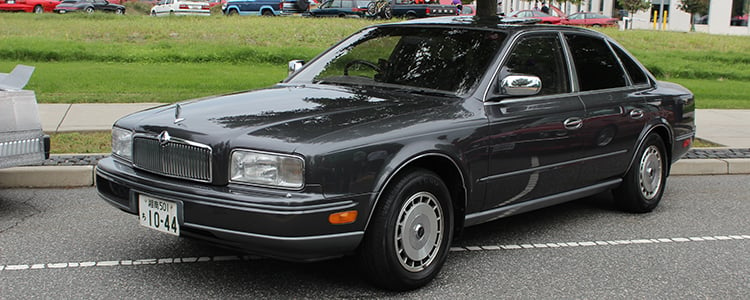
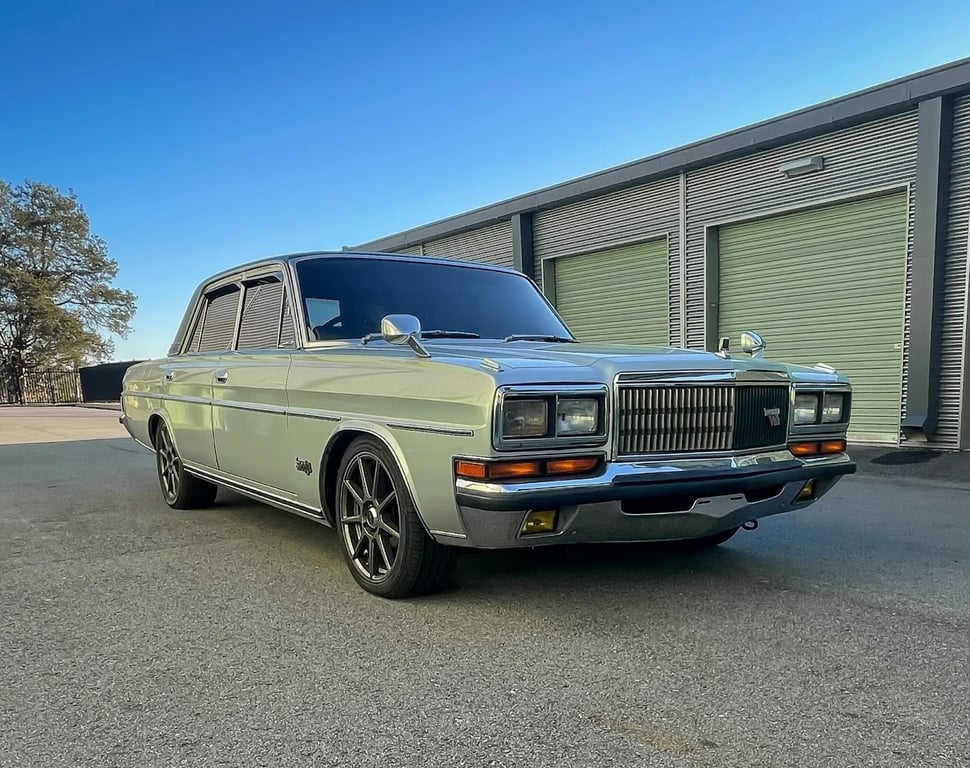
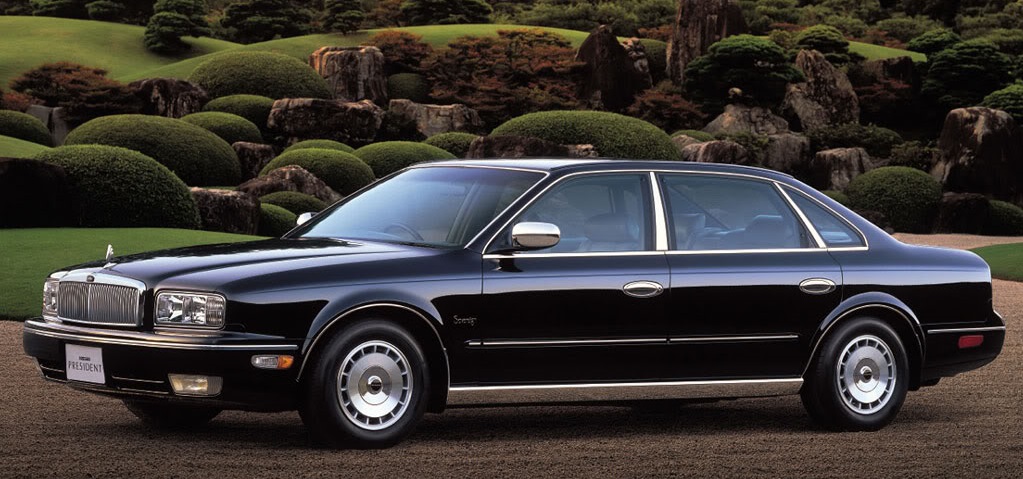
The Buyer's Read
The safest starting point is a documented HG50 or JG50 from the 1995–2001 range. That gives you the VH45DE 4.5-litre V8 with a long service history available through the Infiniti Q45 parts ecosystem, and electronics old enough to be sorted without being so old that every module has given up. Avoid cheap examples without records — a bargain President typically becomes a parts hunt, and what you save at purchase you'll spend chasing trim and rear-cabin hardware that nobody outside Japan stocks.
For the Sovereign VIP rear cabin and long wheelbase, confirm you have a Japan-direct supplier before committing. The PG50 Royal Limousine sits above that — the drivetrain is the same VH45DE, so the engine isn't the concern. Plan partition glass, rear lounge controls, and chauffeur hardware at an extra three to five thousand over the first few years.
The H150 and H252 without service history are the cars to pass on. The early V8s and older electronics are harder to sort than the HG50, and H250 parts get scarce quickly. A clean H252 Sovereign with original interior and documented cooling work is worth a closer look, but most rough H250s cost more than buyers expect once the work adds up.
The PGF50 is not yet 25-year eligible in the US — the earliest 2003 builds qualify from 2028 onward. Where it is importable, treat it as a top-trim Cima Y50: same VK45DE 4.5-litre V8, same F50 platform, and service items that mostly cross-reference to the more common Cima.
Frequently Asked Questions
- Which Nissan President generation is best to buy?
- Most buyers target G50 (1990-2002) for VH45DE and classic VIP look; PGF50 is rarer and pricier.
- What does a clean Nissan President cost today?
- Expect wide spread: rough cars can be cheap, but clean, low-mile examples command mid to high five figures.
- Is the Nissan President reliable?
- Generally yes with records. Biggest risks are electronics, suspension, and neglected cooling/fluids on V8 cars.
- What are the common problems to inspect?
- Check rust, air/active suspension leaks, power accessories, HVAC, and evidence of hard VIP mods or wiring hacks.
- Are parts hard to find in the US?
- Service items are manageable via Japan sourcing; body/interior trim can be difficult and slow to replace.
- Is it US-legal to import under the 25-year rule?
- Yes by build date. G50 (1990+) is legal now; PGF50 (2003+) becomes legal starting 2028.
- Is the President better than a Celsior/LS400?
- For rarity and VIP presence, often yes. For ease of ownership and parts, Celsior/LS400 usually wins.
- What specs add the most value at auction?
- Low mileage, stock condition, documented service, clean underbody, desirable colors, and intact OEM options.
Sources & References
Sources (9)
- Nissan President — encyclopedic overview — WikipediaVerified
- 日産・プレジデント — Japanese encyclopedic overview — Wikipedia (Japanese)Verified
- A vintage Nissan luxury machine — Hagerty profile — HagertyVerified
- Weekly Treasure: 1994 Nissan President JS — CarBuzzVerified
- 1990-2002 Nissan President HG50 — model history — Driven To WriteVerified
- Nissan President specifications and trim catalogue — TCV (Trans Cars Vehicles)Verified
- Nissan President auction results and historical comps — Classic.comVerified
- Nissan President auction history — Bring a TrailerVerified
- Nissan heritage — corporate model history index — Nissan Motor CorporationVerified
Sources last verified: