Suzuki Cappuccino
RWD kei roadster; purer sports feel; strong collector pull
Buyer's guide
15 min read
Buyer's guide & specs
Background
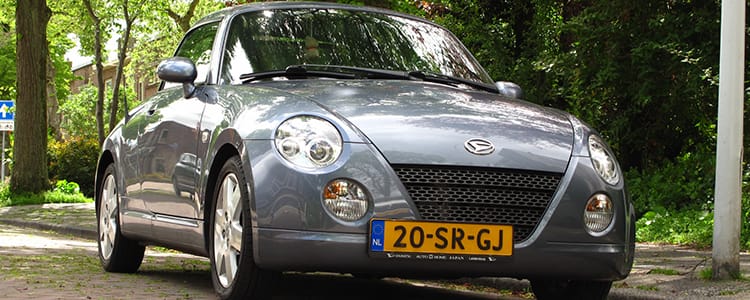
The Daihatsu Copen ran two generations across 2002–present. Most US buyers are tracking the first-generation L880K — 659cc JB-DET turbo four, Active Top retractable hardtop, produced 2002 to 2012. The second-generation LA400K launched in 2014 with the KF-DET three-cylinder and a detachable panel roof. The 2002 L880K becomes 25-year US-legal in 2027; values are firming now as rust-free, unmodified cars thin out.
The L880K (2002–2012) runs the JB-DET 659cc four-cylinder turbo paired with a 5-speed manual or 4-speed automatic, and its defining feature is the Active Top — an electro-hydraulic retractable hardtop that stows under a rear clamshell. The hydraulic pump, microswitches, drain tubes, and seals all wear with age; a non-functional roof separates a $4,000 project from a $20,000 driver.
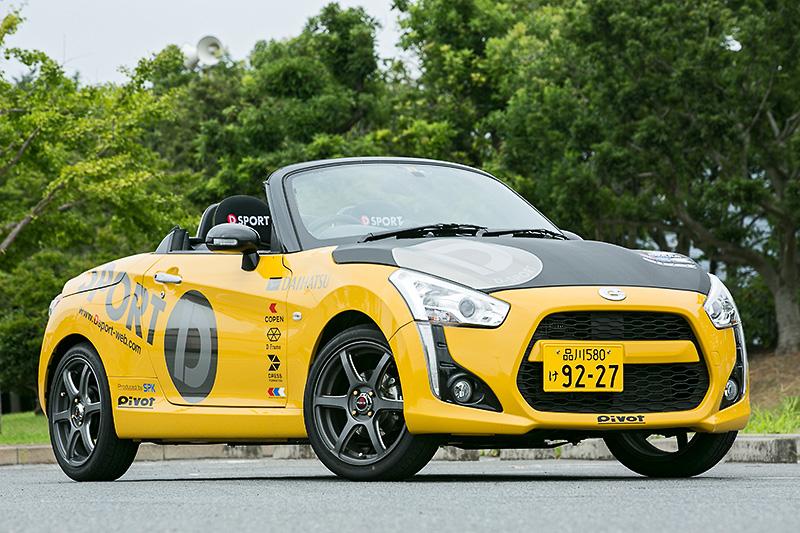
The LA400K (2014–present) dropped the powered hardtop. Daihatsu's D-Frame structure carries interchangeable body panels — Robe (square lamps), Cero (round lamps), or XPLAY (SUV cladding) — and the roof became a three-piece Detachable Top that lifts off manually and stows in the trunk. The engine is the KF-DET 658cc three-cylinder turbo with variable valve timing, still capped at 64 PS, and the 4-speed automatic gave way to a CVT (paddle-shift on some grades).
The 5-speed manual carried over on the LA400K and is required for the S grades that add an LSD, Recaro seats, and Bilstein dampers. Autoevolution's model overview covers both generations' specifications side by side. For tuned L880Ks, staying under 100 hp keeps the factory clutch and bottom end workable; past that threshold, component costs climb faster than resale value does.
For US buyers, 25-year eligibility on the first L880Ks starts in 2027. A limited LHD export run sold in Europe between 2005 and 2011 used a 1.3-litre four in place of the kei engine, but every JDM-spec L880K runs the 659cc turbo — which matters when cross-referencing parts from UK-source catalogs.
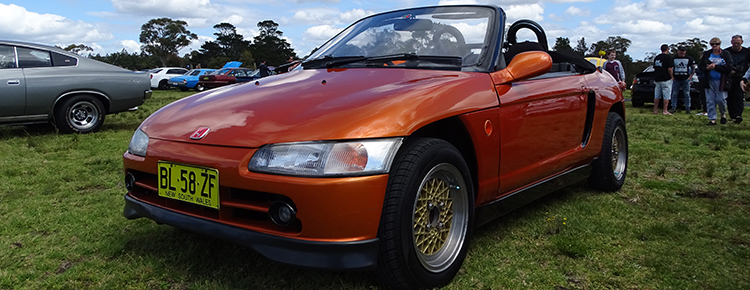
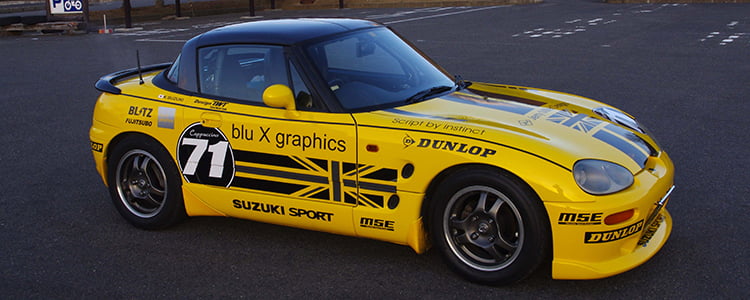
Between 1991 and 1992, three kei sports cars launched in Japan — the Mazda Autozam AZ-1 (mid-engine gullwing), Honda Beat (mid-engine NA), and Suzuki Cappuccino (front-engine RWD turbo) — known collectively as the ABC trio. All three were out of production by 1998. The Copen arrived four years later into a kei sports-car segment that had gone quiet.
Daihatsu's case for the L880K was refinement over purity: factory heated leather seats, dual-zone climate control, and a rear glass window were content the ABC trio never offered. The trade-off was front-wheel drive — the Cappuccino and Beat both ran RWD, and that purity is a substantial reason why both command higher collector prices on the global market today.
The Copen's 64 PS kei cap put it on equal footing with the ABC trio on paper. The powered hardtop, daily-driving comfort, and Toyota-era build quality broadened its audience beyond the enthusiast core and kept it in production for a decade. Classic and Sports Car's feature covers the Copen's value proposition against the contemporary kei roadster market.
Editorial notes
Quick read
Constants
Chassis history
The Copen had two generations and they're different cars under the skin. The L880K (2002 to 2012) is the JB-DET four-cylinder turbo with the powered Active Top hardtop. The LA400K (2014 onward) moved to the KF-DET three-cylinder turbo with a detachable panel roof. Both stay capped at the kei limit of 64 PS, but the L880K is what most people mean when they say Copen.
First generation — L880K (2002–2012)
Second generation — LA400K (2014–present)
Buyer's call
What you get with a Copen and what you give up are both pretty clear. It's a tiny, charming, easy car to live with that punches above its size on character. It also has a powered roof that gets old and a small turbo motor that doesn't forgive bad cooling, so the weak spots are predictable.
Reliability
The Copen isn't fragile, but it's a small turbo car with a complicated roof, and both of those age. Roof hydraulics, microswitches, and seals account for most of the headaches you'll see. The JB-DET takes care of itself if you change the oil and watch the cooling, but a single overheat can turn into a head gasket job.
| Issue | Cause | Solution | Est. cost |
|---|---|---|---|
| Roof hydraulic pump failure | Aging pump seals, low voltage, fluid leaks | Rebuild/replace pump; flush fluid; fix leaks | $900-2500 |
| Roof microswitch faults | Misadjusted latches, worn switches, wiring breaks | Adjust latches; replace switches; repair harness | $200-900 |
| Roof seal leaks | Seal shrink/tears, poor alignment, dry seals | Replace seals; align roof; condition seals | $300-1800 |
| Clogged roof drains | Debris in drain cups/tubes causing overflow | Clean drains; replace tubes; add drain screens | $100-500 |
| Wet carpets & floor rust | Roof leaks/drains; blocked HVAC drain | Fix leak; dry interior; treat/repair rust | $300-2500 |
| Timing chain rattle (L880K) | Worn chain/tensioner from poor oil changes | Replace chain, guides, tensioner; verify oiling | $900-1800 |
| Turbo wear/oil smoke | Coked oil, high boost, poor cooldown habits | Rebuild/replace turbo; clean oil feed; tune boost | $700-2200 |
| Detonation under boost | Overboost, lean tune, heat soak, bad fuel | Proper ECU tune; check AFR; reduce boost; IC upgrade | $400-2000 |
| Head gasket failure | Overheating from rad/fan/thermostat issues | Head gasket job; machine head; fix cooling faults | $1200-2800 |
| Radiator end tank cracks | Aging plastic tanks and heat cycling | Replace radiator; new cap; bleed system properly | $300-800 |
| Cooling fan/relay failure | Relay contacts burn; fan motor wear | Replace relays/fan motor; verify temp sensor | $200-700 |
| Ignition coil misfires | Heat-soaked coils, oil in plug wells, old plugs | Replace coils/plugs; fix cam cover gasket leaks | $200-700 |
| Cam cover gasket leaks | Aged gasket and PCV blow-by pressure | Replace gasket; service PCV; clean breather | $150-450 |
| Boost leak / hose splits | Old rubber hoses, loose clamps, oil swelling | Replace hoses with silicone; pressure test system | $150-600 |
| Wastegate actuator issues | Corrosion, diaphragm wear, sticky linkage | Replace actuator; free linkage; verify boost control | $200-800 |
| Manual 2nd gear synchro wear | Hard shifting, old gear oil, high mileage | Gearbox rebuild or replacement; correct fluid | $1200-3000 |
| Clutch slip/shudder | Worn disc/pressure plate; oil contamination | Clutch kit; resurface flywheel; fix rear main leak | $700-1600 |
| CVT shudder/overheat (LA400K) | Old fluid, overheating, aggressive tuning | CVT fluid service; cooler; rebuild if damaged | $300-4500 |
| EPS steering faults | Low voltage, torque sensor wear, column issues | Battery/charging test; repair EPS; replace column | $250-1800 |
| Front control arm bush wear | Age and pothole impacts; soft OEM rubber | Replace arms/bushes; align; consider upgraded bushes | $300-900 |
| Wheel bearing noise | Age, water ingress, impacts from curbs | Replace hub/bearing assembly; torque to spec | $250-700 |
| Brake caliper slider seizure | Corrosion and lack of service grease | Rebuild/replace calipers; new pads/rotors as needed | $250-900 |
| Rusty brake hard lines | Road salt; poor underbody protection | Replace lines; flush fluid; undercoat properly | $500-1500 |
| Window regulator failure | Cable fray, dry tracks, water intrusion | Replace regulator; lube tracks; fix door vapor barrier | $200-600 |
| Door lock actuator weak | Aging motor/gears; low voltage | Replace actuator; clean grounds; verify keyless unit | $150-500 |
| Heater core leak | Corrosion from old coolant; electrolysis | Replace heater core; flush system; new coolant | $600-1400 |
| A/C compressor failure | Age, low refrigerant, contaminated oil | Replace compressor/drier; flush; evacuate/recharge | $700-1600 |
| O2 sensor/cat efficiency codes | Aging sensors, aftermarket exhaust, tired cat | Replace sensors/cat; correct exhaust leaks | $250-1500 |
| Fuel pump weak under load | Aging pump, clogged sock/filter, low voltage | Replace pump; clean tank; verify wiring/relay | $250-900 |
| ECU/tune-related failures | Overboost, poor AFR, no knock control margin | Return to safe tune; dyno tune; add monitoring | $400-2500 |
| Interior rattles/roof squeaks | Chassis flex, worn latch pads, missing clips | Adjust latches; replace pads/clips; add felt tape | $50-400 |
Market
The Copen was never officially sold in the United States or Canada. Daihatsu exited the European market in 2013, and the 1.3-litre LHD export run (2005–2011) was the only first-generation Copen sold new outside Japan — sold in Germany and a handful of other European markets in modest volume. UK buyers received a small gray-market allocation through specialist importers, but most UK Copens on the road today are private imports. For North American buyers, the L880K becomes 25-year US-legal beginning in 2027 (for 2002 model-year cars), with subsequent years following annually. Until then, every Copen in the US is either a non-conforming import requiring show-or-display permitting or is sitting in a 25-year-rule queue. The second-generation LA400K won't begin reaching US eligibility until 2039. The practical implication: every Copen in the US grey market is a JDM import — meaning RHD, JDM-spec ECU, JDM auction history if documented, and a parts pipeline that runs through Japan.
Specs
Every JDM Copen runs the 64 PS kei limit. The L880K uses the JB-DET 659cc four-cylinder turbo with a 5-speed manual or 4-speed automatic. The LA400K uses the KF-DET 658cc three-cylinder turbo with VVT, paired with a 5-speed manual or a CVT. The export-only 1.0 NA in some LA400A markets makes around 87 PS but you won't see one in Japan.
| Chassis | Engine | Displacement | Power | Boost | Notes |
|---|---|---|---|---|---|
| L880K | JB-DET | 0.659L | 64 PS @ 6000rpm (63 hp) | estimated ~0.9 bar (~13 psi) | DOHC 16V, intercooled turbo, kei limit |
| L880K | JB-DET | 0.659L | 64 PS @ 6000rpm (63 hp) | estimated ~0.9 bar (~13 psi) | Torque 110 N·m @ 3200rpm (factory) |
| LA400K | KF-DET | 0.658L | 64 PS @ 6400rpm (63 hp) | estimated ~0.9 bar (~13 psi) | DOHC 12V I3, intercooled turbo, VVT |
| LA400K | KF-DET | 0.658L | 64 PS @ 6400rpm (63 hp) | estimated ~0.9 bar (~13 psi) | Torque 92 N·m @ 3200rpm (factory) |
| LA400A | 1KR-FE | 0.998L | estimated 87 PS @ 6000rpm (86 hp) | N/A | Export 1.0 NA; exact rating varies by market |
| Type | Ratios | Availability | Notes |
|---|---|---|---|
| 5-speed Manual | estimated (varies by year/market) | L880K 5MT trims | RWD; clutch-type LSD optional on some grades |
| 4-speed Automatic | estimated (varies by year/market) | L880K 4AT trims | RWD; some markets offered steering shift |
| 5-speed Manual | estimated (varies by grade) | LA400K (incl. S/GR SPORT) | S grades typically include LSD and sport tuning |
| CVT | N/A (CVT) | LA400K non-S grades | RWD; paddle shift on some grades/years |
Lineup
L880K Copens came as base, then a run of Ultimate Editions, the Detachable Top, the Tan Leather Edition, the Aluminum Top, and the 10th Anniversary. LA400K Copens come as Robe, Cero, XPLAY, the GR SPORT, and the fixed-roof Coupe. The S grades on the LA400K are 5-speed manual only and add an LSD, Recaro seats, and Bilstein dampers.
| Generation | Trim | Engine | Key features |
|---|---|---|---|
| 1st gen (L880K, Japan) | Copen (base) | JB-DET 659cc I4 Turbo | Active Top, 15in wheels, ABS, dual airbags |
| 1st gen (L880K, Japan) | Copen (5MT) | JB-DET 659cc I4 Turbo | 5MT, Active Top, LSD (opt), Recaro (opt) |
| 1st gen (L880K, Japan) | Copen (4AT) | JB-DET 659cc I4 Turbo | 4AT, Active Top, paddle shift (opt), ABS |
| 1st gen (L880K, Japan) | Copen Detachable Top | JB-DET 659cc I4 Turbo | Detachable hardtop, lighter roof system, 2-seat |
| 1st gen (L880K, Japan) | Copen Ultimate Edition | JB-DET 659cc I4 Turbo | BBS wheels, Recaro seats, MOMO wheel, aero |
| 1st gen (L880K, Japan) | Copen Ultimate Edition II | JB-DET 659cc I4 Turbo | BBS, Recaro, MOMO, special trim, unique colors |
| 1st gen (L880K, Japan) | Copen Ultimate Edition S | JB-DET 659cc I4 Turbo | BBS, Recaro, Bilstein, special badging, aero |
| 1st gen (L880K, Japan) | Copen 10th Anniversary Edition | JB-DET 659cc I4 Turbo | Special interior, unique paint, anniversary badging |
| 1st gen (L880K, Japan) | Copen Tan Leather Edition | JB-DET 659cc I4 Turbo | Tan leather seats, leather trim, Active Top |
| 1st gen (L880K, Japan) | Copen Aluminum Top | JB-DET 659cc I4 Turbo | Aluminum roof panels, Active Top, weight reduction |
| 1st gen (L880K, Japan) | Copen (export) | JB-DET 659cc I4 Turbo | LHD/RHD markets, Active Top, market-specific lamps |
| 2nd gen (LA400K, Japan kei) | Copen Robe | KF-DET 658cc I3 Turbo | D-Frame, Active Top, 16in wheels, sport seats |
| 2nd gen (LA400K, Japan kei) | Copen Robe S | KF-DET 658cc I3 Turbo | 5MT only, LSD, Recaro, Bilstein, BBS (varies) |
| 2nd gen (LA400K, Japan kei) | Copen XPLAY | KF-DET 658cc I3 Turbo | SUV-style cladding, D-Frame, Active Top, 16in |
| 2nd gen (LA400K, Japan kei) | Copen XPLAY S | KF-DET 658cc I3 Turbo | 5MT only, LSD, Recaro, Bilstein, sport aero |
| 2nd gen (LA400K, Japan kei) | Copen Cero | KF-DET 658cc I3 Turbo | Round lamps, D-Frame, Active Top, 16in wheels |
| 2nd gen (LA400K, Japan kei) | Copen Cero S | KF-DET 658cc I3 Turbo | 5MT only, LSD, Recaro, Bilstein, sport tuning |
| 2nd gen (LA400K, Japan kei) | Copen GR SPORT | KF-DET 658cc I3 Turbo | GR body kit, Recaro, BBS, bracing, sport ECU |
| 2nd gen (LA400K, Japan kei) | Copen Coupe | KF-DET 658cc I3 Turbo | Fixed roof, CFRP roof panel, stiffer body, 2-seat |
| 2nd gen (LA400A, export 1.0) | Copen (1.0L export) | 1KR-FE 998cc I3 NA | Active Top, non-kei body, export spec, ABS/ESC |
Pricing
Drivers in the US grey market trade in the $15k to $25k range for a clean Copen. Stock low-mile cars push past $30k. The numbers below show where the market actually sits today. The 2002 L880K becomes 25-year US-legal in 2027, so expect prices to firm up further as that date approaches.
Today's market range: $12,000 to $35,000 (median ~$21,000). Source: JDMBUYSELL / USS Auction.
Copen prices are firming as rust-free, stock L880Ks thin out and kei demand grows. Drivers trade in the teens to low-$20Ks; top-condition cars push $30K+. Expect gradual upside into 2027 as US eligibility begins.
Inspect
Walk this list at the seller's place, not in front of them. Cycle the Active Top three times in a row before anything else. Critical items mean you walk if they don't check out. High items can be priced into the deal, but only if you actually price them.
Cross-shop
If the Copen doesn't fit, the natural alternatives are the Suzuki Cappuccino if you want rear-wheel drive and a purer kei sports feel, or the Honda Beat if you want the mid-engine high-rev character. The Mazda Roadster NA gives you a bigger, simpler open-top car with a deep parts catalog. The MR-S gives you a mid-engine layout with real power.
RWD kei roadster; purer sports feel; strong collector pull
Bigger, simpler RWD; huge parts support; similar open-top vibe
Mid-engine 2-seater; modern dynamics; more power than kei
Tiny turbo roadster; quirky like Copen; watch reliability
Compare
Against the kei roadster trio of the early 1990s, the Copen is the newer, more refined, more livable car. It gives up rear-wheel drive to both the Cappuccino and the Beat. It gives back better build quality, a real hardtop, and content like heated leather and dual-zone climate that the ABC trio never offered.
| Feature | Daihatsu Copen | Suzuki Cappuccino EA11R | Honda Beat PP1 |
|---|---|---|---|
| Layout/Drive | FWD, 2-seat | RWD, 2-seat | RWD, 2-seat |
| Engine | 660cc turbo I4 | 660cc turbo I3 | 656cc NA I3 |
| Power (JDM) | 64 PS (kei cap) | 64 PS (kei cap) | 64 PS (kei cap) |
| Transmission | 5MT or 4AT | 5MT (some 3AT) | 5MT only |
| Roof type | Power retract hardtop | Targa/convertible panels | Soft top |
| Character | Modern kei GT feel | Classic FR roadster | High-rev NA vibe |
| Daily comfort | Better NVH, hardtop | More raw, older | Noisy, minimal |
| Tuning headroom | Good; turbo responds | Good; turbo responds | Moderate; NA costly |
| Market pricing (US) | $12k-$30k typical | $18k-$45k typical | $20k-$50k typical |
| Practicality | Tiny trunk; hardtop | Tiny trunk; panels | Tiny trunk; soft top |
| Weight/feel | Light; stable FWD | Very light; playful RWD | Very light; kart-like |
| Reliability risk | Roof + cooling focus | Rust + age focus | Age + parts scarcity |
| Collector demand | Rising; niche | High; iconic kei FR | High; 90s Honda halo |
Gallery
Editorial
The safest L880K buy is a documented car with a working Active Top and a cooling-system history. Cycle the roof three times in a row in front of the seller — if it pauses, stops mid-cycle, or produces an unfamiliar noise, that's your price-reduction conversation starter. Hydraulic pump and seal work runs $900 to $2,500, which is a real number on a car priced at $18,000.
Budgets under $12,000 almost always mean rust in the rockers, a compromised roof, or a JB-DET that's seen at least one overheat. Parts sourcing outside Japan is slow on small Daihatsu items, so the savings on a cheap buy tend to disappear in shipping and wait times. A stock 5-speed manual with service records is worth more than a tuned car — mods past 100 hp start consuming clutches and ring land material, and the resale discount for an aggressive tune is consistent.
For buyers not chasing special editions, a clean 2008-onward L880K with a functional Active Top is the right balance of price and remaining service life. The Ultimate Editions and Aluminum Top carry premiums when original and documented, but a tidy base car drives identically.
The 2002 L880K reaches 25-year US eligibility in 2027; condition outweighs year — a rust-free 2005 with paperwork is a better buy than a corroded 2002, regardless of the eligibility date. Current Goo-net Exchange listings give a real-time read on what the JDM domestic market is doing.
FAQ
Citations
Sources last verified:
New site! Spotted a bug? We're listening.