We use Google Analytics, Meta Pixel, and Microsoft Clarity to
measure how the site is used so we can improve search, listings,
and the dealer directory. Accept to enable measurement, decline
to opt out. More info.
For the best experience, open JDMBUYSELL in your browser tabs.
We’re having a temporary technical issue. You’re viewing a recently saved copy of this page — some listings and features may be briefly out of date or unavailable.
Treat this as two groups. Required items protect you from payment loss and fraud — if a seller resists any of them, walk away. Ideal items help you assess the car's condition; when one is missing, factor it into your risk and your offer rather than treating it as automatic fraud.
Requiredfraud and payment-loss prevention
Confirm title status. Clean, salvage, rebuilt, or no title — and the title's jurisdiction — should be clear before you wire.
Confirm the car is importable to your location. That's your homework, not the seller's; if the import path is unclear, step back and verify before paying.
Read the bill of sale before you wire. "As-is" with no warranty is normal; anything that removes inspection or payment protections is a red flag.
Use a third-party escrow service; never wire to a personal account. For dealer sales, a wire to the business account named on the invoice is normal; for private-party sales, use escrow.
Idealvehicle-condition diligence; factor missing items into risk and price
Ask for the export certificate. If the car was exported from Japan recently, the deregistration document can help confirm provenance and timing.If unavailable: certificates for older imports are often filed away, so absence is a risk signal, not automatic fraud.
Ask for underbody, engine bay, and rear-quarter photos. Those areas reveal rust and repair work that hero shots can hide.If unavailable: the car may still be in transit or storage; review existing media and ask for fresh shots once it's accessible.
Consider a third-party pre-purchase inspection (PPI). A specialist inspection can catch issues that change the price.If unavailable: a PPI is often not feasible while the car is still overseas, so price the added uncertainty instead of treating it as proof of fraud.
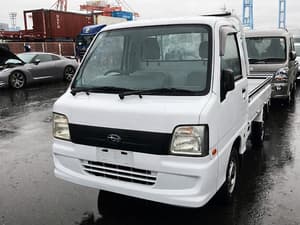
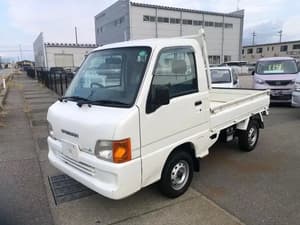
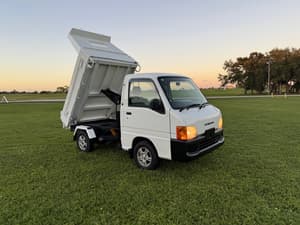
status: For Sale price $: 13,000 make: SUBARU model: SAMBAR mileage: 62,220 exterior color: WHITE interior color: GRAY vin / chassis no.: ****4215 stock no.: 0149 2000 Subaru Sambar Dump EN07V 660cc 4-Cylinder, 4WD, Manual, Electric Dump, 62,220 Miles How We Prepare Every Vehicle Every vehicle goes through the same checklist before it is offered for sale. Mechanical work is done at our prep station in Toyama, Japan; detail, Florida title and the final road test happen at our location in Holiday, Florida. Replaced Engine oil and filter, grade matched to Florida climate and engine mileage…
Read more
Coolant Brake fluid Spark plugs Engine air filter Transmission oil Differential oil Transfer case oil Drive belts New battery Tires Show all 11 items Performed Wheel balancing Tire pressure set for this wheel and tire size Wheels torqued with a calibrated wrench Additional care Full interior disassembly and deep clean Ozone treatment against odors Engine bay rubber and plastic protection Stored with a full tank against fuel tank corrosion Driven regularly while on our lot, any new issue is fixed Upgrades and extra work New coolant expansion tank installed. Original plastic tanks dry rot with age and leak coolant silently. Most owners do not catch this until the engine overheats. We replaced it before listing. Toprun wheels with Yokohama tires mounted, larger than OEM for improved grip and balance Dump bed inspected and tested under load, operates correctly All known platform weak points inspected and addressed Inspected and passed Timing belt and water pump Clean cold start and steady idle, no abnormal exhaust smoke No oil or coolant leaks No engine or transmission mount vibration No overheating under load Smooth gear shifts, synchros and clutch engagement 4WD engages properly Brake pads and rotors within spec, no rotor runout No seized calipers, parking brake works No worn bushings, leaking shocks or steering play No torn CV boots or noisy wheel bearings Tires under 6 years old, no dry rot Alternator charging and battery in good health No battery drain No exhaust or vacuum leaks on smoke test No A/C leaks on vacuum test All lights, signals, gauges and warning lights work Horn, locks, windows, wipers and every other function work Even panel gaps, glass checked No water leaks into the cabin Underbody and frame checked for rust; any rust is shown in the listing Road test, about 300 miles (480 km) on average, issues fixed before listing Show all 22 items Timing belt was done at 87,000 km. Currently at 62,220 miles (100,156 km). No rust on the truck. Bed shows use consistent with a working dump truck. Structure is solid. The Sambar is the only kei truck ever built with a four-cylinder engine. The EN07V is a 660cc SOHC four-cylinder, smoother and more refined at idle than the three-cylinder engines in every competing kei truck. The TC is the top non-supercharged trim, which on the dump truck means A/C, power steering, driver airbag, Extra Low gear, and two door speakers rather than the single speaker fitted to base grades. The factory sound system distinction is small. It is also genuinely the difference between base and top trim on this platform. The dump bed is electric, not PTO-driven. A switch in the cab raises and lowers the bed independently of the engine load. We ran the truck loaded and cycled the dump multiple times before listing. Everything operates as it should. The bed itself has wear from use, which is correct for a truck that was purchased to dump material. The EN07V is a non-interference engine. A timing belt snap will not bend the valves. The belt was replaced at 87,000 km anyway, because a snapped belt still leaves you stranded, and that is not the point. The storage compartment under the passenger seat is a factory feature on TC trim. It is useful, it is intact, and most people do not know it is there until they sit in the truck. Cold A/C. Extra Low gear engages properly. CarPlay and an upgraded audio system can be installed before delivery on request. Mileage: 62,220 miles (100,156 km). Interesting Facts The EN07V is a non-interference engine, meaning the pistons and valves do not occupy the same space at any point in the engine cycle. If the timing belt breaks, the engine stops but the valves remain undamaged. This is a meaningful advantage over interference engines, where a belt failure can destroy the top end. The Sambar is one of the few kei trucks where timing belt failure is an inconvenience rather than a potential engine-totaling event. The coolant expansion tank on the Sambar TT2 generation is made from a plastic compound that becomes brittle with heat cycling over time. The tank cracks or develops pinhole leaks without obvious visible damage, allowing coolant to escape slowly. Because the leak is gradual and the reservoir is not always checked at every service, many Sambars arrive with a compromised cooling system that the previous owner was unaware of. Replacing the tank proactively is the correct pre-purchase step on any TT2 import. Electric dump beds on kei trucks use a dedicated 12V electric motor and hydraulic ram that operate independently of the drivetrain. This is mechanically simpler than a PTO system and adds no load to the engine or transmission during dump cycles. The trade-off is that the electric system is limited by the hydraulic pump’s rated capacity, which is sufficient for the Sambar’s 350 kg payload but not for heavier loads. The Subaru Sambar TC dump truck with Extra Low gear, electric dump, and 4WD represents a configuration that has no direct equivalent in the American market. The closest domestic alternative is a full-size dump truck at many times the operating cost, or an ATV-based dump that cannot be registered for road use in most states. The Sambar does both: street legal and genuinely capable on property. About Us Our team has worked with Japanese vehicles for over 25 years, first in Europe and Japan, now at JP-TRADE in Holiday, Florida. Mechanical preparation is done by Japanese mechanics at our prep station in Toyama, and we drive our cars before they reach a new owner. See our full process. If you made it this far, here is a little bonus for you. Why did Subaru put four cylinders in a kei truck that was also available as a dump truck? The answer is the same reason they used four cylinders in every Sambar: smoother power delivery under sustained load. A dump truck spends more time working at low RPM under heavy load than a flatbed. Three-cylinder kei engines produce more vibration at idle and low RPM, which translates to driver fatigue and increased drivetrain stress during slow-speed work cycles. Subaru’s four-cylinder EN07 idles more smoothly, vibrates less, and maintains a more consistent power delivery at the low engine speeds a dump cycle requires. It cost more to build. Subaru built it anyway.
Asking-price context
Current asking prices of comparable cars listed on JDMBUYSELL for this Subaru Sambar; the basis line states the exact comparison used.