Japanese Domestic Market
What is a JDM car?
A plain-English definition of JDM cars — what the term means, why enthusiasts import them, the import-age rules by country, and the models and engines buyers look for most.
On this page
What is a JDM car?
A JDM car is a vehicle configured and sold new for the Japanese domestic market rather than an export market. JDM stands for Japanese Domestic Market. Japanese-market specifications can differ in steering position, instruments, engines, emissions equipment, trim, and options from versions sold by the same manufacturer elsewhere. Most modern Japanese-market cars are right-hand drive because Japan drives on the left, but steering position alone does not define JDM status.
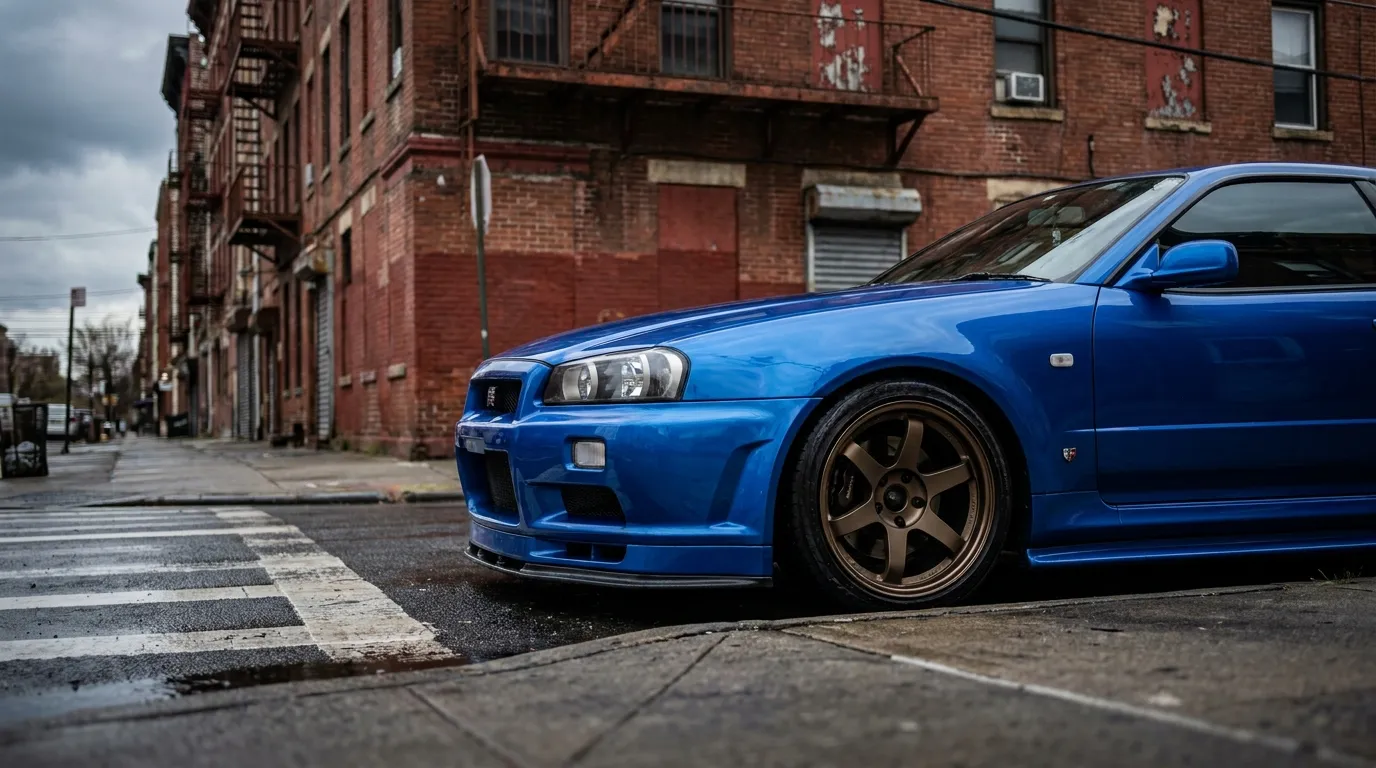
The term is used two ways. Strictly, a JDM car is any model originally sold new in Japan. In enthusiast usage, "JDM" usually refers to the performance and specialty models — Nissan, Toyota, Honda, Mazda, Mitsubishi, Subaru, and others — that were never officially offered abroad, or that were offered abroad in a detuned or restyled form. A Japanese-market Nissan Skyline GT-R, a twin-turbo Toyota Supra, or a rotary Mazda RX-7 are the cars most buyers picture when they say JDM.
Two practical distinctions matter to import buyers. First, many JDM vehicles are right-hand drive, which can affect inspection, insurance, equipment, and registration depending on the destination. Second, Japan has domestic regulatory categories such as kei cars, whose size and engine limits changed over time. Kei passenger cars, trucks, and vans can face different registration treatment abroad even after they are federally or nationally admissible.
Why people import JDM cars
Many sought-after Japanese performance, utility, and kei models were never sold new in the buyer's country, or were sold there in a different specification. Condition varies vehicle by vehicle. Japan's shaken inspection system is not proof that an exported used car is mechanically superior or that its mileage is genuine, so buyers should still verify records, corrosion, repairs, and mechanical condition independently.
Import rules are country-specific and are not always a single age test. In the United States, NHTSA generally treats a vehicle manufactured at least 25 years before entry as outside FMVSS, while EPA has a separate over-21-year provision that depends on an original-equivalent engine. Canada generally treats vehicles 15 years old or older as non-regulated, with provincial registration rules still applying. The UK and Australia use their own approval, customs, and registration frameworks. Our import cost calculator is a planning tool, and the import guides link to the controlling authorities.
Popular JDM cars and engines
The best-known JDM models include the Nissan Skyline GT-R and Silvia, the Toyota Supra and AE86 Corolla, the Honda NSX and Integra Type R, the Mazda RX-7, the Mitsubishi Lancer Evolution, and the Subaru Impreza WRX STI. Alongside the sports cars, Japanese kei cars, vans such as the Mitsubishi Delica, and off-roaders like the Toyota Land Cruiser and Suzuki Jimny have their own import followings.
Much of the interest is engine-led. Power units such as the Nissan RB26DETT and SR20DET, the Toyota 2JZ-GTE, and the Mazda 13B rotary are sought after for their tuning headroom and are swapped between chassis as often as they are kept stock. The reference pages on this hub cover each make, model generation, and engine in detail, drawn from manufacturer records, regulatory documentation, and established enthusiast and industry references.
How to buy and import a JDM car
There are three common routes to buying a JDM car. You can buy a car that has already been imported and is for sale in your own country; you can buy from a Japanese exporter and arrange shipping yourself; or you can bid through a Japanese auction agent. Each listing on JDMBUYSELL shows the seller's country, whether they are a verified dealer or a private party, and how to contact them directly — so you can compare an already-landed car against an export-from-Japan purchase before committing.
Before buying across borders, confirm the car is import-eligible for your country and budget for the full landed cost — purchase price plus shipping, duty, taxes, compliance, and registration. The import cost calculator estimates that landed cost for the USA, Canada, UK, Australia, and other markets, and the import guides walk through the duties, paperwork, and timelines step by step. When you are ready, browse active JDM listings from dealers and private sellers worldwide, or find a verified importer in the dealer directory.
FAQ
JDM cars: frequently asked questions
What does JDM stand for?
What makes a car a JDM car?
Are JDM cars legal to import?
Why are JDM cars so popular?
What are the most popular JDM cars to import?
How much does it cost to import a JDM car?
Authoritative sources
- NHTSA: Importing a Vehicle — federal safety eligibility and Form HS-7.
- EPA: Learn About Importing Vehicles and Engines — emissions eligibility, engine conditions, and Form 3520-1.
- Transport Canada: Importing non-regulated vehicles — the 15-year threshold and exclusions.
- Australian Department of Infrastructure: Importing a road vehicle — ROVER and approval pathways.
- GOV.UK: Importing vehicles into the UK — NOVA, approval, tax, and registration sequence.