Chassis Code Explained
| Segment | Meaning | Detail |
|---|---|---|
| J | Model | J — Jimny |
| B | Platform | B — JB-series platform (third generation and later) |
| 23 | Variant code | 23 — 660cc kei specification (JB23W = standard kei Jimny) |
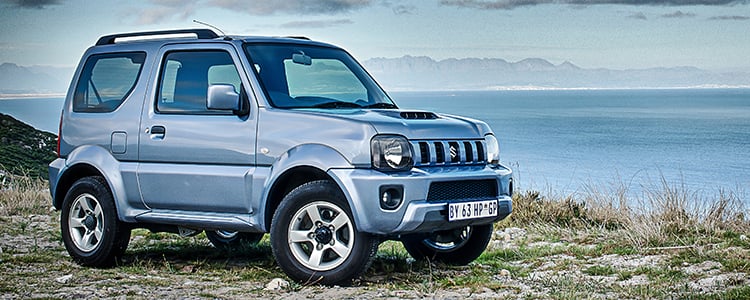
JB23 covers the third-generation Jimny (1998–2018) with the K6A 660cc turbocharged three-cylinder; the JB43 used a 1.3L M13A for non-kei export markets under the 'Jimny Wide' designation.
Technical Specifications
Engine Options
| Chassis | Engine | Displacement | Power — JDM | Notes |
|---|---|---|---|---|
| JB23W | K6A | 0.66L | 64 PS @ 6500rpm | DOHC turbo kei; VVT by revision |
Livability
- Headroom
- 39.0"
- Upright seating; tall drivers fit but narrow cabin
- Rear Seats
- Tight
- Short trips only; limited legroom; best for kids
- Cargo
- 12-30 cu ft
- Tiny with seats up; usable with seats folded flat
US Import Eligibility
Early builds of this chassis became eligible for US import under the 25-year rule in 2023; later production years become eligible through 2043. Calculate import costs →
Variants & Trims
| Generation | Trim | Engine | Key Features |
|---|---|---|---|
| JB23 (3rd gen, Jimny 660) | JB23W (kei, Japan) | K6A 0.66L Turbo I3 | Part-time 4WD, coil springs, turbo kei, 3-door |
Should You Buy a Suzuki Jimny JB23?
Why You'll Love It
- True 4x4 hardware Ladder frame, low range, solid axles deliver real trail ability beyond most crossovers.
- Compact size advantage Fits tight trails and cities; easy to store, maneuver, and transport compared with larger 4x4s.
- Strong global demand Cult following supports resale; clean, stock trucks often sell quickly at a premium.
- Simple, serviceable design Older gens are mechanically straightforward; many jobs are DIY-friendly with basic tools.
- Huge aftermarket support Suspension, armor, gearing, lockers, and recovery gear widely available for SJ/JB platforms.
- Kei tax/size benefits abroad JB23 kei models can be cheaper to run in Japan; plentiful supply helps parts availability.
- Character and usability Practical boxy cabin, good visibility, and iconic styling; great as a second vehicle/adventure rig.
Why You Might Not
- Rust is the #1 killer Frames, sills, floors, and mounts rust; repairs can exceed vehicle value on cheap examples.
- Slow highway performance Short wheelbase, gearing, and modest power make sustained high-speed driving tiring and noisy.
- Short wheelbase dynamics Can feel twitchy in crosswinds; lifted setups worsen stability and braking performance.
- Modified trucks are risky Big lifts/tires stress axles and steering; poor installs cause wobble, wear, and driveline vibes.
- Parts sourcing varies JDM-specific trims can require import parts; lead times and costs vary by region.
- Crash repair quality varies Imports may have hidden repairs; inspect chassis alignment, paint depth, and underbody seams.
- Safety/comfort are basic Older gens lack modern crash protection and refinement; expect noise, vibration, and firm ride.
Who Should NOT Buy This
- Anyone expecting quiet, stable highway cruising
- Drivers doing 75+ mph daily commutes
- People who hate steering wander and body roll
- Buyers needing real rear-seat adult space
- Families needing crash safety like modern SUVs
- Anyone unwilling to chase rust aggressively
- Buyers without a trusted 4x4/rust repair shop
- People who won't maintain diffs/TC after water use
- Those wanting strong acceleration or easy passing
- Owners who won't tolerate frequent small repairs
- People in salt states without indoor storage
- Anyone needing high towing capacity
- Drivers sensitive to vibration from lifts/MT tires
- Buyers wanting cheap OEM parts everywhere
- People needing modern infotainment and insulation
- Anyone who can't inspect import/title legality
- Those who plan big tires without budget for fixes
- People expecting car-like handling and braking
- Owners who won't do preventative cooling work
- Anyone needing lots of cargo with seats in use
Common Issues & Solutions
| Issue | Cause | Solution | Est. Cost |
|---|---|---|---|
| Frame rust perforation | Salt exposure; trapped mud inside rails | Probe/repair sections; internal wax; avoid undercoat | $1500-6000 |
| Rear crossmember rot | Mud/salt packs behind bumper and tank area | Replace/repair crossmember; treat and cavity wax | $800-2500 |
| Body mount/outrigger rust | Water traps at mounts; poor drainage | Cut/weld mounts; replace bushings; rust proof | $1200-4000 |
| Front knuckle oil leak | Worn wiper seals; inner axle seal failure | Knuckle rebuild: seals, bearings, grease, shims | $450-1200 |
| Death wobble/shimmy | Kingpin bearings, tie rods, caster off, tires | Rebuild knuckles; align; add caster correction | $400-1800 |
| Wheel bearing failure | Water ingress; incorrect preload; old grease | Replace bearings/seals; set preload correctly | $300-900 |
| Bent front axle housing | Hard impacts off-road; oversized tires | Replace/straighten housing; align; check knuckles | $800-2500 |
| Propshaft U-joint clunk | Dry joints; lifted angles; mud contamination | Replace U-joints or shaft; correct driveline angles | $200-900 |
| Transfer case whine | Worn bearings/gears; low oil; abuse in 4L | Rebuild transfer case; replace bearings/seals | $900-2500 |
| 4WD won't engage | Vacuum/actuator issues or stuck freewheel hubs | Diagnose lines/solenoids; service hubs/actuator | $150-900 |
| Manual synchro grind | Worn 2nd/3rd synchros; wrong oil; hard shifting | Rebuild gearbox; correct oil; replace clutch if needed | $1200-3500 |
| Clutch slip/chatter | Worn disc; oil contamination; weak pressure plate | Clutch kit; resurface flywheel; fix leaks | $700-1600 |
| Overheating | Radiator clog/crack; fan clutch; thermostat | Replace rad/thermostat; verify fan; flush properly | $350-1200 |
| Head gasket failure | Repeated overheating; old coolant; warped head | Machine head; gasket set; new bolts; cooling refresh | $1200-2800 |
| Timing chain rattle | Worn chain/guides/tensioner; poor oil changes | Replace chain set and tensioner; inspect oil pump | $700-1800 |
| Oil leaks (common) | Aged seals/gaskets; crankcase pressure | Reseal VC/front/rear; address PCV/breather | $200-1500 |
| Rough idle/hunting | Dirty IAC; vacuum leaks; TPS wear | Clean IAC/throttle; smoke test; replace TPS | $150-600 |
| Fuel filler neck rust | Road salt; trapped debris behind filler area | Replace neck/hoses; inspect tank straps and vent lines | $250-900 |
| Brake line corrosion | Rust at frame clips/unions; old fluid | Replace hard lines; flush fluid; protect routing | $400-1400 |
| Caliper slide seizure | Dry pins/boots torn; winter corrosion | Service/replace calipers; new pads/rotors as needed | $250-900 |
| Weak handbrake | Stretched cable; drum out of adjustment; seized lever | Adjust drums; replace cables; clean/replace hardware | $150-600 |
| Steering box play/leak | Wear from big tires; low fluid; seal aging | Adjust box; reseal or replace; check frame cracks | $300-1500 |
| Panhard bracket cracks | Lifted suspension; off-road impacts; poor welds | Weld/plate bracket; correct geometry; inspect both ends | $200-900 |
| Suspension bushing wear | Age; oil contamination; lift stress | Replace arm bushes; align; consider quality rubber | $300-1200 |
| Driveline vibration (lift) | Bad pinion angle; worn joints; no caster correction | Correct angles; double-cardan shaft; caster correction | $300-1800 |
| Water ingress in diffs | Low breathers; hot diffs submerged; clogged vents | Extend breathers; change oils; replace seals if milky | $120-800 |
| Heater core leak | Corrosion from old coolant; electrolysis | Replace heater core; flush; new coolant; check grounds | $600-1400 |
| A/C weak or inop | Leaks at O-rings; tired compressor; condenser damage | Leak test; replace failed parts; evac/recharge | $250-1500 |
| Alternator failure | Heat, mud/water exposure; worn bearings/diodes | Replace alternator; clean grounds; belt/tension check | $250-700 |
| Starter hot soak | Worn starter; heat shielding missing; cable corrosion | Replace starter; refresh cables/grounds; add shield | $200-600 |
| Exhaust manifold crack | Heat cycling; thin castings; broken studs | Replace manifold; extract studs; new gasket/hardware | $300-1200 |
| Catalyst/O2 issues | Oil burning; rich running; age-related sensor slow | Fix oil/mixture; replace O2/cat as needed | $200-1800 |
| Window regulator failure | Dry tracks; worn motor; water in doors | Service tracks; replace regulator/motor; reseal vapor | $150-500 |
| Tailgate hinge sag | Heavy spare/bumper; rusted hinge pins | Replace hinges; reinforce carrier; adjust latch | $150-700 |
| Softtop/hardtop leaks | Aged seals; warped top; clogged drains | Replace seals; adjust latches; clear drains | $100-900 |
Pre-Purchase Inspection Checklist
Critical Priority
High Priority
Medium Priority
Low Priority
Generation History
LJ/SJ (1st gen) (1970-1981)
- LJ10/20/50/80 early lightweight 4x4
- Leaf springs, simple carb engines
- Iconic mini-4x4; rust is common
- Collector niche; parts vary by market
JA11/JA12/JA22 (kei) (1990-1998)
- Japan kei variants; compact and light
- Turbo kei engines in later trims
- Leaf spring era; very mod-friendly
- Good originals are getting scarce
JB23 (kei, coil) (1998-2018)
- Coil springs; better ride/articulation
- K6A 660cc turbo; huge Japan supply
- Common import target; watch rust/repairs
- Auto exists; manuals hold value better
JB33/JB43 (wide, coil) (1998-2018)
- 1.3L wide-body for export markets
- More torque than kei; better highway
- Often better equipped; still slow by US norms
- Rust and crash repairs affect value
JB64/JB74 (4th gen) (2018-present)
- Modern safety; still ladder frame
- JB64 660T, JB74 1.5 NA (Jimny Sierra)
- High demand; long waitlists in some markets
- Not US-legal yet under 25-year rule
Market Data
Production Numbers & Rarity
| Generation | Years | Total Built | Notes |
|---|---|---|---|
| JA/JB (3rd gen Jimny family: JA11-22, JB23/32/33/43) | 1990-2018 | estimated | JB23/JB43 long run; many market builds |
| JB64/JB74 (4th gen 3-door) | 2018-present | estimated | High demand; production split by plant/market |
| JC74 (4th gen 5-door) | 2023-present | estimated | India-built; totals still emerging |
Comparable Alternatives
Daihatsu Terios Kid
Kei ladder-frame 4x4; practical and capable
Suzuki Vitara 1st gen
Bigger, more road-friendly; still real 4x4
Jeep Wrangler TJ
More power and parts; higher costs but iconic
In Pictures
Frequently Asked Questions
- Which Jimny is best to buy for value?
- Best value is a clean JB23 manual with service history and minimal rust; avoid heavily lifted builds.
- What are the biggest rust areas to inspect?
- Check frame rails, body mounts, sills, rear arches, floorpans, and suspension brackets for rot/patches.
- Is the 660cc turbo Jimny too slow?
- Around town it's fine; on highways it’s busy. Expect modest passing power; gearing/tires matter a lot.
- Manual or automatic—what holds value better?
- Manuals typically command a premium for off-road control and simplicity; autos can be fine if maintained.
- What mods hurt resale the most?
- Poorly done big lifts, oversized tires, cut fenders, deleted emissions, and cheap steering parts hurt value.
- What should I budget for baseline maintenance?
- Plan fluids, belts, hoses, brakes, tires, and cooling system refresh; also address any rust immediately.
- Are parts easy to get in the US?
- Wear items are manageable via importers; JDM-specific trim can take time. Stocking filters/ignition helps.
- What’s the best use case for a Jimny?
- Ideal as a city + trail second car, overland-lite, or farm runabout; not great for long high-speed commutes.
Sources & References
Sources (8)
- Suzuki Jimny — encyclopedic overview — Wikipedia Verified
- Suzuki Samurai — US-market history and rollover controversy — Wikipedia Verified
- Big Jimny — Common problems overview (JA/JB-series owner reference) — Big Jimny owners' wiki Verified
- Suzuki Jimny used review — buying advice — What Car? Verified
- Suzuki Jimny auction results — sold/no-sold history — Bring a Trailer Verified
- Suzuki Samurai auction results — Bring a Trailer Verified
- Suzuki Jimny — Japanese encyclopedic overview — Wikipedia (Japanese) Verified
- Suzuki Jimny — current-generation Japanese product page — Suzuki Motor Corporation (Japan) Verified
Sources last verified: