NSX generation
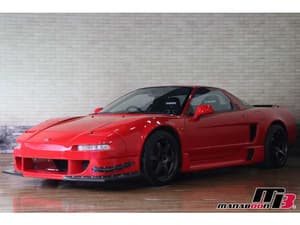
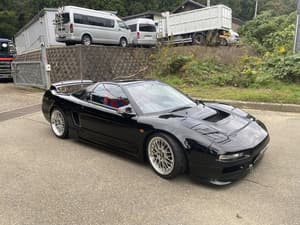
Honda NSX NA1 for sale
NSX listings cover NA1 (1990-1997) and NA2 (1997-2005). Honda's mid-engine V6 platform. Type R variants appeared in both NA1 and NA2 generations.
Read more
Honda NSX NA1 — pricing right now
- Listings
- 105
- From
- $45,361CA$64,655£34,286A$65,003€40,479¥7,180,002
- Up to
- $221,364CA$315,519£167,317A$317,220€197,541¥35,038,775
- Average
- $93,263CA$132,931£70,493A$133,648€83,226¥14,762,207
Source: JDMBUYSELL marketplace data. Prices and availability can change.
37 of 105 listings match your filters.
For sale
Available Honda NSX NA1 listings
-
1992 Honda NSX
Japan$109,076CA$155,470£82,445A$156,309€97,338¥17,265,181TCV (tradecarview)
-
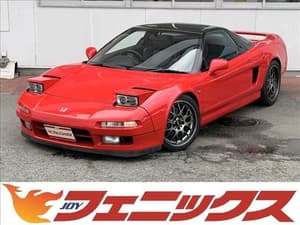
1991 Honda NSX
Japan$88,189CA$125,699£66,657A$126,377€78,698¥13,959,065TCV (tradecarview)
-
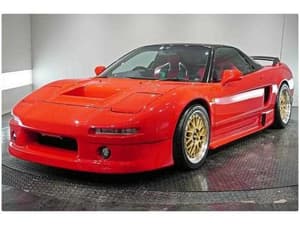
1991 Honda NSX
Japan$147,805CA$210,672£111,718A$211,808€131,899¥23,395,431TCV (tradecarview)
-
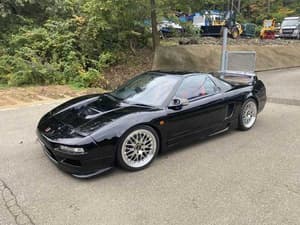
1995 Honda NSX
Japan$120,106CA$171,192£90,782A$172,115€107,181¥19,011,073TCV (tradecarview)
-
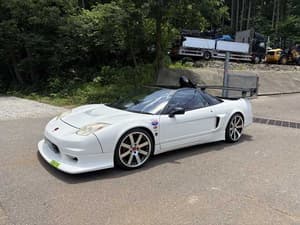
1991 Honda NSX
Japan$82,910CA$118,175£62,667A$118,812€73,987¥13,123,475TCV (tradecarview)
-
1995 Honda NSX
Japan$120,000CA$171,041£90,702A$171,963€107,086¥18,994,295TokyoCarZ
Replies in ~12h
-
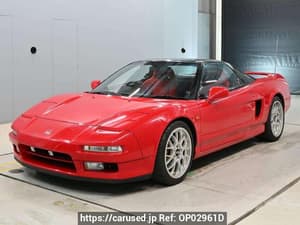
1991 Honda NSX
Japan$83,812CA$119,461£63,349A$120,105€74,792¥13,266,248Carused.jp Carpaydiem
-
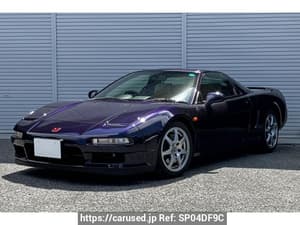
1997 Honda NSX
Japan$114,918CA$163,797£86,860A$164,680€102,551¥18,189,886Carused.jp Carpaydiem
-
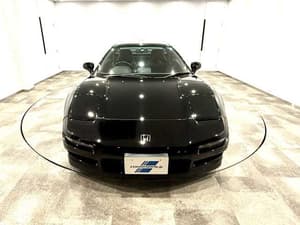
1997 Honda NSX
JapanPrice on requestTCV (tradecarview)
-
1997 Honda NSX
JapanPrice on requestTCV (tradecarview)
-
1991 Honda NSX
MB, Canada$200,744CA$286,127£151,732A$287,671€179,141¥31,774,922JDM Rush Imports
Replies in ~3d
-
1997 Honda NSX
MB, CanadaPrice on requestJDM Rush Imports
Replies in ~3d
-
1994 Honda NSX
MB, CanadaPrice on requestJDM Rush Imports
Replies in ~3d
History & specs
About the Honda NSX NA1
The Honda NSX was produced across two distinct generations: the NA1/NA2 (1990–2005) and the NC1 (2016–2022). The first generation used an all-aluminum monocoque body in a mid-engine, rear-wheel-drive layout assembled by specialist teams in Tochigi; the NA1 ran from 1990 through 1996/1997 depending on market, while the NA2 introduced the larger-displacement engine in 1997 and continued through 2005. A 2002 facelift replaced the pop-up headlamps with fixed HID units and revised the rear track width. In North America, the first generation was sold as the Acura NSX. The second-generation NC1 (2016–2022) was built in Ohio and sold exclusively as the Acura NSX globally. Combined first-generation production is estimated at approximately 18,000 units; NC1 production is estimated at approximately 2,900 units.
The NA1 uses the C30A 3.0L DOHC VTEC V6, rated at 270ps in JDM specification, paired with a 5-speed manual or 4-speed automatic. The NA2 carries the C32B 3.2L DOHC VTEC V6 at 280ps in JDM specification with a 6-speed close-ratio manual. Japan-market trim variants include the Type R (available for both NA1 and NA2, weight-reduced with Recaro seats, no air conditioning, and reinforced suspension), the Type S and Type S-Zero (NA2, lighter than base with sport suspension and close-ratio gearing), and the NSX-T targa (available across both chassis codes with a removable roof panel requiring additional body bracing). The 1999 Zanardi Edition was a US-market limited variant with BBS wheels and manual-only specification. The NC1 uses the JNC1 3.5L twin-turbocharged V6 combined with three electric motors producing 573hp as a system (base trim) or 600hp in the 2022 Type S, routed through a 9-speed dual-clutch transaxle with front-and-rear torque vectoring AWD.
First-generation NA1 models built from 1990 are subject to NHTSA's manufacture-date 25-year provision under the 25-year FMVSS rule from 2015 onward; the full NA2 production run through 2005 passes NHTSA's manufacture-date age threshold progressively through 2030. The NC1 (2016–2022) falls outside the current import window. The NSX was produced in right-hand drive throughout both first-generation chassis codes. Pre-purchase inspection priorities on NA1/NA2 examples include: confirming timing belt and water pump service records (interval approximately 7 years or 105,000 miles on C30A/C32B); a full cooling system check covering radiator end-tank condition, hoses, and thermostat function, as overheating risk rises with deferred maintenance; clutch engagement feel and transmission synchro behavior in 2nd and 3rd gear; ABS system self-test for the documented wheel-speed sensor failure pattern; AC compressor condition, particularly on 1991–1992 examples where a documented evaporator failure rate requires full system replacement; and a paint-meter and lift inspection for aluminum body repair, as the all-aluminum structure is difficult to restore correctly after significant impact and specialist facilities are uncommon.
FAQ