Honda model
Honda NSX for sale
Honda NSX — pricing right now
- Listings
- 73
- From
- $16,552CA$23,142£12,350A$23,510€14,310¥2,652,171
- Up to
- $220,690CA$308,561£164,658A$313,457€190,793¥35,361,747
- Average
- $113,366CA$158,504£84,583A$161,019€98,008¥18,164,936
Source: JDMBUYSELL live marketplace data — updated daily.
Previously listed
No Honda NSX currently listed
These Honda NSX listings are no longer available. Shown for reference only.
-
1991 Honda NSX
FL, USA$57,999CA$81,092£43,273A$82,379€50,142¥9,293,334Kuruma Imports, LLC
-
1991 Honda NSX
FL, USA$69,499CA$97,171£51,854A$98,713€60,084¥11,136,010Kuruma Imports, LLC
-
1991 Honda NSX
Japan$47,724CA$66,726£35,607A$67,785€41,259¥7,646,944Alpine Japan Co. Ltd
-
1991 Honda NSX
Japan$46,500CA$65,015£34,694A$66,046€40,201¥7,450,819Alpine Japan Co. Ltd
-
1991 Honda NSX
Japan$55,600CA$77,738£41,484A$78,971€48,068¥8,908,936Alpine Japan Co. Ltd
-
1992 Honda NSX
Japan$47,985CA$67,091£35,802A$68,155€41,485¥7,688,764Alpine Japan Co. Ltd
-
1991 Honda NSX
Japan$55,000CA$76,899£41,036A$78,119€47,549¥8,812,797Alpine Japan Co. Ltd
-
1997 Honda NSX
Japan$250,000CA$349,541£186,527A$355,087€216,133¥40,058,167Japan Motor CO.
Replies in ~5h
While you wait
Other Honda models available now
-
1993 Honda Beat
Japan$12,344CA$17,259£9,210A$17,533€10,672¥1,977,912TCV (tradecarview)
-
2000 Honda S2000
Japan$14,317CA$20,017£10,682A$20,335€12,377¥2,294,051TCV (tradecarview)
-
2000 Honda Acty
NC, USA$8,900CA$12,444£6,640A$12,641€7,694¥1,426,071Mayberry Mini Trucks
-
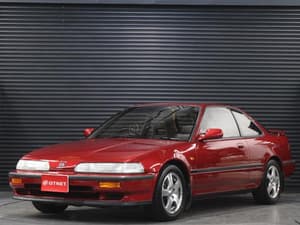
1991 Honda Integra
Japan$19,379CA$27,095£14,459A$27,525€16,754¥3,105,000Goo Net Exchange
History & specs
About the Honda NSX
The Honda NSX was produced across two distinct generations: the NA1/NA2 (1990–2005) and the NC1 (2016–2022). The first generation used an all-aluminum monocoque body in a mid-engine, rear-wheel-drive layout assembled by specialist teams in Tochigi; the NA1 ran from 1990 through 1996/1997 depending on market, while the NA2 introduced the larger-displacement engine in 1997 and continued through 2005. A 2002 facelift replaced the pop-up headlamps with fixed HID units and revised the rear track width. In North America, the first generation was sold as the Acura NSX. The second-generation NC1 (2016–2022) was built in Ohio and sold exclusively as the Acura NSX globally. Combined first-generation production is estimated at approximately 18,000 units; NC1 production is estimated at approximately 2,900 units.
The NA1 uses the C30A 3.0L DOHC VTEC V6, rated at 270ps in JDM specification, paired with a 5-speed manual or 4-speed automatic. The NA2 carries the C32B 3.2L DOHC VTEC V6 at 280ps in JDM specification with a 6-speed close-ratio manual. Japan-market trim variants include the Type R (available for both NA1 and NA2, weight-reduced with Recaro seats, no air conditioning, and reinforced suspension), the Type S and Type S-Zero (NA2, lighter than base with sport suspension and close-ratio gearing), and the NSX-T targa (available across both chassis codes with a removable roof panel requiring additional body bracing). The 1999 Zanardi Edition was a US-market limited variant with BBS wheels and manual-only specification. The NC1 uses the JNC1 3.5L twin-turbocharged V6 combined with three electric motors producing 573hp as a system (base trim) or 600hp in the 2022 Type S, routed through a 9-speed dual-clutch transaxle with front-and-rear torque vectoring AWD.
First-generation NA1 models built from 1990 are US-eligible under the 25-year FMVSS rule from 2015 onward; the full NA2 production run through 2005 clears eligibility progressively through 2030. The NC1 (2016–2022) falls outside the current import window. The NSX was produced in right-hand drive throughout both first-generation chassis codes. Pre-purchase inspection priorities on NA1/NA2 examples include: confirming timing belt and water pump service records (interval approximately 7 years or 105,000 miles on C30A/C32B); a full cooling system check covering radiator end-tank condition, hoses, and thermostat function, as overheating risk rises with deferred maintenance; clutch engagement feel and transmission synchro behavior in 2nd and 3rd gear; ABS system self-test for the documented wheel-speed sensor failure pattern; AC compressor condition, particularly on 1991–1992 examples where a documented evaporator failure rate requires full system replacement; and a paint-meter and lift inspection for aluminum body repair, as the all-aluminum structure is difficult to restore correctly after significant impact and specialist facilities are uncommon.
FAQ