Honda model
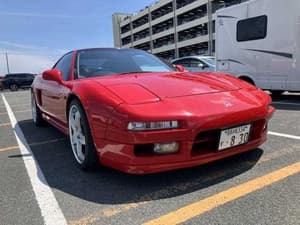
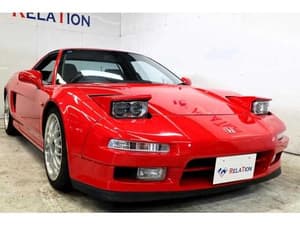
Honda NSX for sale
Honda NSX — pricing right now
- Listings
- 130
- From
- $45,606CA$63,921£34,169A$64,969€40,769¥7,180,089
- Up to
- $231,362CA$324,275£173,343A$329,591€206,823¥36,425,028
- Median
- $83,472CA$116,994£62,540A$118,912€74,619¥13,141,613
Source: JDMBUYSELL marketplace data. Prices and availability can change.
102 of 130 listings match your filters.
102 listings
Sold-price history ↓For sale
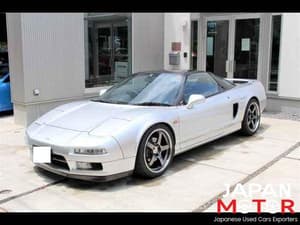
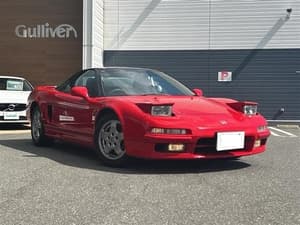
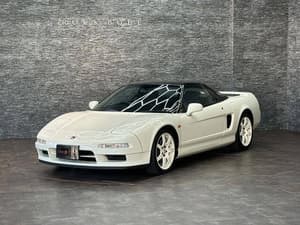
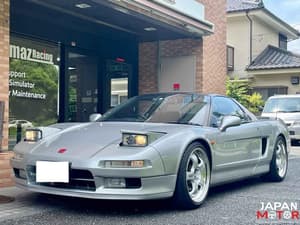
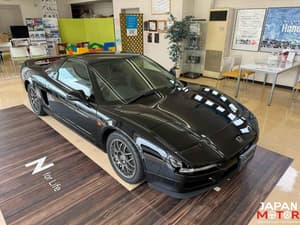
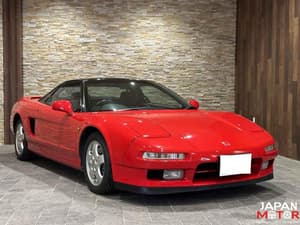
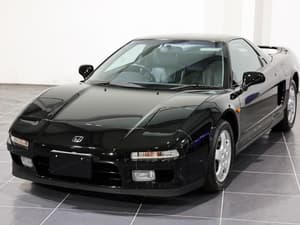
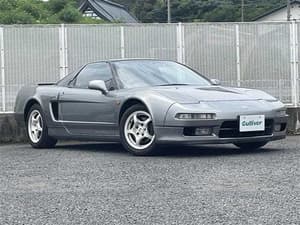
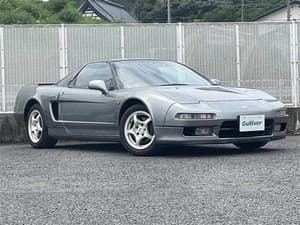
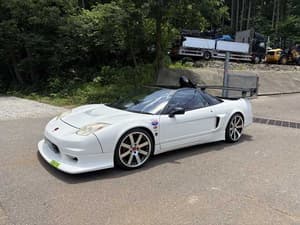
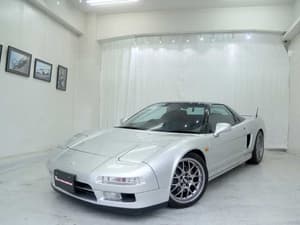
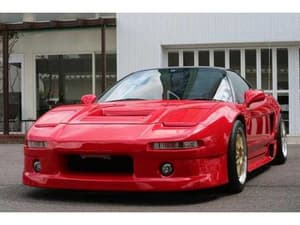
Available Honda NSX listings



Get new Honda NSX listings by email
Matching 2001 or older. Save this search and we'll email you when matching cars are listed.
Market & demand
Median reported sold price · Honda NSX
US$57,999
3 seller-reported sales · n=3 · last 48 months · dated Aug–Aug 2026 · as of 27 Oct 2026.
Middle half of salesUS$31.5–
Reported soldn=3
Median days to sell1162
Box: middle half of sales · Tick: median · Whisker: observed sale range
A trend line needs at least 2 periods with at least 5 sales each; none qualifies.
Show as table
| Period | Sales | Median | Middle half |
|---|---|---|---|
| All · last 48 months | n=3 | US$57,999 | US$31.5– |
| 2026 | n=3 | Fewer than 5 sales: not summarised | |
History & specs
About the Honda NSX
The Honda NSX was produced across two distinct generations: the NA1/NA2 (1990–2005) and the NC1 (2016–2022). The first generation used an all-aluminum monocoque body in a mid-engine, rear-wheel-drive layout assembled by specialist teams in Tochigi; the NA1 ran from 1990 through 1996/1997 depending on market, while the NA2 introduced the larger-displacement engine in 1997 and continued through 2005. A 2002 facelift replaced the pop-up headlamps with fixed HID units and revised the rear track width. In North America, the first generation was sold as the Acura NSX. The second-generation NC1 (2016–2022) was built in Ohio and sold exclusively as the Acura NSX globally. Combined first-generation production is estimated at approximately 18,000 units; NC1 production is estimated at approximately 2,900 units.
The NA1 uses the C30A 3.0L DOHC VTEC V6, rated at 270ps in JDM specification, paired with a 5-speed manual or 4-speed automatic. The NA2 carries the C32B 3.2L DOHC VTEC V6 at 280ps in JDM specification with a 6-speed close-ratio manual. Japan-market trim variants include the Type R (available for both NA1 and NA2, weight-reduced with Recaro seats, no air conditioning, and reinforced suspension), the Type S and Type S-Zero (NA2, lighter than base with sport suspension and close-ratio gearing), and the NSX-T targa (available across both chassis codes with a removable roof panel requiring additional body bracing). The 1999 Zanardi Edition was a US-market limited variant with BBS wheels and manual-only specification. The NC1 uses the JNC1 3.5L twin-turbocharged V6 combined with three electric motors producing 573hp as a system (base trim) or 600hp in the 2022 Type S, routed through a 9-speed dual-clutch transaxle with front-and-rear torque vectoring AWD.
First-generation NA1 models built from 1990 are subject to NHTSA's manufacture-date 25-year provision under the 25-year FMVSS rule from 2015 onward; the full NA2 production run through 2005 passes NHTSA's manufacture-date age threshold progressively through 2030. The NC1 (2016–2022) falls outside the current import window. The NSX was produced in right-hand drive throughout both first-generation chassis codes. Pre-purchase inspection priorities on NA1/NA2 examples include: confirming timing belt and water pump service records (interval approximately 7 years or 105,000 miles on C30A/C32B); a full cooling system check covering radiator end-tank condition, hoses, and thermostat function, as overheating risk rises with deferred maintenance; clutch engagement feel and transmission synchro behavior in 2nd and 3rd gear; ABS system self-test for the documented wheel-speed sensor failure pattern; AC compressor condition, particularly on 1991–1992 examples where a documented evaporator failure rate requires full system replacement; and a paint-meter and lift inspection for aluminum body repair, as the all-aluminum structure is difficult to restore correctly after significant impact and specialist facilities are uncommon.
FAQ