Toyota Mark II JZX100
Same platform; more sleeper look; similar 1JZ trims
Buyer's guide
15 min read
Buyer's guide & specs
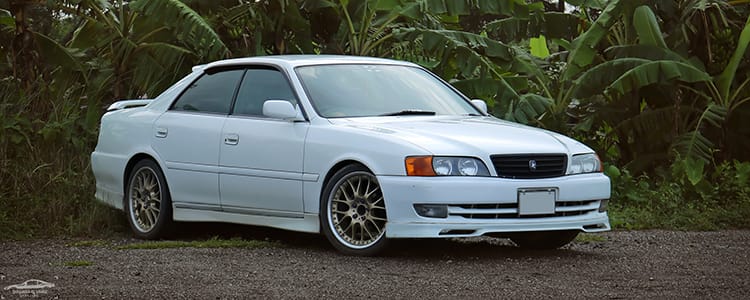
Background
The Toyota Chaser ran six generations from 1977 to 2001 — built on the Mark II platform, sold only in Japan, and available alongside its sister cars the Cresta and Cressida. The early X30/X40 and X60 used sub-2.0L engines to stay inside Japan's road-tax bracket; the X70 introduced twin turbos; the X80 in 1989 brought the 1JZ family and capped output at 280 PS. Most buyers now want the JZX90 or JZX100 Tourer V — both carry the 1JZ-GTE, both can be specified with the R154 five-speed manual, and the JZX100 is the chassis D1GP teams and a generation of tuning media made the benchmark drift sedan.
The Tourer V badge first appeared on the JZX90 in October 1992 and carried over to the JZX100 in September 1996, but the two cars are not the same machine. Both use the 1JZ-GTE 2.5L twin-cam straight-six, both make the JDM-capped 280 PS, and both can be specified with the R154 five-speed manual.
The JZX100 introduced VVT-i to the 1JZ-GTE and swapped from a parallel twin-turbo arrangement to a single CT15B turbocharger, which produced a fatter midrange torque curve — a meaningful change when the horsepower ceiling could not be raised. The chassis grew in parallel: longer wheelbase, revised front and rear suspension geometry, larger brakes on the Tourer V, and improved NVH from a more rigid body.
Inside, the JZX100 dash is more modern than the JZX90, and the Tourer V seats are firmer with deeper bolsters. For drift use the JZX90 is often preferred for its rawer feel and lighter front end; for daily-and-street duty the JZX100 is the more livable car and the one that holds value best.
When D1 Grand Prix launched in 2001, the JZX100 Chaser was already a fixture in the Japanese drift scene — a four-door car with a tuneable 1JZ-GTE, a 53/47 weight split, and a price point within reach of privateers. Through the early 2000s teams campaigned JZX100s alongside Silvias and Skylines, and the car became the platform of choice for drivers who wanted Supra-adjacent power without Supra cost.
Drift Tengoku, Option, and Video Option all featured Chasers heavily across that same window, and Toyota keeping the Cresta and Mark II in showrooms meant cheap donor cars were available. By the time the Chaser was discontinued in 2001 and replaced by the Verossa, the JZX100 Tourer V had become the four-door counterpart to the S15 Silvia in the JDM tuner scene — a position it still holds now that the 2004 Mark X has replaced the lineage entirely.
That reputation — combined with the 25-year US import clock starting to tick on 1996 cars in 2021 — drives prices for clean, documented Tourer V examples upward year over year. Supply of rust-free, low-km, original-paint shells is finite; demand is not.
Editorial notes
Quick read
Constants
Chassis history
The Chaser ran for six generations from 1977 to 2001, and the early ones aren't really what people mean when they say Chaser. The X30 through X70 are JDM curios. Everyone's actually after the JZX90 and JZX100, when the 1JZ-GTE shows up and the car turns into the drift sedan you've seen in Drift Tengoku and Option.
X80 (GX/JZX81; 1988–1992)
X90 (JZX90; 1992–1996)
Buyer's call
The Chaser is a sleeper. It looks like a plain four door and happens to come with a 1JZ-GTE under the hood. The catch is that parts are getting harder to find and rust is real on cars that lived their whole life in Japan.
Reliability
The Chaser is mechanically bullet-proof. Most owners report the drivetrain just keeps going, even when the car gets abused. What does fail is the same stuff that fails on any 25-year-old Japanese car. Electronics get flaky. Rust shows up on shells that never saw rustproofing from the factory, and clutches wear faster than you'd expect on the manual cars.
| Issue | Cause | Solution | Est. cost |
|---|---|---|---|
| Timing belt overdue | Unknown history; skipped interval on imports | Full TB kit: belt, tensioner, idlers, pump | $900-1800 |
| Radiator end tank crack | Aged plastic tanks; heat cycles and pressure | Replace radiator + cap; flush and bleed properly | $350-900 |
| Overheating in traffic | Weak fan clutch, clogged rad, missing shroud | Fan clutch/shroud/rad service; verify thermostat | $300-1200 |
| Heater core leak | Age corrosion; neglected coolant changes | Replace heater core; renew hoses; flush system | $700-1600 |
| Cam/crank seal oil leak | Hardened seals; crankcase pressure from blowby | Replace seals; check PCV; reseal front covers | $500-1400 |
| Rear main seal leak | Age; crankcase pressure; worn seal lip | Replace rear main; inspect crank surface; new clutch | $900-2200 |
| Valve cover gasket leak | Gasket shrink; overtightened covers warp | New gaskets + grommets; clean PCV system | $200-600 |
| Turbo oil smoke | Worn turbo seals; restricted oil drain; high blowby | Rebuild/replace turbo; fix drain; check PCV | $800-2500 |
| Boost creep/overboost | Free-flow exhaust; weak wastegate control | Port wastegate or add EBC; verify boost cut | $250-1200 |
| Misfire under boost | Weak coils, wrong plug heat range/gap, lean fuel | Coils/plugs; verify fuel pressure and AFRs | $250-1200 |
| ECU capacitor leak | Aging electrolytic caps on 90s Toyota ECUs | ECU recap/repair; clean board; verify sensors | $250-900 |
| Hacked wiring gremlins | Bad alarm/immobilizer/audio installs | Remove hacks; re-loom; restore grounds/fuses | $300-2000 |
| Auto trans slipping | Heat + age; higher boost/power on stock A/T | Service if mild; rebuild with upgrades if slipping | $300-4500 |
| Manual 2nd gear grind | Worn synchros from hard shifts/old fluid | Fluid first; rebuild trans if persistent | $120-2500 |
| Clutch slip | Worn disc; oil contamination from rear main | New clutch kit; fix oil leak; resurface flywheel | $700-2000 |
| Driveshaft vibration | Worn center bearing; bad U-joints; lowered angles | Replace bearing/U-joints; correct pinion angle | $300-1200 |
| Diff clunk/whine | Worn mounts/bushings; low fluid; abused LSD | Bushings/mounts; reseal; rebuild diff if noisy | $250-2500 |
| Steering rack leak | Seal wear; torn boots trap fluid and dirt | Rebuild/replace rack; flush PS; new hoses | $600-1800 |
| PS pump whine | Aerated fluid from leaks; worn pump vanes | Fix leaks; flush; replace pump if still noisy | $250-900 |
| Front ball joint wear | Age; lowered cars stress joints | Replace ball joints/control arms; align after | $300-1200 |
| Rear arm bushing play | Aged rubber; drift use; seized eccentrics | Replace arms/bushings; free eccentrics; align | $500-2000 |
| Inner tire wear | Lowered without correction; worn arms/bushings | Correct arms + alignment; set sane camber/toe | $400-1800 |
| Brake caliper sticking | Seized slide pins; old fluid; torn dust boots | Rebuild calipers; new pins/boots; flush fluid | $250-900 |
| Warped rotors/shudder | Cheap rotors/pads; overheated from stuck caliper | Quality rotors/pads; fix caliper; bed properly | $300-900 |
| A/C not cold | Low refrigerant; leaking condenser/evap; old compressor | Leak test; replace failed parts; evacuate/recharge | $250-1800 |
| Window regulator failure | Aged grease/cables; worn motor brushes | Replace regulator/motor; clean tracks | $150-500 |
| Cluster/speedo issues | Capacitors/solder cracks; swapped clusters | Repair cluster; verify speed sensor wiring | $150-700 |
| Fuel pump dying | Age; running low tank; ethanol exposure | Replace pump + sock; check wiring and relay | $200-700 |
| Injector O-ring leaks | Old seals; disturbed during mods | Replace upper/lower seals; lube and seat correctly | $150-450 |
| Knock/rod bearing wear | Low oil, detonation, bad tune, track abuse | Stop driving; inspect; rebuild/replace long block | $2500-9000 |
| Head gasket failure | Overheating; detonation; high boost on stock setup | Machine head; MLS gasket/studs; fix cooling/tune | $1800-6000 |
| Crank pulley separation | Aged harmonic balancer rubber delaminates | Replace crank pulley; inspect keyway and bolt torque | $250-900 |
| Rust in rockers/floors | Japan coastal/snow use; clogged drains; poor repairs | Cut/weld properly; rustproof; avoid filler fixes | $800-6000 |
| Water leaks to cabin | Sunroof drains, cowl seams, door vapor barriers | Clear drains; reseal cowl; replace vapor barriers | $150-900 |
| Poor idle/hunting | Vac leaks, dirty IAC, bad MAF, wrong BOV setup | Smoke test; clean IAC/MAF; recirc BOV if needed | $100-700 |
| Fuel cut/limp on boost | Boost spikes; stock MAP/ECU limits; bad boost control | Fix boost control; proper tune; verify sensors | $200-1500 |
Market
The Toyota Chaser was a Japanese-domestic nameplate from launch to retirement — never officially exported, never sold new in North America or Europe, and right-hand drive only for all six generations. The closest export equivalent was the Toyota Cressida, which shared the Mark II/Chaser/Cresta platform but used different bodywork, trim, and engine tunes for left-hand-drive markets. The Chaser arrives in the United States only through the 25-year FMVSS exemption: the first-generation X30/X40 became importable in 2002, the JZX90 fifth generation passed the threshold between 2017 and 2021, and the JZX100 sixth generation started becoming legal in September 2021 with the rest of the run going legal year-by-year through 2026. For Canada, the 15-year rule made JZX100 cars importable from 2011 onward, which is why a meaningful share of clean JZX100 stock now sitting in the US passed through Canadian ownership first.
450HP Toyota Chaser 1JZ — The Budget Supra Alternative
Specs
Every Chaser is RWD and most of them ran a straight-six. The early cars used 2.0L engines to stay in Japan's small-car tax bracket. By the JZX90 you've got the 1JZ-GTE with parallel twin turbos, and the JZX100 swapped to a single CT15B that makes more torque in the middle of the rev range.
| Chassis | Engine | Displacement | Power | Boost | Notes |
|---|---|---|---|---|---|
| X70 | 1G-GTEU | 2.0L | 185 PS @ 6200rpm | estimated ~8-10 psi | Twin-turbo; early 1G-GTEU |
| X80 | 1G-GTE | 2.0L | 185 PS @ 6200rpm | estimated ~8-10 psi | Twin-turbo; JDM performance grade |
| X80 | 1G-FE | 2.0L | estimated ~135-140 PS @ ~5600rpm | N/A | Estimated; exact spec varies by year |
| X80 | 1G-GE | 2.0L | estimated ~150-160 PS @ ~6200rpm | N/A | Estimated; DOHC NA I6 |
| X80 | 7M-GE | 3.0L | estimated ~200 PS @ ~5600rpm | N/A | Estimated; NA 3.0L I6 |
| X90 | 1G-FE | 2.0L | 135 PS @ 5600rpm | N/A | JDM spec varies; common rating shown |
| X90 | 1JZ-GE | 2.5L | 180 PS @ 6000rpm | N/A | NA 2.5L I6; pre-VVT-i era |
| X90 | 2JZ-GE | 3.0L | 220 PS @ 5800rpm | N/A | NA 3.0L I6; JDM rating |
| X90 | 1JZ-GTE | 2.5L | 280 PS @ 6200rpm | estimated ~11-12 psi | Twin-turbo; JDM 280PS agreement |
| X100 | 1G-FE | 2.0L | 140 PS @ 5600rpm | N/A | Common JDM rating; varies by year |
| X100 | 1JZ-GE | 2.5L | 200 PS @ 6000rpm | N/A | VVT-i on later models; rating varies |
| X100 | 2JZ-GE | 3.0L | 220 PS @ 5800rpm | N/A | NA 3.0L I6; JDM rating |
| X100 | 1JZ-GTE (VVT-i) | 2.5L | 280 PS @ 6200rpm | estimated ~11-12 psi | Single turbo VVT-i (late); JDM 280PS |
| X90/X100 | 2L-TE | 2.4L | estimated ~97-105 PS @ ~3800rpm | estimated ~6-9 psi | Estimated; turbo diesel varies by market |
| Type | Ratios | Availability | Notes |
|---|---|---|---|
| 5-speed Manual | estimated (varies by engine/trim) | Tourer V (opt), some Tourer S | Exact ratios depend on gearbox code |
| 4-speed Automatic | estimated (varies by A/T family) | Most trims (common) | A340-series common; ratios vary |
| 5-speed Automatic | estimated (varies by year/engine) | Late X100 NA trims (market-dependent) | Some late models used 5AT; varies |
Lineup
Trim names changed a lot across the six generations, but only a few matter today. Tourer V is the one with the 1JZ-GTE. Avante is the luxury trim. Anything else is mostly for completeness, and you won't see those cars come up for sale very often outside Japan.
| Generation | Trim | Engine | Key features |
|---|---|---|---|
| X30/X40 (1st gen, 1977-1980) | Chaser (base) | 4M/5M (market-dependent) | RWD sedan, carb I6, basic trim |
| X30/X40 (1st gen, 1977-1980) | Chaser XL | 4M/5M (market-dependent) | Upgraded interior, higher equipment, I6 |
| X30/X40 (1st gen, 1977-1980) | Chaser XG | 4M/5M (market-dependent) | Top trim, luxury equipment, I6 |
| X60 (2nd gen, 1980-1984) | Chaser (base) | 1G-EU/5M-GEU (market-dependent) | RWD sedan, EFI I6, basic trim |
| X60 (2nd gen, 1980-1984) | Chaser XL | 1G-EU/5M-GEU (market-dependent) | Upgraded interior, higher equipment |
| X60 (2nd gen, 1980-1984) | Chaser XG | 1G-EU/5M-GEU (market-dependent) | Top trim, luxury equipment, EFI I6 |
| X70 (3rd gen, 1984-1988) | Chaser Avante | 1G-EU/1G-GEU (market-dependent) | Luxury trim, EFI I6, comfort focus |
| X70 (3rd gen, 1984-1988) | Chaser Avante TwinCam24 | 1G-GEU | DOHC 24V I6, sportier tune, Avante |
| X70 (3rd gen, 1984-1988) | Chaser GT TwinTurbo | 1G-GTEU | Twin-turbo I6, sport trim, RWD |
| X80 (4th gen, 1988-1992) | XL | 1G-FE/1G-GE/2L-T (market-dependent) | Entry trim, comfort suspension, RWD |
| X80 (4th gen, 1988-1992) | GL | 1G-FE/1G-GE/2L-T (market-dependent) | Mid trim, added equipment, RWD |
| X80 (4th gen, 1988-1992) | Avante | 1G-FE/1G-GE/7M-GE (market-dependent) | Luxury trim, higher equipment, RWD |
| X80 (4th gen, 1988-1992) | Avante G | 7M-GE/1JZ-GE (late, market-dependent) | Top luxury, premium interior, RWD |
| X80 (4th gen, 1988-1992) | GT TwinTurbo | 1G-GTE | Twin-turbo I6, sport trim, RWD |
| X90 (5th gen, 1992-1996) | XL | 1G-FE/2L-TE (market-dependent) | Entry trim, comfort focus, RWD |
| X90 (5th gen, 1992-1996) | GL | 1G-FE/2L-TE (market-dependent) | Mid trim, added equipment, RWD |
| X90 (5th gen, 1992-1996) | Avante | 1JZ-GE/1G-FE (market-dependent) | Luxury trim, higher equipment, RWD |
| X90 (5th gen, 1992-1996) | Avante G | 1JZ-GE/2JZ-GE (market-dependent) | Top luxury, premium interior, RWD |
| X90 (5th gen, 1992-1996) | Tourer S | 1JZ-GE | Sport trim, firmer suspension, RWD |
| X90 (5th gen, 1992-1996) | Tourer V | 1JZ-GTE | Turbo I6, sport seats, LSD (opt), RWD |
| X100 (6th gen, 1996-2001) | XL | 1G-FE/2L-TE (market-dependent) | Entry trim, comfort focus, RWD |
| X100 (6th gen, 1996-2001) | GL | 1G-FE/2L-TE (market-dependent) | Mid trim, added equipment, RWD |
| X100 (6th gen, 1996-2001) | Avante | 1JZ-GE/1G-FE (market-dependent) | Luxury trim, higher equipment, RWD |
| X100 (6th gen, 1996-2001) | Avante G | 1JZ-GE/2JZ-GE (market-dependent) | Top luxury, premium interior, RWD |
| X100 (6th gen, 1996-2001) | Tourer S | 1JZ-GE | Sport trim, firmer suspension, RWD |
| X100 (6th gen, 1996-2001) | Tourer V | 1JZ-GTE (VVT-i late) | Turbo I6, 5MT opt, LSD opt, RWD |
Pricing
The Chaser market is led by the JZX100 Tourer V, and manuals lead the manuals. A clean documented manual Tourer V is the car driving the curve up. Auto cars are cheaper but still going up. The older generations sit further back in the market because they don't have the 1JZ-GTE that buyers are paying for.
Today's market range: $12,000 to $65,000 (median ~$28,000). Source: JDMBUYSELL / USS Auction.
Demand remains strong for JZX100 Tourer V, with manuals and clean OEM cars appreciating. Drift-worn cars lag. As 1999–2001 become US-legal, supply tightens and prices for rust-free, documented examples trend upward.
Inspect
Walk this list with the seller, not in front of them. The Critical items mean walking away if there's no paperwork backing them up. The High items can usually be priced into the deal. Pay extra attention to rust on a Chaser. These cars never saw rustproofing from the factory, and what's hiding under the carpet matters more than what's on top.
Cross-shop
If the Chaser doesn't end up being your car, the natural alternatives are its siblings. The Mark II and Cresta share the chassis with different bodywork and are usually cheaper for equivalent condition. The Skyline R33 sedan is the obvious rival if you want twin-turbo straight-six in a different badge.
Same platform; more sleeper look; similar 1JZ trims
Same bones; luxury-leaning interior; Tourer V variants
RB25DET sedan rival; cheaper entry; good drift base
RB25DET coupe/sedan feel; strong aftermarket; pricier
Wagon practicality; RB26DETT AWD; higher running costs
Compare
Against the JDM sport-sedan field, the Chaser's edge is the 1JZ-GTE and four-door practicality at a price the Skyline GT-R and Supra can't touch. The trade-off is parts. Skyline and Supra parts are everywhere, and Chaser-specific trim is getting genuinely hard to source for a car that was never sold outside Japan.
| Feature | Toyota Chaser | Nissan Laurel C35 | Mitsubishi Galant VR-4 |
|---|---|---|---|
| Engine (turbo flagship) | 1JZ-GTE 2.5T I6 | RB25DET 2.5T I6 | 4G63T 2.0T I4 |
| Drivetrain layout | FR (RWD), some autos | FR (RWD) | AWD (most trims) |
| Stock power (typical) | 280 PS (JZX90/100 V) | 280 PS (top trims) | 280 PS (JDM cap era) |
| Torque character | Strong midrange; I6 smooth | Peaky; turbo lag varies | Linear; high-rev NA feel |
| Transmission options | R154 5MT / 4AT | 5MT / 4AT | 6MT / 5AT (later) |
| Manual desirability | Very high; big premium | High; more available | Moderate; many autos |
| Chassis use-case | Street, drift, VIP-sport | Drift-focused coupe | GT street coupe |
| Aftermarket depth | Huge (JZ ecosystem) | Huge (SR/RB ecosystem) | Strong but pricier niche |
| Parts interchange | Mark II/Cresta shared | Skyline/Stagea shared | Limited cross-model |
| Reliability baseline | High if maintained | Good; coil/MAF issues | Sensitive to heat/vac leaks |
| Rust vulnerability | Moderate; inspect sills/floor | Moderate; rear arches common | Moderate; age-dependent |
| Interior space | Good rear seat; sedan | Tight rear; coupe | Good; wagon option |
| Collector upside | Rising for clean Tourer V | High for Spec R, clean cars | High but already expensive |
Gallery
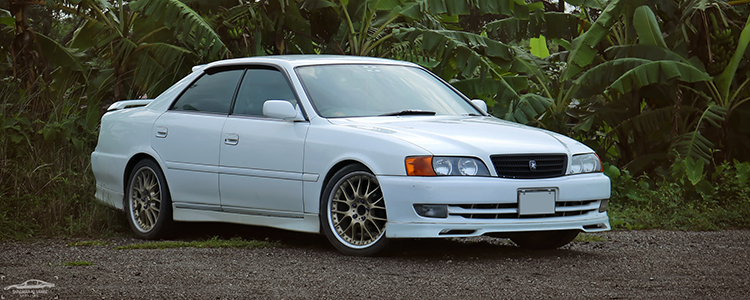
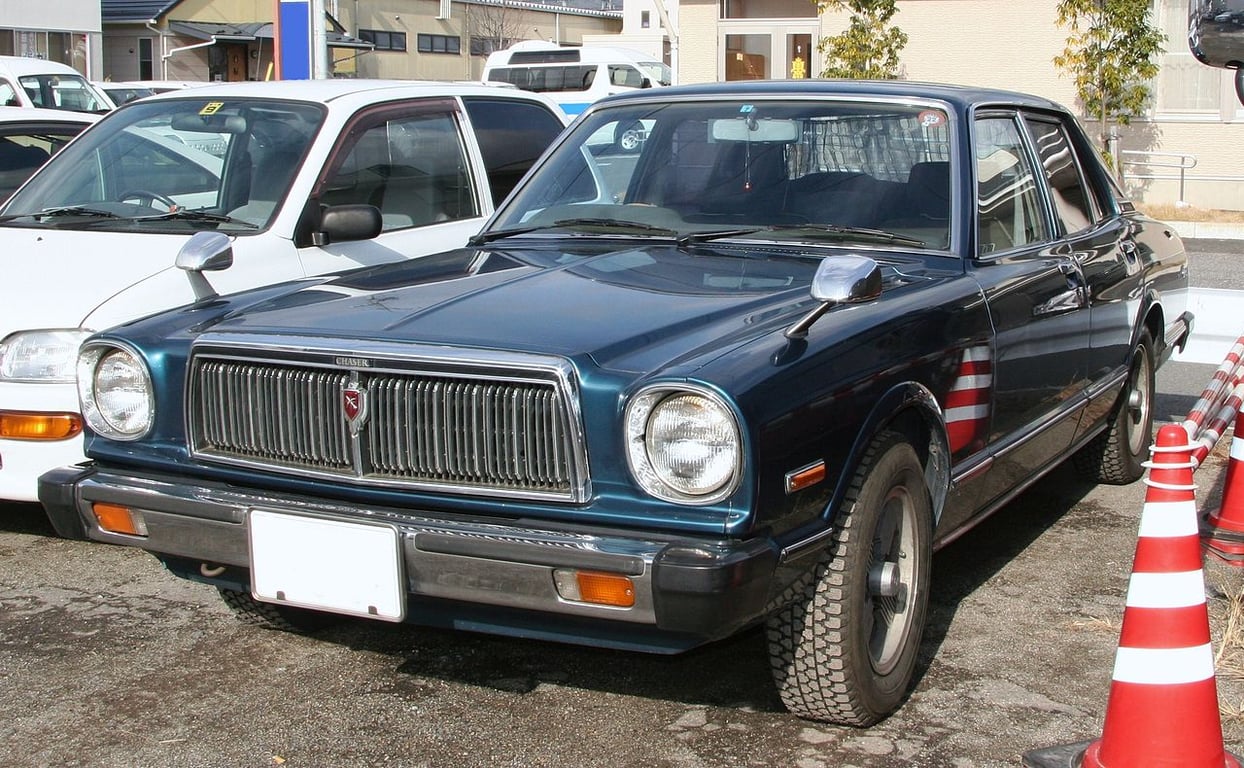
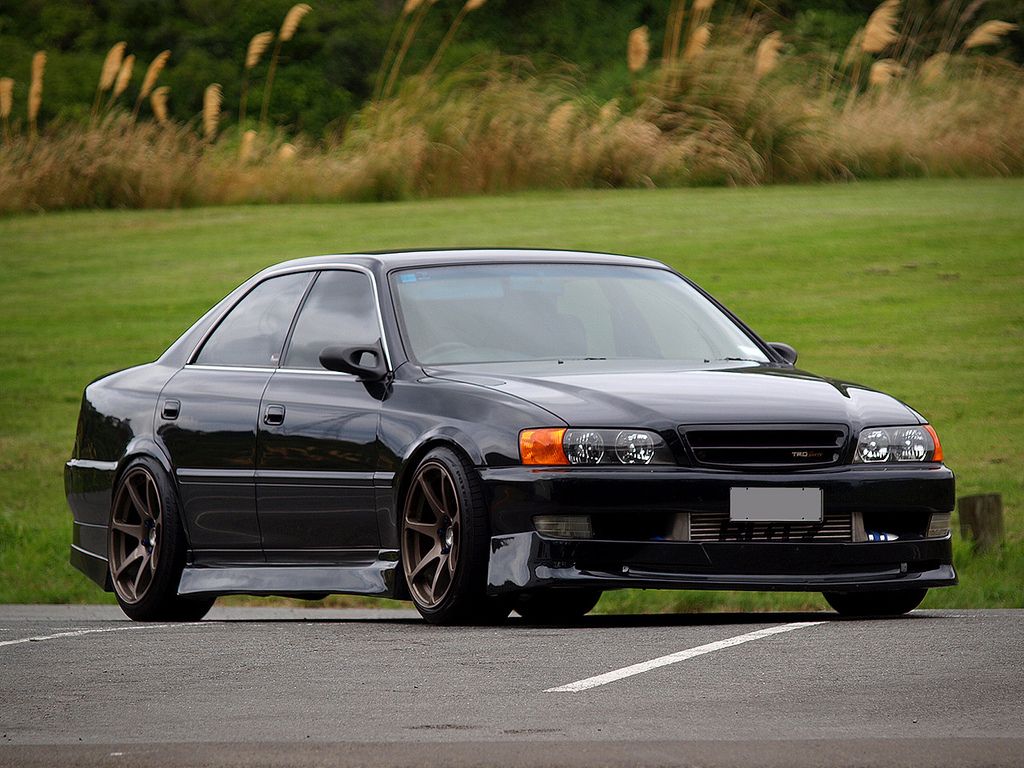
Editorial
If you're buying a Chaser, the car most buyers want is a JZX100 Tourer V manual. That is the 1JZ-GTE with the single CT15B turbo and VVT-i, the R154 five-speed gearbox, and the body shape Drift Tengoku and Option turned into the drift-sedan benchmark. A documented Tourer V manual with original paint, intact OEM aero, and a clean auction sheet is the spec that holds value as US import eligibility rolls through the late 2020s.
The JZX90 Tourer V is the budget entry into the same formula. It runs the parallel twin-turbo 1JZ-GTE, the same R154 gearbox, and a rawer, lighter car than the JZX100. It is not as polished and the front end is less planted, but clean original-paint examples are still findable at a meaningful discount.
Skip the X70 and earlier unless you specifically want a JDM curio. Those cars are interesting but parts are scarce, and you will spend more chasing a clean X70 than a tidy JZX100 Tourer S that you can drive every day.
The biggest risk on any Chaser is rust. Toyota did not rustproof these cars because Japan does not salt the roads, so rot can hide under the carpet, in the rear arches, and at the seams. Pull the carpet, lift the spare, and walk away from anything with bubbling at the rocker panels.
The second risk is misrepresented power. The Chaser was 280 PS from the factory — the JDM gentleman's-agreement ceiling — and any car advertised as making more from the factory is incorrect. Real over-280 numbers come from aftermarket tuning; if the receipts are not present, price the car as an unknown engine state.
FAQ
Citations
Sources last verified:
New site! Spotted a bug? We're listening.