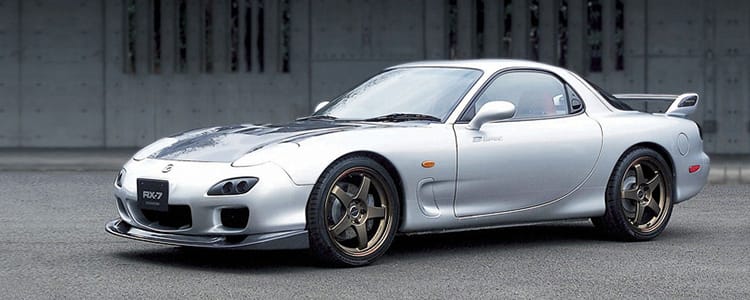
Chassis Code Explained
| Segment | Meaning | Detail |
|---|---|---|
| F | Body series | F-series (3rd-gen RX-7 platform) |
| D | Variant | D = FD series designation |
| 3 | Door count / body | 3-door hatchback/fastback |
| S | Powertrain | S = sequential twin-turbo 13B-REW |
FD3S applies to all RX-7 third-generation models. The suffix changed for specific markets (FD3S-E for Australian delivered cars).
Editorial notes
Key Takeaways
The FD3S ran from 1992 until 2002 across three series revisions, and each one drives like a slightly different car. Series 6 from 1992 to 1995 is the only FD that reached the US, and it's the cheapest way in. Series 7 from 1996 to 1998 is JDM only and brought a 10 PS bump on the manual cars plus better vacuum routing. Series 8 from 1999 to 2002 is also JDM only and got the bigger turbos, the 280 PS rating, larger front brakes, and the 2002 Spirit R run that everyone wants now.
- Best buys: stock, documented, rust-free cars
- Top premiums: Spirit R, low miles, rare colors
- Risk area: cooling, vacuum lines, turbos
- Trend: collector-grade rising; modded cars lag
- Budget for refresh: hoses, seals, cooling, fuel
- Rivals: Supra/300ZX more durable, less nimble
Technical Specifications
Every FD3S runs the same engine, the 13B-REW twin rotor with sequential turbos. JDM Series 6 made 255 PS, JDM Series 7 manuals went to 265 PS, and JDM Series 8 hit the 280 PS gentlemen's agreement ceiling with bigger turbos and a larger intercooler. US cars are all Series 6 rated at 255 hp. The OEM turbos cap out around 300 to 400 horsepower, and pushing past that is what blows them up.
Engine Options
| Chassis | Engine | Displacement | Power — JDM | Notes |
|---|---|---|---|---|
| FD3S (JDM 1991-1995) | 13B-REW | 1.3L (654cc x2) | 255PS @ 6500rpm | Sequential twin-turbo, 9.0:1 comp |
| FD3S (JDM 1996-2002) | 13B-REW | 1.3L (654cc x2) | 280PS @ 6500rpm | Sequential twin-turbo, JDM 280PS era |
| FD3S (USDM 1993-1995) | 13B-REW | 1.3L (654cc x2) | 255hp @ 6500rpm | Sequential twin-turbo, US emissions spec |
| FD3S (EU/UK 1992-1996) | 13B-REW | 1.3L (654cc x2) | 239PS @ 6500rpm (estimated) | Market-dependent tune; figure estimated |
Transmission Options
| Type | Ratios | Availability | Notes |
|---|---|---|---|
| 5-speed Manual | 3.483/2.015/1.391/1.000/0.719 | Most FD3S trims (JDM/US/EU) | RWD; final drive varies by market/trim |
| 4-speed Automatic | 2.800/1.540/1.000/0.700 | JDM Type A/Type X, Spirit R Type C | RWD; lock-up torque converter |
Livability
- Headroom
- 36.0"
- Low roof; helmet clearance is tight
- Rear Seats
- 2+2 (very small)
- Kids/bags only; adults fit briefly at best
- Cargo
- 7.5 cu ft
- Hatch helps, but opening is tight; heat in bay
Early builds of this chassis became eligible for US import under the 25-year rule in 2017; later production years become eligible through 2027. Calculate import costs →
Variants & Trims
JDM FD3S trims are Type R, Type RS, Type RZ, Type RB, Type RS-R, Type X, Type S, Type A, plus the late Bathurst R and the 2002 Spirit R Type A, B, and C. US buyers got Base, Touring, R1, and R2. The Type R and Type RS are the driver focused specs with Bilstein shocks and an LSD. The Spirit R is the one collectors chase, with Recaro buckets, BBS wheels, cross drilled rotors, and only 1,500 cars built across all three Spirit R sub trims.
| Generation | Trim | Engine | Key Features |
|---|---|---|---|
| FD (Series 1, JDM 1991-1992) | Type R | 13B-REW | 5MT, LSD, Bilstein, lightweight trim |
| FD (Series 1, JDM 1991-1992) | Type R-S | 13B-REW | 5MT, LSD, Bilstein, more equipment than Type R |
| FD (Series 1, JDM 1991-1992) | Type X | 13B-REW | 4AT, touring equipment, higher trim |
| FD (Series 1, JDM 1991-1992) | Type S | 13B-REW | 5MT, standard suspension, more comfort equipment |
| FD (Series 1, JDM 1991-1992) | Type A | 13B-REW | 4AT, base equipment |
| FD (Series 2, JDM 1993-1995) | Type R | 13B-REW | 5MT, LSD, Bilstein, lightweight trim |
| FD (Series 2, JDM 1993-1995) | Type R-S | 13B-REW | 5MT, LSD, Bilstein, more equipment than Type R |
| FD (Series 2, JDM 1993-1995) | Type X | 13B-REW | 4AT, touring equipment, higher trim |
| FD (Series 2, JDM 1993-1995) | Type S | 13B-REW | 5MT, standard suspension, comfort equipment |
| FD (Series 2, JDM 1993-1995) | Type A | 13B-REW | 4AT, base equipment |
| FD (Series 3, JDM 1996-1998) | Type R | 13B-REW | 5MT, LSD, Bilstein, lightweight trim |
| FD (Series 3, JDM 1996-1998) | Type R-S | 13B-REW | 5MT, LSD, Bilstein, more equipment than Type R |
| FD (Series 3, JDM 1996-1998) | Type RS | 13B-REW | 5MT, LSD, Bilstein, BBS wheels (market-dependent) |
| FD (Series 3, JDM 1996-1998) | Type RB | 13B-REW | 5MT, LSD, Bilstein, lightweight-focused |
| FD (Series 3, JDM 1996-1998) | Type RZ | 13B-REW | 5MT, LSD, Bilstein, lightweight, limited-run |
| FD (Series 3, JDM 1996-1998) | Type X | 13B-REW | 4AT, touring equipment, higher trim |
| FD (Series 3, JDM 1996-1998) | Type S | 13B-REW | 5MT, comfort equipment |
| FD (Series 3, JDM 1996-1998) | Type A | 13B-REW | 4AT, base equipment |
| FD (Series 4, JDM 1999-2000) | Type R | 13B-REW | 5MT, LSD, Bilstein, lightweight trim |
| FD (Series 4, JDM 1999-2000) | Type RS | 13B-REW | 5MT, LSD, Bilstein, performance-focused |
| FD (Series 4, JDM 1999-2000) | Type RZ | 13B-REW | 5MT, LSD, Bilstein, lightweight, limited-run |
| FD (Series 4, JDM 1999-2000) | Type RB | 13B-REW | 5MT, LSD, Bilstein, lightweight-focused |
| FD (Series 4, JDM 1999-2000) | Type X | 13B-REW | 4AT, touring equipment |
| FD (Series 5, JDM 2001-2002) | Type R | 13B-REW | 5MT, LSD, Bilstein, lightweight trim |
| FD (Series 5, JDM 2001-2002) | Type RS | 13B-REW | 5MT, LSD, Bilstein, performance-focused |
| FD (Series 5, JDM 2001-2002) | Type RZ | 13B-REW | 5MT, LSD, Bilstein, lightweight, limited-run |
| FD (Series 5, JDM 2001-2002) | Spirit R Type A | 13B-REW | 5MT, Bilstein, Recaro, BBS, limited |
| FD (Series 5, JDM 2001-2002) | Spirit R Type B | 13B-REW | 5MT, 2+2, Recaro, limited |
| FD (Series 5, JDM 2001-2002) | Spirit R Type C | 13B-REW | 4AT, touring equipment, limited |
| FD (USDM 1993-1995) | Base | 13B-REW | 5MT, sequential twin-turbo, touring equipment |
| FD (USDM 1993-1995) | Touring | 13B-REW | 5MT, more equipment, leather (option) |
| FD (USDM 1993-1995) | R1 | 13B-REW | 5MT, Bilstein, LSD, lightweight-focused |
| FD (USDM 1993-1995) | R2 | 13B-REW | 5MT, Bilstein, LSD, BBS wheels (limited) |
| FD (EU/UK 1992-1996) | Standard | 13B-REW | 5MT, sequential twin-turbo, touring equipment |
Should You Buy a Mazda RX-7 FD3S?
The FD3S gives you sharp steering and a chassis that still feels modern on a 30 year old car, but it asks for more attention than its rivals. The good and the bad here are the same across every series, because they come from the rotary itself, not from the year.
Why You'll Love It
- Steering & chassis balance Low mass and great geometry deliver modern-feeling feedback and rotation.
- Iconic JDM collector appeal Poster-car status; strong demand for clean, original, documented examples.
- High tuning ceiling Single-turbo conversions and supporting mods can make big power on track builds.
- Compact packaging Small footprint and low hoodline; easy to place on road and circuit.
- Strong parts ecosystem Deep aftermarket; specialist knowledge base for rotary-specific service.
Why You Might Not
- Rotary reliability is upkeep-driven Neglect kills them: cooling, oiling, vacuum leaks, and heat management matter.
- Aging twin-turbo complexity Sequential system and vacuum routing add failure points and diagnostic time.
- Heat management challenges Crowded bay; weak cooling setups can lead to detonation and seal wear.
- Modified cars can be money pits Unknown tunes and wiring often depress value and raise sorting costs.
- Insurance/parts costs rising Collector pricing increases premiums; OEM trim pieces can be pricey.
Who Should NOT Buy This
- Anyone needing reliable daily transportation
- Owners who won't monitor temps/AFR/boost
- People who can't afford a $6k-12k rebuild
- Drivers who hate warm-up/cool-down routines
- Emissions-strict areas with modified cars
- Anyone without a rotary-experienced shop nearby
- Buyers expecting 'set and forget' turbo reliability
- People who won't use premium fuel consistently
Common Issues & Solutions
Most FD3S trouble traces back to two things, the rotary needing perfect cooling and oiling, and the sequential turbo vacuum system being old. Get those right and the FD3S can run for years without issues. Get them wrong and an apex seal will cost you $6,000 to $12,000 to put back together. The other thing worth flagging is that on a 30 year old FD3S, the silicone hoses in the 'rats nest' have all reached end of life at the same time, so what looks like five separate problems is usually one hose refresh.
| Issue | Cause | Solution | Est. Cost |
|---|---|---|---|
| Low compression / hard start | Apex/side seal wear from heat, detonation | Proper rebuild; fix tune/cooling before new motor | $6000-12000 |
| Hot start long crank | Weak compression, flooded engine, tired starter | Compression test; upgrade starter; fix fueling | $300-12000 |
| Overheating | Old radiator, weak fans, air in system, ducting | New rad/fans, bleed properly, add ducting | $600-2000 |
| Sequential turbo hesitation | Vacuum leaks, bad actuators/solenoids, cracked hoses | Pressure/vac test; replace hoses; rebuild actuators | $300-2500 |
| Boost leaks / low boost | Aged couplers, loose clamps, cracked IC end tanks | Boost leak test; replace couplers/clamps; repair IC | $150-1200 |
| Turbo oil smoke | Worn turbo seals or restricted oil drain | Rebuild/replace turbos; fix drain/PCV routing | $800-3500 |
| Vacuum 'rats nest' failures | 30yr hoses/solenoids; prior owner deletes/misroutes | Restore or simplify correctly; replace all hoses | $400-2500 |
| Detonation / melted seals | Bad tune, weak fuel pump, clogged injectors, heat | Fuel system refresh + conservative tune + monitoring | $800-12000 |
| 2nd/3rd synchro grind | Worn synchros from hard shifts/old fluid | Rebuild trans; use correct fluid; adjust shifter | $2000-4500 |
| Clutch hydraulics leak | Aging master/slave seals; heat soak | Replace master/slave + line; bleed thoroughly | $250-700 |
| Cracked radiator end tanks | OEM plastic tanks fatigue from heat cycles | Replace with quality aluminum radiator + cap | $400-1200 |
| Electrical gremlins | Old grounds, hacked stereo/alarm wiring | Ground refresh; undo hacks; repair harness sections | $200-1500 |
| Rust in sills/arches | Trapped moisture; poor prior repairs; winter use | Cut/weld properly; rustproof; avoid filler fixes | $1500-8000 |
| Fuel smell / vapor leaks | Old hoses, cracked filler neck grommets, vent issues | Replace hoses/grommets; smoke test evap lines | $200-1200 |
Differences between JDM & USDM
The FD reached the United States only as a 1993, 1994, and 1995 model year car — roughly 13,879 units across three model years. Mazda pulled the RX-7 from the US market after 1995 due to a combination of declining sales, the dollar-yen exchange rate, and the cost of certifying a low-volume specialty car for US emissions; Series 7 (1996-1998) and Series 8 (1999-2002) were JDM-only (with a small UK Series 7 import). The US cars are Series 6 only, factory-rated at 255 hp; the JDM Series 8 makes 280 PS with larger turbos and the higher-flow intercooler. US cars also got the Touring (sunroof, leather, fog lights, rear wiper, Bose audio) and R1/R2 (Bilstein dampers, front and rear spoilers, stiffer suspension, aero, no sunroof, no leather) trims that do not exist in Japan. JDM cars never got the US Touring or R1/R2 designations. The driving position is LHD on every US car, RHD on every JDM car. Spirit R, Type RZ, Bathurst R, and the late Type RS — all four of the most collectible factory trims — are JDM-only Series 8 cars. For a 2026 buyer the practical implication is that any FD newer than model year 1995 in the US is an import: typically a Series 7 or Series 8 brought in under the 25-year exemption (Series 7 cars from 1996-1998 are legal now; Series 8 cars are progressively eligible 1999 onward).
Mazda RX-7 FD ULTIMATE Buyers Guide
Pre-Purchase Inspection Checklist
Walk this list with the seller present and don't rush. Anything tagged Critical is a deal breaker without documentation, especially compression numbers from a rotary specific tester and a hot start that doesn't drag the starter. The High items can be priced into the deal but they add up fast on an FD3S. If the car flunks compression or hot start, walk away no matter how clean the paint is.
Critical Priority
High Priority
Medium Priority
Generation History
FD3S (3rd gen RX-7) (1992-2002)
- 13B-REW twin-turbo rotary
- Lightweight, benchmark handling
- JDM trims: Type R/RS/RZ, Spirit R
- Late cars: stronger collectibility
Market Data
JDM FD3S trims are Type R, Type RS, Type RZ, Type RB, Type RS-R, Type X, Type S, Type A, plus the late Bathurst R and the 2002 Spirit R Type A, B, and C. US buyers got Base, Touring, R1, and R2. The Type R and Type RS are the driver focused specs with Bilstein shocks and an LSD. The Spirit R is the one collectors chase, with Recaro buckets, BBS wheels, cross drilled rotors, and only 1,500 cars built across all three Spirit R sub trims.
Production Numbers & Rarity
| Variant | Years | Units built | Notes |
|---|---|---|---|
| FD3S Type R (base) | 1991–2002 | 53,000 | Approximate total across all FD3S variants and model years |
| FD3S Spirit R Type A | 2002 | 1,504 | Final-year Spirit R; 6-speed manual only |
| FD3S Spirit R Type B | 2002 | 700 | 4-seat variant of Spirit R |
| FD3S Spirit R Type C | 2002 | 500 | Automatic variant of Spirit R |
Rarest variant: Spirit R Type A
Motorsport Heritage
| Series | Years | Result | Car |
|---|---|---|---|
| JGTC (Japan GT Championship) GT300 class | 1994–2003 | Multiple GT300 class victories; privateer and factory-backed entries | FD3S RX-7 GT300 |
| Bathurst 12 Hour | 1991–1992 | Class wins in production sports car category | FC3S / FD3S RX-7 |
Sources: Super GT historical records, Bathurst 12 Hour records
Original MSRP & Pricing
Original MSRP: $32,500 at launch in 1993. 1993 US base R1 RX-7 listed at approximately USD 32,500; Touring trims pushed the sticker into the USD 36,000 range loaded. JDM Series 6 launch pricing was set in yen and varied by trim grade (Type R, Type RS, Type RZ, Type X, Type S, Type A); the US figure is the most-cited launch benchmark.
How It Compares
Against the JZA80 Supra and the Z32 300ZX, the FD3S is the lightest and sharpest of the three, but also the most upkeep sensitive. The Supra is the durability winner. The 300ZX sits in between on both. The table below leans toward the FD3S strengths because that's where it actually wins, on chassis feel and collector premium for clean Spirit R and Type R cars.
| Feature | FD3S | Toyota Supra JZA80 | Nissan 300ZX Z32 |
|---|---|---|---|
| Stock power (JP) | 255-280 PS (13B-REW) | 280 PS (2JZ-GTE) | 280 PS (VG30DETT) |
| Curb weight | ~1,250-1,300 kg | ~1,500+ kg | ~1,550+ kg |
| Driving feel | Light, sharp, playful | Fast GT, stable | GT, planted, heavy |
| Reliability profile | Upkeep-sensitive | Generally robust | Complex but durable |
| Tuning path | Single turbo common | Big power w/ 2JZ | Costly to access |
| Market premium driver | Spirit R, originality | 6MT TT, low miles | 2+0 TT 5MT, stock |
Comparable Alternatives
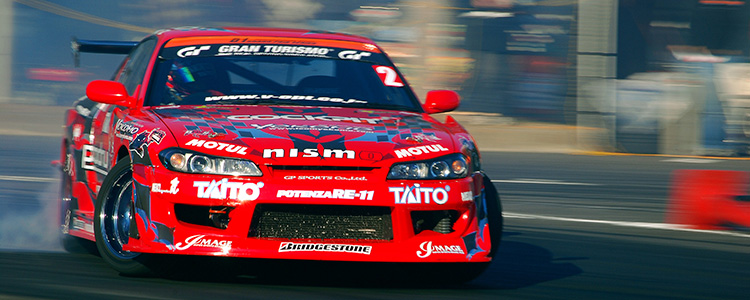
If the FD3S maintenance load looks like too much, the natural alternatives are a Toyota Supra JZA80 with the 2JZ if you want big power and durability, or a Nissan Silvia S15 if you want light and tossable without the rotary upkeep. The Honda NSX is the analog icon at a higher price point. None of them feel like an FD3S, but they're easier to live with.
Honda NSX NA1/NA2
Analog icon; higher buy-in but strong reliability
Nissan Skyline R33 GT-R
RB26 + AWD grip; heavier, but huge parts support
Toyota Supra JZA80
2JZ durability and power; pricier and less nimble
Porsche 996 Carrera
Similar money; fast, usable, strong chassis feel
In Pictures
The Buyer's Read
If you're buying an FD3S, start with compression numbers on a rotary-specific tester, not a piston gauge. That single test separates a $40,000 driver from a $12,000 rebuild waiting to happen — both rotors should read even across all three faces. A healthy FD3S also restarts cleanly when fully warm; a long crank on a hot restart points to weak compression and is the same conversation.
For most buyers the right FD3S is a documented Series 7 or Series 8 import. Series 7 cars are 1996 to 1998 with revised vacuum routing that is less brittle than the Series 6 setup; Series 8 cars from 1999 to 2002 got the bigger turbos and the 280 PS rating, which is what you actually want if you are paying import money. If you can find a US-market 1993 to 1995 Series 6 with a documented rebuild, that is a fine car too and you skip the import paperwork entirely. The thing to avoid at any price is a heavily modified FD3S with no records — unknown tune plus aging vacuum lines is how an apex seal goes, and a 13B-REW rebuild runs $6,000 to $12,000 before fixing whatever caused the failure.
The Spirit R is the FD3S to own if money allows: only 1,500 cars were built across Type A, B, and C in 2002, with the Type A with Recaro buckets and BBS wheels commanding the headline auction prices. A clean Type R or Type RS with a recent vacuum hose refresh, a quality aluminum radiator, and documented compression is the FD3S most owners actually want. Budget $3,000 to $5,000 in the first year for cooling, hoses, and fluids regardless of what you buy.
Frequently Asked Questions
- What’s the best FD3S trim to buy?
- Prioritize stock and service history. Spirit R is most collectible; Type R/RS are great driver specs.
- Are twin turbos a problem on the FD?
- The sequential setup is complex; aging vacuum lines/solenoids cause issues. Many convert to single turbo.
- What should I check before buying?
- Verify compression, cooling upgrades, vacuum routing, rust, accident repair, and quality of any tune.
- How much does a rotary rebuild cost?
- Varies by parts/labor; budget for engine refresh plus ancillaries. Cheap builds fail—use a rotary specialist.
- Do modified RX-7s hold value?
- Usually less than clean stock cars. Well-documented, reversible mods help; unknown wiring/tunes hurt resale.
- What’s the most desirable spec?
- Spirit R (2002), low miles, original paint, OEM aero, correct wheels, and complete documentation command top money.
- Is the FD3S daily-drivable?
- Possible, but expect higher attention: heat management, frequent checks, and downtime risk versus piston rivals.
Sources & References
Sources (8)
- Mazda RX-7 FD ULTIMATE Buyers Guide — YouTubeVerified
- Mazda RX-7 — encyclopedic overview — WikipediaVerified
- Rotary engine — Wankel design and history — WikipediaVerified
- Mazda Rotary Story — manufacturer history — Mazda Motor CorporationLink dead
- Hagerty valuation — Mazda RX-7 — HagertyVerified
- Bring a Trailer — Mazda FD RX-7 auction archive — Bring a TrailerLink dead
- RX7Club — owner community technical reference — RX7ClubVerified
- How To Tell If Your Apex Seals Are Blown In Your Rotary Engine — YouTubeVerified
Sources last verified: