JDM Culture
7 Best JDM Hot Wheels
Hot Wheels collecting gets expensive fast once you stop buying random mainlines and start chasing the Japanese castings everyone else wants too. That is the part casual buyers miss. A basic JDM Hot Wheels car can still cost pocket change at retail, but the minute you get into discontinued Car Culture releases, Real Riders, older redlines, RLC pieces, or movie cars tied to The Fast and the Furious, prices climb fast.
That matters here because this list is not about every Japanese Hot Wheels car ever made. It is about the castings collectors keep circling back to: the Skyline, the Supra, the RX-7, the NSX, the AE86, and a couple of older Datsun castings that have real history behind them. Some are affordable enough to hunt loose at a swap meet. Others are the kind of pieces you buy once, protect with a clamshell, and think about every time you pass your display case.
The prices below are typical secondary-market ranges as of 2026 for clean loose cars and standard carded examples, with notes where premium, RLC, Super Treasure Hunt, or movie versions regularly sell for much more. Condition, card damage, wheel swaps, tampo wear, and whether a casting came from a premium line can easily move the price up or down.
If your interest in die-cast comes from the real cars rather than the toy aisle, it is worth reading our guides on the fastest JDM cars, the best rear-wheel-drive JDM cars, and why the Mazda FD RX-7 is such a handling icon. Most of the castings below are miniature versions of the same legends.
One more thing before the ranking: price talk around Hot Wheels gets messy because collectors often blur together completely different products. A $3 retail mainline, a $7 premium with Real Riders, and a sold-out RLC release should never be discussed like they belong in the same pricing bucket. They share a casting name, but they do not behave the same in the market.
That is why the ranges below focus on what most buyers will actually encounter when browsing eBay, Whatnot streams, hobby shops, and collector forums. You will always see outliers. There is always a seller listing a common Supra for triple market value because it says “JDM” in the title. There is also always someone moving a lightly worn loose NSX for cheap because they just want to clear space. The useful number is the middle of the market, not the loudest listing.
Quick Reference: Best JDM Hot Wheels and Typical Prices
| Casting | First Release / Notable Early Release | Typical Secondary-Market Price | Why Collectors Want It |
|---|---|---|---|
| Z-Whiz | 1977 | $150-600 loose, $1,000+ carded for clean redlines | First major Japanese Hot Wheels icon and early redline-era grail |
| Nissan Skyline GT-R (BNR34) | 2002 | $6-20 basic releases, $30-250+ premium/RLC | The R34 tax is real in die-cast just like it is with real cars |
| Toyota Supra | 1997 | $4-12 basic releases, $20-100+ premium/movie cars | MK4 Supra nostalgia plus endless 2JZ and movie appeal |
| ’95 Mazda RX-7 | Modern era FD casting | $5-15 basic releases, $20-75 premium versions | FD shape, tuner liveries, and Tokyo Drift association |
| ’90 Acura NSX | 2017 | $4-15 basic releases, $20-60 premium or limited decos | Clean lines, real supercar significance, and Honda fan loyalty |
| Toyota AE-86 Sprinter Trueno | 2014 | $5-20 basic releases, $25-80 sought-after variants | Initial D energy without needing a full anime-branded line |
| Datsun Bluebird 510 Wagon | 2012 | $8-35 common carded, $50-250+ for chase variants | One of the most beloved JDM Hot Wheels castings ever made |
In This List
- #7 Datsun Bluebird 510 Wagon
- #6 Toyota AE-86 Sprinter Trueno
- #5 ‘90 Acura NSX
- #4 ‘95 Mazda RX-7
- #3 Toyota Supra
- #2 Nissan Skyline GT-R (BNR34)
- #1 Z-Whiz
Hot Wheels first leaned into Japanese performance in a serious way long before the modern JDM boom took over collector culture. One of the most important early examples was the Z-Whiz, a Hot Wheels take on the Datsun 280Z released in 1977. That car matters because it showed Mattel understood something American buyers were only beginning to notice: Japanese sports cars were cool, quick, and visually distinctive enough to carry an entire casting on their own.
Today the market is much wider. There are Boulevard cars, Car Culture assortments, Team Transport sets, Fast & Furious premiums, convention exclusives, and RLC pieces that trade more like sneakers than toys. But the best JDM Hot Wheels still follow the same rule. The casting has to be tied to a real car people already care about, and the die-cast has to capture something recognizable about that car’s shape, stance, or cultural baggage.
That last part is important. There are plenty of Japanese-branded Hot Wheels cars that are fine, but not especially memorable. The castings below survived because they do more than fill a peg. They connect to racing history, tuner culture, anime, video games, movie cars, or collector nostalgia in a way that keeps demand alive after a release disappears from stores.
#7 Datsun Bluebird 510 Wagon
The Datsun Bluebird 510 Wagon is one of those castings that proves collectors are not only chasing horsepower poster cars. Hot Wheels introduced the wagon version in 2012, and it quickly became one of the most loved Japanese castings in the modern era. That makes sense. The real 510 is lightweight, boxy, and deeply rooted in vintage Japanese racing culture, while the wagon shape gives Hot Wheels designers more room to play with BRE-style liveries, lowered stances, surf-wagon looks, and shop-truck aesthetics.
Collectors like it because it crosses multiple audiences at once. JDM fans want it because the 510 is a genuine icon. Old-school Datsun people want it because it feels analog and period-correct. Customizers want it because the proportions are perfect for wheel swaps and mild stance tweaks. That overlap is exactly why the casting rarely stays cheap for long once a good colorway goes out of production.
Typical secondary-market prices sit around $8-15 for basic loose or common carded releases, $15-35 for more desirable decos, and anywhere from $50 to $250 or more for chase versions, Super Treasure Hunts, or harder-to-find convention-style releases. The cheapest examples are usually opened. The expensive ones are the sort of cars people buy because they missed them at retail and do not want to keep waiting.
What makes the 510 wagon desirable is not rarity alone. It is the stance. Hot Wheels got the silhouette right, especially in castings with deeper wheels and motorsport-inspired graphics. On a shelf full of more aggressive cars, the 510 wagon still stands out because it looks like a die-cast version of a real enthusiast build, not just another generic tuner. If you enjoy the older side of Japanese performance culture, our list of classic JDM cars hits the same nerve.
It is also one of the best castings for collectors who like buying multiple versions of the same car. That sounds irrational until you see how differently the 510 wagon can read from one release to the next. Some versions feel vintage race inspired. Some lean into lowered street-truck style. Some are all about the wheel choice. A good casting with that much visual flexibility tends to stay relevant for years.
If you are buying your first one, avoid overpaying for the name alone. Start with a clean common version in a color you genuinely like, then work upward into premium or chase pieces if the casting really hooks you. The 510 wagon is fun because there is room to collect it casually or obsessively.
The best versions to watch are the ones that lean into period Datsun race culture rather than random fantasy graphics. That is usually where the wagon looks most convincing, and it is also where collectors tend to stay interested long after the initial release hype fades.
#6 Toyota AE-86 Sprinter Trueno
The Toyota AE-86 Sprinter Trueno casting arrived in 2014, and Hot Wheels did the smart thing by not overcomplicating it. The shape alone carries most of the appeal. Pop-up headlight Trueno, compact proportions, rear-wheel-drive legend, and immediate association with mountain-road drifting. Even people who are only casually into JDM know what an AE86 is supposed to represent.
[Image: Hot Wheels Toyota AE-86 Sprinter Trueno die-cast model]
The AE86 works because it taps into two different collector instincts. One group wants it because the real car is a legitimate grassroots hero, a lightweight chassis that earned its reputation through drifting and driver skill rather than brute force. The other group wants it because any black-and-white AE86-adjacent livery immediately triggers Initial D nostalgia, even when the release is not an official anime tie-in.
Pricing is still fairly approachable compared with premium Skyline or Supra pieces. Expect around $5-10 for basic loose examples, $10-20 for clean carded cars in desirable colors, and roughly $25-80 when you get into sought-after versions with stronger shelf appeal. That is the sweet spot for a collector who wants something recognizable without paying RLC money.
The reason this casting remains desirable is simple: Hot Wheels shrunk one of the most important drift cars ever built into a format that still looks right at a glance. The hoodline, short wheelbase, and upright greenhouse all read correctly. It does not need flames, exaggerated aero, or wild graphics to sell the fantasy. If you want the full-size context, our best JDM drift cars and best rear-wheel-drive JDM cars explain why the Hachiroku refuses to fade away.
The AE86 is also one of the easiest castings to understand emotionally. Nobody buys it because it is the fastest or most luxurious. They buy it because it represents momentum, driver skill, and underdog energy. That is why a modestly priced AE86 often feels more satisfying on a display shelf than a technically more expensive premium car.
For collectors, the main watch-out is assuming every black-and-white version deserves a premium. Some do. Some are just ordinary releases benefiting from Initial D-style nostalgia. Compare sold prices first, especially if the seller is leaning hard on anime keywords in the listing title.
The smartest AE86 buy is usually a clean carded car with minimal gimmicks. The casting is strong enough that it does not need much help. When Hot Wheels keeps it simple, the car reads more like a faithful miniature and less like a toy trying too hard.
#5 ‘90 Acura NSX
The '90 Acura NSX casting first appeared in 2017, and it is one of the cleanest modern JDM Hot Wheels castings if you prefer factory lines over tuner aggression. That is exactly what makes it appealing. The NSX does not need a huge wing or a movie livery to justify its place in a collection. It is desirable because the real NA1 NSX changed how people viewed Japanese performance cars.
[Image: Hot Wheels 90 Acura NSX red die-cast model]
In real life, the NSX sits in rare company. It is a Japanese supercar that embarrassed European assumptions about reliability, ergonomics, and build quality. Hot Wheels collectors respond to that same reputation. The best versions are usually the simple ones: red, white, yellow, silver, or black, with proportions left mostly alone. When Hot Wheels keeps the deco restrained, the casting looks expensive even when the toy is small.
Typical prices usually land in the $4-8 range for loose common releases and about $8-15 for clean carded basics. Premium assortments, special decos, and harder-to-find variants often move into the $20-60 range. It is not the cheapest Honda casting, but it is still attainable enough that most collectors can choose the version they actually want instead of settling for whatever is available.
What makes the NSX desirable is that it appeals equally to Honda people and broader JDM collectors. It is not merely a badge car. It represents a specific moment when Honda built something genuinely world-class and did it without sacrificing usability. If you want to revisit why the NSX became such a permanent part of 1990s performance culture, our Honda NSX coverage in the fastest JDM cars list and our best JDM cars of the 90s article are worth reading.
That matters in die-cast form because the NSX attracts a slightly different buyer than the Skyline or Supra. It is less about aggression and more about purity. Collectors who want clean lines, OEM-looking colors, and a casting that feels closer to a design object than a drift missile usually end up with at least one NSX in the case.
The best buying strategy here is patience. NSX prices do spike when a cleaner premium release sells out, but the casting is not usually as chaotic as R34 pricing. If you miss one version, another good one will eventually show up. That makes it one of the safer castings to collect slowly.
Collectors who keep only one Honda in the case often choose the NSX for a reason. It balances prestige, recognizable design, and manageable pricing better than almost any other Japanese casting Hot Wheels has done.
#4 ‘95 Mazda RX-7
Few Hot Wheels castings benefit more from the real car’s shape than the '95 Mazda RX-7. The FD is already one of the most elegant Japanese sports cars ever built, so even a small die-cast version has an advantage before color, wheel choice, or series branding enter the conversation. The long hood, flowing fenders, and low roofline do a lot of the work.
[Image: Hot Wheels 1995 Mazda RX-7 black die-cast model]
Collectors chase this casting for three big reasons. First, the FD3S is a design icon even outside rotary circles. Second, Hot Wheels has used it in the sort of liveries JDM buyers actually like, including tuner-inspired and premium releases. Third, the RX-7 is inseparable from video game, movie, and drift culture, so there is a constant stream of buyers who want at least one version on display.
Prices usually start around $5-8 for loose common releases and $8-15 for standard carded examples in good condition. Premium releases, especially anything with stronger movie or tuner demand, often land in the $20-40 range and can climb toward $75 when supply dries up. Fast & Furious-related versions and cleaner premium card art tend to hold value better than basic mainlines.
The desirability is not just about looks. The real FD is a high-drama car in enthusiast culture. It is gorgeous, rotary-powered, lightweight, and slightly intimidating to own. That mythology makes the die-cast stronger because buyers are not only purchasing a toy; they are buying a scaled-down symbol of a car most of them will never own. If the RX-7 is your weakness, read our full breakdown of why the FD RX-7 is considered one of the best-handling cars ever built.
Movie and tuner culture help a lot here. The FD looks natural with subtle factory paint, but it also looks convincing with more dramatic graphics, aftermarket-style wheels, and body-kit inspired premium treatment. That gives the casting range. Some collectors only want a clean yellow or red street-car look. Others specifically want versions that hint at Tokyo Drift energy.
If you are deciding between a cheap mainline and a premium RX-7, the premium usually delivers more of what makes the FD special. Better wheels, stronger stance, and cleaner presentation matter more on this casting than they do on more upright cars. It is one of the few cases where paying up a little often makes visual sense.
That is also why the RX-7 is such a common gateway premium for JDM collectors. Somebody buys one good FD, realizes how much better it looks than a basic mainline, and suddenly starts caring about Boulevard cards and Car Culture assortments.
#3 Toyota Supra
The Hot Wheels Toyota Supra casting dates back to 1997, and that long history matters. It means there are decades of variants for collectors to chase, from simple basic releases to premium cars that lean hard into movie nostalgia. If there is one constant in JDM die-cast collecting, it is that the MK4 Supra never stays irrelevant for long.
[Image: Hot Wheels Toyota Supra orange die-cast model]
The obvious reason collectors want it is the real car. The A80 Supra is one of the defining Japanese performance cars of the 1990s, and its 2JZ-powered reputation is now larger than the actual production numbers ever were. The second reason is cultural. Any orange, silver, or movie-adjacent Supra release gets immediate attention because buyers associate it with The Fast and the Furious, aftermarket tuning, and the whole late-1990s to early-2000s import scene.
Common pricing is still reasonable if you avoid the headline-grabbing versions. Basic loose or common carded Supras usually trade around $4-12. Premiums often sit between $20 and $40. The more desirable Fast & Furious or harder-to-find older releases can easily move into the $50-100 range, especially if the card is clean and the deco matches a well-known on-screen car.
What makes the casting desirable is that Hot Wheels can do almost anything with it and the market still responds. Stock-looking cars work. Targa-style visual cues work. Movie replicas work. Black, white, red, silver, and orange all work because the Supra already has a permanent place in enthusiast memory. If you want more context on the real car, our Toyota Supra coverage in the 90s JDM list and rear-wheel-drive JDM guide are natural follow-ups.
There is also a simple supply-and-demand issue. The Supra has one of the broadest fan bases in modern car culture, and many of those buyers are not traditional die-cast collectors. They are movie fans, Toyota owners, former tuner kids, or younger enthusiasts who grew up hearing that the MK4 was untouchable. That extra audience keeps even average releases liquid.
The trap with Supra collecting is paying premium money for mass-market nostalgia. Always ask whether you are buying a genuinely harder-to-find release or just a familiar silhouette with a famous badge. The answer changes the correct price by a lot.
In practical terms, the Supra is one of the easiest castings to flip back out of your collection if you change your mind. Demand is broad enough that clean examples almost always find a buyer, which is part of why prices stay firm.
#2 Nissan Skyline GT-R (BNR34)
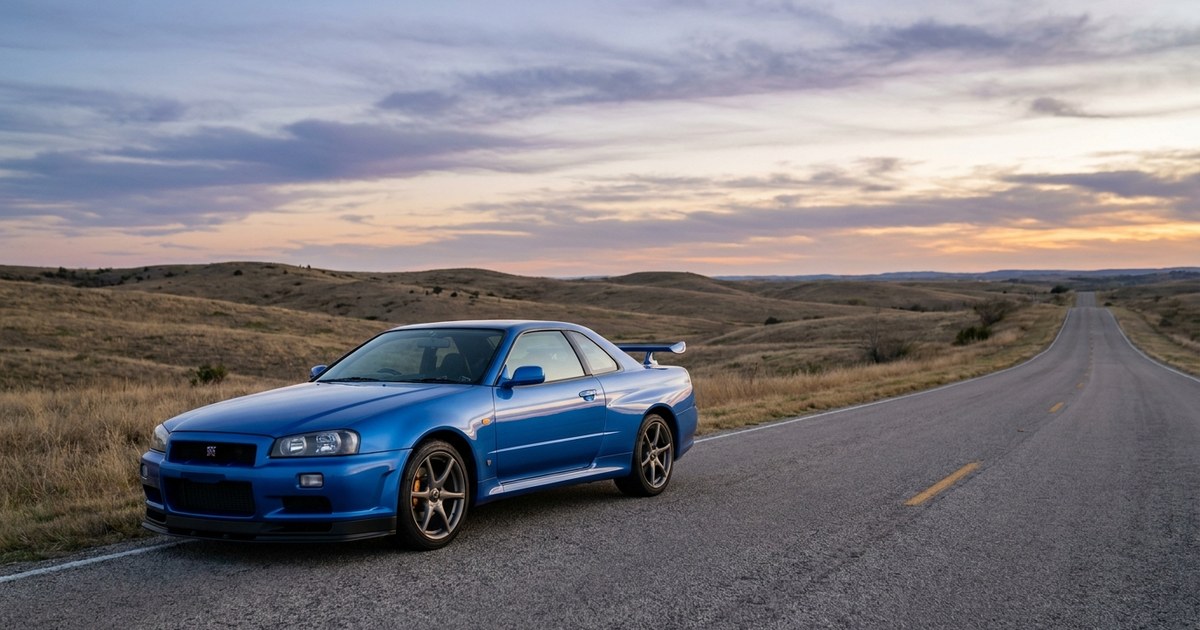
The Nissan Skyline GT-R (BNR34) is the casting that makes otherwise rational collectors start paying irrational prices. Hot Wheels first released the BNR34 casting in 2002, and since then it has been treated like a blue-chip JDM piece. That is not because every release is rare. It is because the R34 badge carries absurd weight in car culture.
[Image: Hot Wheels Purple Nissan Skyline GT-R die-cast model] via Hot Wheels Wiki
The Skyline GT-R’s appeal is wider than almost any other Japanese Hot Wheels casting. Gran Turismo fans want one. Nissan collectors want one. Fast & Furious fans want one. People who have never turned a wrench still know the car as “Godzilla.” That broad demand means even average releases do not stay unnoticed for long, and special versions disappear very quickly.
Typical prices start around $6-12 for loose basic releases and $12-20 for nicer carded mainlines. Premium Boulevard or Car Culture versions usually live in the $30-80 range after retail. RLC cars, membership exclusives, and the more hyped special releases regularly break $100 and can push well past $250 depending on color, packaging, and how recently they sold out. That is the die-cast version of R34 economics: the logo does half the work.
Why is the casting so desirable? Because it delivers exactly what buyers want from an R34. The stance is aggressive, the proportions are recognizable even from a distance, and Hot Wheels has repeatedly put it in colors that collectors already associate with the real car. That includes the sort of blue, silver, black, white, and purple finishes that echo factory or tuner-era Skyline lore. For more on why the real car carries such absurd cachet, read our features on R34 import-era icons and Nissan Skyline GT-R alternatives.
The Skyline is also the casting most likely to create price confusion for new collectors. There are affordable releases that look great. There are also special releases where the packaging, wheel spec, and exclusivity matter almost as much as the car itself. If two BNR34 listings look similar but one is four times the price, there is usually a reason, even if it is not obvious from the thumbnail.
If you only want one R34, buy the version that best matches your mental image of the car. For some people that is a premium blue car with realistic wheels. For others it is a silver movie-adjacent release. Chasing every Skyline variant is how small die-cast budgets turn into large adult problems.
That may sound exaggerated, but the Skyline is where many collectors accidentally move from “I buy a few Hot Wheels” to “I monitor release calendars and preorder cases.” Very few castings create that kind of behavior without earning it.
#1 Z-Whiz
If you want the most historically important JDM Hot Wheels casting rather than the most internet-famous one, the answer is the Z-Whiz. Released in 1977 and based on the Datsun 280Z, it is one of the foundational Japanese castings in the entire Hot Wheels back catalog. Long before the R34, long before premium assortments, and long before JDM became a mass-market buzzword, the Z-Whiz was already proving there was collector appeal in Japanese sports cars.
That history is why it tops this list. The Z-Whiz is not number one because it is the fastest looking or most modified. It is number one because it is old, significant, and undeniably real as a collector piece. Early redline-era examples occupy a totally different market from standard modern mainlines. You are not buying them on impulse next to the checkout lane. You are shopping them like vintage collectibles.
Typical secondary-market pricing reflects that split. Beaten loose examples can sometimes be found around $150-250, cleaner loose cars often sit closer to $300-600, and truly clean carded or high-grade redline examples can break well into four figures. That is the range where condition stops being a footnote and becomes the entire conversation. Wheel wear, paint chips, axle damage, and packaging quality matter a lot.
The Z-Whiz remains desirable because it connects two collector worlds at once. Vintage Hot Wheels people want it as an authentic redline-era piece. JDM collectors want it because it represents the earliest serious recognition of Japanese performance in the Hot Wheels universe. It is also tied to the S30 story, one of the most important chapters in Japanese sports car history. If older Japanese metal is your thing, our classic JDM cars article is the right rabbit hole.
It is not the easiest recommendation on this list because vintage collecting is less forgiving than buying modern premium cars. Repros, incomplete descriptions, and vague condition photos are much bigger concerns. But that friction is part of the appeal. Owning a real Z-Whiz feels more like owning a piece of Hot Wheels history than owning just another cool release.
For serious collectors, this is the piece that turns a JDM Hot Wheels collection from fun to curated. It shows you understand where the hobby came from, not only what is trendy now.
It also has one advantage modern collector pieces do not: nobody buys a Z-Whiz by accident. If one is in your collection, it is there on purpose, which gives it a different kind of weight.
How JDM Hot Wheels Prices Usually Break Down
If you are wondering why one Japanese casting is worth $6 and another version of what looks like the same car is worth $60, the answer is usually a mix of four factors.
The first is the line itself. Mainlines are produced in much higher numbers, so most of them stay affordable unless a specific color or market release becomes unexpectedly scarce. Premium lines cost more at retail and generally stay higher on the secondary market because collectors like the heavier feel, Real Riders, and better presentation.
The second is cultural crossover. A casting tied to Fast & Furious, drift culture, Gran Turismo-era nostalgia, or a highly recognizable real-world spec tends to have a bigger buyer pool. That is why Skyline, Supra, and RX-7 releases regularly outperform less famous but equally well-made Japanese castings.
The third is condition. On vintage cars, condition can multiply value. On modern cars, card quality and blister condition still matter, especially for people who display sealed pieces. A soft corner or cracked blister can turn a premium-value car into a loose-car-price conversation.
The fourth is timing. Prices often spike right after a release disappears from stores, then settle once the market stops panic-buying. That does not happen with every casting, but it happens often enough that patient buyers save real money.
Loose versus sealed pricing matters too. Some collectors only care about the car itself and are happy to buy opened pieces at a discount. Others care just as much about the card art, the hook, the blister, and whether the package can be displayed cleanly. Those are effectively two related but separate markets.
That distinction is especially relevant for movie cars and RLC pieces. A loose premium Skyline or Supra can still be expensive, but once the complete packaging enters the equation, you are often paying for the presentation almost as much as the casting.
The Best JDM Hot Wheels for Different Collectors
Not every collector wants the same thing, which is why the best JDM Hot Wheels depends partly on how you collect.
If you want the historical pieces, start with the Z-Whiz and then look for a Datsun 510 wagon. Those castings tell the story of where Japanese Hot Wheels collecting started and how it evolved.
If you want the biggest shelf presence for the least explanation, buy a Skyline GT-R and a Supra. Even non-collectors recognize them instantly.
If you want the strongest enthusiast credibility without paying top Skyline money, the AE86, RX-7, and NSX are the smart middle ground. They are beloved by real car people, and the better versions still feel special in hand.
If you are mostly buying what looks best in premium format, prioritize the RX-7, Skyline, and NSX. Those are the castings that benefit most from upgraded wheels and cleaner presentation.
If you are building around a budget, prioritize castings with a deep release history. Supra, AE86, and NSX collectors can usually find a version that scratches the itch without buying the most expensive variant available that week.
What to Look For Before You Buy
Collector prices get distorted quickly when people talk about JDM Hot Wheels without separating common releases from premium ones. A basic mainline Skyline or Supra might only be a $5-10 car. The same casting in RLC trim, with Real Riders and premium packaging, can be several times that. Before paying up, confirm four things:
- Whether the car is a standard mainline, premium, Super Treasure Hunt, convention piece, or RLC release
- Whether it is loose, short-carded, long-carded, or still sealed in premium packaging
- Whether the paint and tampos are clean, especially on white cars and movie replicas
- Whether the seller is pricing a custom wheel-swapped car as if it were an original factory release
It is also smart to compare sold listings rather than active asking prices. JDM castings attract optimistic sellers, especially when the card says Skyline, Supra, RX-7, or NSX. Plenty of listings sit unsold because the seller is charging RLC money for an ordinary mainline.
Another basic check is whether the seller is using stock photos. That is common enough in die-cast resale, but it is not ideal when card condition or paint quality affects price. Ask for actual photos if the listing is expensive enough to matter.
Which JDM Hot Wheels Should You Start With?
If you are brand new, start with the AE86, NSX, or RX-7. They are recognizable, good-looking, and still attainable in multiple versions without turning the hobby into a bidding war.
If you want the centerpieces, buy the Skyline GT-R and Supra. Those are the castings most non-collectors immediately recognize, and they anchor a display the same way the real cars anchor JDM conversations.
If you care about history more than hype, hunt a Z-Whiz and a Bluebird 510 Wagon. One gives you the roots of Japanese Hot Wheels collecting, and the other shows how strong modern JDM die-cast culture became.
If you want more scale-car recommendations beyond Hot Wheels, our guide to JDM model cars you can buy is a useful next stop. If you want brick builds instead of die-cast, read our LEGO JDM cars guide.
Where Collectors Usually Find the Good Stuff
Most mainstream JDM Hot Wheels still begin at retail, but the better older releases are usually found in the secondary market. That means eBay, die-cast Facebook groups, collector forums, local toy shows, flea markets, and hobby shops with used inventory.
Each source has tradeoffs. eBay is best for price discovery because sold listings create a visible market. Collector groups are often better for fairer deals, especially if you are buying from someone who actually knows the hobby instead of keyword-stuffing every listing with “rare JDM.” Swap meets and toy shows are still the best places to inspect card condition in person.
The safest habit is to learn the casting first and buy second. Once you know what a common release looks like, it becomes much harder to overpay for one.
That sounds obvious, but it is the difference between building a collection you enjoy and building one full of regret purchases. JDM castings move on emotion more than most categories, and sellers know it.
That is exactly why doing even ten minutes of homework usually saves money.
The short version is this: if you want the safest buys, start with the NSX, AE86, and RX-7. If you want the biggest-name cars, buy the Skyline and Supra. If you want the pieces other collectors will immediately respect, go after the Z-Whiz and the 510 wagon.
FAQ
Frequently asked questions
Which JDM Hot Wheels casting is best for a new collector?
Why are some JDM Hot Wheels so expensive?
Should I buy loose or carded JDM Hot Wheels?
How do I avoid overpaying for JDM Hot Wheels?
- Featured Image by lamleygroup
- Images via Hot Wheels Wiki, Shopee, Amazon, eBay