Import guide
The US 25-Year Car Import Rule — What It Means and How It Works
The 25-year rule exempts imported vehicles from EPA and NHTSA conformance requirements in the US. This guide explains the legal basis, what qualifies, and the annual calendar of eligible JDM models.
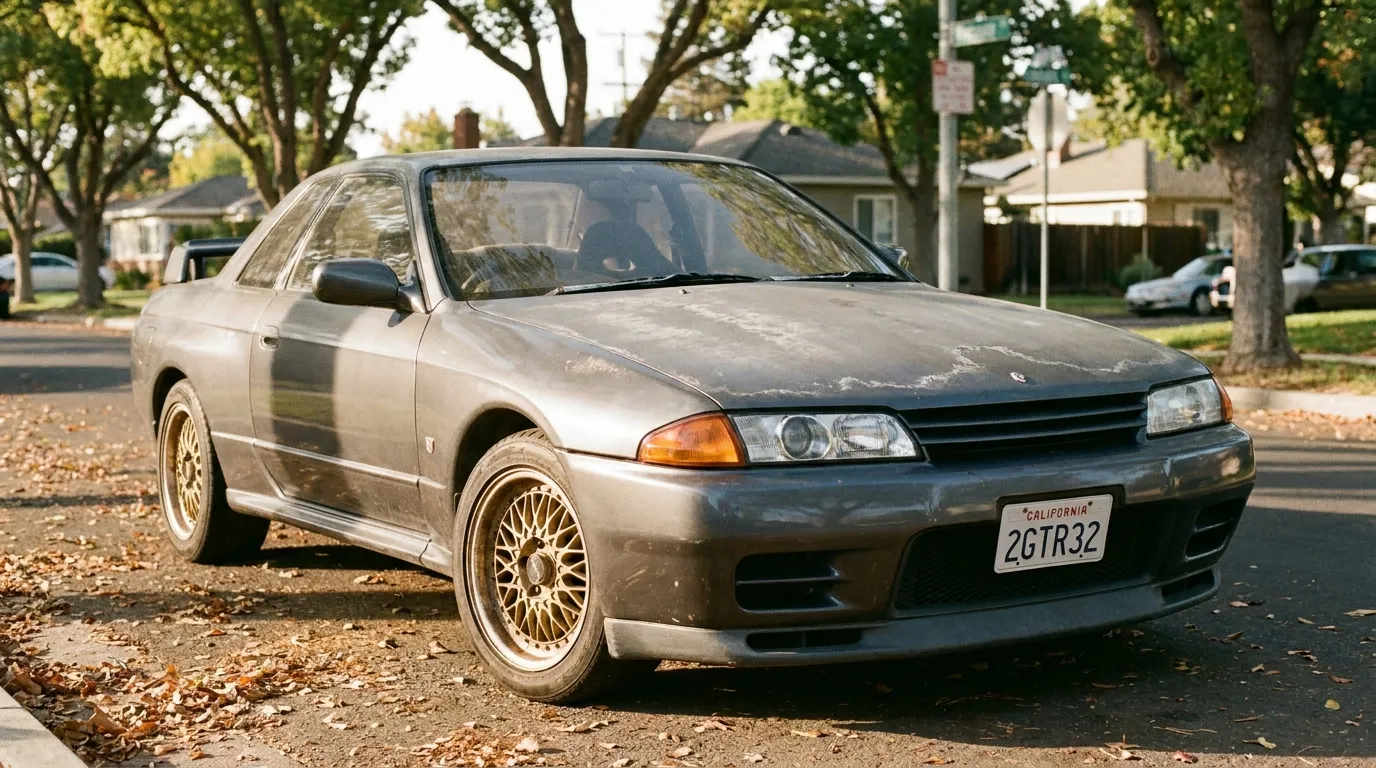
What Is the 25-Year Rule?
The 25-year rule is the common name for the NHTSA exemption that frees vehicles 25 years old or older from Federal Motor Vehicle Safety Standards (FMVSS) conformance (49 CFR 571.7), which CBP enforces at the port of entry under 49 CFR Part 591. A separate EPA exemption frees vehicles 21 years old or older — in original, unmodified configuration — from emissions conformance (40 CFR 85.1511); because the NHTSA threshold of 25 years is the later of the two, a car that clears the 25-year line has already cleared the EPA's 21-year line. The rule means a vehicle manufactured in calendar year 2000 becomes importable beginning January 1, 2025. It applies regardless of the vehicle's country of origin — it is a US-side regulation, not a Japan-side one — and the age-based exemption is available to any importer, not only personal buyers (the 25-year provision at 49 CFR 591.5(i) carries no personal-use restriction).
Vehicles 25 years or older are also excluded from the Section 232 automobile tariff — the 25% duty on imported cars introduced in April 2025 — under HTS heading 9903.94.04, so a 25-year-eligible import is assessed the 2.5% base duty rather than the 25% rate. The US has layered other country-of-origin tariff surcharges on vehicle imports since 2025 whose rates have shifted repeatedly, so confirm the current duty with a customs broker before importing.
What the Exemption Does and Does Not Cover
The 25-year exemption relieves the importer of the obligation to demonstrate that the vehicle conforms to FMVSS (bumper heights, safety glazing, lighting standards, etc.) and EPA emissions standards. It does not exempt the vehicle from state-level registration requirements, which vary. California CARB emissions testing, for example, operates under state authority separate from federal EPA standards; a federally-exempt vehicle may still face state-level testing depending on the state's adopted procedures. The exemption also does not remove the 2.5% ad valorem duty on passenger vehicles (CBP Form 7501, Schedule B).
Annual Eligibility Calendar — Key JDM Models
Because the rule is age-based, the list of eligible models grows each January. The chassis-by-chassis US import eligibility calendar tracks every major JDM platform with current and next-year status; the summary below highlights notable models.
2001 → Nissan Skyline GT-R R34 (BNR34, 1999–2002 production) becomes partially eligible from Jan 2024 (1999 build dates) through Jan 2027 (2002 build dates). Individual vehicle eligibility depends on the specific vehicle's build date, not the model's production start.
2000 → Toyota Supra A80 final production run (1997–2002 JDM); Honda S2000 AP1 (1999+); Subaru Impreza WRX STI (GDB, 2000 launch).
2001–2026 → Nissan Silvia S15 (1999–2002 production), Mitsubishi Lancer Evolution VII–IX (2001–2007), Honda Integra Type R DC5 (2001–2006), Toyota Altezza RS200 (1998–2005).
Buyers should verify the specific vehicle's build date (visible on the door jamb compliance plate) rather than relying solely on the model year, as JDM vehicles do not always carry a calendar-year-matching model designation. For a guided walk through the 2001-model lineup specifically, see the top JDM cars eligible in 2026.
Process to Import Under the 25-Year Exemption
At US entry, the importer (or their broker) submits CBP Form HS-7 (Declaration of Importation or Exportation of Motor Vehicles and Motor Vehicle Equipment Subject to Federal Motor Vehicle Safety Standards). For a 25-year-exempt vehicle, Box 1 on HS-7 is checked (vehicle is at least 25 years old and therefore not subject to FMVSS). Customs will verify the vehicle's year using the Japanese export certificate and VIN. The 2.5% duty is calculated on the CBP-appraised value and paid on CBP Form 7501. No bond is required for a personal import that clears on the 25-year exemption, unlike a non-conforming vehicle import (which requires a bond equal to 150% of vehicle value). The form-by-form CBP entry sequence, plus per-state title and registration for California, Florida, Texas, Washington, and New York, is documented in the US JDM import process guide.
FAQ
Frequently asked questions
- When does the Nissan Skyline R34 become legal in the US?
- The R34 GT-R (BNR34) was produced from January 1999 through 2002. Vehicles with a January 1999 build date became eligible for 25-year-exempt import in January 2024. 2002-production R34s will not clear the 25-year threshold until 2027. Individual eligibility depends on the specific vehicle's build date shown on the door jamb compliance plate, not the model year alone.
- Does the 25-year rule apply in Canada?
- Canada has a parallel 15-year exemption under the Motor Vehicle Safety Act and its regulations. Vehicles 15 years old or older are exempt from Canada's Motor Vehicle Safety Standards (CMVSS) conformance and from the Registrar of Imported Vehicles (RIV) program. This means JDM models that are still not eligible in the US under the 25-year rule may already be importable to Canada.
- Does the 25-year exemption mean I don't pay any duties?
- No. The 25-year exemption waives EPA and NHTSA conformance requirements only. A 2.5% ad valorem base import duty on the CBP-appraised value still applies. Vehicles 25 years or older are excluded from the 25% Section 232 automobile tariff introduced in April 2025 (HTS 9903.94.04), so the 2.5% base rate is the operative duty for a qualifying import — though the US has added other country-of-origin tariff surcharges on vehicle imports since 2025 whose rates have changed, so confirm the current figure with a customs broker. GST/HST also applies if importing to Canada. State/provincial taxes and registration fees are separate.
- Can I sell a 25-year-exempt import commercially?
- Yes. The age-based exemption at 49 CFR 591.5(i) carries no personal-use restriction, so a vehicle 25 years or older may be imported by any importer, including a dealer importing for resale. The FMVSS-conformance obligation and the NHTSA Registered Importer (RI) program apply to vehicles under 25 years old, not to 25-year-exempt cars.
- Is it legal to import a JDM car under 25 years old to the US?
- Yes, but the options are narrow and expensive for most buyers. A sub-25-year vehicle can enter the US only via full FMVSS conformance completed by an NHTSA Registered Importer — a process that typically costs $10,000 to $30,000 or more depending on the model and the modifications required. Two narrow alternatives exist: the Show or Display exemption applies to a short list of models that NHTSA has deemed of historical or technological significance, allowing import for limited-mileage non-daily-driver use; and a vehicle imported solely for closed-course competition that will never be road-registered is treated differently. For most private buyers, waiting until the vehicle's build date clears the 25-year threshold is the practical route.
See also
Related topics
Sources
- US Code of Federal Regulations 49 CFR 571.7
- US Code of Federal Regulations 49 CFR Part 591
- NHTSA Form HS-7 instructions
- CBP Publication: Importing a Motor Vehicle (CBP Publication No. 0000-0596)
- US CBP — Section 232 additional FAQs: automobiles (vehicles 25+ years old excluded, HTS 9903.94.04)
- US EPA — Importing vehicles and engines (21-year emissions exemption, original configuration)
- Transport Canada — Importing a vehicle (15-year exemption)