Editorial notes
Key Takeaways
The Seven's story splits in two. Colin Chapman built it at Lotus from 1957 to 1973 across the S1, S2, S3, and S4. Then Caterham took over production in September 1973 and has built the Seven continuously ever since. The Caterham era is where almost every car you can actually buy and drive comes from.
- Spec and engine drive value more than year
- Factory-built cars usually outperform kit builds
- 620/420/CSR are the top-value modern picks
- K-series can be great but needs head-gasket diligence
- Track use is common; inspect chassis, diffs, and logs
- Documentation and setup parts add real liquidity
Technical Specifications
Caterham has run the Seven through more engines than almost any sports car you can name. Ford Kent and Crossflow in the early years, Rover K-series through the 1990s and early 2000s, Ford Sigma and Duratec from 2005, and the turbocharged Suzuki K6A and R06A kei engines from 2013 on. Every Seven is rear-wheel drive with a manual gearbox.
Engine Options
| Chassis | Engine | Displacement | Power — JDM | Notes |
|---|---|---|---|---|
| CSR | Ford Duratec 2.0 | 2.0L | 200hp @ 7250rpm (estimated) | CSR 200; IRS chassis |
| CSR | Ford Duratec 2.3 | 2.3L | 260hp @ 7200rpm (estimated) | CSR 260; high-output NA |
| CSR | Ford/PSA DW10 (diesel) | 2.0L | 175hp @ 4000rpm (estimated) | CSR 175 diesel; extremely rare |
Transmission Options
| Type | Ratios | Availability | Notes |
|---|---|---|---|
| 5-speed Manual | 3.545/1.904/1.280/0.973/0.775 (estimated) | 160/170/270/310 (varies) | Common Ford/Suzuki-sourced 5MT |
| 6-speed Manual | 2.692/2.012/1.590/1.275/1.034/0.842 (estimated) | 485/620R/CSR (varies) | Close-ratio; supplier varies by year |
| Sequential Manual | varies by gearbox | Race cars/option | Track-only; homologation/series dependent |
Livability
- Headroom
- 38.0"
- No roof most of time; helmet fit varies by seat
- Rear Seats
- None
- Strict 2-seater; no child seat practicality
- Cargo
- 3-5 cu ft
- Tiny boot; heat and water ingress limit luggage
Variants & Trims
The Seven 160 and 170 use the kei-class Suzuki turbo three and sit on the narrow S3 chassis. The 270, 310, 360, 420, and 485 step up through Ford Sigma 1.6 and Duratec 2.0 power on either S3 or the wider SV chassis. The 620R is the supercharged Duratec flagship. The CSR is a separate chassis family with independent rear suspension built between 2005 and 2013.
| Generation | Trim | Engine | Key Features |
|---|---|---|---|
| CSR (independent rear) 2005-2013 | CSR 200 | Ford Duratec 2.0 NA | CSR chassis, IRS, 6MT, inboard front suspension |
| CSR (independent rear) 2005-2013 | CSR 260 | Ford Duratec 2.3 NA | CSR chassis, IRS, 6MT, uprated brakes/suspension |
| CSR (independent rear) 2005-2013 | CSR 175 (diesel) | Ford/PSA 2.0 TD | CSR chassis, IRS, 6MT, diesel torque, rare |
Should You Buy a Caterham 7 CSR?
The Caterham Seven is honest about what it is. You get steering feel that almost no modern car can match and pace per dollar that embarrasses much more expensive machinery. What you give up is everything else. Weather sealing, comfort, crash protection, luggage space, none of that is in the brief.
Why You'll Love It
- Unmatched steering feel Low mass and direct rack deliver feedback few modern cars match; huge buyer draw.
- Track pace per dollar Even modest power feels fast; 420/620 rival supercars on tight circuits.
- Simple, serviceable design Mechanical simplicity aids DIY ownership; parts support is strong via Caterham specialists.
- Strong enthusiast liquidity Active clubs and track communities keep demand steady for well-specced, documented cars.
- Spec customization upside Suspension, brakes, aero, and seats can be tailored; the right options add resale appeal.
- Low consumables (lightweight) Tires and brakes can last well versus heavier sports cars; track days cost less overall.
Why You Might Not
- Weather and comfort limits Minimal weather protection, heat, noise, and ingress/egress reduce daily usability.
- Build quality varies Kit builds and modified cars differ widely; inspection and provenance are critical.
- K-series cooling/HGF risk Rover K can suffer head gasket issues if neglected; upgrades and history matter.
- Crash safety is basic Open cockpit and light structure mean less protection than modern sports cars.
- Track use can hide wear Bent wishbones, tired dampers, cracked chassis paint, and diff noise are common.
- Insurance/registration hurdles Varies by state/country; kit vs factory build can affect titling and premiums.
Who Should NOT Buy This
- Anyone needing reliable daily transport
- Drivers who must commute in heavy rain/snow
- People who hate noise, vibration, and harshness
- Anyone expecting modern crash protection
- Drivers over ~6'3" or broad-shouldered
- Anyone with knee/hip/back issues
- People who need real luggage/cargo capacity
- Anyone who needs rear seats or child seats
- Owners without garage storage
- Anyone unwilling to wrench or pay specialists
- People expecting dealer-level parts availability
- Those who can’t tolerate frequent minor fixes
- Anyone in very hot climates without cooling upgrades
- People who require strong heater/demist performance
- Drivers who wear wide shoes (pedal box is tight)
- Anyone uncomfortable with twitchy handling at limits
- People who plan lots of highway miles
- Those needing hands-free phone/infotainment features
- Anyone who dislikes attention and constant questions
- Buyers who can’t verify build/IVA/SVA paperwork
Common Issues & Solutions
Most Seven problems trace back to how the car gets used, not how it's built. Track days bend wishbones and crack De Dion mounts. Stone chips let rust creep under the powdercoat. Kit builds vary wildly in quality. The Rover K-series has its head gasket reputation, but a documented car with the right upgrades is fine.
| Issue | Cause | Solution | Est. Cost |
|---|---|---|---|
| Chassis rust under powdercoat | Stone chips + moisture creeps under coating | Strip/repair tubes; epoxy prime; repaint/powdercoat | $1500-6000 |
| Bent wishbones/geometry off | Kerb strikes/track offs; tubes bend easily | Replace arms; full alignment and corner-weight | $800-2500 |
| Cracked A-frame/De Dion mounts | Fatigue from stiff springs/track use | Weld repair + reinforcement; inspect regularly | $600-2000 |
| Loose rivets/floor movement | Age, vibration, water ingress corrosion | Re-rivet with proper spacing; seal seams | $300-1200 |
| Steering rack knock/play | Worn rack bushings or loose mounts | Replace bushes/rack; torque mounts; align | $250-1200 |
| Column U-joint binding | Corrosion or misalignment after repairs | Replace U-joints; set column angles correctly | $200-800 |
| Brake caliper piston seizure | Infrequent use + moisture; heat cycles | Rebuild/replace calipers; flush fluid | $300-1200 |
| Soft/sinking brake pedal | Master cylinder wear or air in system | Replace master; pressure bleed; inspect lines | $250-900 |
| Fuel smell/leaks at tank | Sender gasket, vent lines, seam seepage | Replace seals/lines; pressure test; reseal tank | $200-1500 |
| Vapor lock/hot restart issues | Fuel line heat soak near side exhaust | Reroute/insulate lines; add heat shield | $150-600 |
| Overheating in traffic | Undersized rad, trapped air, weak fan | Bleed properly; upgrade rad/fan/shrouding | $300-1800 |
| Header tank cracks/leaks | Plastic aging + heat cycling | Replace tank/cap; check hose clamps | $120-450 |
| Head gasket failure (varies) | Past overheating or poor tune/lean running | Compression test; gasket + skim if needed; retune | $1200-3500 |
| Oil leaks (sump/cam/front) | Gasket shrinkage; crank seal wear; vibration | Reseal; check crankcase breather; torque fasteners | $200-1500 |
| Dry-sump line seepage (if fitted) | Aging AN fittings/hoses; vibration loosens | Replace hoses; re-terminate; safety wire clamps | $400-2000 |
| ITB idle hunt/poor drivability | Throttle sync off; vacuum leaks; bad map | Balance throttles; smoke test; proper ECU tune | $250-1500 |
| Carb flat spots/icing | Jetting off; no heat; cold damp conditions | Rejet; add heat/insulation; verify fuel pressure | $200-900 |
| Gearbox synchro wear | Hard shifting/track use; old oil | Rebuild gearbox; use correct fluid; adjust linkage | $1500-4500 |
| Clutch cable stretch/failure | Heat and tight routing; age | Replace cable; improve routing; consider hydraulic | $150-1200 |
| Clutch judder | Contamination, warped flywheel, worn mounts | Replace clutch; resurface flywheel; mounts check | $800-2500 |
| Propshaft vibration | Worn U-joints or incorrect angles | Replace propshaft/U-joints; set pinion angle | $400-1500 |
| Diff whine/leaks | Worn bearings/seals; low oil from seepage | Rebuild diff; replace seals; correct oil level | $900-3000 |
| LSD chatter/harshness | Wrong oil or worn plates (plate LSD) | Correct friction modifier; rebuild LSD if needed | $120-2000 |
| Alternator failure from heat | Proximity to exhaust; poor airflow | Heat shield; relocate/upgrade alternator | $250-1200 |
| Starter heat soak no-crank | Exhaust heat + tired starter/solenoid | Heat wrap/shield; replace starter; improve grounds | $200-900 |
| Intermittent electrics | Bad grounds, DIY wiring, water ingress | Clean grounds; re-loom sections; proper relays | $150-2000 |
| Water ingress/pedal box rust | Minimal sealing; wet weather use | Seal scuttle; replace corroded hardware; dry carpets | $100-800 |
| Soft top/doors poor fit | Stretched vinyl, missing bows, misadjusted | Replace hood/doors; adjust frames and seals | $600-2500 |
| Exhaust cracks/mount failures | Vibration + side-exit leverage; track heat | Reweld/replace; add flex joint; new mounts | $300-1800 |
| Seat/harness mount stripping | Rivnuts in thin aluminum; over-torqued bolts | Install proper nut plates; repair holes correctly | $200-1200 |
| Tire tramlining/instability | Aggressive alignment, worn joints, old tires | Refresh joints; set sane street alignment; new tires | $400-2500 |
Differences between JDM & USDM
Caterham builds the Seven in the United Kingdom and ships it to global markets including Japan and the United States, but the kei-engined Seven 160/165/170 is the only configuration with a meaningful Japan-specific story. With its 660 cc turbocharged Suzuki engine and sub-1480 mm width, the Seven 170 is homologated as a kei car in Japan — making it the rare non-Japanese vehicle to wear yellow kei plates. Every other Seven (270, 310, 360, 420, 485, 620R, CSR variants) is sold in Japan as a standard imported sports car with no kei privileges. In the United States, the Seven enters either as a buyer-assembled kit or through registered importers; there is no factory-finished new Caterham sold through US dealers. The CSR variant (2005–2013) is a UK-built independent-rear-suspension Seven and was never homologated for Japanese kei classification.
Pre-Purchase Inspection Checklist
Walk this list with a torch and a creeper. Powdercoat hides a lot. Bent wishbones, cracked A-frame mounts, and loose floor rivets are common on track cars. The harness mounts and roll bar fasteners are the items where shortcuts can actually hurt you.
Critical Priority
High Priority
Medium Priority
Low Priority
Generation History
Lotus Seven S3/S4 roots (1968-1973)
- Caterham acquired Seven rights in 1973
- Original ethos: ultra-light, simple, fast
- Early cars set the template for later Sevens
Caterham Seven (early) (1973-1989)
- Ford Kent/Crossflow era
- Kit builds common; quality varies widely
- Classic narrow-body look and feel
SV chassis expansion (2000-2026)
- SV: wider/longer cockpit for taller drivers
- Broader appeal; often higher resale liquidity
- Spec varies; verify chassis type and options
Ford Duratec era (2005-2013)
- 2.0 Duratec: big power potential, robust base
- R500/CSR variants become halo models
- Track-focused packages grow in popularity
Ford Sigma/1.6 era (2007-2017)
- 1.6 Sigma: lighter, friendly road manners
- Great entry point; lower running costs
- Less peak power; values tied to condition/spec
CSR (independent rear) (2005-2014)
- IRS rear suspension; more compliant on road
- Distinct chassis/body; premium pricing
- Desirable for fast-road touring builds
Modern 420/620 range (2013-2026)
- 420: sweet spot of pace and usability
- 620: flagship power; strongest top-end values
- Aero, carbon, and race options affect pricing
EU5/Final Edition shifts (2021-2026)
- Emissions/regs influence engine availability
- Limited/Final editions support collectability
- Supply constraints keep strong price floors
Market Data
The Seven 160 and 170 use the kei-class Suzuki turbo three and sit on the narrow S3 chassis. The 270, 310, 360, 420, and 485 step up through Ford Sigma 1.6 and Duratec 2.0 power on either S3 or the wider SV chassis. The 620R is the supercharged Duratec flagship. The CSR is a separate chassis family with independent rear suspension built between 2005 and 2013.
Production Numbers & Rarity
| Generation | Years | Total Built | Notes |
|---|---|---|---|
| Lotus Seven (pre-Caterham reference) | 1957-1973 | ~2,500 (estimated) | Lotus-built; not Caterham production |
| Caterham Seven (all variants) | 1973-present | ~35,000+ (estimated) | Public totals vary; includes kits and factory builds |
| SV (wide body subset) | 2000-present | unknown (not published) | Manufacturer did not publish SV-only totals |
| CSR (all CSR variants) | 2005-2013 | unknown (not published) | CSR volumes low; exact totals not released |
Rarest variant: CSR 175 Diesel
How It Compares
Against the Lotus Elise and the Ariel Atom, the Caterham Seven wins on steering feel and pace per dollar. It loses on comfort and weather protection. The Elise is the easier car to live with day to day. The Atom is more extreme on track. The Seven sits in between, which is exactly where most buyers want to be.
| Feature | CSR | Lotus Elise S2 | Ariel Atom 3 |
|---|---|---|---|
| Curb weight | 1,100-1,350 lb (typ.) | 1,900-2,100 lb | 2,000-2,300 lb |
| Power (typical) | 125-310 hp (620 higher) | 189-220 hp | 245-300 hp |
| Power-to-weight | Strong; 420/620 elite | Very strong | Extreme |
| Weather protection | Basic soft top/doors | Full roof, windows | Minimal; open |
| Road comfort | Firm; depends on setup | Better ride/ergos | Harsh; loud |
| Steering feel | Benchmark directness | Excellent hydraulic feel | Very direct |
| Running costs | Low consumables; simple | Moderate; Toyota parts | Higher; bespoke parts |
| DIY serviceability | High; easy access | Moderate; tighter packaging | Moderate; custom systems |
| Track-day readiness | Excellent; huge support | Excellent; proven platform | Excellent; very fast |
| Cabin space | Tight; SV helps | Better seating/space | Open; varies by seat |
| Resale liquidity | Strong for 420/620/CSR | Strong; broad market | Niche; spec-sensitive |
| Analog experience | Maximum; raw | High; more refined | Maximum; raw |
| Collector upside | High for R500/620/CSR | Strong for rare variants | Strong for limited runs |
Comparable Alternatives
If the Seven doesn't fit, the natural alternatives split into two groups. The Lotus Elise gives you the lightweight purity with a roof and real weather sealing. The Ariel Atom takes the open-cockpit idea even further with more power and less bodywork. The Westfield SEiW is the cheaper Seven-style option if budget matters more than the Caterham badge.
Lotus Elise S2
Lightweight purity with more comfort and weather sealing
Ariel Atom 3
Even more extreme track weapon; open-frame thrills
Westfield SEiW
Seven-style experience; often cheaper; spec varies
BAC Mono
Single-seat modern track focus; premium alternative
Porsche 987 Cayman
More usable sports car; strong chassis; broad support
In Pictures
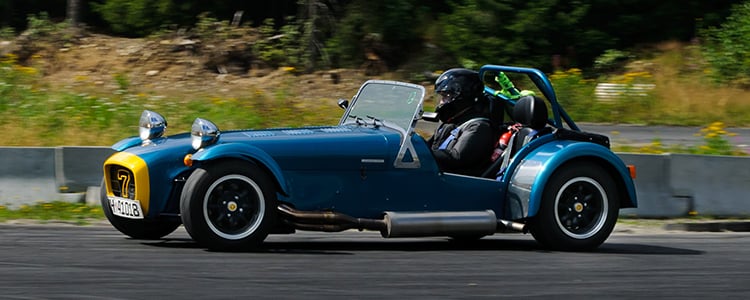
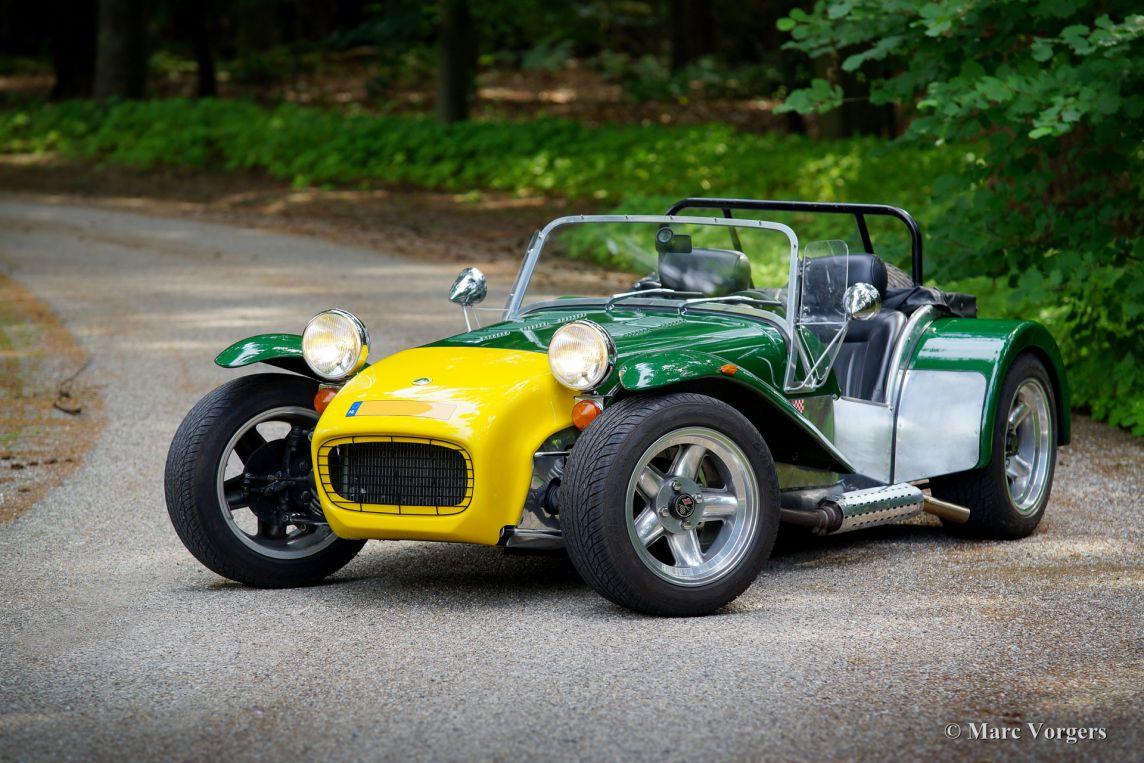
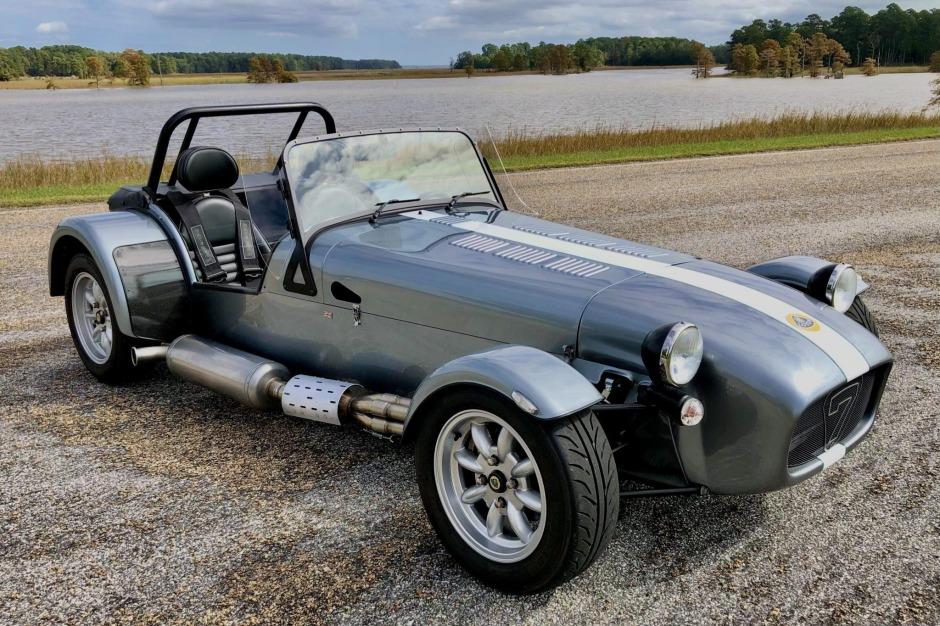
The Buyer's Read
The safest first Caterham is a documented factory-built 420 on the SV chassis. The 420 delivers Ford Duratec 2.0 power at around 210 hp, a 5-speed manual, large brakes, and an LSD. The SV chassis gives enough cockpit width for most drivers to sit without compromising reach to the pedals. Factory paperwork confirms Caterham-spec assembly; budget for a pre-purchase inspection by a Seven specialist regardless, because powdercoat hides a great deal on chassis tubes.
For the kei Seven, the 170 is the current production version and the 160 is the used-market reference point. Both use the turbocharged Suzuki kei three with a 5-speed manual, both sit on the narrow S3 chassis with the original live axle, and both weigh under 500 kg. The 170 runs 0-60 in about 6.5 seconds — rapid for a car with 84 hp — and is the only Seven that fits Japan's kei regulations. Running costs are lower than any Duratec Seven and the mechanical package is simpler.
The Caterham to avoid is an undocumented kit build with no IVA or SVA paperwork and no record of who assembled it. The Seven is straightforward to build but straightforward to build incorrectly. A poor kit build can have asymmetric wishbones, harness mounts riveted to thin aluminum sheet, and a chassis that steers under braking. A kit car with proper IVA documentation, dyno sheets, alignment records, and builder receipts is a different proposition — but unverified kit builds carry real inspection risk.
The R500 and the 620R are the collector-grade Sevens. Clean factory examples of either hold their value tightly. Auction results and pricing trends show demand for well-documented cars outpacing the broader used-car market.
Frequently Asked Questions
- What matters most for Caterham Seven value?
- Engine/spec, factory vs kit build, documentation, and condition. 420/620/CSR and clean history lead.
- Are kit-built Sevens worth less than factory-built?
- Usually yes. Factory-built tends to bring a premium; kit cars can be great if build quality is proven.
- Which Caterham is the best all-around buy?
- Many buyers target a 420 (or well-specced 310/360) for pace, usability, and strong resale demand.
- Is the Rover K-series engine a problem?
- Not inherently, but head gasket/cooling history is key. Look for upgraded gasket, radiator, and receipts.
- What should I inspect before buying?
- Check chassis corrosion, wishbones, dampers, diff noise, alignment, crash repairs, and service records.
- How do SV and S3 chassis differ?
- SV is wider/longer with more cockpit room; S3 is classic narrow. SV often sells faster to taller buyers.
- Are Caterhams expensive to run on track?
- Often reasonable: light weight saves tires/brakes. Costs rise with 420/620 power and track-focused setups.
- Will Caterham Seven prices keep rising?
- Top specs likely stay firm due to limited supply. Broader market may be flat-to-up, tied to rates and seasonality.
Sources & References
Sources (10)
- Caterham 7: The Ultimate Guide (2026) — JDMBUYSELL Verified
- Caterham Cars — the iconic range — Caterham Cars Verified
- Caterham 7 — encyclopedic overview — Wikipedia Verified
- Caterham Seven — encyclopedic overview — Wikipedia Verified
- Lotus Seven — encyclopedic overview — Wikipedia Verified
- Colin Chapman — biography — Wikipedia Verified
- Lotus Cars — corporate history — Wikipedia Verified
- Bring a Trailer — Caterham auction archive — Bring a Trailer Verified
- Caterham Seven review — Autocar Verified
- Caterham news and reviews — evo Verified
Sources last verified: